
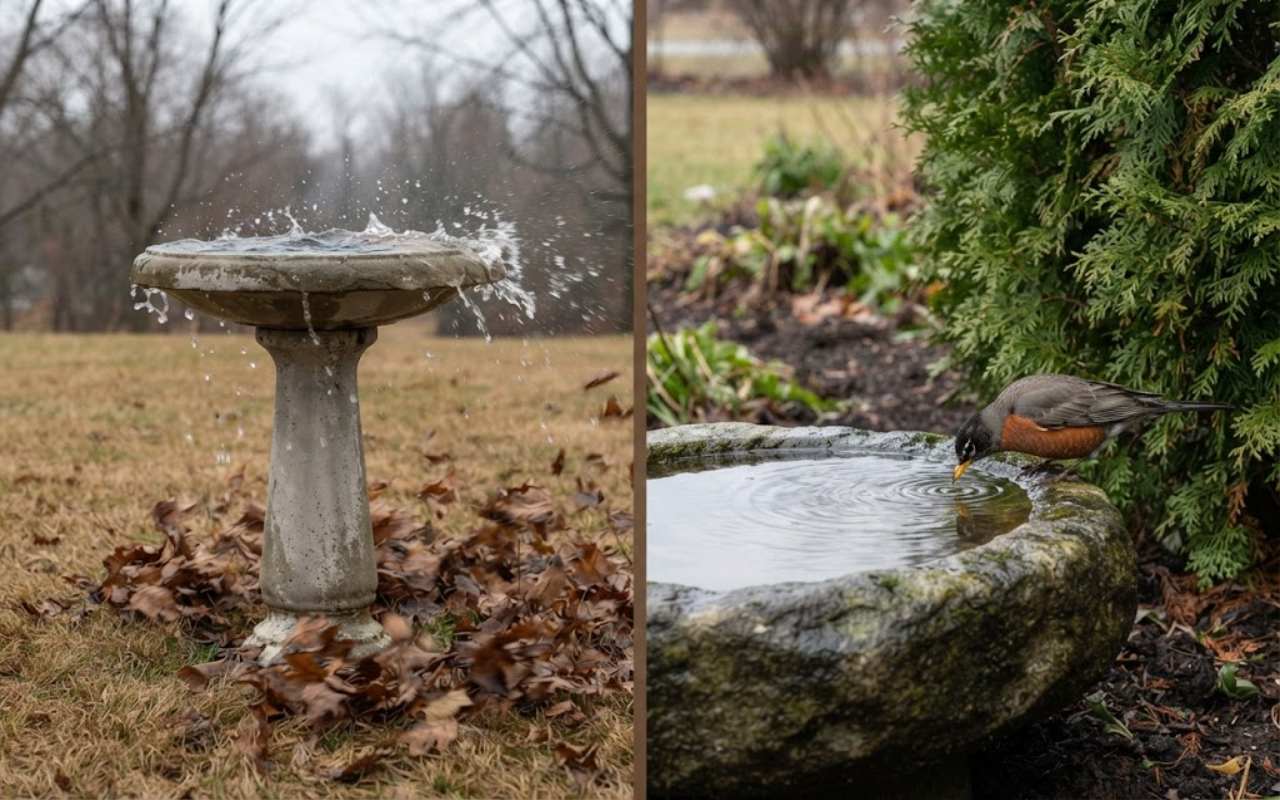
Strategic positioning fall bird baths is essential to protect your backyard water features from wind-driven evaporation. Cold autumn fronts generate turbulent drafts that easily topple unanchored stands and dry out shallow trays. Carefully shielding your garden water source preserves critical hydration zones during peak migration windows.
A mindful installation keeps birds visiting safely without exposing them to ground-based ambush predators. Setting your basin near dense evergreen windbreaks or lowering its profile effortlessly neutralizes local drafts. This quick yard manual details the best aerodynamic layout configurations to handle severe autumn seasonal storms cleanly.
Quick-Glance Field Summary
Positioning an autumn bird bath requires anchoring the basin in a semi-sheltered leeward microclimate roughly six to ten feet away from dense vegetation. This setup protects the water from turbulent wind shear and convective heat loss while maintaining clear escape routes from stalking ground predators.
- Minimum safe distance from stalking cover: 6 to 10 feet
- Window strike safety zones: Under 3 feet or beyond 30 feet from glass surfaces
- Ideal water depth for autumn songbirds: 1 to 2 inches
- Wind barrier height: At least 12 inches above the basin lip
- Stabilizing base ballast: 15 to 25 pounds of non-porous river rock or paver weight
- Safe sanitizing mixture: 1 part plain chlorine bleach to 9 parts water
Mapping Yard Microclimates to Counter Prevailing Wind Funnels
Autumn wind patterns consistently shift toward strong prevailing gusts from the north and northwest across temperate zones. Setting up a bird bath on the windward side of a residential structure exposes the water surface to uninterrupted aerodynamic drag, leading to rapid water loss. Backyard observers on regional wildlife forums frequently report that wind-exposed basins lose up to an inch of water daily purely from wind-induced splashing and convective evaporation.
Placing the water station along the southern or southeastern perimeter of a home or solid outbuilding creates a reliable leeward pocket. These structural lee zones break high-velocity drafts, creating a pocket of calm air where birds can drink and preen without fighting balance issues. Architectural wind breaks also reduce the chill factor, helping birds conserve metabolic energy during late-season visits.
Avoid positioning equipment inside narrow breezeways between homes, garages, or tight fence lines. These architectural corridors produce a Venturi effect, which constricts and accelerates ambient airflow into high-velocity wind funnels. A basin positioned in a breezeway will experience higher overturning forces than one placed out in an open lawn.
| Wind Layout Position | Aerodynamic Defense Profile | Avian Safety Benefit | Primary Maintenance Risk |
|---|---|---|---|
| Evergreen Understory | Dense cedar or holly foliage absorbs and deflects oncoming air currents completely. | Creates an immediate, calm microclimate that stops water from blowing out of the bowl. | Requires regular monitoring to scoop out falling needles and debris. |
| Ground-Level Basin | Low physical silhouette drops below the primary horizontal shear line of lawn gusts. | Completely eliminates pedestals tipping over or crashing during severe storm drafts. | Increases vulnerability to ground predators if placed too close to thick brush. |
| Open Lawn Center | Exposes all sides to maximum wind velocity, triggering rapid evaporation cooling. | Provides high peripheral visibility but offers zero physical shelter. | High risk of structure capsizing, cracked concrete basins, and dry trays. |
Ground Ballast and Hardware Anchors for Pedestal Tipping Failures
Standard two-piece concrete and resin bird baths suffer from high centers of gravity that leave them vulnerable to autumn storms. In discussions on r/backyardbirds, members frequently describe decorative bird baths toppling in moderate October gales, often cracking basins or shattering resin pedestals completely. Heavy materials like glazed ceramic or cast stone will still tip when sustained gusts push against the wide surface area of an elevated bowl.
- Drive a three-foot length of steel rebar two feet deep into the ground and slide a hollow pedestal directly over it.
- Rest the pedestal base on a sunken, level 16-inch concrete patio paver rather than soft, rain-soaked turf.
- Place a broad rubber ring or specialized basin gasket between the base and the bowl to absorb wind vibration.
- Secure hanging bird baths using rigid three-point steel chains rather than flexible single-strand wire loops.
For lightweight polymer and resin assemblies, bury the hollow base several inches into the subsoil and pack the interior chamber with dry play sand. Adding a twenty-pound ring of smooth masonry stones around the base plate provides extra low-center ballast. These ground-level adaptations distribute aerodynamic loads into the soil, keeping the fixture upright during severe autumn frontal passages.
Managing Basin Sloshing, Water Evaporation, and Boundary Layer Wind Shear
As wind sweeps across a wide basin, it sets up continuous wave action that sloshes water over the rim until the bath runs dry. This surface disruption also breaks the thermal boundary layer of the water, accelerating cooling rates on chilly fall afternoons. Forum contributors on backyard birding channels note that agitated, deep water actively frightens smaller species like goldfinches and kinglets, which prefer stable perches.
Lower the overall water depth to a safe range of one to two inches, which reduces the total fluid mass subject to wave movement. Submerging several wide, flat river stones directly in the center of the dish disrupts interior water currents and limits wind fetch. These stones serve as stable islands where birds can dip their beaks without being swept off balance by sudden air currents.
Avoid using chemical surface tension reducers or commercial anti-evaporative additives under any circumstances. Introducing foreign compounds compromises the delicate structure of avian plumage, allowing icy water to reach the skin and causing fatal hypothermia. Physical baffles, such as a heavy rock cluster, provide wind resistance while safeguarding bird health.
Balancing Dense Vegetation Buffers Against Ambush Predator Sightlines
Placing a bird bath inside a dense thicket blocks the wind effectively, but it introduces an unacceptable hazard from hunting predators. Wet feathers dramatically impair a songbird’s flight agility and takeoff speed, requiring precious seconds to evade hunting domestic cats. Dense low-growing shrubbery right against the edge of a water basin functions as an ambush screen that compromises bird safety.
Follow the recognized ten-foot habitat buffer rule to balance effective wind protection with predator avoidance. Position the bath approximately eight to ten feet away from low brush, tangled flowerbeds, or dense evergreen borders. This buffer gives birds an unobstructed panoramic view of approaching threats while leaving a short retreat route if alarmed.
Elevate the basin roughly three feet above ground level to give perched birds a wider field of view. Be sure to align the bath outside the primary strike zone for exterior windows. Per Audubon recommendations, locate backyard fixtures either within three feet of glass windows or further than thirty feet away to prevent high-speed collisions when birds flush in strong winds.
Fall Sanitation Routines and Substrate Weighting Without Pathogen Traps
Autumn winds blow dying leaves, seeds, and organic matter into open water basins, creating a fast-growing breeding ground for dangerous bacteria. Submerged organic matter decays quickly in autumn rains, generating foul odors and encouraging pathogens like Salmonella and Candida albicans. Backyard birders who use loose gravel to weigh down their basins often find that decaying debris collects in the tiny spaces between the pebbles.
- Scrub the interior basin surface twice weekly using a stiff nylon bristle brush to scour away organic biofilms.
- Disinfect the clean basin with a standard 1:9 bleach-to-water solution, letting it soak for ten minutes before rinsing.
- Flush the water bowl thoroughly with clear water until all detectable chlorine scent dissipates completely.
- Avoid using boiling water on resin or polycarbonate fixtures, as high thermal stress easily causes structural warping.
Select large, smooth, non-porous stones like granite or quartz river rocks as bath weights instead of fine pea gravel. Large stones are easy to lift out and scrub during routine water changes, which keeps organic muck from settling underneath. Clean water maintains the natural oils and insulating qualities of bird feathers, protecting your visitors through the windy autumn season.