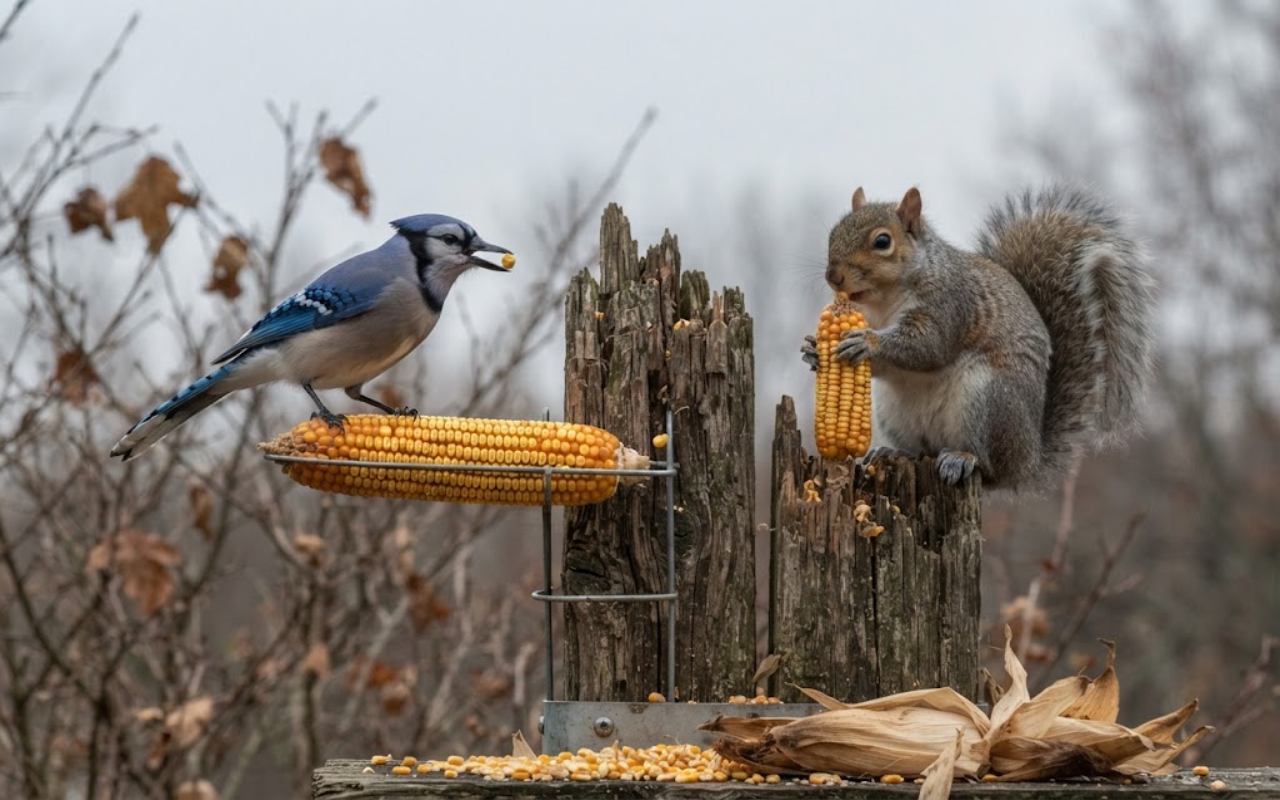
Building the easiest diy corn on the cob bird feeder to attract autumn squirrels and jays creates an intentional diversion zone that satisfies high-energy wildlife while protecting delicate seed feeders. When cool autumn weather arrives, corvids and sciurids seek calorie-dense grain to build lipid reserves and fuel winter caching behaviors. Setting up a dedicated station satisfies this seasonal feeding drive using simple hardware and field-tested mounting strategies.
Many backyard birders discover that standard platform feeding leads to aggressive turf disputes and spilled seed debris. By elevating dried whole ear corn on a heavy-duty anchor, you provide a durable foraging station that challenges squirrels physically while giving blue jays easy leverage to harvest whole kernels. The entire assembly requires only basic hand tools, minimal lumber, and a few rust-resistant fasteners.
Quick-Glance Field Summary
This DIY cob feeder uses a single threaded steel lag screw anchored through an untreated wood backing to secure whole dried corn ears through their dense inner floral pith. Suspending or securing this station at least ten feet away from delicate songbird perches creates an effective behavioral diversion that holds up against aggressive gnawing and heavy autumn wind.
- Base mount: 1×4 untreated cedar or white pine plank cut to 12 inches in length
- Primary anchor: 3-inch long by 0.25-inch diameter galvanized steel lag screw or hanger bolt
- Cob stabilization hardware: Two 1-inch zinc flat washers and one matching hex nut
- Suspension tether: 1/16-inch coated stainless steel wire cable or direct timber lag mounting
- Feedstock standard: Whole, untreated, field-dried dent corn with intact center pith
- Safe clearance: Minimum 10 feet horizontal buffer from sensitive songbird feeders and window collision zones
Hardware Selection and Pith Anchor Integrity
Standard birding blogs often suggest simply driving a thin drywall screw through a board or dangling a cob from cotton butcher twine. In community discussions on r/squirrels, experienced backyard keepers regularly document how quickly squirrels chew through nylon or hemp cords, dropping the food to ground predators in minutes.
Thin nails and drywall screws also pull free under moderate leverage because the soft center of dried ear corn offers minimal tensile resistance.
Dried field corn possesses a spongy inner core surrounded by a hard, woody vascular ring. To hold an active fox squirrel or gray squirrel, you must anchor into this woody ring using a coarse-threaded fastener with aggressive bite. A 0.25-inch galvanized lag screw or a two-sided hanger bolt cuts deeply into the core fibers, preventing the animal from twisting the ear loose.
- 3-inch by 0.25-inch galvanized steel lag bolt for heavy timber mounting
- Dual-ended 0.25-inch steel hanger bolt with wood threads on both halves
- 1-inch outer diameter fender washers to prevent the screw head from pulling through the lumber
- 0.25-inch hex nuts for locking the threaded shaft firmly to the backing board
Pre-drill the base of the corn cob with a 0.125-inch pilot bit to a depth of roughly one inch. This step prevents the dry cob core from splitting open along its natural grain lines when you screw it onto the steel shaft. Once threaded into place, the cob stays rigid, forcing visitors to forage directly from the station rather than carting the entire ear away.
| Corn Feeder Type | Nutritional / Physical Profile | Target Wildlife Safety Benefit | Primary Weather Risk |
|---|---|---|---|
| Whole Dried Ears | Dense, intact kernels packed with raw complex carbohydrates and fiber. | Forces squirrels to chew slowly, keeping them distracted from songbird boxes. | Can harbor deadly Aspergillus mold if left sitting in standing rain puddles. |
| Loose Cracked Corn | Broken mechanical fragments that are highly accessible to ground foragers. | Provides quick, easy calories for ground-feeding doves, jays, and towhees. | Absorbs ambient humidity rapidly, turning into a sour, fermented ground mess. |
Blue Jay Caching Dynamics and Kernel Extraction Mechanics
Blue Jays do not chew through ear corn the same way tree squirrels do. Ornithological field studies confirm that these corvids use their heavy, chisel-like bills to grasp, wrench, and dislodge intact kernels, which they store in their distensible sublingual pouch before flying off to hide them under leaf mulch.
Autumn is peak caching season, and a single jay can collect hundreds of individual kernels per week to establish winter food caches. On birdwatching forums such as r/backyardbirds, community members often note that jays abandon dangling, swinging “bungee” feeders because the erratic movement prevents the birds from gaining physical leverage.
Blue Jays possess anisodactyl feet designed for perching rather than hanging upside down from oscillating cables. They need a stable horizontal or upright surface to brace their feet while hammering at hardened kernels.
- Rigid vertical board mounts that offer at least four inches of foot rest below the cob
- Horizontal platform cleats where corvids can stand flat-footed while wrenching kernels
- Clearance zones that provide a clean flight path for quick aerial exits with full crops
When building this DIY project, extend the wooden backer board at least four inches beyond the base of the mounted cob. This extended surface acts as a firm perching shelf. The jay can brace its weight against the cedar plank, deliver decisive strikes against the grain base, and strip rows cleanly without tumbling off balance.
Spatial Separation and Window Collision Geometry
Strategic feeder placement determines whether your new diversion station succeeds or merely attracts unwanted chaos to your primary feeding area. Placing ear corn directly adjacent to thistle or black oil sunflower stations invites territorial aggression that will scatter timid chickadees, nuthatches, and goldfinches.
Squirrels naturally dominate the easiest calorie source available, so positioning the cob feeder along their primary travel corridor diverts them before they reach songbird zones.
Window strike mitigation must also guide your station setup. The fatal hazard of window collisions increases when high-energy birds flush rapidly from feeding perches during predator alerts. You should follow established safety standards by placing your feeding station either within three feet of your home exterior or farther than thirty feet away.
- Mount stations within 3 feet of windows to prevent fatal flight velocities during escape maneuvers
- Position free-standing posts beyond 30 feet from reflective glass to eliminate reflection confusion
- Establish a 10-foot minimum isolation gap between the cob station and delicate songbird perches
- Provide adjacent evergreen or brush cover within 8 to 12 feet to offer rapid escape routes from accipiters
If you plan to mount the cob station on a tree trunk, choose a mature hardwood with stable bark. Keep the installation roughly five to six feet off the ground to give you easy loading access while keeping the cob safely above prowling domestic cats.
Moisture Control and Aspergillus Aflatoxin Mitigation
Autumn rainfall creates serious biological risks for grain feeders that many casual hobbyists overlook. Dried dent corn contains dense starches that readily absorb ambient moisture during sustained precipitation.
When corn remains damp in temperatures above 50 degrees Fahrenheit, fungal spores from Aspergillus flavus multiply rapidly, producing dangerous mycotoxins known as aflatoxins.
Aflatoxins represent a severe, often lethal threat to avian respiratory and digestive systems, and they cause chronic liver damage in small mammals.
You must never let ear corn sit out through days of warm rain until it develops a grey, powdery, or greenish mold sheen. If a cob feels soft or shows dark discoloration between kernel rows, unthread it immediately and throw it in the trash.
- Inspect mounted ears every 48 hours during periods of heavy fog or rainfall
- Replace damp or unconsumed cobs after five continuous days of wet weather
- Disinfect wooden mount boards periodically using a standard 1:9 bleach-to-water dilution wash
- Allow all wooden structures to air dry completely in direct sunlight before threading on new ears
Avoid sealing your cedar or pine baseboards with chemical water repellents or toxic exterior varnishes. Squirrels will inevitably gnaw on the edges of the backing board as they strip the cob down to the wood. Leaving the wood untreated or using raw heat-treated lumber keeps the wildlife safe from chemical ingestion.
Debris Management and Structural Maintenance
A productive cob station generates a surprising volume of organic refuse in a very short time. As squirrels gnaw down to the cob center, they scrape away the indigestible outer hulls and drop hundreds of fragmented seed coats directly below the mount.
If you leave this debris to accumulate on the soil, it mats down, smothers lawn turf, and attracts nocturnal rodents like Norway rats and house mice.
Experienced wildlife enthusiasts on local backyard forums often recommend hanging a wide galvanized catchment tray or shallow utility pan roughly eighteen inches below the feeder.
This catch basin captures dropped grain fragments and discarded corn cores before they hit the ground. Emptying this tray twice a week eliminates nocturnal scents and keeps the foraging area tidy.
- Rake fallen corn chaff and kernel fragments weekly to minimize rodent scent trails
- Remove bare, chewed cobs promptly to prevent squirrels from chewing the structural timber
- Check mounting lag bolts for thread wear each month and re-tighten hardware into the baseboard
- Store surplus whole ear corn in galvanized steel bins with locking lids to block mice
Maintaining the station takes less than five minutes per week once the initial structure is secured in your yard. The feeder delivers dependable entertainment, diverts aggressive foragers away from expensive specialty seed blends, and provides autumn wildlife with a reliable, calorie-dense food source to face the coming winter.