
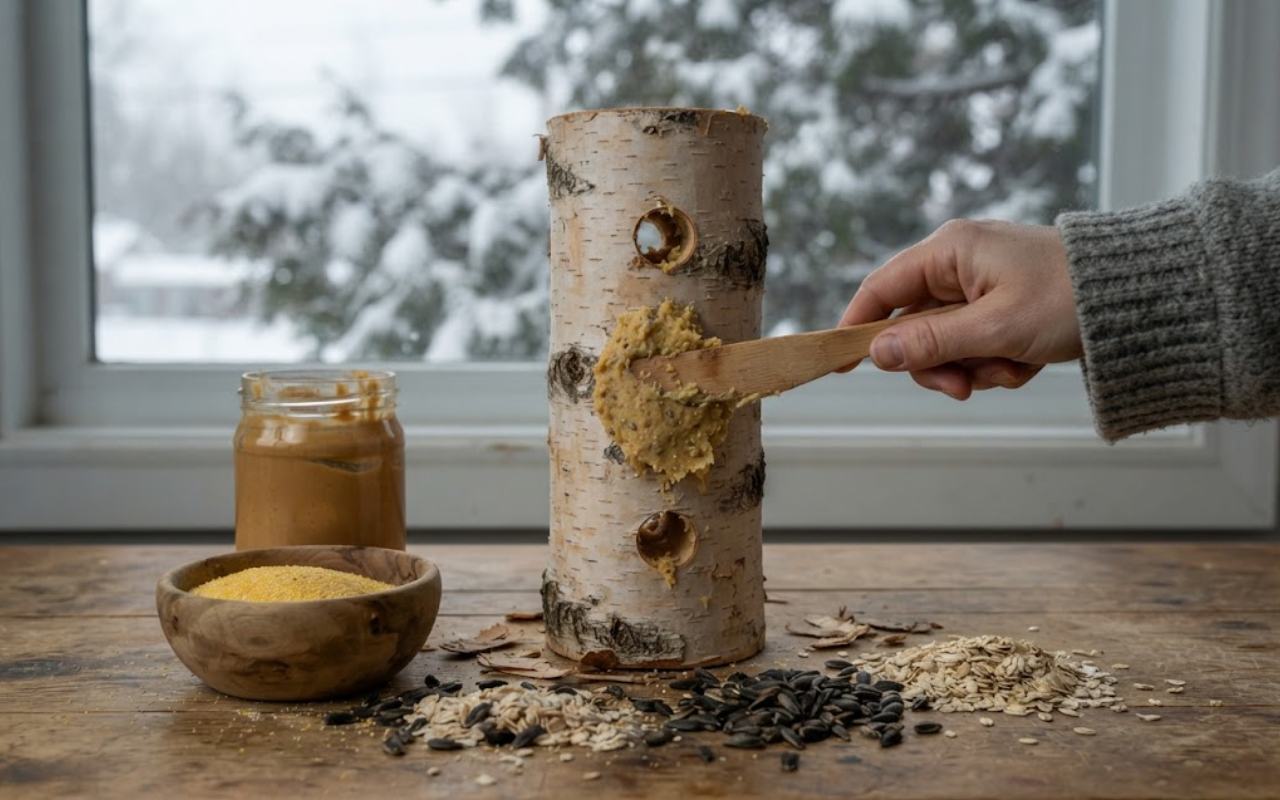
Learning how to pack no-melt winter suet logs for woodpeckers comes down to balancing proper fat binding with hole geometry so your plugs do not drop onto the frozen ground. Many backyard birders buy pre-made cakes, only to watch the fat freeze, contract, and tumble out into the snow during the first deep freeze. Building your own blend and preparing your log properly keeps food accessible to clinging birds through the coldest stretches of the season.
Woodpeckers rely on dense, high-calorie fats to survive sub-zero nights when natural insects are hidden beneath ice. Using the right packing technique prevents waste, deters nuisance birds, and keeps the feeder functional in high winds.
Quick-Glance Field Summary
A stable winter suet log requires a dense base of rendered beef kidney tallow mixed with binding grains, pressed firmly into rough-bored holes to prevent shrinkage drop-out. Angling holes slightly upward and placing the station within safe flight corridors protects clinging foragers while keeping food clean.
- Log dimensions: untreated hardwood or cedar limb, 3 to 5 inches in diameter, 14 to 18 inches long
- Cavity specifications: 1.25-inch to 1.5-inch diameter holes, 1 inch deep, drilled with a Forstner or spade bit
- Temperature range: stable in conditions from 40°F down to -20°F without crumbling
- Base recipe ratio: 2 parts rendered beef tallow to 1 part unsalted peanut butter, thickened with 2 parts equal-ratio cornmeal and rolled oats
- Placement boundary: strictly within 3 feet of windows or beyond 30 feet to prevent strike injuries
Picking the Right Wood and Drilling the Feed Holes
A common issue shared on r/backyardbirds involves backyard birders using smooth birch logs where the suet simply slides out as a solid frozen cylinder. When raw wood freezes, moisture loss shrinks both the wood fibers and the fat plug, breaking any weak surface grip. Using naturally rough-barked logs like oak, cedar, or pine gives both the suet and the woodpeckers something to hold.
Cut a fallen limb to roughly 16 inches long, leaving the outer bark intact for tail-propping leverage. Drill your holes around the circumference using a 1.25-inch or 1.5-inch spade bit, spacing them roughly 4 inches apart so birds do not fight over adjacent holes.
- Use natural limbs with thick, furrowed bark rather than slick, milled dowels
- Bore holes 1 to 1.25 inches deep to hold roughly two tablespoons of packed suet per hole
- Angle your drill bit slightly downward toward the center of the branch at roughly 10 degrees
- Run a drywall screw halfway into the interior back wall of the hole to give the fat a mechanical anchor
Angling the drill entry slightly downward stops driving sleet from pooling inside the cavity. The inner rough edges left behind by a dull spade bit actually help the fat lock into place.
| Log Packing Mixture | Starch & Grain Binding Agents | Physical Texture in Freezing Cold | Target Woodpecker Foragers |
|---|---|---|---|
| The Cornmeal-Oat Plug | Coarse yellow cornmeal, uncooked quick oats, and unbleached flour. | Firm, pliable, and non-sticky; stays soft enough to chew without crumbling. | Downy Woodpeckers, Hairy Woodpeckers, and Carolina Wrens. |
| The High-Protein Nut Dough | Finely crushed raw peanut hearts, walnut meats, and sunflower bits. | Dense and chunky; locks tightly inside log cavities without slipping out. | Pileated Woodpeckers, Red-bellied Woodpeckers, and Blue Jays. |
Mixing Cold-Weather Suet That Stays Put in Freezing Temps
Commercial suet cakes often rely on cheap grain fillers and low-grade grease that shatter like glass when temperatures plummet below 15°F. On specialty wild bird forums, experienced rehabbers recommend pure rendered beef kidney fat, also called suet tallow, because it carries a natural melting point around 115°F while retaining workable plasticity in cold weather.
Avoid adding glycerin to soften the mix under any circumstances. While glycerin prevents freezing in water baths, it coats avian feathers, ruins their microscopic interlocking barbules, and induces fatal hypothermia when birds preen. Stick to clean, unadulterated fats paired with dry binding agents that absorb excess moisture.
- Rendered beef kidney fat forms the firm, calorie-dense foundation
- Creamy, unsalted, no-sugar peanut butter provides flexibility and prevents deep-freeze shattering
- Coarse yellow cornmeal binds free oils without swelling in the presence of snow melt
- Rolled oats or raw sunflower chips add grip for woodpecker beaks
Melt two cups of rendered tallow with one cup of smooth peanut butter over low heat until completely liquid. Stir in two cups of cornmeal and one cup of rolled oats until the mix reaches the consistency of stiff cookie dough.
Packing the Log Tightly So the Food Stays Inside
Packing the suet when it is piping hot causes shrinkage gaps around the perimeter as the tallow cools and solidifies. Let your warm suet mixture sit at room temperature until it cools to roughly 70°F, taking on a pliable, clay-like consistency.
A troubleshooting trick shared on Reddit’s r/birdwatching suggests using a standard metal putty knife rather than a spoon to eliminate trapped air pockets. Air pockets collect condensation during daily freeze-thaw cycles, creating ice sheets behind the plug that push the food right out of the log.
- Scoop a golf-ball-sized clump of warm suet dough directly into your palm
- Drive the mixture into the base of the drilled hole using the heel of your thumb
- Force the fat into the rough wood pores with heavy, direct pressure
- Scrape the excess flush with the bark using a rigid metal putty knife
Never leave a mounded dome of suet protruding past the bark layer. Smoothing the plug level with the wood surface forces the bird to reach inside the cavity, which stops broad-billed birds like grackles from breaking off large chunks in a single swipe.
Hanging Your Log Feeder to Stop Bullies and Window Strikes
Log feeders are designed for specialized clinging birds like Downy, Hairy, and Pileated Woodpeckers, as well as nuthatches and brown creepers. Starlings often overrun suet cages, but they lack the strong zygodactyl toe arrangement and rigid retrices needed to cling comfortably to vertical bark. You can deter nuisance birds simply by adjusting where and how your log hangs.
Suspend the log using a heavy screw eye drilled directly into the top center of the wood, secured with weather-rated wire or chain. If European Starlings begin raiding the upper holes, invert the log so the drilled cavities face downward toward the ground. Woodpeckers effortlessly hang inverted to feed, while heavier flocking species quickly abandon the perch.
- Mount feeders within 3 feet of your home or beyond 30 feet to follow Audubon collision safety guidelines
- Hang the log at least 5 feet above the ground to keep it out of reach of domestic cats
- Place the log in an open flight path protected from prevailing northern winter winds
- Add an 18-inch polycarbonate weather dome above the log to shield the plugs from freezing rain
Placing the feeder within three feet of glass ensures that a startled bird cannot build up enough flight speed to sustain a fatal impact. Alternatively, an open yard position past thirty feet gives birds ample room to avoid windows entirely.
Cleaning Dirty Logs and Keeping Winter Birds Safe
While winter air limits bacterial growth, damp grain fillers inside wet wood cavities create an ideal breeding ground for mold. Cornmeal and crushed nuts exposed to persistent rain can host Aspergillus flavus, a fungal pathogen that produces dangerous aflatoxins. Inspect the cavities every week for dark discoloration, sour smells, or water saturation.
Do not boil your wooden suet logs or run them through a dishwasher, as rapid thermal expansion splits natural limbs and warps the drilled holes. Instead, use a stiff wire test-tube brush to clear out any uneaten, spoiled fat residues down to bare wood before refilling.
- Scrape away lingering fat deposits using an old butter knife or narrow paint scraper
- Scrub the drilled holes thoroughly with a stiff nylon or brass wire brush
- Sanitize the wood cavities using a 1:9 household bleach-to-water dilution
- Let the entire log air-dry completely in a heated garage or indoor utility room before repacking
Never pack fresh suet into damp wood cavities, because trapped water will rot the base of the fat plug. Keep two logs in rotation so you can immediately swap in a dry, clean unit while the other dries thoroughly indoors.