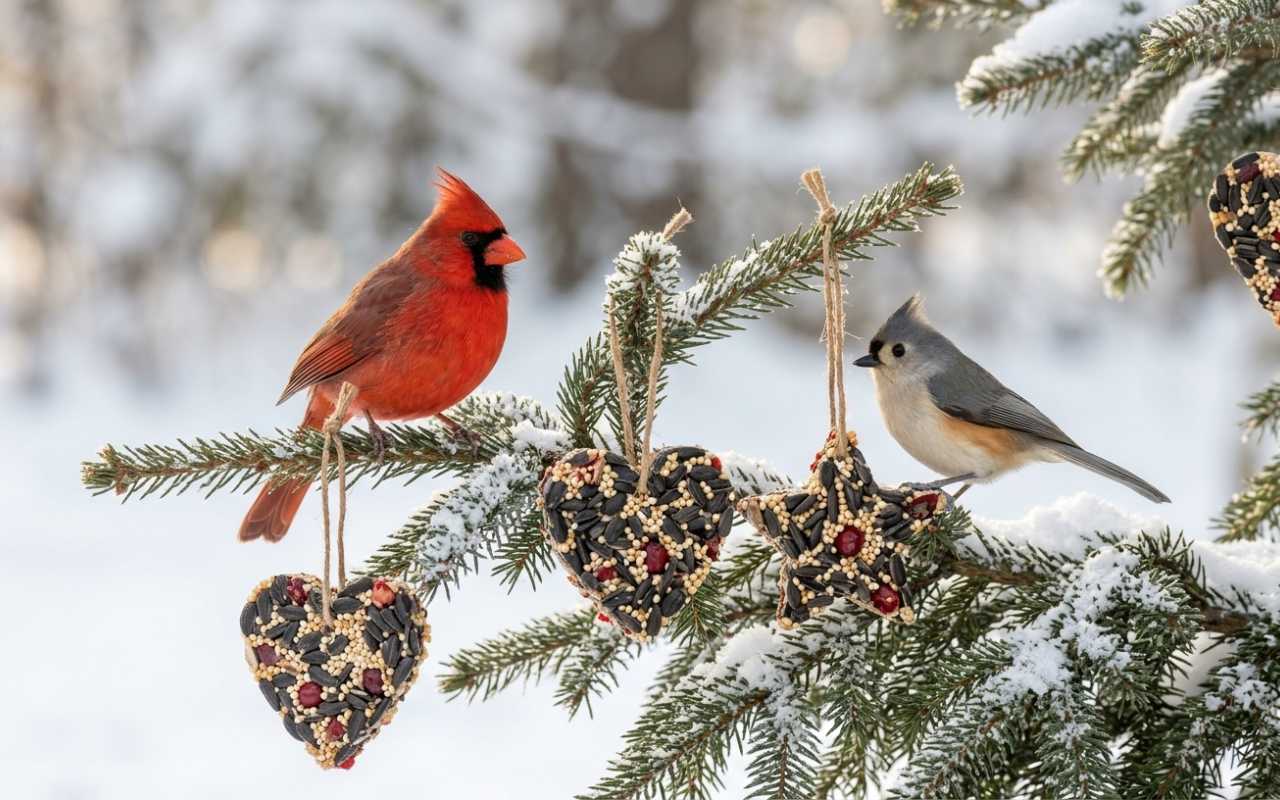
Edible Christmas ornaments for birds are weather-hardy holiday feeders molded from high-fat seeds, dried berries, and natural binders like unflavored gelatin or rendered beef suet, hung outdoors with short loops of untreated jute or hemp twine. Skipping sticky honey, refined corn syrup, synthetic ribbons, and plastic tinsel protects songbirds from plumage fouling, digestive trouble, and fatal string entanglement.
Decorating an outdoor evergreen tree with homemade treats turns winter birdwatching into a festive family tradition. However, many popular holiday craft tutorials rely on pantry shortcuts like white flour paste, honey, or fishing line that spoil in damp weather or endanger backyard wildlife.
Using verified wildlife-safe binders and natural cordage lets you hang durable, high-calorie ornaments that chickadees, woodpeckers, nuthatches, and finches can safely peck all December long.
Quick-Glance Summary: Bird-Safe Holiday Ornaments
- Best Weather-Hardened Binders: Unflavored gelatin (for firm cookie-cutter shapes in mild weather) or rendered beef suet (for maximum sub-zero calories).
- Ingredients to Strictly Avoid: Never use honey, white sugar glazes, baking chocolate, salted nuts, artificial food coloring, or scented craft pinecones.
- Safest Hanging Cordage: Use 6- to 8-inch loops of untreated 100% natural jute, hemp, or sisal twine. Never use fishing line, nylon ribbon, wire twist-ties, or yarn.
- Best Bird-Attracting Mix-Ins: Black oil sunflower seeds, hulled sunflower hearts, white proso millet, safflower, unsalted shelled peanuts, and unsulfured raisins or cranberries.
- Window Safety Placement: Hang ornaments within 3 feet of house windows or more than 30 feet away so startled birds never hit glass at full flight speed.
Three Safe Recipes for Edible Christmas Ornaments for Birds
Depending on your winter temperatures, choose between firm gelatin seed cutouts, high-lipid suet bells, or natural citrus and pinecone cups.
1. No-Corn-Syrup Gelatin Birdseed Ornaments (Best for Mild Winter Days)
Inspired by wildlife craft guides from organizations like the National Audubon Society, using unflavored gelatin creates a firm, non-sticky matrix that holds cookie-cutter shapes cleanly without coating bird beaks in sugary syrup.
- Ingredients (Makes 6 to 8 Ornaments):
- 2 packets (1/2 ounce total) unflavored gelatin
- 1/4 cup cold water
- 1/4 cup boiling water
- 2 cups high-oil birdseed mix (black oil sunflower, sunflower hearts, and white millet)
- 1/4 cup finely chopped unsulfured cranberries or soaked raisins
- Instructions:
- Sprinkle the unflavored gelatin over the 1/4 cup cold water in a mixing bowl and let it bloom for 2 minutes.
- Pour in the 1/4 cup boiling water and stir until every granule dissolves completely.
- Fold in the birdseed and dried fruit until every seed is lightly coated with liquid.
- Place lightly oiled metal cookie cutters on a parchment-lined baking sheet. Pack the mixture halfway up each mold, lay a 7-inch loop of untreated jute twine into the top half, and pack the remaining seed mixture firmly on top.
- Chill in the refrigerator for 3 to 4 hours until solid, gently push the shapes out of the molds, and air-dry on a wire rack at room temperature for 12 hours before hanging outdoors.
2. Sub-Zero Suet & Nut Pinecones (Best for Freezing Climates)
In temperatures below 20°F (-6°C), gelatin ornaments can turn brittle, whereas rendered beef suet stays packed with essential fat calories.
- Ingredients (Makes 4 to 6 Pinecones):
- 1 cup rendered beef suet (or equal parts lard and unsalted natural peanut butter)
- 1 cup coarse yellow cornmeal (binds oils so fat does not smear on feathers)
- 1/2 cup rolled oats
- 1 cup hulled sunflower hearts and chopped unsalted peanuts
- 4 to 6 clean, dry, unscented natural pinecones
- Instructions:
- Tie a short loop of natural hemp or jute twine securely around the top scales of each pinecone before filling.
- Gently melt the suet over low heat, remove from the stove, and stir in the cornmeal, oats, sunflower hearts, and peanuts until a thick paste forms.
- Press the warm mixture deep between the pinecone scales, place on waxed paper, and chill in the freezer for 1 hour until firm.
3. Hollowed Orange & Cranberry Suet Cups
Halved orange rinds act as biodegradable, zero-waste hanging bowls that attract orioles, woodpeckers, chickadees, and titmice.
- Ingredients (Makes 4 Orange Cups):
- 2 large thick-skinned oranges, halved and scooped clean
- 1 cup suet-and-seed mixture (from Recipe 2, cooled until slightly thickened)
- 1/4 cup fresh cranberries, halved
- 8 short lengths (8 inches each) of untreated 100% jute twine
- Instructions:
- Slice two large oranges in half and scoop out the fruit pulp cleanly, leaving intact peel bowls.
- Poke four small drainage and hanger holes near the rim of each orange peel cup using a metal skewer, and thread two short crossed lengths of natural jute twine through the holes to form a balanced cradle.
- Let your warm suet-and-seed mixture cool slightly until thick and spreadable so it does not warp the orange rind or weep citrus juice, then spoon it into each peel cup, press halved cranberries on top, and chill until solid.
Gelatin vs. Suet vs. Fruit Ornaments Compared
Matching your ornament base to your winter weather keeps treats intact and safe for local species:
| Ornament Style | Best Weather Range | Caloric Value | Key Care & Safety Rule |
|---|---|---|---|
| Gelatin Seed Cutouts | Dry, crisp weather (15°F to 45°F) | High seed protein & oil; zero added sugar | Bring indoors during heavy rain or warm thaws so gelatin does not soften or mold |
| Suet & Cornmeal Pinecones | Deep winter freezes (below 40°F) | Highest fat density for overnight survival | Avoid hanging in direct sun above 50°F, where soft fat can coat feathers |
| Orange Peel & Berry Cups | Mild to cold winter days (10°F to 50°F) | Balanced fat, seed, and fruit sugars | Compost empty rinds once birds finish the filling |
Critical Wildlife Safety Rules for Holiday Bird Ornaments
Before hanging homemade treats on outdoor branches, check your materials against four non-negotiable bird safety rules:
- 1. Use Short, Natural Plant Fibers Only: Avian cordage safety guidelines warn that long, loose strands of nylon, fishing line, or synthetic yarn wrap around toes and legs, cutting off circulation. Always use short 6- to 8-inch loops of untreated 100% jute, hemp, or sisal twine, and remove empty hangers once the seed is gone.
- 2. Never Use Honey or Pure Corn Syrup: Honey can harbor Clostridium botulinum spores and stays sticky on beaks and feathers, while straight corn syrup softens in humidity and attracts mold.
- 3. Skip Scented Craft Pinecones: Store-bought cinnamon-scented pinecones are treated with synthetic fragrance oils and chemical solvents that irritate avian respiratory systems. Gather clean, dry pinecones from untreated trees or bake backyard cones at 200°F (93°C) for 30 minutes to remove sap and insects.
- 4. Hang Near Perch Support: Songbirds prefer solid footing while pecking. Hang ornaments 4 to 6 inches below a sturdy horizontal twig rather than dangling from thin branch tips where only acrobatic chickadees can reach them.
Frequently Asked Questions
Can I use peanut butter on edible Christmas ornaments for birds?
Yes, plain unsalted peanut butter mixed with coarse cornmeal and rolled oats is completely safe for birds. Always blend peanut butter with dry cornmeal or suet so its sticky texture does not cling to the roof of a small bird’s mouth.
How long do gelatin birdseed ornaments last outside?
In dry, below-freezing winter weather, gelatin birdseed ornaments hold their shape for 2 to 3 weeks (or until local birds finish eating them). If warm rain or heavy wet snow arrives, take them down early so damp seeds do not sprout or develop mold.
Can you put an old indoor Christmas tree outside for birds?
Yes, setting up an untreated real spruce, fir, or pine tree in your backyard after Christmas creates instant wind shelter and a natural frame for edible ornaments. Because commercial lot trees are sometimes sprayed with synthetic pesticides, needle-retention sealers, or green colorants, verify that the tree is untreated and remove every trace of tinsel, metal hooks, and flocking spray before placing it outside for wildlife.