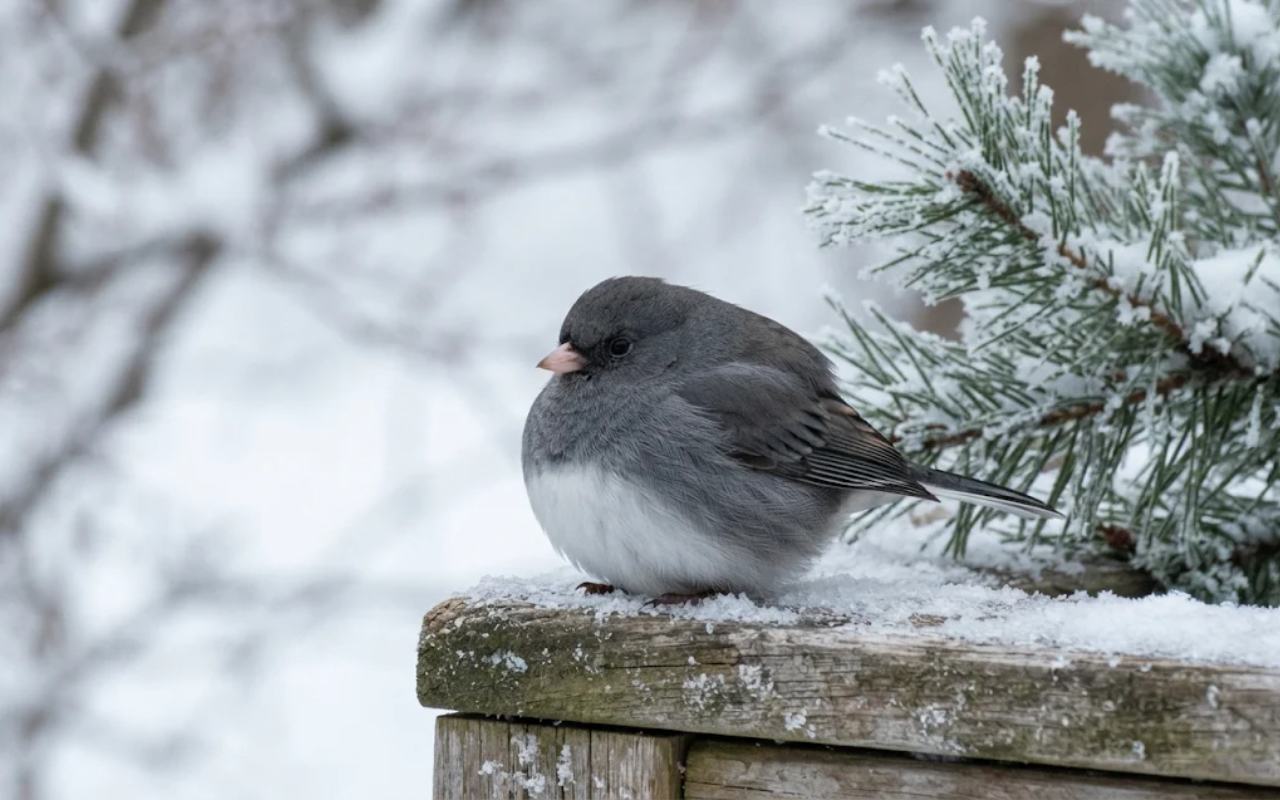
Key winter bird hypothermia signs include sitting motionless on the ground or a low perch with heavily fluffed feathers, closed or half-closed eyes, drooped wings, and a complete loss of flight response when approached. Unlike healthy winter birds that puff up temporarily on branches while staying alert and reactive, a hypothermic bird has exhausted its metabolic fat reserves and can no longer shiver hard enough to maintain its 102°F to 109°F (39°C to 43°C) core body temperature.
Knowing how to recognize true cold shock, and how to distinguish it from harmless feather fluffing or natural hummingbird torpor, prevents unnecessary human interference while giving genuinely stranded birds a safe chance at recovery. If you find an unresponsive bird in snow or freezing rain, gradual external warming in a ventilated dark box followed by a call to a licensed wildlife rehabilitator is the safest protocol.
Quick-Glance Summary: Hypothermia Triage at a Glance
- Normal Cold Behavior (Leave Alone): Bird is puffed up on an elevated branch or feeder, actively foraging, blinking sharply, and flying away when you step toward the window.
- Nocturnal Torpor in Hummingbirds (Leave Alone): Year-round Pacific Coast hummingbirds (such as Anna’s Hummingbirds) hang upside down or sit rigid on twigs at night with a slowed heart rate; they wake naturally as morning air warms.
- True Hypothermia Emergency (Intervene Safely): Bird is hunched on the ground, snow, or porch floor, shivering violently or unable to shiver, slow to blink, uncoordinated, or letting you walk within arm’s reach without flying.
- Golden Rule of Warming: Warm the bird slowly inside a ventilated cardboard box in a quiet, warm room. Never force water or food into a cold bird’s beak, as liquid can enter its airway or trigger fatal shock.
5 Warning Signs of Winter Bird Hypothermia After Freezing Rain or Ice Storms
Healthy wild birds rarely freeze from dry cold air alone, because their layered down plumage and isometric pectoral shivering generate tremendous heat. Hypothermia typically strikes during freezing rain, wet snowstorms, or prolonged ice glaze that soaks outer feathers (destroying insulation) or seals off seeds and bark insects so birds run out of fuel overnight.
Watch for these five physical and behavioral red flags in your yard:
- 1. Loss of Escape Reflex: A healthy songbird darts into cover the moment a person steps outside or approaches within 10 to 15 feet. A hypothermic bird remains frozen in place even when approached closely.
- 2. Sitting Hunched on the Ground or Snow: Weakened birds drop down to snowbanks, deck boards, or foundation walls because they lack the grip strength to balance on tree branches.
- 3. Drooped Wings and Unsteady Posture: As core body temperature drops, muscle coordination fails. The bird’s wings sag away from its body instead of tucking neatly against its flanks, and it may wobble or tip forward.
- 4. Closed or Half-Closed Eyes: Rather than scanning rapidly for predators, a cold-stressed bird keeps its eyes squeezed shut or blinks sluggishly.
- 5. Invisible Isometric Shivering Escalating to Trembling and Stillness: Early-stage avian heat generation is almost invisible to the human eye because birds contract opposing pectoral (breast) muscles simultaneously without ruffling their outer insulating feathers. As core temperature falls further, this shifts into intense, visible body trembling, followed by complete stillness once blood sugar and muscle glycogen are exhausted.
Hypothermia vs. Normal Fluffing vs. Hummingbird Torpor
Before picking up any backyard bird, check the comparison table below to ensure you are not accidentally disturbing a healthy bird using normal winter survival tactics.
| Condition | Where You See It | Key Physical Signs | What to Do |
|---|---|---|---|
| Normal Piloerection | Tree branches, shrubs, or perched at feeders | Round puffed feathers, bright alert eyes, quick head turns, normal flight | Leave alone; keep feeders stocked |
| Nocturnal Torpor | Sheltered twigs at night or early dawn (hummingbirds) | Eyes closed, gripping perch tightly or hanging upside down, very slow breathing | Do not touch unless on ground or in danger |
| True Hypothermia | Snowbank, porch floor, driveway, or base of window | Drooped wings, wet/matted feathers, closed eyes, no escape reflex | Contain safely, warm gradually & call rehabber |
Step-by-Step: How to Safely Help a Hypothermic Bird
If a bird is sitting motionless on the snow and does not fly away when you approach, follow these five wildlife rehabilitation steps immediately.
1. Prepare a Safe Warming Box First
Before picking up the bird, prepare a small cardboard box or paper bag with air holes poked in the lid. Line the bottom with a clean, smooth cloth towel or paper towels. (Avoid terrycloth bath towels with loose loops, as tiny bird claws easily snag in fabric loops and break toes).
2. Pick Up the Bird Gently with Gloved Hands
Wear lightweight garden gloves or drape a soft washcloth over the bird to scoop it up gently, folding its wings comfortably against its body. Even a chilled bird can panic and flutter abruptly, so keep movements slow and quiet.
3. Apply Gradual, Indirect Warmth
Place the closed box in a warm, quiet room (around 70°F to 75°F / 21°C to 24°C) away from pets, children, and noisy appliances. Darkness lowers stress hormones and stops the bird from fluttering against the walls.
If the bird feels icy to the touch, provide gentle supplemental heat using one of these safe methods:
- Heating Pad on Low (Watch for Auto-Shutoff): Set an electric heating pad to its lowest setting and place it under only half of the cardboard box so the bird can move off the warm side if it gets too hot. Check the pad every 45 to 60 minutes, as many modern heating pads feature automatic 1- to 2-hour shutoff timers that can allow a recovering bird to re-chill.
- Warm Water Bottle: Fill a plastic bottle or zippered bag with warm (not boiling) tap water, wrap it in a towel so the bird cannot touch bare plastic, and set it beside the bird inside the box.
4. Never Force Food or Water Into Its Beak
This is the single most common mistake well-meaning rescuers make. A hypothermic bird cannot swallow properly, and dripping water or sugar syrup into its mouth can cause fatal aspiration pneumonia (liquid entering the lungs) or trigger fatal digestive shock while gut circulation is shut down. Keep the box completely free of open water dishes, which can spill and soak the bird’s feathers again.
5. Contact a Licensed Wildlife Rehabilitator
Once the bird is resting quietly in the warm box, use a national wildlife rescue directory such as Animal Help Now (https://ahnow.org) or your state or provincial wildlife agency directory to locate a nearby licensed wildlife rehabilitator.
Many birds found cold on the ground are actually suffering from a secondary issue, such as a window strike, cat attack, or avian illness, that left them unable to forage before nightfall.
If the bird is completely uninjured, dry, alert, and hopping vigorously inside the box after 60 to 90 minutes of warming, a rehabilitator may advise releasing it outdoors during the warmest part of the day near dense evergreen shrubs and a stocked bird feeder.
4 Critical Mistakes to Avoid When Rescuing a Cold Bird
- Do Not Use Hair Dryers or Space Heaters: Blasting a chilled bird with hot air causes rapid overheating, burns delicate skin, and dehydrates mucous membranes within minutes.
- Do Not Place the Bird in a Wire Cage: Wire bars damage flight feathers and injure beaks if the bird wakes up and tries to escape. A smooth-walled cardboard box is always safer.
- Do Not Keep Wild Birds Overnight as Pets: Native North American songbirds are protected under federal wildlife laws (including the Migratory Bird Treaty Act), and keeping them indoors without specialized veterinary care quickly leads to starvation or stress mortality.
- Do Not Release a Bird After Dark: Never put a recovered bird back outside near dusk or after sunset, when it cannot find shelter or food before temperatures plunge again.
How to Prevent Winter Bird Hypothermia in Your Yard
Supporting local flocks before severe cold fronts arrive reduces the risk of cold stress across your entire neighborhood:
- 1. Offer High-Fat Winter Foods: Keep feeders stocked with black oil sunflower seeds, sunflower hearts, commercial rendered beef suet cakes, and unsalted shelled peanuts, especially 12 to 24 hours before snowstorms or freezing rain.
- 2. Use a Thermostatically Controlled Heated Birdbath: Keep water depth shallow (1 to 2 inches) with flat river stones for safe footing so birds can drink without getting their belly feathers soaked in sub-zero air.
- 3. Maintain Dense Windbreaks: Leave evergreen conifers, brush piles, and ornamental grasses standing through winter so songbirds have dry, wind-sheltered roosts.
- 4. Prevent Window Collisions: Apply UV window decals, paracord curtains, or external screens to large panes so stunned birds do not end up grounded in the snow.
Frequently Asked Questions
Can a frozen bird come back to life if warmed up?
A bird that is truly frozen solid cannot be revived, as ice crystals destroy internal cells. However, a bird that is severely hypothermic, stiff, or in deep torpor may appear lifeless and can often recover fully if warmed gradually inside a dark, quiet box.
How long does it take to warm up a hypothermic bird?
Mildly chilled birds typically perk up and begin moving normally within 45 to 90 minutes inside a warm room with indirect bottom heat, though severely exhausted birds require professional fluids and care from a wildlife rehabilitator.
Why do birds sit puffed up on branches in winter if they aren’t sick?
Healthy birds puff out their feathers (a behavior called piloerection) to trap insulating pockets of body-warmed air next to their skin. As long as the bird is perched off the ground, alert, and responsive to movement, it is regulating its temperature normally.