You should feed birds primarily 12 to 24 hours before a major winter snowstorm arrives and immediately after the snow stops falling, while keeping sheltered feeders stocked during lighter daytime squalls. Birds detect dropping barometric pressure hours ahead of approaching fronts and enter an intense pre-storm feeding frenzy to build fat reserves before hunkering down inside evergreens and tree cavities.
Once peak blizzard winds hit, most songbirds stop flying completely to conserve energy and avoid becoming disoriented, only emerging to refuel as soon as the storm clears.Timing your feeder maintenance around these three distinct storm phases makes a measurable difference for backyard flocks.
Filling feeders too late means seeds get buried under wet snow and freeze into moldy clumps, whereas topping off high-fat foods ahead of the barometer drop gives local birds the exact calorie surge they need to survive the freeze.
Quick-Glance Summary: Storm Feeding Timeline
- Before the Storm (12 to 24 Hours Out): The single most critical window. Top off all feeders with black oil sunflower seeds, rendered beef suet cakes, and shelled peanuts before snowfall begins so birds can gorge ahead of the storm.
- During Peak Blizzard Conditions: Most birds shelter in dense conifers and cavities rather than flying in high winds. Rely on covered feeders and sheltered ground spots for brief lulls, and avoid walking out into hazardous weather just to refill empty tubes.
- Immediately After the Storm: A massive secondary feeding wave hits within minutes of clearing skies. Brush heavy snow off feeder ports, dump wet or clumped seed, and refresh unfrozen water.
- Foods to Avoid: Never put out bread, crackers, salted nuts, raw butcher trimmings, or cooked grains, which offer empty calories, spoil rapidly, or freeze into hard clumps.
How Birds Sense Approaching Snowstorms
Backyard birders often notice sudden, crowded feeding frenzies at their feeders hours before the first snowflake falls. Wild birds do not rely on luck to beat bad weather; they detect subtle drops in atmospheric pressure using specialized mechanoreceptors in their middle ear, known as the paratympanic organ (or Vitali’s organ).
In a landmark 2013 study published in Animal Behaviour, researchers confirmed that barometric pressure begins declining 12 to 24 hours ahead of winter storms and demonstrated experimentally that songbirds (specifically White-throated Sparrows) sense this drop and increase their food intake before bad weather arrives.
Songbirds respond immediately by shifting into overdrive, eating high-fat seeds and caching extra food in bark crevices so they can ride out the storm without burning through their internal fat reserves.
Phase 1: Feeding Birds Before a Snowstorm (Most Important)
If you only refill your feeders once around a winter storm, do it the afternoon or evening before the snow starts.
- 1. Load High-Calorie, High-Fat Foods: Prioritize black oil sunflower seeds, sunflower hearts, commercial rendered beef suet cakes, shelled peanuts, and nyjer seed. High-fat foods deliver maximum metabolic heat per bite compared to low-fat filler grains like red milo or wheat.
- 2. Fill Feeders to Capacity: Topping off hopper and tube feeders before dusk ensures food is waiting at first light, when small birds wake up with depleted energy reserves after a cold night.
- 3. Create a Sheltered Ground-Feeding Spot: Ground-foraging species such as Dark-eyed Juncos, White-throated Sparrows, and Mourning Doves struggle to perch on narrow tube feeders. Scatter a modest portion of white proso millet or sunflower hearts beneath a dense evergreen shrub, under a covered porch, or beneath a raised patio table where falling snow will not bury the seed.
Phase 2: What Happens During the Snowstorm?
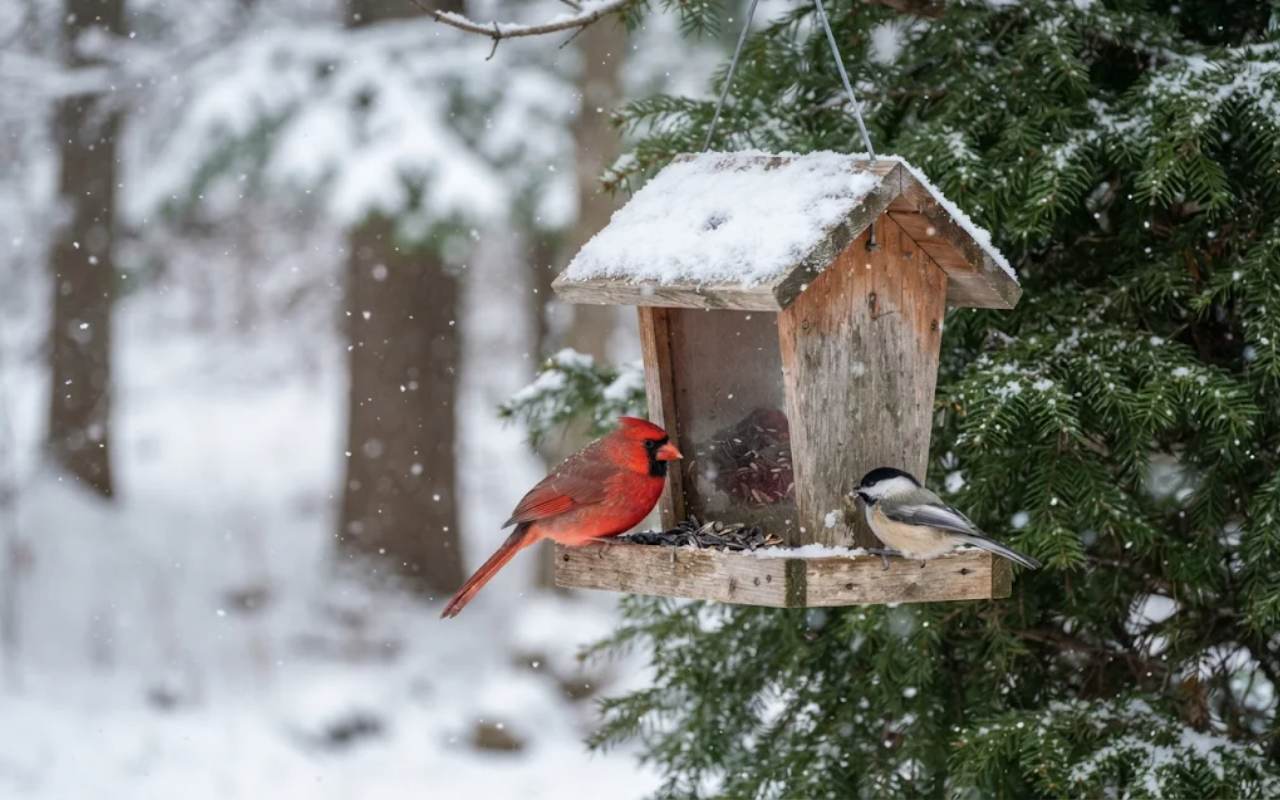
Once heavy snow, sleet, and gusting winds arrive, feeder activity usually drops sharply. Flying through driving snow burns tremendous calories and ruins feather waterproofing, so chickadees, cardinals, and woodpeckers retreat into thick spruce boughs, brush piles, and tree cavities to wait out the worst conditions.
However, during lighter daytime snowfalls or brief midday lulls, hardy residents will dart out for quick refueling trips:
- Protect Feeder Ports from Snow: Tube feeders equipped with weather domes (plastic rain and snow baffles) and covered hopper feeders keep seed dry and accessible even as snow accumulates.
- Follow Safe Feeder Placement Rules: Position feeders 10 to 12 feet away from dense evergreen shrubs or brush piles. This distance gives birds a nearby windbreak and hawk escape route without placing them close enough for outdoor cats or squirrels to ambush them from the bushes. If you temporarily move a feeder onto a covered porch during a storm, follow the U.S. Fish & Wildlife Service window-safety rule: place the feeder 3 feet or less from windows (the closer, the better, so birds cannot build fatal flight momentum) or more than 30 feet away.
- Prioritize Your Own Safety: Never risk slipping on icy steps or walking out into whiteout conditions to refill feeders mid-blizzard. Birds that stocked up before the front arrived are built to sit tight until the wind subsides.
Phase 3: Feeding Birds Immediately After the Storm
The moment snowfall tapers off and skies brighten, backyard feeders experience a second major rush. Natural food sources (including weed seed heads, berries, and tree bark crevices) are now sealed beneath snow and ice, making backyard feeding stations a vital recovery stop. In fact, a classic Wisconsin field study found that Black-capped Chickadees with access to supplemental feeders achieved a 69% overwinter survival rate, compared to just 37% for birds without feeder access during severe cold spells.
Run through this quick post-storm reset checklist as soon as it is safe to step outside:
- 1. Brush Off Snow and Ice: Clear heavy snow caps off feeder roofs, perches, and suet cages so birds can reach the feeding ports.
- 2. Discard Wet or Clumped Seed: If blowing snow soaked the seed inside a tray or hopper, dump out the wet clumps immediately. Wet seed freezes solid or grows toxic Aspergillus mold as soon as daytime temperatures swing above freezing.
- 3. Sanitize Dirty Feeders Every Two Weeks: Crowded winter storm feeding accelerates the spread of avian diseases like Salmonella and house finch eye disease (avian conjunctivitis). Scrub feeders with warm soapy water, soak them for 10 minutes in a 10% diluted household chlorine bleach solution (1 part sodium hypochlorite bleach to 9 parts water), rinse thoroughly, and air-dry completely before refilling.
- 4. Shovel a Bare Patch for Ground Feeders: Shovel a small square of snow down to bare grass or patio stone near shrubs, and sprinkle fresh white millet or sunflower hearts so sparrows, juncos, and towhees can feed without sinking into deep powder.
- 5. Refresh Unfrozen Water Safely: Clear snow and ice out of your heated birdbath and top it off with fresh water, as dehydration is a major winter hazard when natural puddles freeze solid. Never add antifreeze, salt, or glycerin to a birdbath to melt ice, as antifreeze and salt are toxic to birds and glycerin ruins feather waterproofing.
Storm Feeding Timeline Matrix
| Storm Phase | Bird Behavior | Your Best Action | Top Recommended Foods |
|---|---|---|---|
| 12–24 Hours Before | Intense feeding frenzy triggered by falling barometric pressure | Fill all feeders completely & place seed under sheltered cover | Black oil sunflower, rendered suet, shelled peanuts |
| During Peak Storm | Sheltering in evergreens and cavities; brief visits during lulls | Rely on baffled/covered feeders; stay safely indoors during blizzards | Pre-stocked suet cakes & dry tube-feeder seeds |
| Immediately After | Urgent recovery feeding as natural seeds remain buried under snow | Brush off ice, dump wet seed, shovel ground patch & thaw bath | Sunflower hearts, white millet, mealworms, suet |
Best and Worst Foods for Winter Snowstorms
Choosing moisture-resistant, calorie-dense foods prevents frozen clogs and gives birds the highest energy return per visit:
- Best Storm Foods: Black oil sunflower seeds (thin shells, high oil content), sunflower hearts (zero shells, fast calorie intake), commercial rendered beef suet cakes (purified fat that resists spoilage and will not smear onto feathers during post-storm warm-ups), unsalted shelled peanuts, and white proso millet (for ground feeders).
- Foods to Avoid: Bread, crackers, baked goods, salted nuts, raw butcher fat scraps, and cooked rice or pasta. Bread fills a bird’s stomach with low-nutrient starch that lacks the fat needed for overnight shivering, wet bread freezes into inedible lumps, and raw unrendered butcher fat spoils quickly if temperatures rise above freezing.
Frequently Asked Questions
Do birds eat during a snowstorm?
Birds rarely fly during intense blizzard winds and heavy blowing snow, preferring to shelter in dense evergreens and tree cavities. However, they feed aggressively 12 to 24 hours before the storm hits and immediately after it passes, and they will visit sheltered feeders during lighter snowfalls.
Should I put birdseed directly on top of deep snow?
Avoid scattering loose seed directly onto soft, deep snow, where it quickly sinks out of reach or absorbs moisture and molds. Instead, shovel a small patch down to bare ground or scatter seed under a covered porch, evergreen tree, or patio table where snow cannot accumulate.
Will birds become dependent on my feeder and starve if it runs empty during a blizzard?
No. According to research by ornithologist Stanley Temple published through The Aldo Leopold Foundation, wild birds obtain roughly 75% to 80% of their winter energy from natural food sources and only 20% to 25% from backyard feeders. Birds forage across multiple neighborhood yards and natural bark caches daily, though keeping feeders stocked before and after severe sub-zero cold snaps significantly boosts local survival rates.