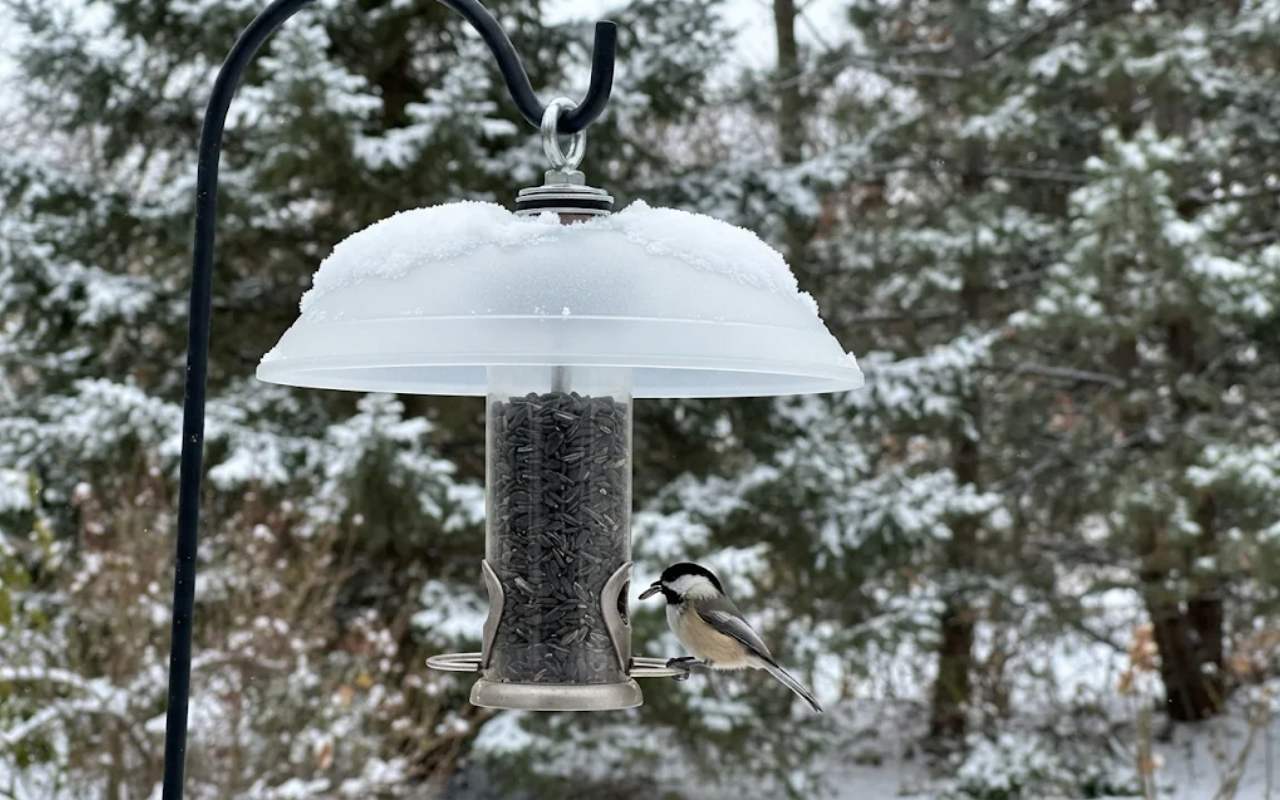
Building a diy bird feeder weather guard umbrella stops freezing rain, sleet, and heavy wet snow from turning expensive black oil sunflower seeds into a moldy, frozen brick. When winter moisture wicks into tube feeder ports or pools on open tray feeders, damp seeds rapidly grow toxic Aspergillus mold and Salmonella bacteria that sicken backyard finches, chickadees, and cardinals.
Store-bought polycarbonate feeder domes add a steep markup when you have multiple feeders to cover, yet you can craft a durable, custom-fitted clear rain baffle in 20 minutes using cold-rated upcycled household plastics like a clear #1 PETE 2-liter soda bottle, a #2 HDPE 1-gallon water jug, or a wide #2 HDPE or #1 PETE plastic planter saucer.
Below are three weather-tested DIY baffle builds, exact overhang sizing rules so driving snow cannot blow underneath, and wind-stabilizing hardware tips so winter gusts do not flip your umbrella upside down.
Quick-Glance DIY Weather Guard Summary
A properly sized overhead baffle acts like a wide-brimmed umbrella over your feeder ports, shedding water away from seed trays while letting songbirds fly underneath easily.
- Prep & Build Time: 15 to 20 minutes per baffle
- Best Sub-Zero Plastics: HDPE (#2) translucent 1-gallon milk or water jugs, HDPE (#2) or PETE (#1) 14- to 16-inch garden planter saucers, and PETE (#1) clear 2-liter soda bottles (all stay flexible down to -20°F / -29°C; avoid #5 polypropylene bowls and #6 polystyrene containers, which turn brittle and crack in deep winter freezes)
- Critical Overhang Rule: Your DIY umbrella diameter must extend at least 3 to 4 inches (7.5 to 10 cm) wider on every side than the feeder ports or tray edge below it
- Height Above Feeder: Mount the bottom edge of the dome 3 to 4 inches above the top seed ports so birds have unobstructed flight clearance without letting angled rain blow inside
- Wind-Locking Hardware: Use a stainless-steel eye bolt, two wide fender washers, and a rubber grommet (or carbon-black UV-resistant zip tie stop) so 40 mph winter gusts cannot slide the dome down onto the feeder
Why Wet Winter Bird Seed Is Dangerous (Not Just Wasteful)
Many backyard birders assume wet bird seed simply dries out once the sun comes out. According to backyard bird-feeding hygiene guidance from the Cornell Lab of Ornithology, damp, clumped seeds create an ideal breeding ground for deadly avian pathogens, including Aspergillus fungal mold (which causes fatal respiratory aspergillosis) and Salmonella bacteria.
In addition, when daytime sleet melts into a feeder tube and refreezes overnight below 32°F (0°C), ice locks the seed ports shut right at dawn when chickadees and nuthatches desperately need calories. Adding a sloped plastic weather guard umbrella keeps seed ports dry, loose, and accessible through freezing rain and lake-effect snowstorms.
3 Best DIY Plastic Weather Guard Designs Compared
| DIY Baffle Design | Polymer & Cold Rating | Coverage Diameter | Best Feeder Match |
|---|---|---|---|
| 2-Liter Soda Bottle Hood | #1 PETE (flexible below -20°F) | ~4.5 inches (11.5 cm) | Slim nyjer/thistle & finch tube feeders |
| 1-Gallon Water Jug Dome | #2 HDPE (rated to -40°F) | ~6 to 7 inches (15–18 cm) | Standard sunflower tube & small mesh feeders |
| Inverted Planter Saucer Umbrella | #2 HDPE or #1 PETE (-20°F to -40°F) | 14 to 16 inches (35–40 cm) | Cedar hopper feeders, suet cages & platform trays |
Polymer Cold-Weather Science: Choosing Plastics That Won’t Shatter in January
Not all clear household plastics survive deep winter freezes. Standard #5 polypropylene (PP) salad bowls have a glass transition temperature near freezing (32°F to 14°F / 0°C to -10°C), meaning they stiffen and shatter like glass if struck by freezing rain or hail in northern winters, while flimsy #6 polystyrene (PS) takeout containers and thin clear saucers crack at the slightest bump.
Instead, flip your container over and verify the recycling triangle before cutting:
- #2 HDPE & #1 PETE Garden Planter Saucers: Heavy-duty frosted or translucent white garden saucers are typically made of #2 HDPE (High-Density Polyethylene), which stays flexible down to -40°F (-40°C), while crystal-clear heavy-gauge garden saucers are often made of #1 PETE, which stays impact-tough below -20°F (-29°C). Both work great for winter feeder domes, as long as you check the bottom stamp and skip flimsy #6 polystyrene saucers.
- #2 HDPE Milk & Water Jugs: Translucent 1-gallon jugs offer extreme cold-weather impact resistance down to -40°F (-40°C) while letting diffused daylight through so birds never feel trapped underneath.
- #1 PETE Soda Bottles: Crystal-clear 2-liter bottles retain strong impact toughness well below -20°F (-29°C) while giving songbirds an unobstructed view of approaching hawks.
Materials and Tools Checklist
Gather sub-zero-rated plastics and rust-proof hardware so your homemade dome survives ice storms without tearing loose:
- Upcycled Cold-Rated Plastic Base:
- Method 1: One clean #1 PETE clear 2-liter soda bottle (for narrow finch tubes)
- Method 2: One clean #2 HDPE 1-gallon plastic water or milk jug (for standard sunflower tube feeders)
- Method 3: One 14- to 16-inch #2 HDPE or #1 PETE heavy-duty garden planter saucer (for wide hopper feeders, suet cages, or platform trays)
- Stainless-Steel Eye Bolt (1/4-Inch × 3-Inch) & 2 Hex Nuts: Creates a rock-solid hanging point at the top of a wide saucer dome
- 2 Wide Stainless-Steel Fender Washers (1-1/4-Inch Outer Diameter) & 2 Rubber Tap Washers: Distributes wind stress across the plastic center hole so 40 mph winter gusts cannot tear the plastic
- Carbon-Black UV-Resistant Zip Ties or 1/8-Inch Cable Clamp: Locks bottle domes at the exact height above top seed ports
- Utility Knife, Heavy-Duty Kitchen Shears, Cordless Drill (1/4-Inch Bit), and 220-Grit Sandpaper: For clean cuts and burr-free edges
Step-by-Step: 3 Ways to Make a DIY Bird Feeder Weather Guard Umbrella
Method 1: The 2-Liter Soda Bottle Hood (Best for Slim Finch Feeders)
This zero-cost hood uses the tapered funnel neck of a crystal-clear #1 PETE 2-liter bottle to shed sleet off narrow nyjer and thistle tubes:
- Measure and Mark the Cut Line: Measure down 6 inches from the bottle cap on a clean, label-free 2-liter soda bottle (yielding a 4.5-inch diameter hood). Wrap a strip of painter’s tape around the circumference so your cut stays level.
- Cut and Smooth the Rim: Pierce the plastic along the tape line with a utility knife and trim cleanly around the bottle with heavy-duty shears. Lightly sand the cut bottom rim with 220-grit sandpaper so visiting goldfinches never brush against a sharp edge.
- Drill the Hanger Hole and Lock Height: Unscrew the bottle cap, drill a 1/4-inch hole dead-center through the cap, and thread your feeder’s hanging cable through the cap and neck. Lock the lower rim 3 to 4 inches above the top seed ports using a small cable clamp or black UV-resistant zip tie wrapped tightly around the cable.
Method 2: The 1-Gallon HDPE Water Jug Dome (Best for Standard Tube Feeders)
For wider 2.5- to 3-inch black oil sunflower tube feeders, a #2 HDPE 1-gallon water jug gives you 6 to 7 inches of sub-zero-proof overhang:
- Trim Above the Handle: Measure down 7 inches from the threaded neck (cutting right below the molded carry handle so no water-trapping pocket remains) and use heavy-duty shears to cut smoothly around the jug’s shoulder.
- Reinforce the Neck Hole: Drill a 1/4-inch hole through the center of the screw cap. Because a 1-gallon jug catches more wind than a narrow soda bottle, slide a 3/4-inch stainless-steel fender washer onto the hanger wire inside the neck so high winds cannot pull the wire through the plastic cap.
- Position 3 to 4 Inches Above Top Ports: Set a rubber plumbing O-ring or black UV zip tie on the hanging wire so the cut edge of the jug hovers 3 to 4 inches above the upper perches, keeping angled snow off the seed ports while leaving ample flight clearance.
Method 3: The 16-Inch Inverted Planter Saucer Umbrella (Best for Hoppers & Trays)
For wide cedar hopper feeders, double suet cages, or platform trays, inverting a heavy-duty 14- to 16-inch #2 HDPE or #1 PETE garden planter saucer creates a wide, pitched umbrella that sheds heavy wet snow:
- Mark and Drill the Center Hole: Flip the planter saucer upside down, mark the exact center point on the bottom, and stick a small square of painter’s tape over the mark to prevent the drill bit from skating. Slowly bore a 1/4-inch hole through the center.
- Install Fender Washers for Wind Reinforcement: Slide a 1-1/4-inch stainless-steel fender washer and a rubber washer onto a 1/4-inch × 3-inch stainless-steel eye bolt, push the bolt up through the inside center of the saucer, and secure the top with a second rubber washer, fender washer, and hex nut. Sandwiching the plastic between wide fender washers and rubber gaskets prevents winter gusts from tearing the bolt hole.
- Hang Your Feeder Underneath: Clip the top eye of the bolt onto your shepherd’s hook or branch cable, and attach your bird feeder’s hanging loop to the lower threaded end (using an eye nut or coupling nut) so the saucer rim sits 3 to 4 inches above the feeder roof or tray.
3 Pro Tips to Keep Winter Wind From Flipping Your DIY Dome
Lightweight plastic baffles catch gusts like a sail if hung loosely. Use these three field-tested adjustments to keep your DIY weather guard steady in 35+ mph winter storms:
- Use Carbon-Black UV-Resistant Zip Ties Instead of White: Standard white nylon zip ties turn chalky and snap after a few months of winter UV exposure; always use carbon-black UV-stabilized zip ties for outdoor feeder hardware.
- Choose Clear or Translucent Plastic Over Opaque Colors: Songbirds are wary of dark, solid overhead covers that hide approaching Cooper’s Hawks; clear #1 PETE or translucent #2 HDPE plastic lets birds see upward through the dome while staying dry.
- Add Bottom Ballast Weight on Ultra-Light Jugs: If you hang a lightweight 1-gallon jug dome over a small feeder in an exposed, windy yard, hang a heavy ceramic or filled wooden feeder underneath, as the feeder’s own weight anchors the vertical hanging wire taut so gusts cannot tilt the dome sideways.
Frequently Asked Questions About DIY Bird Feeder Weather Guards
How high above a bird feeder should a weather guard umbrella sit?
Mount the bottom rim of your weather guard 3 to 4 inches (7.5 to 10 cm) above the top seed ports or tray rim. Placing it any higher lets wind-driven sleet blow sideways onto the seed, while mounting it closer than 2 inches blocks larger birds like Northern Cardinals and Red-bellied Woodpeckers from reaching the top perches.
Will a DIY plastic umbrella also stop squirrels?
A small 4.5- to 7-inch bottle or jug dome will shed rain, but it will not stop squirrels, as squirrels easily reach around narrow domes. To double as an effective squirrel baffle on a hanging feeder, your inverted saucer dome must be at least 16 to 18 inches (40 to 45 cm) wide, slick-sided, and mounted away from nearby jumping branches.
Why shouldn’t I use a #5 polypropylene salad bowl for a winter feeder dome?
Standard #5 polypropylene (PP) becomes rigid and brittle around freezing temperatures (32°F to 14°F / 0°C to -10°C) and can shatter if struck by hail or ice in winter. Stick to #2 HDPE jugs and heavy-duty planter saucers or #1 PETE soda bottles and clear saucers, which retain impact flexibility well below -20°F (-29°C).