
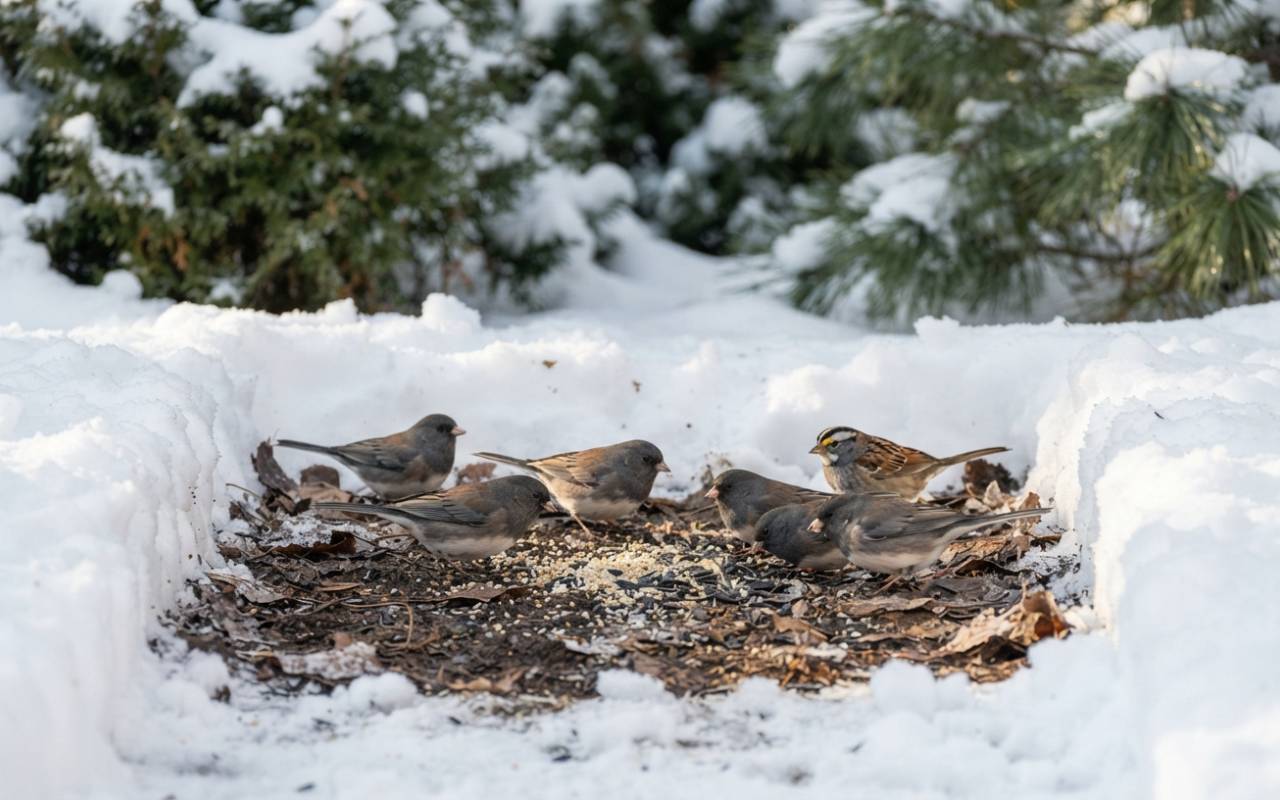
Clearing snow for ground feeding birds exposes bare soil, dry grass, and natural grit that species like Dark-eyed Juncos, Mourning Doves, and native sparrows rely on to survive after winter storms. Because ground-foraging birds rarely cling comfortably to narrow tube perches, shoveling a small patch down to the earth prevents starvation and keeps seeds out of wet slush.
When a heavy winter snowstorm blankets your yard overnight, hanging tube feeders are usually the first thing birders brush off. Yet for nearly half of your backyard winter visitors, elevated tube feeders do very little good.
Ground-feeding birds evolved to scratch through leaf litter and peck at fallen seeds on solid surfaces. When six inches of crusted snow buries the ground, these birds face an immediate calorie emergency unless you clear a safe feeding zone for them.
Quick-Glance Summary: Clearing Snow for Winter Birds
- Why It Matters: Heavy snow locks ground foragers away from both fallen seeds and tiny stones (grit) needed to grind food in their gizzards.
- Best Spot to Shovel: Clear a 4-by-4-foot patch roughly 8 to 10 feet from dense evergreen shrubs for quick hawk escape cover, and keep it either within 3 feet or beyond 30 feet from windows to prevent glass strikes.
- Shovel to Bare Soil or Patio Stone: Scrape down to dirt, short turf, or a flat patio slab rather than scattering seed directly onto loose snow, where melting and refreezing traps food in ice.
- Best Winter Seeds: Offer white proso millet, black oil sunflower seeds, cracked corn, and hulled sunflower chips.
- Hygiene Rule: Rake away empty seed hulls and droppings during mid-winter thaws to prevent bacterial growth and salmonellosis outbreaks.
Which Backyard Birds Need Cleared Ground in Snow?
While agile acrobats like Black-capped Chickadees and White-breasted Nuthatches easily hang upside down on suet cages and tube perches, ground-foraging species have larger bodies, heavier feet, or flatter bills designed for pecking on level surfaces.
- Dark-eyed Juncos: Often called “snowbirds,” juncos do the vast majority of their foraging on the ground (roughly 65 percent of foraging time in forest studies) and show up at over 80 percent of winter Project FeederWatch sites across North America.
- Mourning Doves: Their plump bodies and short legs make clinging to narrow wire perches awkward, forcing them to feed almost exclusively on flat ground or wide platform trays.
- White-throated, Song, and American Tree Sparrows: Native sparrows scratch backward with both feet simultaneously (“double-scratching”) to uncover seeds hidden in soil and leaf litter.
- Northern Cardinals & Eastern Towhees: Although cardinals visit sturdy hopper feeders, they strongly prefer feeding at ground level during early morning and dusk hours.
- Wild Turkeys & Ring-necked Pheasants: Larger winter ground birds depend on wind-scoured patches of bare earth and gravel roadsides to find mast, grains, and grit.
Three Critical Reasons Shoveling Bare Dirt Saves Lives
1. Immediate Calorie Recovery After Overnight Storms
Small songbirds burn through up to 10 percent of their body weight shivering through a single sub-zero night. When morning arrives under a fresh blanket of snow, birds have only a narrow window of daylight to replenish lost fat reserves. Digging through deep, crusted snow drains far more energy than a small sparrow can recover, whereas a shoveled patch delivers instant calories within minutes.
2. Access to Essential Winter Grit
Because birds have no teeth, seed-eating species swallow tiny pebbles, coarse sand, and mineral grit that sit inside their muscular gizzard to grind tough seed hulls into digestible nutrients. As noted by the Cornell Lab of Ornithology’s Project FeederWatch, deep snow covers natural grit sources for weeks at a time. Shoveling down to bare dirt or gravel restores access to both food and the mineral grit needed to digest it.
3. Preventing Seed Loss in Slush and Ice
Scattering birdseed directly on top of fresh snow seems helpful, but daytime sunlight warms dark sunflower shells and causes them to sink straight through the snowpack. Overnight temperatures then freeze those buried seeds into a solid ice layer, wasting food and creating wet, mold-prone debris when temperatures rise.
Shoveled Ground vs. Snow Scattering vs. Platform Feeders
Choosing the right winter ground-feeding setup keeps seeds dry, visible, and safe from predators:
| Feeding Method | Seed Accessibility | Moisture & Mold Risk | Best For |
|---|---|---|---|
| Shoveled Bare Dirt / Patio Patch | High; seeds sit visibly on dry ground alongside natural grit | Low to moderate (if swept clean during thaws) | Juncos, Mourning Doves, native sparrows, and towhees |
| Scattering Seed on Loose Snow | Poor; dark seeds absorb sun and sink into snow | High; freezes into ice and turns soggy during thaws | Not recommended except on hard-packed, shaded ice |
| Low Ground Tray / Covered Platform | Excellent; elevated 4 to 8 inches above wet ground | Very low when fitted with drainage mesh and a roof | Cardinals, juncos, doves, and snowy climates |
Step-by-Step: How to Clear a Winter Ground-Feeding Patch
- 1. Pick a Sheltered Spot Safe From Hawks and Windows: Shovel a patch roughly 8 to 10 feet away from dense evergreen shrubs, holly bushes, or a brush pile. This distance gives sparrows and juncos a two-second flight path to safety if a Cooper’s Hawk swoops in, while staying far enough from low branches so outdoor cats cannot ambush birds unseen. At the same time, follow the window-strike safety rule by placing your patch either within 3 feet of house windows (so birds cannot build lethal flight speed) or more than 30 feet away from glass.
- 2. Scrape All the Way Down to Bare Earth or Stone: Clear a 4-by-4-foot square down to bare soil, short lawn turf, mulch, or a stone patio. Avoid leaving a slick skim of packed ice that causes birds to slip.
- 3. Create a Low Windbreak Wall: Pile the shoveled snow along the north and west edges of your cleared square. That snow berm blocks prevailing winter winds and traps afternoon sun inside your feeding pocket.
- 4. Scatter Only One Day’s Worth of Seed: Spread a thin, single-layer handful of seed in the morning rather than dumping a deep pile. Birds will finish the ration before dusk, leaving nothing behind to attract nocturnal mice or raccoons.
Best Seeds to Scatter on Cleared Winter Ground
According to the National Audubon Society’s winter bird feeding guide, matching seed type to ground foragers reduces waste and attracts higher species diversity:
- White Proso Millet: The top favorite of Dark-eyed Juncos, Mourning Doves, and native sparrows. Its small, round pale seeds stand out clearly against dark soil.
- Black Oil Sunflower Seeds: High in fat and thin-shelled enough for cardinals, juncos, and chickadees to crack effortlessly.
- Hulled Sunflower Chips: Zero-waste hearts that leave no empty shells behind to rot on your lawn or patio.
- Coarse Cracked Corn (In Moderation): Relished by Mourning Doves, jays, and sparrows, though you should scatter small amounts so leftover corn does not absorb ground moisture.
Important Safety & Disease Prevention Rules
Ground feeding concentrates dozens of birds in one tight footprint, which can spread avian salmonellosis or conjunctivitis if droppings mix with damp seed. Follow three simple hygiene habits all winter:
- Rotate Your Shoveled Spot Every Few Weeks: When fresh snow falls, shovel a brand-new patch 6 to 10 feet away from the previous spot so birds always feed over clean ground.
- Avoid Chemical Ice Melts Nearby: Never clear snow for birds near driveways or walkways treated with rock salt (sodium chloride) or calcium chloride de-icers, which are toxic if birds mistake salt crystals for grit.
- Sweep Up Hulls During Winter Thaws: Whenever temperatures climb above freezing, rake or sweep away discarded sunflower hulls and droppings before the next freeze locks them in place.
Frequently Asked Questions
Should I put birdseed directly on top of snow?
No, scattering seed onto loose snow causes dark hulls to absorb sunlight, melt downward, and freeze out of reach overnight. Always shovel a small patch down to bare dirt, patio stone, or short grass before scattering seed.
How big should I shovel a patch for ground-feeding birds?
A 4-by-4-foot square gives 10 to 15 juncos, sparrows, and Mourning Doves plenty of personal space to forage peacefully without territorial squabbling.
What if I don’t have bare dirt in my yard?
Shoveling a section of a wooden deck, stone patio, or raised garden bed works just as well. You can also place a low, screened ground-tray feeder on top of the cleared surface to keep seeds completely dry.