
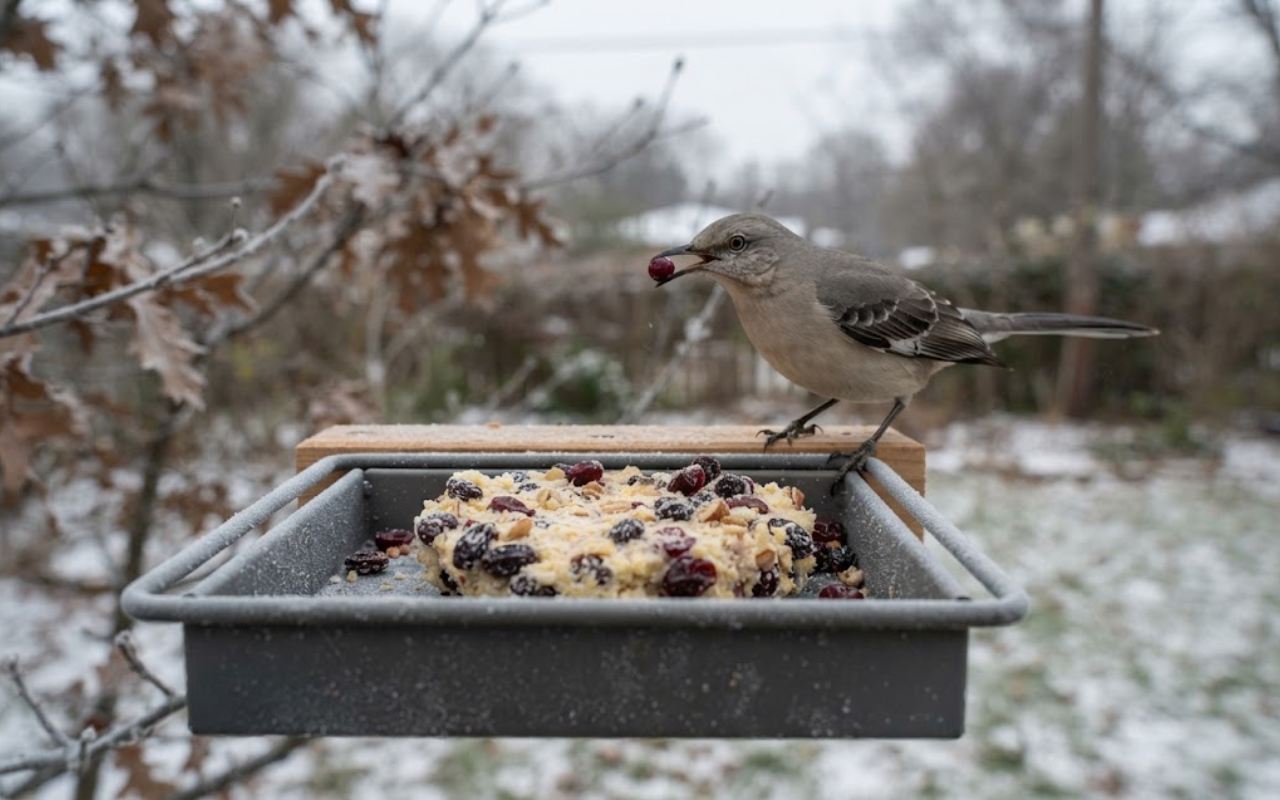
Selecting the best berry and nut suet cakes to attract winter mockingbirds requires understanding that these birds are not typical backyard seed eaters. While finches and sparrows crowd hopper feeders for sunflower seeds, Northern Mockingbirds spend cold months scouring trees for lingering wild fruits and dormant insects. Offering high-lipid cakes packed with authentic fruit and nut meats provides them with the dense fuel they need when sub-freezing temperatures arrive.
Many backyard birders buy generic suet blocks only to watch mockingbirds completely bypass the feeding station. Mockingbirds possess soft bills and perching feet rather than climbing claws, meaning both the texture of the cake and the physical design of the feeder dictate whether they can eat. Setting up the right combination of rendered fat, real berries, and accessible perching space turns an empty yard into an active winter territory.
Quick-Glance Field Summary
Targeting winter mockingbirds requires dense beef kidney tallow packed with real berries and tree nuts, served on flat perching surfaces rather than clinging wire. Position feeders inside established territory lines while avoiding cheap grain fillers that attract nuisance flocks and cause digestive upset.
- Base lipid: 100 percent pure rendered beef kidney tallow without hydrogenated oils
- Fruit blend: Dried blueberries, cranberries, raisins, or elderberries free of added sugar
- Nut and protein content: Coarsely chopped peanuts, pecans, and dried black soldier fly larvae or mealworms
- Feeder setup: Open platform feeder or wire cage fitted with a 0.5-inch wooden perching dowel
- Spoilage limit: Replace unconsumed cakes after 7 days if temperatures rise above 45 degrees Fahrenheit
Why Mockingbirds Ignore Seed and Hunt for Winter Fat
Northern Mockingbirds switch their seasonal biology as autumn transitions into winter. During spring and summer, their diet consists almost entirely of insects, worms, and other terrestrial invertebrates. When freezing ground eliminates arthropod hunting, their digestive tracts alter to process wild berries from plants like pyracantha, sumac, and native juniper.
Because their slender bills cannot crack hard shells, standard backyard mixes like safflower or black oil sunflower seeds remain useless to them. High-fat suet bridges the caloric gap when wild berry crops deplete in midwinter. A pure rendered cake provides immediate metabolic heat without demanding the digestive energy needed to break down fibrous plant skins.
On community forums like r/backyardbirds, members frequently note that mockingbirds completely ignore bargain suet cakes laden with cracked corn, milo, and red millet. Birds view these cheap grain bases as physical obstructions, flicking them away or abandoning the station altogether. Premium cakes that mimic an insect and berry diet are necessary to coax these territorial birds down to human feeding spaces.
| Suet Cake Composition | Fruit & Nut Inclusion Ratios | Texture & Soft-Bill Accessibility | Winter Mockingbird Attraction Rating |
|---|---|---|---|
| The Berry-Tallow Blend | High densities of soaked raisins, elderberries, and dried blueberries. | Soft, chewy, and easily picked apart by slender, non-conical bills. | Elite; mimics natural winter berry foraging targets perfectly. |
| The Diced Peanut Heart Cake | Finely crushed, skinless peanut kernels and unsalted walnut bits. | Dense but crumbly; avoids large, hard nuts that require massive jaw force. | High; delivers quick, concentrated fats if mixed with a soft flour base. |
Picking Ingredients That Match Natural Cold-Weather Diets
The foundation of an effective winter cake must be pure, rendered beef kidney tallow. Cheap commercial cakes often cut corners by substituting tallow with hydrogenated vegetable oils or soy shortening. These altered plant fats possess lower melting points, which creates greasy residues that transfer to feathers. When oily fats coat avian breast feathers, they destroy natural waterproofing and insulation, creating a serious risk of fatal hypothermia during wet winter storms.
Fruit selection must reflect wild forage rather than commercial confectionery scraps. Look for cakes listing whole dried blueberries, cranberries, blackberries, currants, or elderberries as primary ingredients. Avoid products that list artificial fruit flavorings, corn syrup, or candied citrus peel. Natural dried berries retain the simple sugars that mockingbirds metabolize rapidly during freezing dawns.
Nut proteins supply the amino acids mockingbirds normally harvest from overwintering larvae. Pecans, walnuts, and chopped peanuts are top options, but they must be chopped into coarse pieces smaller than a garden pea. If you prepare homemade cakes, ensure all nuts are strictly unsalted and raw; high sodium levels strain avian renal function and quickly dehydrate birds during freezing periods when liquid water is scarce.
- Rendered beef kidney tallow provides pure energy without coating plumage
- Whole dried blueberries and raisins match native winter forage
- Coarse chopped tree nuts deliver necessary proteins and vegetable fats
- Dried mealworms add authentic invertebrate protein to help mimic summer forage
- Low-grade millet and corn fillers must be completely avoided
Fixing Feeder Perches So Weak Clinging Feet Can Feed
Unlike nuthatches, titmice, and woodpeckers, mockingbirds have anisodactyl perching feet designed to grasp thin horizontal tree branches rather than cling to vertical bark. Standard suet feeders consist of plain wire mesh cages that hang suspended in midair. A mockingbird attempting to land on a swinging wire mesh slips, flutters frantically, and burns critical winter energy trying to hold itself upright.
Backyard enthusiasts on community forums often share a simple modification to solve this mechanical barrier. Users on wild bird discussion boards document success by zip-tying a clean, half-inch wooden dowel or a natural oak twig directly to the bottom edge of the wire basket. This crossbar provides a firm, horizontal anchor where the mockingbird can balance comfortably while leaning forward to pick at the cake.
Another successful method involves placing the suet cake flat on a protected, open platform feeder. Ensure the platform is covered with an overhead weather dome measuring at least 12 inches across. This barrier prevents freezing rain from icing over the fat block while giving the mockingbird ample clearance to stand, look around for threats, and feed without wing fatigue.
Stopping Winter Bullies and Backyard Suet Drama
Mockingbirds possess intense territorial drives during the cold months, frequently staking claims over individual berry bushes or feeding stations. One user on a birdwatching forum reported a lone mockingbird spending an entire afternoon repeatedly dive-bombing downy woodpeckers and bluebirds away from a solitary suet block. This defensive posture exhausts the resident mockingbird and creates needless stress throughout your backyard flock.
You can interrupt this hyper-defensive loop by spacing multiple feeding stations throughout the yard. Place one suet station deep within dense shrubbery, such as a holly or boxwood thicket, where the mockingbird naturally perches to scan its domain. Place a second suet feeder at least 30 feet away, near open space or woodland edges, to serve woodpeckers and clinging species.
This spatial separation disrupts lines of sight and forces the mockingbird to choose between eating or continuously flying back and forth. You should also watch out for European starlings and common grackles, which arrive in large flocks and consume suet blocks in a matter of hours. Installing an upside-down suet cage will prevent starlings from raiding the fat, but mockingbirds cannot use upside-down models, making physical station separation the superior path.
Keeping Cakes Fresh and Safe from Deadly Mold
High moisture levels and fluctuating winter temperatures present severe risks to stored and deployed suet. When damp conditions persist, fungi such as Aspergillus flavus quickly colonize the grains and nuts embedded inside suet cakes. This mold produces hazardous aflatoxins, which cause lethargy, liver failure, and death in songbirds when ingested even in minute quantities.
Store all extra suet blocks in airtight plastic containers placed within a cool, dry garage or freezer to halt mold growth. When inspecting outdoor feeders, discard any block that shows gray fuzz, dark discoloration, or an acrid, sour odor. Scrub wire suet cages regularly using a 1:9 bleach-to-water dilution soaking, rinsing the metal thoroughly with clean water before loading a fresh block.
Never place suet blocks in spots exposed to prolonged direct midday sunlight. Even in winter, direct solar radiation can warm a metal suet cage enough to soften the fat, creating dripping tallow that fouls the feeder base. Mount your feeders on north-facing or east-facing tree branches where morning sun helps cold birds, but afternoon shade keeps the lipid matrix firm and clean.