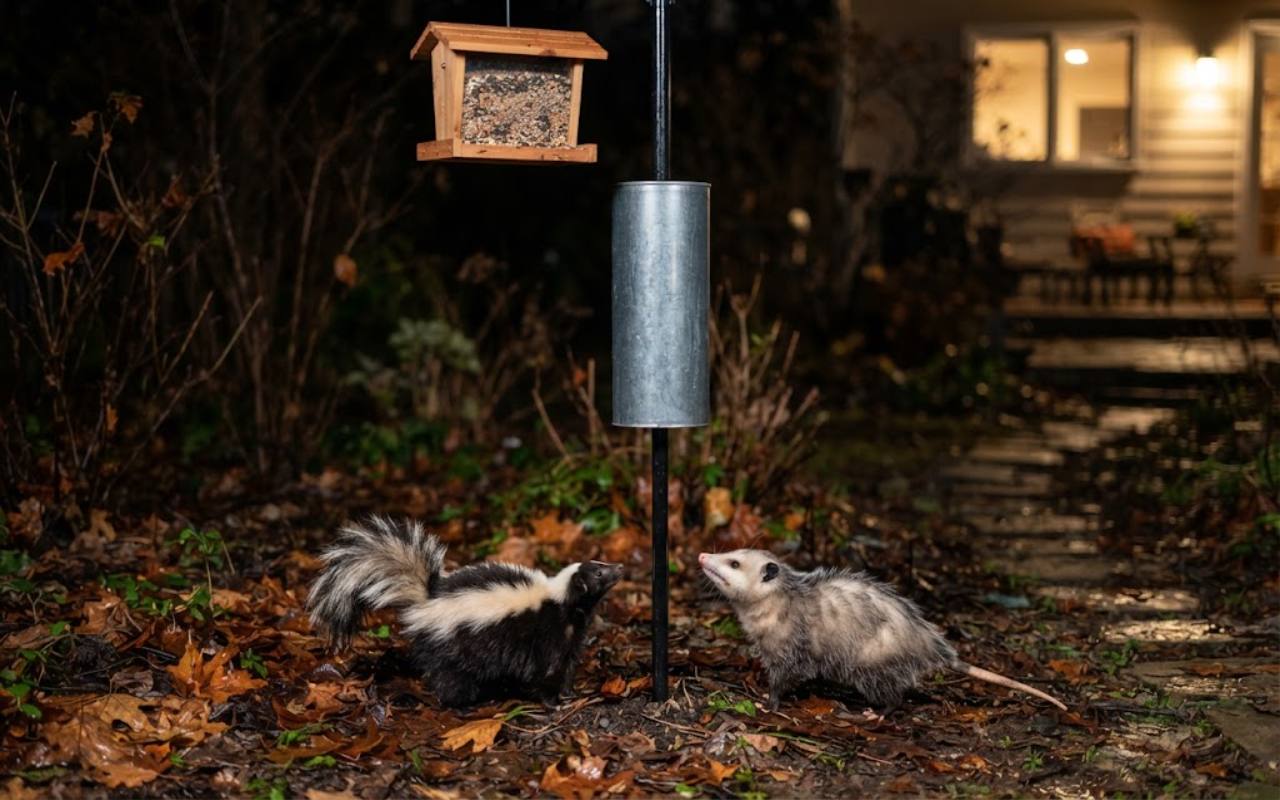
Learning how to keep possums out of bird feeders is a common challenge once you realize your backyard feeding station is attracting nighttime visitors. While opossums and skunks play beneficial roles in local ecosystems by consuming ticks and fallen fruit, they can quickly bend metal perches, crack hoppers, and create a messy hazard right outside your backdoor.
Skunks will happily vacuum up every dropped hull on the ground, while nimble opossums use their opposable digits and sharp claws to scale almost any wooden post or tree branch. Fortunately, a combination of physical barriers, feed adjustments, and yard routines can reliably keep both animals away without causing them harm.
Why Opossums and Skunks Visit Feeders After Dark
Both opossums and skunks are primarily nocturnal omnivores equipped with exceptionally keen senses of smell. They roam neighborhood corridors looking for calorie-dense meals that require minimal effort to obtain. A bird station spilling millet, sunflower seeds, and beef suet scraps creates an irresistible scent trail that draws them in from hundreds of yards away.
The physical abilities of these two visitors differ significantly, which changes how they access your yard. Skunks have long, curved claws designed for digging rather than climbing, meaning they are strictly ground foragers looking for dropped seeds, fallen suet chunks, and insects.
Opossums, on the other hand, are remarkably agile climbers that can shinny up standard 4×4 wooden posts, walk along utility lines, and hang from feeder support arms.
Addressing the issue requires a split strategy that blocks climbing mammals from getting up high while cutting off the food supply for ground dwellers down below. Once you understand which creature is causing specific damage, fixing the setup becomes much simpler.
Proper Pole Placement and Baffle Mechanics
If your feeders hang from a tree branch or a wooden deck railing, climbing mammals will always find a way to reach them. Wood provides exceptional traction for an opossum’s claws, making fences and decks essentially open highways straight into your seed trays. The gold standard in backyard birding is a smooth, free-standing metal pole positioned out in the open yard.
To prevent opossums from jumping horizontally or dropping down onto the feeders, your pole placement must follow strict clearance guidelines:
- Place the pole at least ten feet away from tree trunks, low-hanging limbs, fence lines, and porch railings.
- Ensure the top feeder sits at least five to six feet above the ground surface.
- Install a heavy-duty torpedo or stovepipe baffle on the pole with the top rim resting at least four to four and a half feet high.
- Choose a baffle with a diameter of at least eight inches so climbing critters cannot stretch their bodies around the metal rim.
Many backyard birders make the mistake of using plastic dome baffles meant for smaller rodents. Opossums are heavy marsupials that easily tilt, crack, or shimmy around flimsy plastic attachments. A cylindrical metal stovepipe baffle mounted on a smooth, galvanized steel pole is one of the only mechanical barriers an adult opossum simply cannot grip or bypass.
Because skunks cannot climb smooth metal poles, a properly baffled pole assembly solves both problems at once. The skunk stays on the grass, while the opossum slides off the metal baffle and drops harmlessly to the turf.
Eliminating Fallen Seed and Ground Buffets
Baffling the pole keeps opossums out of the feeders, but it does not stop skunks and opossums from treating your lawn as an all-night banquet.
Cheap seed mixes contain heavy ratios of red milo, cracked corn, and wheat, which most backyard songbirds discard directly onto the grass. This discarded grain builds up into a dense layer of ground feed that keeps ground animals returning every night.
Switching to waste-free feeding methods dramatically lowers the scent footprint in your yard:
- Use hulled sunflower chips or hearts so songbirds consume the entire seed without tossing shells.
- Avoid inexpensive bulk seed blends that contain high percentages of grain fillers.
- Attach wide plastic or mesh seed catchers beneath your hanging feeders to snag loose morsels before they hit the ground.
- Offer suet only in cake holders fitted with catch trays to collect greasy crumbs.
You can also implement a quick sunset sweep of the feeding area with a stiff outdoor broom or an electric leaf vacuum. Removing the concentrated pile of debris right before dusk robs nocturnal scavengers of an easy meal.
Sanitizing your feeding stations monthly also prevents grease and seed dust from clinging to surfaces. The standard recommendation from wildlife conservation groups is a thorough scrub using a solution of nine parts warm water to one part unscented household bleach.
Rinse the feeders thoroughly with fresh water and allow them to dry completely before refilling them with fresh seed.
The Truth About Pepper Seed and Scent Deterrents
Mammalian biology gives bird enthusiasts an incredible advantage when it comes to taste-based deterrents. Mammals possess specific receptors in their sensory systems that react intensely to capsaicin, the chemical compound that makes hot chili peppers spicy.
Wild birds lack these specific receptors, allowing them to eat hot pepper seed, spicy suet dough, and liquid pepper additives without feeling any irritation or heat.
When using capsaicin products to deter mammals, keep these practical points in mind:
- Purchase pre-treated hot pepper suet blocks or liquid capsaicin seed sauces designed specifically for wild bird feed.
- Wear durable rubber gloves and safety glasses whenever handling pepper-treated feed to avoid rubbing your eyes.
- Reapply liquid additives frequently if you experience heavy wind or continuous rainstorms that wash away surface oils.
- Understand that while skunks and opossums will usually reject spicy seeds after a single taste, heavily starved animals might tolerate some spice.
Commercial predator urine sprays or chemical ammonia rags rarely work for long-term control. Skunks and opossums in suburban neighborhoods quickly become habituated to odd scents once they realize there is no physical danger attached to the smell.
Natural home remedies like cayenne pepper powder sprinkled on damp lawn grass can occasionally deter skunks from digging for grubs. However, loose powders blow away in the wind and can irritate domestic dogs or cats walking through the yard. Stick to hot pepper bird seed products applied directly to the feeder hardware for clean and predictable results.
Nighttime Routines and Practical Gear Adjustments
If you are dealing with particularly stubborn animals that continue to loiter beneath your feeders, adjusting your daily routine can break the pattern quickly. Wild animals operate heavily on habit, returning nightly to the exact locations where they found food the previous evening.
If the food disappears consistently for just one or two weeks, skunks and opossums will naturally expand their foraging territory elsewhere.
Consider adopting these practical yard routines to discourage late-night visits:
- Bring lightweight tube feeders and suet baskets indoors or store them inside a sturdy garage or shed every evening at dusk.
- Rehang your feeders shortly after sunrise when morning songbirds begin their primary feeding period.
- Install motion-activated garden lights or low-voltage solar spotlights aimed directly at the base of your bird pole.
- Keep household trash cans secured with locking lids or heavy tension straps to eliminate secondary food targets.
Sudden bursts of light from motion sensors make skunks and opossums nervous because they prefer the cover of total darkness to forage safely. While light alone rarely stops a hungry animal, pairing bright lights with a baffled pole and zero ground spillage completely destroys their foraging incentives.
Taking back control of your feeding station does not require harsh chemical controls or trapping. By applying simple physical barriers and eliminating the ground waste, you can enjoy a bustling backyard filled with native birds all day long while keeping nocturnal critters peacefully moving through the neighborhood.