
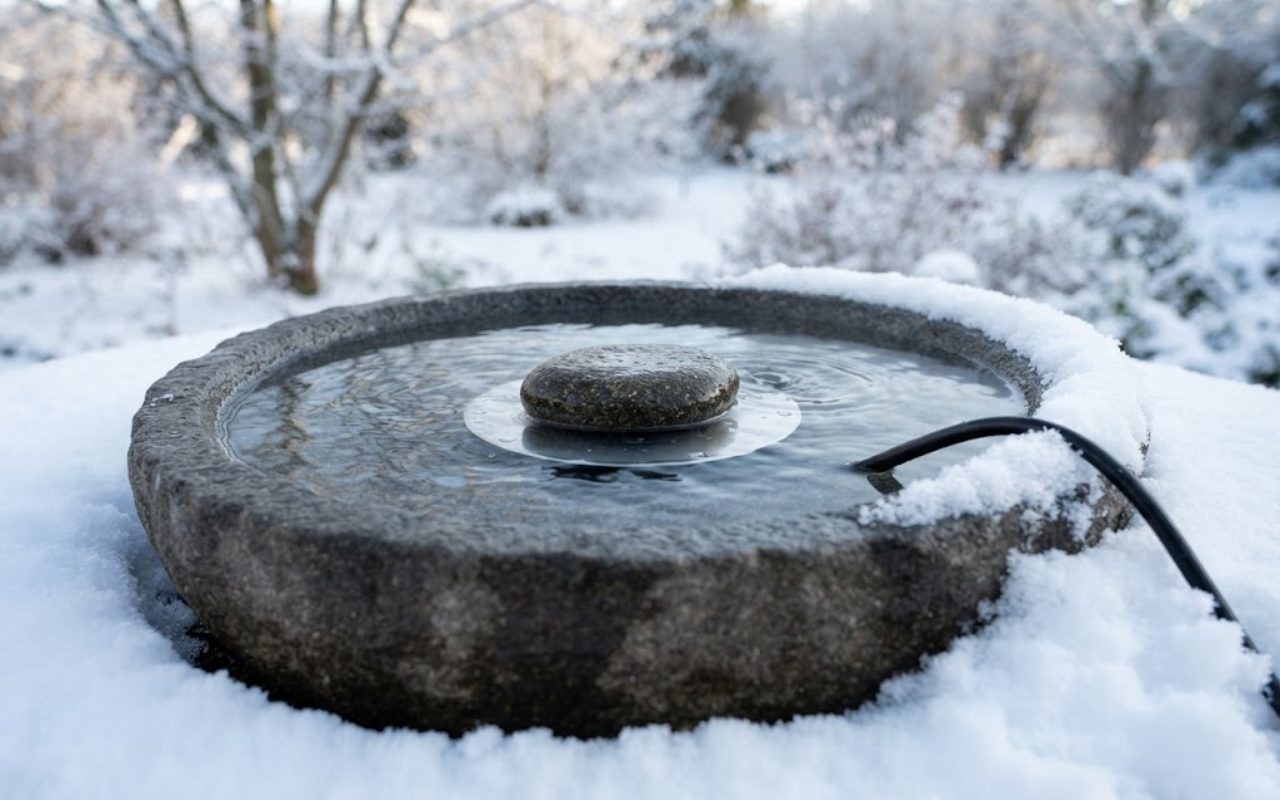
Avoiding dangerous bird bath de-icer mistakes is critical for maintaining a safe winter refuge for local wildlife during sub-freezing temperatures. Many well-meaning homeowners inadvertently deploy agricultural stock heaters or chemical additives that compromise avian survival. Heated water provides an essential metabolic lifeline when natural open water sources freeze solid across northern latitudes.
A pervasive myth suggests that birds will enthusiastically bathe in freezing weather and immediately succumb to hypothermia. In reality, passerines instinctively prioritize drinking over deep plumage saturation during extreme cold events, provided the basin depth is properly restricted. Understanding species-specific mechanics ensures winter hydration systems support wild flocks without introducing lethal hazards.
Species Profile and Core Behavioral Differences
Avian physiology dictates how different species interact with heated basins during freezing weather. Small passerines such as the Black-capped Chickadee (Poecile atricapillus) and Tufted Titmouse (Baeolophus bicolor) require shallow perches to sip water without submerging their contour feathers.
In contrast, heavier granivores like the Northern Cardinal (Cardinalis cardinalis) and Dark-eyed Junco (Junco hyemalis) tolerate slightly deeper margins but still avoid full submersion below freezing thresholds.
- Black-capped Chickadee: Body mass of 10 to 14 grams; visits exclusively for rapid sips along shallow edge perches.
- Northern Cardinal: Body mass of 42 to 48 grams; requires a firm, stable rim capable of supporting heavier foot grips.
- American Goldfinch: Body mass of 12 to 15 grams; susceptible to fatal plumage soaking if water levels exceed feather margins.
The primary behavioral difference lies in body mass to surface area ratios, which dictate thermoregulatory vulnerability. Smaller species suffer catastrophic heat loss within minutes if their downy feather underlayers become saturated in sub-zero air.
Providing dry resting rocks within the heated perimeter ensures birds can drink safely without wetting their primary flight feathers.
Habitat Layout and Feeder Setup
Thermal bath placement demands strict spatial separation from high-energy feeding stations. Positioning heated water directly beneath bird feeders invites rapid contamination from spilled hulls, feces, and wet debris. In addition, open water attracts opportunistic predators who exploit the limited watering holes available during hard freezes.
- Perimeter safety clearance: Maintain a 10 to 12 foot buffer from dense, low-lying brush to eliminate feline ambush points.
- Window strike mitigation: Mount basins either within 3 feet of reflective glass or beyond 30 feet to prevent fatal collisions.
- Feed station buffer: Establish a minimum 15 foot lateral separation between seed stations and heated water reservoirs.
Ground-level bird baths must incorporate a clean gravel apron or clear ground radius to eliminate decomposing organic litter. Placing heating elements in unraked mulch encourages fungal spore proliferation in the warm microclimate beneath the basin. Elevated pedestal mounts or pole systems provide superior lines of sight for nervous winter flocks.
Structural Dimensions and Placement Guidelines
Using incorrect heating hardware is among the most catastrophic errors backyard birders make. High-wattage livestock de-icers can melt plastic resin bird baths, leach toxic polymers, or boil small volumes of standing water.
Thermostatically controlled 50-watt to 150-watt cast aluminum heating units are engineered to maintain water temperatures just above freezing at roughly 35 to 48 degrees Fahrenheit.
- Water depth ceiling: Maintain a strict depth between 1.0 and 1.5 inches at the deepest point to prevent accidental immersion.
- Basin diameter: Utilize pans between 14 and 20 inches across to disperse bird activity and prevent territorial crowding.
- Electrical safety: Connect hardware exclusively to a certified Ground Fault Circuit Interrupter (GFCI) outdoor outlet using an all-weather cord.
Placing ungrounded extension cords or submerged heating coils in unrated containers creates lethal shock risks. Unprotected heating cables can be gnawed by hungry rodents, exposing live wires directly to standing water. Ensure all heating components sit completely flush against the basin floor beneath an anchoring stone.
Nutritional Biochemistry and Feeding Protocols
Hydration directly governs how efficiently birds metabolize winter calories into life-saving body heat. When birds eat snow instead of drinking liquid water, they expend precious metabolic energy converting ice into liquid within their crops. Liquid water intake accelerates the assimilation of high-density lipids, which fuel nightly torpor and shivering thermogenesis.
- Black oil sunflower seeds: 40 to 45 percent crude fat, 16 percent protein, and under 25 percent carbohydrates.
- Beef tallow suet: 75 to 85 percent crude lipids, 5 percent protein, and zero carbohydrates for maximum caloric density.
- Raw peanut kernels: 45 to 50 percent crude lipids, 25 to 28 percent protein, and 18 percent carbohydrates.
Chemical anti-freeze agents such as glycerin, alcohol, or propylene glycol are strictly toxic and must never enter bird baths. Glycerin coats avian feathers, destroying their microscopic interlocking barbules and eliminating all thermal insulation.
High-lipid winter diets combined with pure, additive-free liquid water provide the exact biochemical foundation wild birds require to endure severe blizzards.
Pest Mitigation and Sanitation Safeguards
Artificially warmed water creates an ideal incubation medium for lethal avian pathogens when organic waste accumulates. Bacteria like Salmonella enterica multiply rapidly in tepid conditions, while wet surrounding seed harbors Aspergillus flavus. Regular sanitation cycles are non-negotiable for operating an active winter bath.
- Bleach solution (1:9 ratio): Highly effective against bacteria, viruses, and fungi; requires a 10-minute soak and exhaustive rinsing.
- White distilled vinegar (1:1 ratio): Moderately effective against mineral scale and mild bacteria; safe for plastic but leaves mold spores viable.
- Boiling water rinse: Highly effective thermal pasteurization without chemical residues; risks cracking cold resin or ceramic basins.
Bleach solutions rank highest in total biocide efficacy, but operators must scrub plastic and galvanized steel components promptly to prevent surface pitting.
Never use outdoor UV lights to inspect for micro-contaminants, as benign environmental lichens trigger misleading fluorescence on perches. Thoroughly rinse all sanitized equipment with fresh water and allow it to dry completely before restoring thermal power.