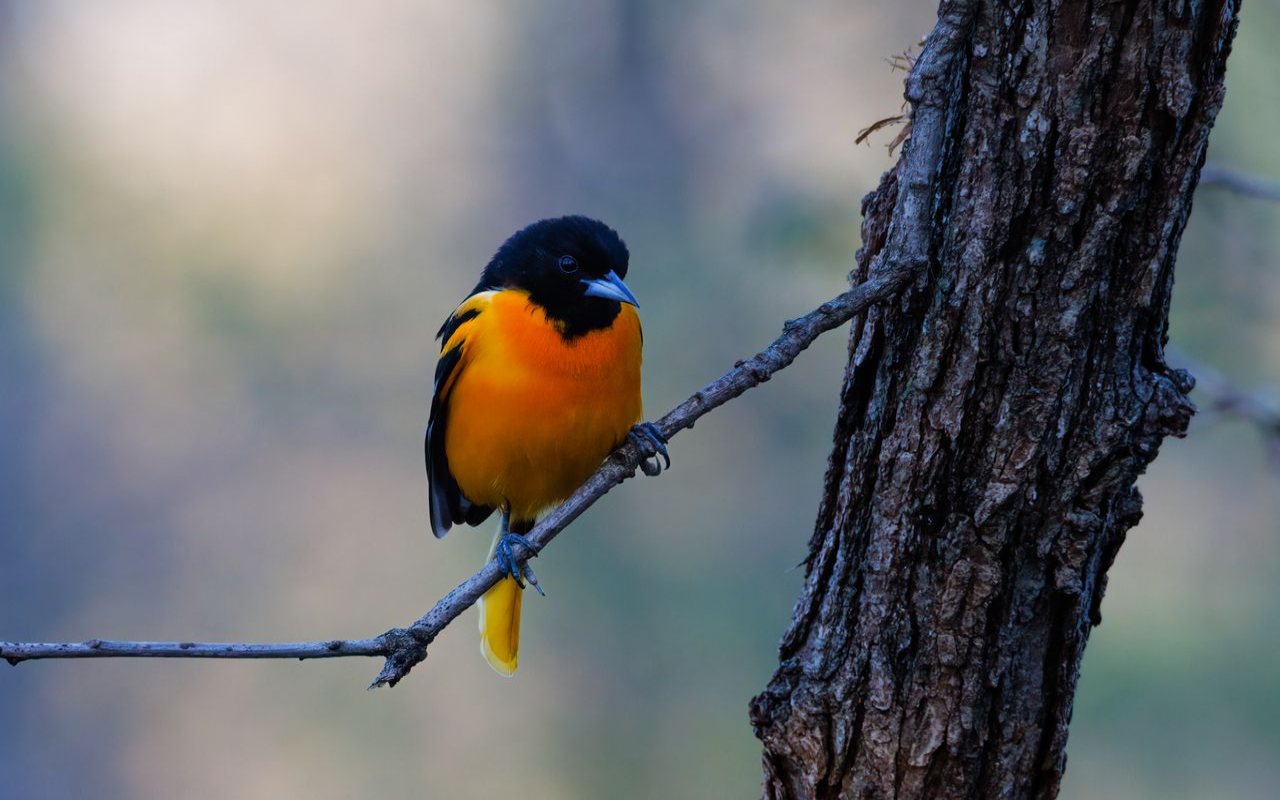
Success with attracting orioles in autumn is a race against freezing temperatures. Their fall visit is a brief, high-stakes refueling stop driven by a collapsing insect supply and an urgent need to build flight fat. If your yard lacks high-contrast orange targets or liquid sugar when a cold front hits, traveling flocks will fly straight over without stopping.
Intercepting these hyper-vigilant canopy birds requires moving your feeders away from high-traffic patios and into quiet tree lines. Offering dark, high-calorie foods like pure grape jelly alongside moving water provides the exact energy oasis these passing migrants need to survive their long journey south.
Understanding the Autumn Shift in Oriole Tastes
Spring orioles crave fast fuel in the form of pure sugars, but autumn birds have different nutritional demands. As migration peaks between late August and October, adult birds and newly fledged juveniles look for calorie-dense foods that build body fat reserves.
They do not abandon sweet treats entirely, but their interest quickly expands to include insects, ripe berries, and dense fats. Cold morning temperatures push them to hunt insects in leaf litter and tree barks, making varied feeding stations especially valuable.
You will also notice behavioral changes in the fall. Birds that sang boldly in May become secretive and quiet in September, sticking closer to dense foliage to avoid migrating raptors.
The Best Foods to Offer During Fall Migration
To catch the attention of passing orioles, your feeding station should offer multiple energy sources. Providing a spread of sweet carbohydrates alongside high-protein offerings will cater to both their immediate energy needs and their long-term fuel storage.
- Plain dark grape jelly offered in shallow dishes
- Fresh orange halves impaled on dedicated spikes or branches
- Homemade sugar water mixed at four parts water to one part white table sugar
- Live or rehydrated dried mealworms placed in smooth-sided cups
- Suet cakes formulated with fruit, nuts, and peanut butter
When offering sugar water in autumn, stick strictly to refined white sugar without any red food dyes. Red coloring offers zero nutritional value and can harm sensitive internal organs.
If you offer grape jelly, put out only two or three tablespoons at a time. Generous piles of jelly often turn into messy traps where birds can get sticky feathers, which ruins their natural insulation.
Setting Up Feeders to Beat Wasps, Ants, and Spoilage
Early fall weather often brings fluctuating temperatures, which creates major headaches for sweet-nectar feeders. September is notorious for aggressive yellowjacket swarms and warm afternoons that ferment sugary feeds within hours.
Experienced backyard birders frequently report that wasps can completely drive orioles away from feeding stations. Using feeders with small, wasp-resistant bee guards or switching to nectar feeders with narrow feeding ports keeps stinging insects from taking over.
- Place feeders in early morning shade to prevent jelly and nectar from fermenting in the sun
- Install dedicated water-filled ant moats directly above hanging feeding stations
- Wipe feeder perches daily with warm water to remove sticky residue that attracts bees
- Clean nectar reservoirs every two to three days using a mild mixture of hot water and vinegar
Never use petroleum jelly, cooking oils, or grease on feeder poles or hanging wires to stop ants. If an oriole brushes against grease, the oil coats its flight feathers and destroys its waterproofing ability, which can be fatal.
To keep orange halves fresh, slice them in half and press the exposed fruit against feeder spikes facing slightly downward. This angle reduces rain wash and prevents the fruit from turning into a sour sponge on wet days.
Using Native Autumn Berry Shrubs for Long-Term Visits
Artificial feeders are fantastic, but wild birds naturally scan the landscape for native vegetation first. Migrating orioles drop into yards that feature dense, fruiting plants because these shrubs offer both immediate food and instant predator cover.
Planting native, berry-producing shrubs provides a renewable food source that persists well past your feeder season. As birds scour the branches for fruit, they also glean nutritious spiders, beetles, and caterpillars hiding on the underside of leaves.
- Flowering dogwood trees for fat-rich fall seeds
- Black elderberry bushes offering dense clusters of dark berries
- Serviceberry varieties providing soft, sweet autumn fruit
- Northern spicebush for lipid-packed red berries loved by thrushes and orioles
- Pokeweed left to mature along fence lines for its juicy purple berries
Allowing a small, naturalized thicket to grow along the edge of your property creates a natural corridor. Southbound migrants feel much safer landing in yards that mimic the protective edges of wild woodlands.
If you already have fruiting shrubs, avoid aggressive autumn trimming until the migration window closes in late October. Leaving seed heads, late-season berries, and fallen leaves intact creates an insect-rich foraging ground.
Water Features That Catch Migrating Eyes from Above
Migrating songbirds rarely locate your yard by smelling food; they locate safe refueling spots from high altitudes by sight and sound. Moving water is the single most effective visual and auditory magnet you can install to bring traveling orioles down into your garden.
A flat, stagnant bird bath often goes unnoticed by birds cruising dozens of feet in the air. Adding active surface movement reflects sunlight upward and generates splashing sounds that carry across the neighborhood.
- Drippers positioned over shallow baths to create consistent surface ripples
- Low-voltage or solar-powered water bubblers to break the surface tension
- Small backyard waterfalls spilling over wide, flat river stones
- Elevated, shallow dishes placed near tree canopy cover
Keep the water level surprisingly shallow, maintaining a depth of no more than one to two inches. Orioles have relatively long legs compared to finches, but they still avoid deep pools where they cannot touch the bottom securely.
If your bird bath has a slick ceramic or glazed surface, line the bottom with rough river stones. These rocks give traveling birds a textured footing so they can splash, drink, and clean their flight feathers safely before resuming their long journey south.