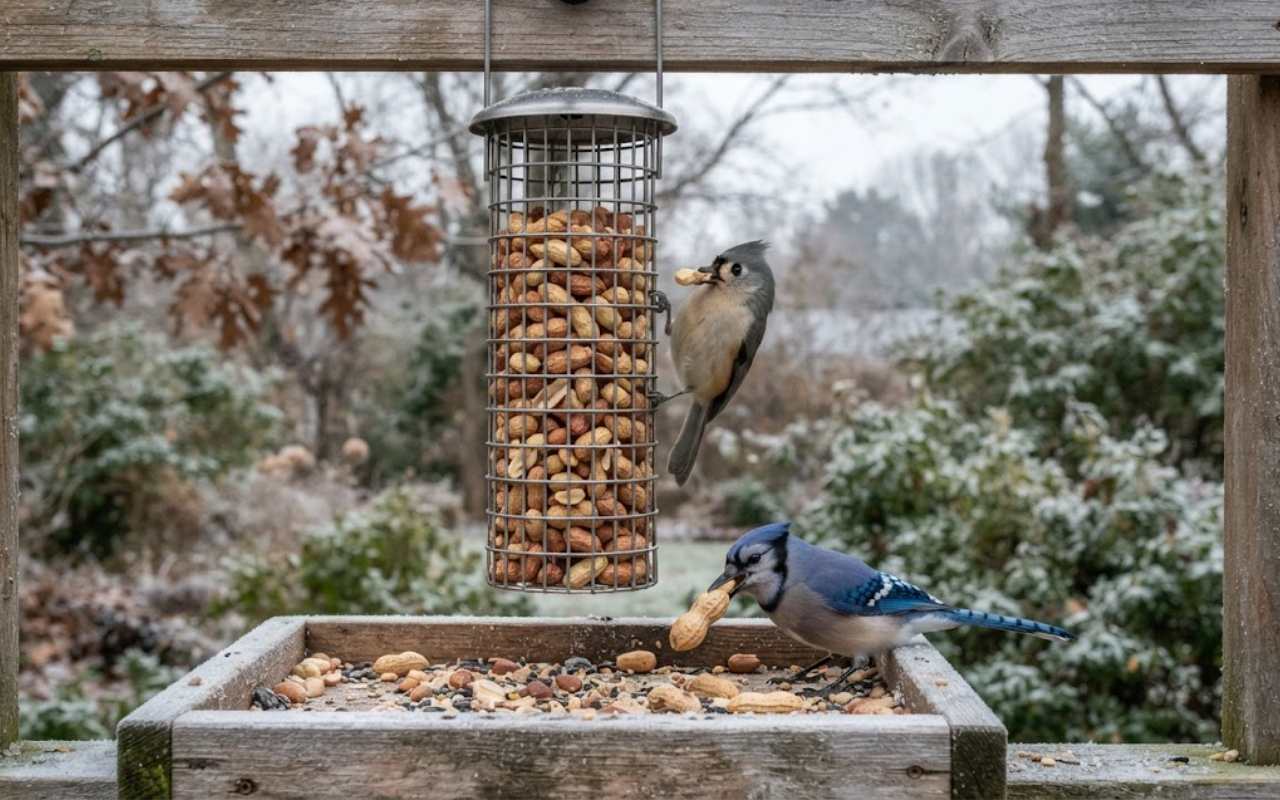
Feeding birds unsalted nuts in winter gives backyard flocks the dense caloric fuel they need when sub-zero nights rapidly drain their body fat. Raw peanuts, chopped walnuts, pecans, and sunflower meats deliver immediate plant lipids and proteins without forcing small birds to expend precious calories cracking tough outer hulls.
Many backyard birders run into unexpected problems when freezing rain turns chopped nuts into a solid block of moldy ice, or when squirrels destroy lightweight hoppers. Applying the right feeder hardware, crushing nuts to matched species sizes, and monitoring moisture levels keeps your winter feeding station clean and safe.
Quick-Glance Field Summary
Offering raw, oil-rich nut pieces provides birds with efficient winter calories while reducing ground litter that attracts rodents. Success requires weather-protected metal feeders, strictly unsalted and aflatoxin-free stock, and species-appropriate piece sizes.
- Safe nut varieties: Raw unroasted peanuts, black walnuts, English walnuts, pecans, and unsalted almonds
- Toxic ingredients to avoid: Added table salt, roasted oils, chocolate coatings, seasoned coatings, and moldy kernels
- Hardware wire mesh opening size: 0.25-inch stainless steel or galvanized wire mesh for chopped nut meats
- Feeder dome diameter: 12-inch to 18-inch clear polycarbonate weather shield
- Feeder spacing safety rule: Place feeders within 3 feet of windows or beyond 30 feet from glass
- Cleaning solution: 1 part household bleach diluted in 9 parts clean water
Choosing the Best Raw Nuts for Cold Weather Calories
Winter birds need high-fat foods to fuel their nocturnal shivering, which is the primary metabolic method small songbirds use to stay warm. Black-capped chickadees, tufted titmice, white-breasted nuthatches, and woodpeckers burn a significant portion of their body weight every single night. Offering dense nut meats cuts down their foraging time and delivers pure energy.
Raw peanuts provide roughly 45 to 50 percent fat and 25 percent protein, making them one of the most cost-effective winter staples available. Walnuts and pecans offer even higher lipid concentrations, frequently exceeding 65 percent fat content. These softer tree nuts break down quickly in cold weather, allowing smaller songbirds to digest them without burning excessive metabolic heat.
Never feed birds salted, roasted, or spiced nuts intended for human snacking. Songbird kidneys are tiny and cannot process concentrated sodium levels, which can trigger severe dehydration, renal failure, and rapid death. Stick entirely to plain, unroasted, unsalted nuts sourced from feed stores or bulk baking aisles.
- Peanuts: High protein and fat balance, economical, readily taken by jays and woodpeckers
- Walnuts: Exceptionally high lipid levels, soft texture for easy eating by tiny bills
- Pecans: Premium oil content, ideal for extreme cold snaps below zero degrees
- Almonds: Dense meat that requires crushing before small birds can ingest it
- Hazelnuts: Excellent supplemental fat source favored by nuthatches and titmice
Always inspect raw nut shipments for freshness before filling your outdoor stations. Stale or rancid nuts develop a sour paint-like smell from oxidized oils that wild birds will completely avoid. Fresh nuts smell clean, earthy, and sweet.
| Raw Winter Nut Variety | Caloric & Amino Acid Profile | Mechanical Shell Hardness | Target Avian Foragers |
|---|---|---|---|
| Raw Unsalted Peanuts | High protein and fat; rich in natural plant sterols and clean oils. | Soft, fibrous pods; easily broken open or pre-shelled for quick access. | Chickadees, titmice, nuthatches, and blue jays. |
| Whole Raw Acorns / Walnuts | Dense complex carbohydrates and slow-release storage fats. | Extreme; requires specialized heavy jaw leverage or cracking tools. | Woodpeckers, corvids, jays, and wild turkeys. |
Picking Feeders That Keep Nuts Dry and Stop Pests
Nut meats spoil quickly when exposed to rain, snow, and freeze-thaw cycles. Standard plastic tube feeders designed for small seeds trap moisture at the base, creating a soggy sludge that ruins expensive nut meats. Dedicated nut feeders utilize open-mesh wire cylinders that let air circulate while forcing birds to peck out individual pieces.
On community forums like r/backyardbirds, experienced birders frequently complain about cheap wire feeders with plastic caps that squirrels chew apart within forty-eight hours. Backyard hobbyists report far better longevity by switching to all-metal designs constructed from heavy-gauge stainless steel. Look for feeding cylinders built with 0.25-inch wire mesh, which holds chopped nut pieces securely without spilling them onto the snow.
A bare wire feeder offers zero defense against driving sleet and freezing rain. Hanging an 18-inch wide polycarbonate weather dome directly above the feeder tube deflects snow and keeps the nut pieces dry. If water reaches the mesh cylinder, it creates a solid ice block that locks food away from foraging birds.
- Feeder body: Heavy-duty stainless steel cylinder with 0.25-inch wire mesh openings
- Feeder roof: Wide, locking metal lid or an added 18-inch polycarbonate weather baffle
- Seed catch tray: Perforated metal base tray to capture stray crumbles and drain water
- Feeder hanger: Steel cable or solid rod secured with a threaded carabiner clip
Mount your setup on an isolated metal pole fitted with a deep torpedo baffle to block climbing mammals. Position the pole at least ten feet away from tree trunks, fence rails, or roof lines. Squirrels and raccoons jump surprising distances, and an unprotected nut feeder will be emptied overnight.
Preventing Deadly Mold and Dangerous Toxins in Wet Snow
Moisture combined with oily nuts creates an ideal breeding ground for Aspergillus flavus, a fungus that produces lethal aflatoxins. Songbirds have tiny metabolic systems and zero tolerance for aflatoxin poisoning, which damages their internal organs and causes rapid mortality. During wet winter thaws, whole peanuts and chopped nut meats can develop invisible fungal spores in less than forty-eight hours.
Check your feeders daily after heavy snowfall or warm winter rains. If you notice any caking, musty odors, dark discoloration, or white webbing inside the wire mesh, dump the contents immediately into the trash. Never scrape moldy nuts into your compost bin or onto the ground where ground-feeding native sparrows could ingest them.
Sanitize nut feeders every two weeks using a standard disinfecting soak. Submerge the disassembled metal hardware in a solution of one part unscented household bleach to nine parts warm water for fifteen minutes. Scrub all mesh surfaces with a stiff bottle brush to remove stubborn nut oils, rinse thoroughly with fresh water, and let every piece air-dry completely before refilling.
- Daily task: Tap the feeder base to break up slight crusting and check for wet clumps
- Weekly task: Inspect interior mesh joints for green or white fungal spores
- Bi-weekly task: Disinfect the entire feeder in a 1:9 bleach solution
- Storage rule: Keep extra nuts in an airtight metal bin inside a cool, dry shed
Avoid using boiling water to clean feeders with clear plastic parts or weather domes. Boiling water warps polycarbonate plastic, causing cloudy stress fractures that ruin the rain shield. Stick to cool or warm water paired with household bleach for safe, effective disinfection.
Prepping Nut Sizes for Chickadees, Nuthatches, and Jays
Different backyard species handle nut meats in completely different ways based on their bill anatomy and foot strength. Blue jays and red-bellied woodpeckers possess heavy bills and strong toes, allowing them to grasp large peanut halves against a branch to hammer them into pieces. Smaller birds like Carolina chickadees and ruby-crowned kinglets lack that physical leverage and cannot process large chunks.
In community discussions across wildlife forums, users often note that chickadees abandon feeders filled with whole peanuts after dropping piece after piece into deep snow. Backyard birders solve this issue by running shelled peanuts through an inexpensive manual nut chopper to produce coarse, uniform crumbles. These smaller pieces allow small birds to grab a quick morsel and swallow it on the spot without wasting flight energy.
Whole in-shell peanuts belong exclusively in heavy spring-loaded wreath feeders or flat platform trays. Blue jays actively seek out these large targets, weighing individual peanuts in their bills to pick the heaviest ones before flying off to cache them in tree bark. Reserving whole in-shell nuts for platform feeders keeps your hanging mesh cylinders clear for smaller clinging birds.
- Whole in-shell peanuts: Best for blue jays, scrub jays, crows, and large woodpeckers
- Halved nut meats: Great for red-breasted nuthatches, tufted titmice, and hairy woodpeckers
- Chopped nut pieces: Ideal for chickadees, kinglets, brown creepers, and goldfinches
- Fine nut meal: Excellent addition to suet blocks or open platform trays for ground birds
If you purchase raw whole nuts in bulk, spend an afternoon batch-processing them through a coarse hand grinder. Store the resulting chips in airtight buckets alongside a dry food-grade desiccant pack to pull out ambient moisture. Processing your nuts into appropriate sizes ensures every bird in your yard gets fed without risking choking hazards or food waste.
Setting Up Your Feeders Safely to Avoid Window Collisions
Offering premium nut meats attracts frantic, high-speed bird activity around your yard, which drastically increases the risk of window strikes. Startled birds fleeing from backyard predators like Cooper’s hawks hit glass because clear panes reflect the surrounding sky and trees. Mitigating this collision hazard is just as important as supplying the calories themselves.
Follow the standard window placement guidelines established by field ornithologists. Place your nut feeding stations within three feet of your window panes, or push them beyond thirty feet away. Feeders positioned within three feet do not allow birds to build up enough flight speed to cause fatal impact injuries if they panic and flush toward the glass.
If you must hang your nut feeders between five and twenty feet from a window, install exterior visual markers on the glass. Spacing vertical paracord lines or applying ultraviolet reflective decals every two inches disrupts the mirror illusion. These simple visual breaks give fleeing birds an obvious barrier to avoid during emergency escapes.
- Under three feet: Safest close range; eliminates high-velocity flight paths into glass
- Over thirty feet: Safest long range; provides ample space for birds to clear window paths
- Danger zone: Five to twenty-five feet from untreated windows; requires glass markings
- High-risk ground cover: Avoid low brush piles directly beneath reflective patio doors
Position your feeding stations so they remain sheltered from prevailing winter winds, ideally on the south or east side of your home. Protecting birds from cold wind while they feed allows them to maintain their core body temperature while foraging. A calm, well-placed feeding station helps your local bird flock thrive through the harshest winter weather.
Your Winter Wildlife Checklist
To ensure your backyard station stays safe and efficient through the coldest months, use this quick operational routine:
- Procurement: Always select raw, entirely unroasted, and unsalted nuts from commercial feed suppliers or baking aisles.
- Sizing: Batch-grind larger tree nuts down to a uniform 0.25-inch scale so smaller songbirds can consume them without dropping pieces.
- Deployment: Hang your hardware within 3 feet of your windows under an 18-inch clear weather dome to maximize safety and block ice accumulation.
- Sanitation: Empty caked or damp feed within 48 hours to halt toxic mold, and soak the wire cylinder in a 1:9 bleach mix bi-weekly.