
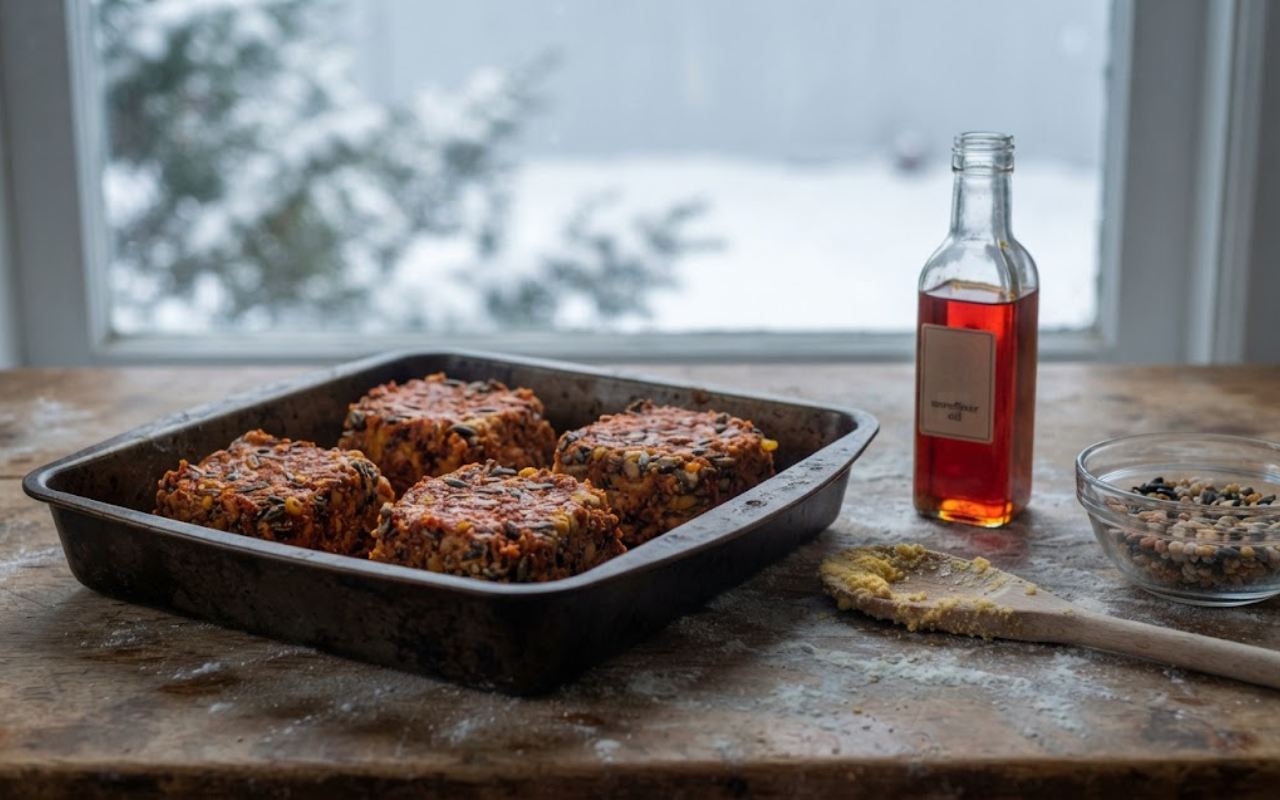
Making DIY hot pepper suet recipes to feed birds and deter mammals gives you complete control over your backyard feeding budget while keeping persistent pests out of your feeders. Standard grocery store suet cakes often rely on cheap grain fillers and mild pepper dusting that local squirrels quickly learn to ignore.
By rendering pure beef tallow at home and blending it with high-heat capsaicin, you create a calorie-dense feed that woodpeckers and nuthatches love. Mammals possess specific pain receptors that make them avoid this fiery blend, leaving your feeding station untouched by rodents.
Quick-Glance Field Summary
Formulating hot suet requires rendering hard beef tallow, mixing in high-Scoville pepper powder, and blending bird-safe seeds before cooling the mixture into wire-cage molds. Balancing thermal stability and capsaicin heat guarantees that the cake stays firm above freezing while turning away nuisance mammals immediately.
- Rendered Beef Tallow Base: 2 parts strained kidney suet fat
- Dry High-Energy Base: 1 part coarse yellow cornmeal and 1 part unsalted peanut butter
- High-Calorie Seed Blend: 1 part black oil sunflower chips and raw unsalted peanuts
- Active Deterrent: 2 tablespoons pure cayenne pepper (minimum 30,000 Scoville Heat Units) or ground habanero per two-cup batch
- Feeder Hardware: Standard 5-inch by 5-inch coated wire cage with 0.5-inch mesh grid
- Ambient Thermal Cutoff: 50°F maximum outdoor temperature to prevent fat softening and feather smearing
How Birds and Mammals React Differently to Hot Peppers
Birds and mammals experience hot pepper compounds through entirely different biological pathways. Capsaicin targets the transient receptor potential cation channel subfamily V member 1, or TRPV1, which operates as a heat and pain sensor in mammalian tissue. Mammals like gray squirrels, raccoons, and mice experience a burning sensation in their mouth, nose, and eyes when they bite into treated suet.
Avian species possess an equivalent receptor, but structural differences in the bird TRPV1 protein make it insensitive to capsaicin molecules. Field research confirms that woodpeckers, chickadees, and titmice consume heavily spiced fats without irritation or digestive stress. The spicy compound simply passes through their digestive tracts harmlessly.
Because wild birds evolved alongside native peppers and dispersed wild pepper seeds in the wild, capsaicin serves as a natural mammalian filter. Backyard birders frequently note that native backyard birds do not hesitate at the feeder even when suet smells pungent from ground pepper. The birds focus entirely on extracting raw lipids and proteins to fuel their daily metabolic demands.
| Capsaicin Delivery Style | Fat Binding Integration | Avian Eye & Membrane Safety | Mammalian Deterrence Value |
|---|---|---|---|
| Fat-Bound Hot Chili Oil | Elite; lipids completely trap heat molecules within the hardened suet block. | Safe; locked compound cannot blow into eyes or get matted onto wing feathers. | Extreme; triggers immediate tongue burn in squirrels, forcing them to move on. |
| Loose Chili Powder Dust | Poor; loose dry spices simply coat the outer seeds without bonding to the fat. | Hazardous; winter wind gusts blow fine dust directly into sensitive bird eyes. | Low; washes away easily during morning dampness or light rains. |
Gathering the Best Kitchen Gear and Raw Ingredients
Raw beef kidney fat, often sold at local butcher shops as raw beef suet, provides the best lipid structure for outdoor suet blocks. Avoid trimmings from steaks or pork fat, as soft muscle fat melts at low temperatures and spoils quickly in the sun. Pure kidney suet contains stearic and palmitic acids that solidify into a hard, weather-resistant block when cooled.
Forum discussions on backyard bird communities reveal two distinct practical tips for the preparation phase. Members of r/backyardbirds frequently warn that simmering chili powders indoors creates airborne aerosolized capsaicin, effectively turning a kitchen into a tear-gas chamber without an exhaust fan running.
Experienced contributors also emphasize that cheap grocery suet fails because commercial processors use low-heat cayenne dust, which local squirrels adapt to unless you use pure habanero or chili flakes testing above 30,000 Scoville Heat Units.
- Hard raw beef kidney fat or pre-rendered commercial beef tallow
- Pure cayenne pepper powder, habanero powder, or crushed dried red pepper flakes
- Coarse stone-ground cornmeal or whole rolled oats
- Unsalted, no-additive peanut butter
- Black oil sunflower seed kernels without outer shells
- Double boiler or heavy-bottomed stockpot
- Reusable silicone baking molds or recycled commercial suet trays
- Heavy rubber gloves and safety glasses for handling hot pepper mash
Rendering Your Fat to Keep It Firm in Warm Weather
Place finely chopped raw kidney fat into a double boiler over low heat to slowly melt the lipids away from connective tissue. Never boil the fat directly on high heat, which scorches the suet and creates bitter odors that birds avoid. Let the fat liquefy gently until clear golden liquid separates from the browned tissue cracklings.
Pour the hot liquid fat through a double layer of fine cheesecloth or a metal strainer into a clean bowl. Straining out solid meat scraps is necessary because residual animal proteins spoil and harbor bacteria when hung outdoors.
Experienced hobbyists recommend a second rendering cycle, which means cooling the tallow completely and melting it a second time to ensure maximum hardness.
- Melt the chopped raw fat slowly over low heat until cracklings float.
- Strain the liquid tallow through cheesecloth to remove every organic particle.
- Cool the strained liquid to room temperature until it turns solid white.
- Reheat the solid block gently over low heat for a second clarify pass.
- Remove from heat as soon as the fat turns clear and fully liquid.
Mixing and Molding Your Custom Hot Suet Blocks
Once the tallow melts on the second pass, take the pot off the heat source before stirring in your additives. Add your unsalted peanut butter directly into the warm liquid until it dissolves into a smooth, creamy base. Put on your safety glasses and gloves before measuring out the pepper powders into the liquid fat.
Stir the ground cayenne or habanero directly into the warm fat so the lipid molecules bind with the hydrophobic capsaicin. Mix in your coarse cornmeal, sunflower chips, and chopped peanuts until the mixture forms a dense, heavy paste. Distribute the thick mixture evenly into suet molds, tamping it down firmly with a spoon to eliminate air pockets.
- 2 cups clarified liquid beef tallow
- 1 cup unsalted peanut butter
- 1 cup coarse yellow cornmeal
- 1 cup black oil sunflower hearts
- 2 tablespoons pure ground cayenne pepper
- 0.5 cup raw chopped peanuts or dried mealworms
Place your filled molds inside a refrigerator for three hours or in a freezer for forty-five minutes until rock solid. Wrapped tightly in parchment paper and placed in an airtight container, these blocks keep in a home freezer for up to six months. Storing the cakes cold prevents natural fat oxidation and keeps seeds from developing dangerous mold spores.
Hanging Your Suet Safely to Protect Feathers and Yard Wildlife
Hang your finished suet blocks in standard vinyl-coated wire cages placed in areas shielded from direct afternoon sunlight. When outdoor ambient temperatures cross 50°F, fat begins to soften, creating a hidden hazard for wild birds. Softened fat smears onto bird plumage, matting flight feathers and disrupting the natural water-repellency needed to prevent fatal hypothermia.
Position your feeding stations either closer than 3 feet to exterior windows or farther than 30 feet away, adhering to standard Audubon collision prevention guidelines. Keep the suet cage suspended from an overhead baffle or a metal shepherd hook at least 5 feet off the ground. This elevation prevents non-target animals like neighborhood dogs from attempting to chew through the cage.
Never use liquid vegetable oils, hydrogenated shortening, or bacon grease in place of true beef tallow. Soft consumer fats leave greasy residues on the bird’s facial feathers, which can clog nares and cause respiratory distress. High-quality, double-rendered hot suet remains hard, clean, and bird-safe, delivering direct nutrition while permanently ending mammalian pest raids.