
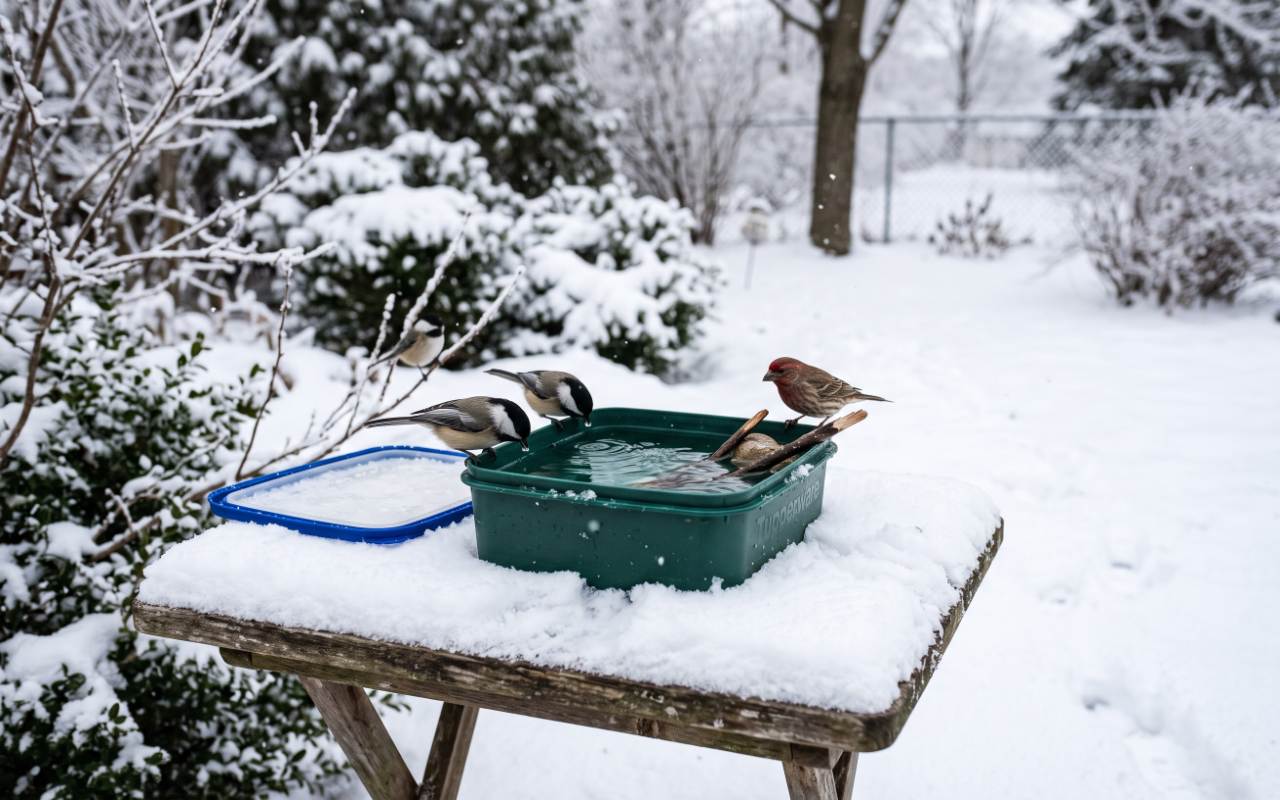
Learning how to provide emergency winter water for birds using Tupperware containers provides an immediate hydration lifeline when prolonged sub-zero temperatures lock up regional water sources. During deep polar freezes, wintering songbirds exhaust vital caloric reserves searching for open water, making rapid backyard intervention essential.
A persistent myth among birders suggests wild birds do not require standing water in sub-freezing weather because they can simply ingest snow. While birds can consume snow crystals, melting ice internally requires substantial metabolic energy, accelerating core temperature drops in small passerines that already operate near their thermal limits.
Avian Hydration Needs and Winter Survival Profiles
Winter water stations serve an array of resident birds and cold-hardy winter migrants facing acute dehydration. Parids such as the Black-capped Chickadee (Poecile atricapillus) and Tufted Titmouse (Baeolophus bicolor) must process water daily to metabolize fat reserves quickly. Fringillids, including the American Goldfinch (Spinus tristis) and Purple Finch (Haemorhous purpureus), subsist on low-moisture seeds that dramatically increase systemic water demand.
Different avian families exhibit distinct physiological and behavioral strategies when approaching emergency ground-level or elevated water resources:
- Paridae (Chickadees and Titmice): Require rapid, edge-clinging sips lasting two to four seconds before retreating to immediate perimeter foliage.
- Fringillidae (Finches and Siskins): Arrive in small flocks, preferring stable perches along the container margin to drink communally.
- Sittidae (Nuthatches): Utilize vertical approach angles, frequently moving down tree trunks to assess water surface stability before contact.
- Turdidae (Bluebirds and American Robins): Depend heavily on liquid surface water to digest desiccated cold-weather berries and lingering ground mast.
Wintering birds avoid plunging into water during severe cold snaps, as soaked contour feathers can destroy insulation and cause lethal hypothermia within minutes. Providing a shallow, perimeter-restricted station satisfies acute drinking needs while preventing accidental plumage saturation.
Emergency Hardware Selection and Tupperware Assembly Blueprint
Building an emergency station requires food-grade, flexible plastic containers that resist cold-cracking and prevent freeze adhesion. High-density polyethylene (HDPE, resin code 2) or polypropylene (PP, resin code 5) food-storage containers serve as the safest bases. You must avoid thin polystyrene containers or brittle plastics, which fracture easily when ice expands.
Do not use metal containers, ceramic bowls, or deep untreated pans under any circumstances. Metal surfaces cause wet avian tongues or feet to instantly adhere in sub-freezing conditions, leading to severe physical trauma. Unaltered deep containers also present severe drowning and immersion hazards for smaller songbirds.
- Primary Water Vessel: A shallow, wide rectangular polypropylene container measuring 8 to 12 inches across, with a maximum sidewall height of 2 inches.
- Thermal Retention Shell: A larger secondary plastic tub or crate that leaves a 2-inch perimeter gap around the primary vessel for insulation.
- Base Ballast and Perching Substrate: Coarse, cleaned river rocks measuring 1.5 to 3 inches in diameter, placed inside the primary basin to eliminate slip risks.
- Insulative Packing Material: Untreated wood shavings, shredded cardboard, or clean straw densely packed between the inner and outer vessels.
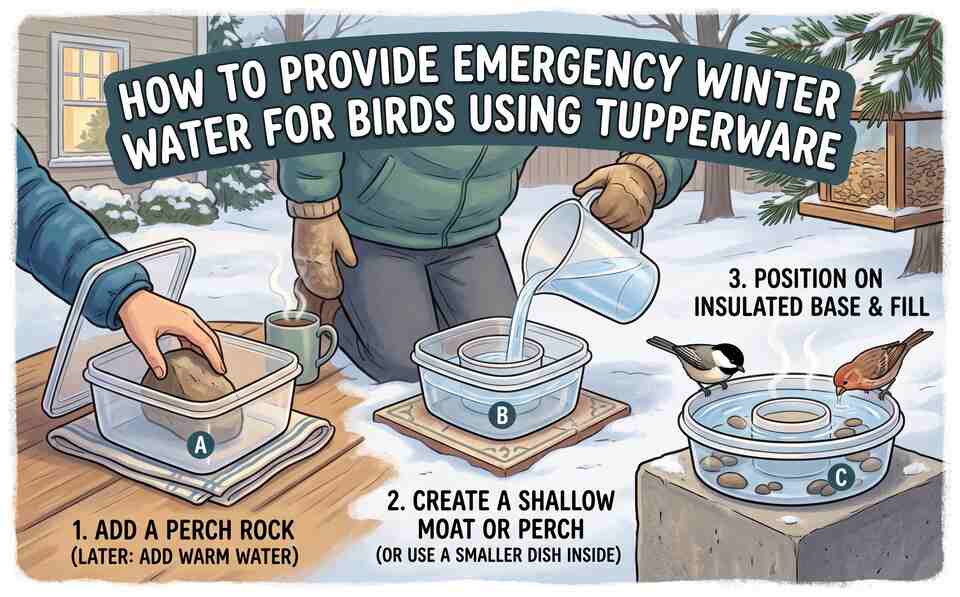
Assemble the station by placing the primary vessel firmly inside the larger base container, nesting the thermal insulation securely between the two walls. Place the washed river rocks into the central container so that their upper crowns break the water surface by at least 0.5 inches. Fill the basin with clean, cool-to-tepid (just enough to delay the initial surface freeze) tap water to a maximum depth of 1 to 1.25 inches, ensuring the rocks provide clear, dry perching access across the entire rim.
Spatial Geometry, Flight Path Clearances, and Placement Audits
Proper positioning dictates whether an emergency water station saves local wildlife or creates a lethal trap. Stations must never be situated directly underneath active seed feeders, where hulls, seed dust, and droppings will fall directly into the drinking water. Clear sightlines represent the single most critical defensive variable for ground-foraging birds.
Adhere strictly to safe structural distances to eliminate impact trauma and ambush risks from domestic predators:
- Window Strike Mitigation Buffer: Place the station either within 3 feet of exterior windows or beyond 30 feet from glass surfaces to prevent fatal flight collisions.
- Predator Escape Radius: Maintain a minimum 10-foot perimeter of clear, open visual space around the station so birds can detect hunting domestic cats.
- Thermal Windbreak Orientation: Position the vessel along a south-facing exterior wall or behind an evergreen hedge to maximize solar exposure and block prevailing northwest winter winds.
- Perch Staging Proximity: Ensure dense brush or low-hanging branches exist 10 to 12 feet away, offering birds safe approach and exit staging points.
Never place an emergency water station on bare ice or directly upon metal outdoor tables, which rapidly conduct cold and accelerate ice formation. Elevate the container assembly 4 to 6 inches above the frozen ground using dry wooden blocks, a scrap piece of plywood, or an insulated foam pad.
Thermodynamics of Freezing Water and Comparative Hydration Metrics
Maintaining liquid water during prolonged sub-freezing conditions requires active thermal management. Pure water releases 334 Joules of latent heat per gram as it transitions to ice, but high surface-area-to-volume ratios in small tubs quickly overcome this release. Selecting the correct method depends on your accessible gear, electrical infrastructure, and labor capacity.
Here is how common winter watering methods compare in efficacy and operational safety:
- Commercial Heated Basins: Rank 1 for thermal reliability. High efficiency; internal thermostats maintain water at 40 degrees Fahrenheit constantly, but require dedicated exterior ground-fault electrical outlets and higher monetary investment.
- Insulated Emergency Tupperware: Rank 2 for rapid emergency deployment. Zero electrical dependency; retains liquid state for two to four hours at 20 degrees Fahrenheit when constructed with double-walled insulation, though requires manual water replacements.
- Floating Solar Inserts: Rank 3 for winter utility. Highly unreliable during prolonged winter freezes; insufficient battery capacitance and low winter solar radiation angles cause complete freeze-over at temperatures below 28 degrees Fahrenheit.
Never add commercial chemical anti-freeze, table salt, glycerin, or sugar to an avian water vessel. Salt disrupts osmotic balance and induces lethal dehydration in birds, while sugar creates sticky plumage that compromises insulation. Frequent replacements with warm, fresh water remain the safest intervention during deep cold spells.
Pathogen Defense, Toxicological Risks, and Sanitization Protocols
Stagnant winter water stations readily concentrate dangerous biological pathogens if left unmonitored. Despite cold outdoor temperatures, enteric bacteria persist in dormant phases and multiply rapidly when birds defecate or bathe in standing reservoirs. The bacterium Salmonella enterica, along with Escherichia coli, causes rapid mortality across flocking songbirds during cold-weather congregations.
Fungal spores, including Aspergillus fumigatus, also thrive in wet, organic substrate residues surrounding damp feeding sites. You must maintain strict chemical cleanliness without compromising consumer plastic integrity:
- Dilute Chlorine Bleach Solution (1:9 ratio): Rank 1 for microbial destruction. Delivers total broad-spectrum eradication of bacteria and fungal spores; requires an exact 10-minute soak followed by extensive rinsing until all odor completely dissipates.
- Food-Grade White Vinegar Solution (1:1 ratio): Rank 2 for safety and mild cleaning. Removes calcium scale, mineral crusting, and light biofilms; does not degrade consumer plastics, but lacks total efficacy against heavy bacterial outbreaks.
- Boiling Water Scald: Rank 3 for chemical-free sanitation. Effectively neutralizes biological pathogens, but warps thin polypropylene tubs and can trigger micro-fissures or chemical leaching in lower-grade plastics.
Conduct a rapid water dump and hot-water rinse twice daily during extreme freezes, refilling with fresh tap water at morning dawn and mid-afternoon. Perform a full sanitizing soak using the dilute bleach solution twice weekly, inspecting the container interior for hairline fractures or foul odors. Maintaining strict sanitation ensures your emergency station sustains winter bird populations safely until seasonal thaws arrive.