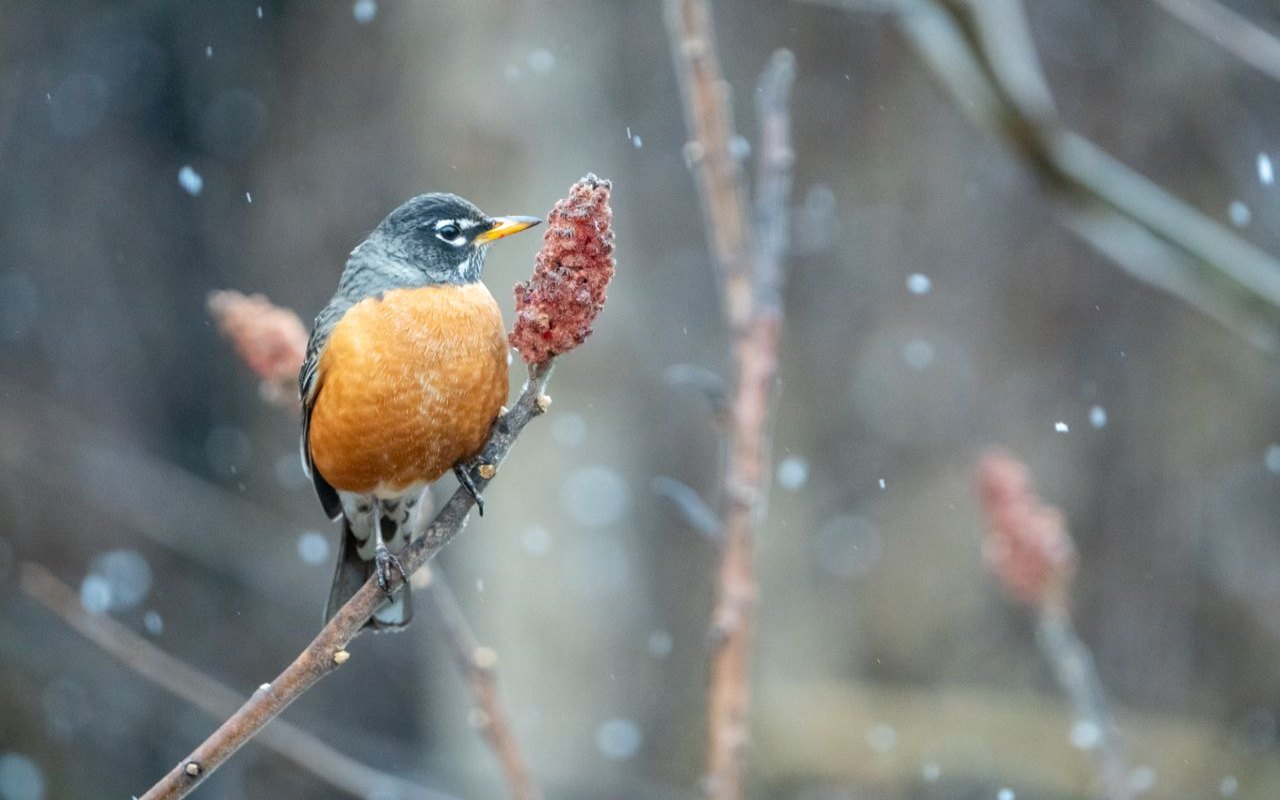
If you look out across a snow-covered lawn in January, you might wonder why you are seeing an american robin in winter instead of flying south like many other backyard birds. For generations, spotting the first robin of the year was treated as the ultimate sign that spring had finally arrived. This seasonal myth caused many people to assume that every robin vanishes south before the first freeze.
In reality, millions of robins spend the coldest months of the year right in northern and central backyards. They simply change their daily habits, which makes them far harder for casual observers to spot. Once you understand their cold weather survival strategies, you will start seeing them everywhere.
The Great Spring Herald Myth and Where It Came From
The idea that robins leave entirely grew out of simple human observation. In spring and summer, robins are bold, territorial, and spend their days hopping across open lawns pulling earthworms out of moist turf. When ground frosts lock up the soil, earthworms tunnel deep underground below the frost line, leaving robins with nothing to hunt on open grass.
Because they vanish from manicured lawns, homeowners historically assumed the birds had migrated thousands of miles toward the equator. Some northern robins do travel south, but their migration is nomadic rather than direct. If a flock has access to adequate food and dense shelter, they will happily endure subzero temperatures.
Ornithologists from the Cornell Lab of Ornithology note that robin populations shift in overlapping waves across North America. Robins nesting in northern Canada might move into the northern United States for winter, while the robins that nested in those same northern states slide just a county or two southward.
To a backyard observer, it looks like a complete disappearance, but the species remains active across most of the continent all year.
The Big Winter Diet Shift from Earthworms to Berries
Winter survival for robins comes down to a complete physiological and behavioral shift in their diet. During warm months, soft invertebrates like beetles, caterpillars, and earthworms make up almost all of what they eat. Once freezing ground locks away those protein sources, robins switch almost entirely to wild fruit and berries.
A wintering robin relies heavily on high-sugar and fat-rich plant matter to fuel its high metabolism. Their digestive systems actually adapt to process dense fibrous fruit flesh much more quickly during the cold season. You can easily spot the natural plantings that sustain these birds during deep freezes:
- Eastern redcedar and juniper berries
- Native crabapples and persistent wild apples
- Sumac seed clusters
- American holly and winterberry
- Hawthorne and serviceberry fruits
- Wild grape clusters hanging from tangled vines
When a roaming flock finds a reliable crop of berries, they will strip the bushes clean in just a few days. Backyard birders frequently report seeing thirty or forty robins descend on an ornamental holly tree, gorging themselves until every red berry is gone. Once that localized bush is empty, the flock moves along to find the next fruit patch.
Because of this constant foraging cycle, robins rarely linger in a single yard for weeks at a time during January. They move continuously across neighborhoods, golf courses, and wild woodlots searching for uneaten fruit. This nomadic lifestyle keeps them well fed, even when several inches of snow blanket the landscape.
Roosting Flocks and Secret Treetop Wandering
During the breeding season, robins are notoriously aggressive about defending their nesting territories. A single pair will fiercely chase off any neighboring robin that dares to land on their lawn. In winter, those territorial boundaries vanish completely in favor of safety in numbers.
Winter robins gather into communal flocks that can range from a few dozen birds to several thousand individuals. These massive flocks spend their nights deep inside dense hardwood swamps, cedar groves, or sheltered evergreen stands where thick foliage blocks biting winds.
Roosting closely together allows them to share trapped heat and spot lurking predators like Cooper’s hawks much faster. During daylight hours, these flocks stay up in the high tree canopy, which is why people rarely see them from kitchen windows.
Instead of walking on the grass, they flit quietly between towering oaks, hackberries, and wild cherry trees. Unless you hear their sharp, high-pitched alarm calls echoing from the woods, you might walk right past a roost of two hundred robins without noticing a single one.
Their downy winter plumage provides extraordinary insulation against frigid weather. Robins fluff up their contour feathers to trap pockets of warm air against their skin, making them look round and chubby on icy perches. As long as a robin consumes enough calories to maintain its internal furnace, it can comfortably handle temperatures dropping well below zero degrees.
What You Can Actually Put in Feeders to Help Them
Many backyard birders run into deep frustration when they try to help winter robins using standard seed feeders. Robins possess soft, pointed beaks designed for grasping worms and plucking soft fruit, not heavy crushing bills like cardinals or finches. Hanging a feeder packed with black oil sunflower seed, safflower, or cracked corn will do absolutely nothing for a hungry robin.
If you want to support robins through brutal cold snaps, you need to offer soft, nutrient-dense foods placed close to ground level or on wide platform trays:
- Dried mealworms soaked in warm water for fifteen minutes to rehydrate
- Chopped fresh apples and softened pear slices
- Unsweetened raisins, currants, and dried cranberries soaked in water
- Soft peanut butter suet crumbled into small, bite-sized nuggets
- High-fat insect suet cakes diced into quarter-inch squares
Placing these offerings on an open ground platform feeder or spreading them along low shrub branches gives robins the easy access they prefer. If local starlings or aggressive blue jays monopolize the tray, place the food directly beneath dense bushes where robins naturally forage.
Providing liquid water is often far more helpful than providing food during freezing weather. Robins need to drink daily and bathe to keep their feathers aligned and insulating properly, but natural creeks and puddles often freeze solid.
Installing a simple electric bird bath de-icer keeps fresh water available when every other source in the neighborhood is locked in ice.
How to Landscaping Your Yard for Winter Roosters
While supplemental feeder foods offer temporary relief, long-term backyard bird habitat provides the ultimate sanctuary for winter robins. A barren lawn ringed with non-native ornamental grass offers zero winter sustenance for fruit-eating birds.
Planting native shrubs and trees turns your yard into a reliable seasonal sanctuary that flocks will revisit year after year. Native plantings support robins far better than introduced exotic plants.
For instance, non-native bush honeysuckle yields berries that are low in lipids and nutritionally poor compared to native dogwoods or sumac. Designing a bird-friendly landscape requires a thoughtful mix of both shelter and winter-persistent food sources:
- Plant evergreen conifers like spruce, pine, and cedar along your northern property line to block freezing winds.
- Add multi-stemmed native shrubs like staghorn sumac and black chokeberry in tight clumps to provide secure foraging pockets.
- Incorporate female winterberry holly shrubs alongside a male pollinator to produce bright winter berries that persist into February.
- Leave fallen leaves untouched beneath your garden borders to shelter overwintering insects that robins can dig through on warm thaw days.
Creating varied canopy layers mimics natural forest edges where robins feel most secure. Tall canopy trees provide lookout posts, mid-story fruit trees deliver food, and dense low shrubs give birds quick cover from aerial predators.
This layered setup creates microclimates that remain several degrees warmer than open terrain on windy days. Understanding these winter dynamics completely changes how you view local wildlife throughout the coldest months.
Robins do not need to wait for spring blossoms to thrive in our neighborhoods. With thick down coats, clever flocking habits, and a taste for winter fruit, these resilient birds are built to conquer the freeze.