
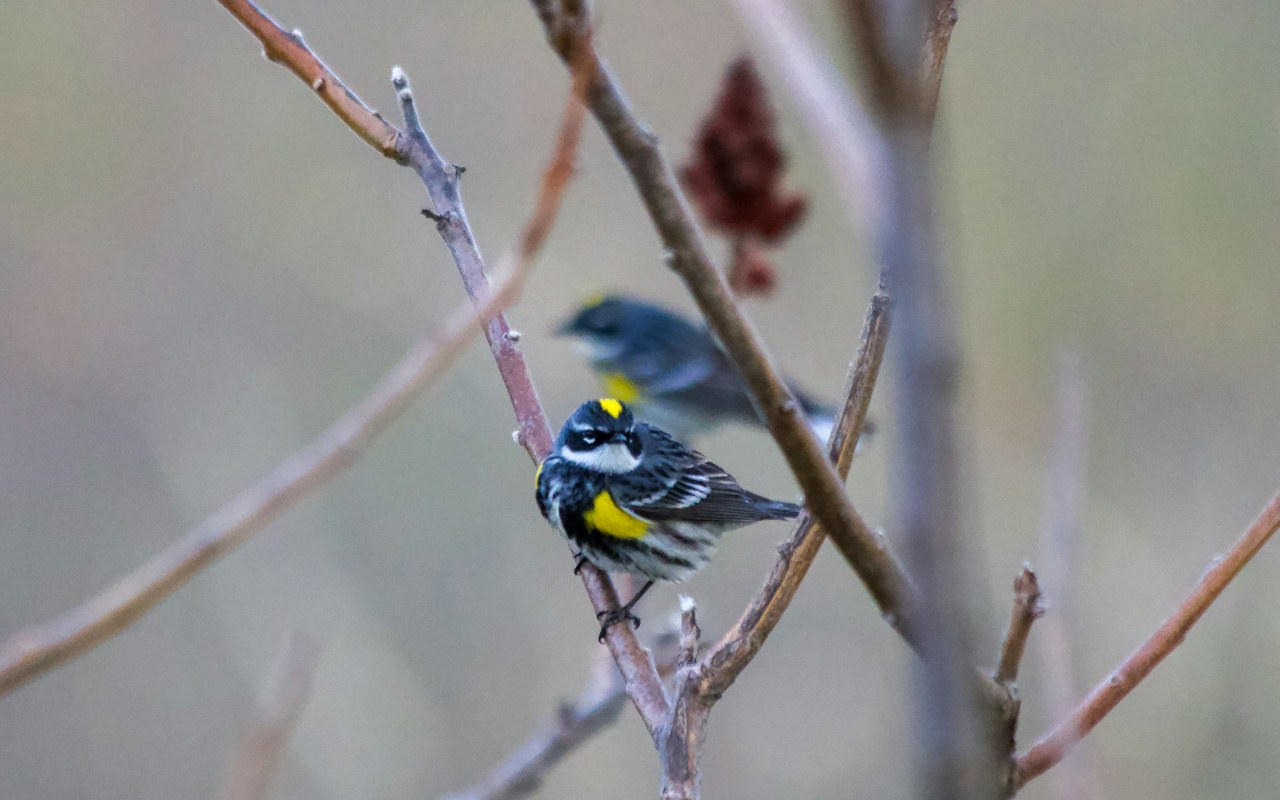
Witnessing a songbird travel in the exact opposite direction of its seasonal journey is a classic sign of reverse bird migration. For backyard birders, watching warblers or thrushes fly north during an autumn cold snap feels completely backward. Yet, this phenomenon happens regularly across every major flyway.
Modern weather radar networks frequently show large masses of birds retreating against the prevailing seasonal flow. While weather triggers account for massive local turnarounds, long term studies reveal two distinct causes:
- Physiological Survival Strategy: Exhausted birds deliberately backtracking to escape sudden severe weather or barren feeding grounds.
- Genetic Orientation Flaws: Inexperienced, juvenile birds suffering from an innate, 180 degree navigational glitch.
According to a multi method radar study published by the Lund University Faculty of Science, individuals flying in the reverse direction are statistically far more likely to be lean and to be juveniles. When you understand the mechanical, biological, and genetic triggers behind these sudden turnarounds, these strange yard sightings become much easier to interpret.
What Reverse Migration Actually Looks Like in the Field
In simple terms, this event occurs when migratory birds intentionally fly backward along their route. During fall migration, birds generally travel southward toward wintering grounds, while spring migration pushes them northward toward breeding territory. In reverse movements, you will see autumn birds flying due north, or spring arrivals turning around and retreating south.
Radar ornithologists track these massive shifts using regional radar stations, which detect nighttime migratory flight layers. Birders on the ground usually notice the aftermath at first light. You might spot exhausted wood warblers darting through low shrubs or unusual species clustering on your lawn during an unexpected season.
Field observers often log these events by tracking specific behavioral clues:
- Flocks flying at lower altitudes into head winds rather than riding tailwinds high up
- Mixed species groups foraging frantically on lawns rather than moving through tree canopies
- Large numbers of nocturnal migrants dropping into unfamiliar suburban yards at dawn
- Insect-eating species searching tree bark on the sheltered, leeward sides of buildings
These behaviors differ dramatically from normal migratory stopovers. During a typical rest stop, birds rest briefly and resume their directional journey. In a reverse movement event, birds actively spend valuable calories retreating to safer habitats they passed days earlier.
The Genetic Matrix and Innate 180 Degree Errors
While environmental pressures force temporary retreats, a distinct sub-category of reverse migration is entirely hardwired. Unlike larger waterfowl (such as swans and geese) which migrate in family groups and learn geography socially, nocturnal perching birds (passerines) migrate entirely alone. They rely on an innate, genetically programmed vector program to navigate across continents.
When genetic mutations or developmental anomalies occur in the genes governing a juvenile bird’s perception of environmental cues (like day length or geomagnetic fields), an orientation flaw can manifest. The most common expression is a literal 180 degree bimodal orientation error.
Data hosted on the SpringerLink Journal Database reveals that this temporary reverse migration is a widespread and regular phenomenon among nocturnal as well as diurnal migrants. During autumn, a hatch-year songbird experiencing this internal navigational glitch will fly due north or northeast instead of south, continuing deeper into perilous climates.
This genetic variance occasionally functions as an evolutionary catalyst. If these lost birds survive and find viable novel wintering grounds, they can pass the altered route down to subsequent generations, slowly shifting the species’ geographic range.
Severe Weather and Shifting Wind Currents
Weather is the single largest trigger for sudden flight reversals. Migrating songbirds rely heavily on favorable tailwinds to conserve their fat reserves. When an unexpected weather system rolls in, it can bring punishing head winds, freezing rain, or heavy snow that makes forward flight impossible.
A strong cold front sweeping down from Canada in early spring can slam into warblers that have just crossed the Gulf of Mexico. Temperatures plummet rapidly, insect activity halts, and the air becomes turbulent. Pushing north into that freezing air is often fatal.
Several key weather dynamics consistently force these sudden turnarounds:
- Strong northerly squalls striking early spring migrants in open agricultural corridors
- Thick fog layers that obscure celestial navigation cues like stars and polarized sunlight
- Heavy precipitation bands that saturate feathers and dramatically increase flight weight
- Sudden atmospheric pressure drops that signal dangerous incoming storms
When birds hit an impassable wall of bad weather, turning around is their smartest move. Retreating fifty miles south can bring warmer air, unfrozen soil, and active insects. Flying backward temporarily burns energy, but it keeps the bird alive until conditions stabilize.
Fat Reserves, Food Shortages, and Hard Choices
Weather alone does not dictate whether a bird presses onward or turns back. Body condition plays an equally vital role in every flight decision. Migrating birds must maintain dense lipid deposits, which act as the high-octane fuel powering long flights.
If a bird encounters a biological desert where drought or sudden frost has wiped out food supplies, it faces starvation. Continuing forward into unknown territory without sufficient fuel is a massive gamble. Many birds choose to backtrack to the last reliable feeding ground they encountered, even if it means flying in reverse.
Field researchers examine several internal metrics when studying these retreating individuals:
- Subcutaneous fat scores checked along the furcular hollow of the bird
- Pectoral muscle thickness, which wastes away when fat reserves are fully exhausted
- Daily weight changes tracked during extended ground delays
- Total hydration levels, especially after flights across dry interior landscapes
A bird with an empty fuel tank cannot afford to wait out a three-day storm on a barren hillside. It will turn with the wind and drift backward toward richer woodlands. In these moments, food availability trumps directional instinct every single time.
Coastline Traps and Morning Flight Corrections
Coastal landscapes create a unique form of reverse flight often referred to as morning reorientation. Many songbirds migrate under the cover of darkness across broad geographical fronts. When prevailing offshore winds push nocturnal travelers out over open ocean water, dawn presents a terrifying prospect.
Because songbirds cannot land on water without drowning, thousands of offshore birds climb high into the sky at first light, locate the nearest visible shoreline, and immediately fly perpendicular to their standard route to escape the water barrier.
This phenomenon, heavily tracked by the Cornell Lab of Ornithology’s BirdCast Migration Tracking Portal, results in massive, concentrated morning flights pointing directly northwest, north, or even northeast during the autumn season. Radar stations and coastal watch points document predictable patterns during these coastal corrections:
- Dawn ascents where birds climb high to locate the nearest visible mainland shoreline
- Perpendicular flight paths that actively run backwards from the standard seasonal trajectory
- Dense landfalls at barrier islands, public parks, and coastal backyard gardens
- Brief mid day rests followed by inland hops to escape harsh maritime winds and coastal predators
Once these exhausted birds make landfall, they often stay put for several days to drink fresh water, glean small insects from beach shrubs, and rebuild depleted muscles before attempting to correct their macro-route.ive within twenty miles of an ocean or large lake, these correction flights bring incredible birds right past your windows.
How to Support Displaced Birds in Your Backyard
When sudden weather shifts drop reversed migrants into your neighborhood, your yard can serve as an emergency refueling station. These birds are usually stressed, cold, and running on dangerously low calorie reserves. Providing immediate, high-calorie foods can mean the difference between survival and death for these wayward travelers.
In spring, retreating migrants frequently hunt on bare ground because snow covers tree branches. In autumn, cold-shocked birds need accessible fats that digest quickly. Offering the right nutrition in sheltered spots gives displaced visitors an immediate lifeline.
You can set up a responsive emergency station using practical backyard tactics:
- Scatter chopped suet, peanut butter smears, and mealworms near low, sheltered shrubs
- Place shallow bird baths with submerged heaters to provide liquid water during sudden freezes
- Keep ground-level feeding trays close to dense brush piles to protect exhausted birds from predators
- Avoid using yard pesticides so natural insects remain available in leaf litter
Keep your domestic pets indoors during these reverse movement events. Exhausted warblers and thrushes often forage directly on the grass, making them easy targets for neighborhood cats. Giving these birds quiet space and rich food allows them to refuel, wait for favorable winds, and restart their real journey.