
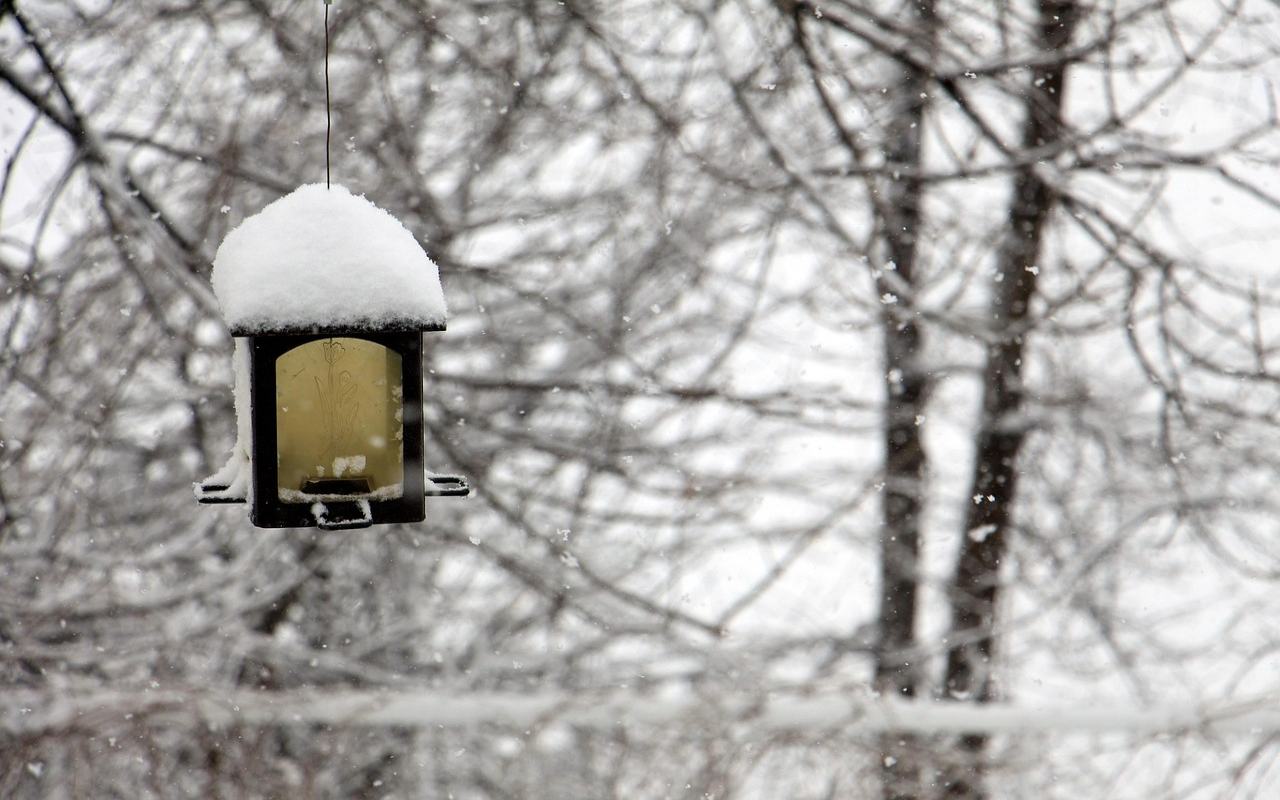
Backyard birders often face an unexpected mystery in mid-winter when their busy feeding stations suddenly go quiet. While this desertion can raise immediate concerns about population drops, understanding why birds disappeared from feeder stations usually reveals that it simply reflects normal shifts in winter ecology and avian behavior.
Wild birds rely on supplemental feeders for only a fraction of their daily caloric intake. Understanding how seasonal weather patterns, natural food crops, and predator presence interact helps explain why backyard feeding activity fluctuates during the coldest months.
Abundant Natural Food Supplies Divert Winter Flocks
A primary reason backyard stations empty out in January is the availability of wild mast and seed crops in nearby woodlands. Tree species such as oaks, birches, pines, and sweetgums often drop heavy seed yields that provide superior natural foraging opportunities. Flocks of Black-capped Chickadees, American Goldfinches, and Tufted Titmice will readily abandon residential feeders to harvest these preferred wild foods.
Natural foraging allows mixed-species flocks to exploit diverse foraging niches across larger forest territories. Foraging wild seeds also reduces the physiological stress of flock competition around artificial feeding perches.
- Native tree seeds like pine nuts and sweetgum seeds offer dense lipids.
- Dormant insect eggs and larvae hidden behind tree bark provide vital proteins.
- Wild berries such as sumac, juniper, and holly supply essential winter moisture.
When deep snow covers these natural woodland stocks later in the season, wild birds often return to residential feeders just as quickly as they left.
Local Hawk Activity Creates Feeding Station Avoidance
The sudden absence of songbirds often indicates that an avian predator has established a winter hunting territory over your yard. Sharp-shinned Hawks and Cooper’s Hawks frequently patrol suburban neighborhoods in mid-winter because bird feeders concentrate small passerines in predictable locations.
When a hawk actively hunts near a feeding zone, songbirds alter their foraging routines immediately. Mourning Doves and Dark-eyed Juncos will scatter to thick cover and remain silent for hours to evade detection.
- Dense evergreen shrubs situated within 10 to 15 feet of feeders offer immediate escape cover.
- Overgrown brush piles provide low ground-level shelters for sparrows and towhees.
- Window strike prevention decals reduce panicked collisions during sudden hawk ambushes.
Once the resident raptor shifts its hunting focus to another territory, regular feeder visitors will cautiously resume their feeding habits.
Microclimate Shifts and Temperature Spikes Alter Caloric Needs
January weather frequently features dramatic temperature swings that directly affect avian metabolic demands. During severe cold snaps, birds must consume large quantities of high-fat foods just to maintain their core body temperatures through long winter nights. Conversely, unseasonable January warm spells significantly reduce this metabolic stress.
When temperatures rise, birds expend far less energy on shivering thermogenesis. Consequently, species like White-breasted Nuthatches and Downy Woodpeckers do not need to visit feeding stations as intensively.
- Sub-freezing days force birds to seek dense suet cakes and black-oil sunflower seeds.
- Mild winter days allow birds to spend energy searching for hidden arthropods in leaf litter.
- Heated bird baths providing liquid water remain vital regardless of fluctuating temperatures.
This flexible foraging strategy ensures birds do not become entirely dependent on a single feeding location.
Seed Spoilage and Pathogen Buildup Drive Birds Away
Winter precipitation can quickly ruin bird seed and create an unhealthy feeding environment. Freezing rain and wet snow frequently enter hopper or platform feeders, turning dry seeds into damp, compacted clumps. When seed remains wet, molds such as Aspergillus develop rapidly and produce dangerous mycotoxins.
Birds possess acute senses of taste and smell, leading them to reject contaminated seed trays. Furthermore, outbreaks of pathogens like Salmonella can prompt surviving birds to abandon a feeding site altogether.
- Platform feeders require daily clearing of wet hull accumulation.
- Seed trays must feature adequate drainage holes to prevent standing moisture.
- Feeder hardware should be sanitized bi-weekly using a standard 1:9 bleach-to-water solution.
Thoroughly drying feeders before refilling them with clean seed ensures that returning birds encounter safe, palatable nutrition.
Irruptive Finch Movements and Nomadism Shift Winter Ranges
Many winter feeder visitors are nomadic species whose geographic distributions vary dramatically from year to year. Boreal finches, including Pine Siskins, Purple Finches, and Common Redpolls, follow erratic wandering patterns known as irruptions. These movements depend entirely on the success of conifer cone crops across northern forests.
An area that hosts massive flocks in December may see those same birds move dozens of miles away by January. Irruptive birds constantly travel across landscapes in search of unharvested seed reservoirs rather than remaining loyal to a single backyard.
- Red-breasted Nuthatches move southward early in the winter when northern spruce cones fail.
- Pine Siskins form large, wandering flocks that deplete localized resources before moving on.
- Evening Grosbeaks travel continuously along forest corridors tracking wild boxelder seeds.
This constant movement is a standard biological adaptation that ensures nomadic finches survive unpredictable winter food distributions.