
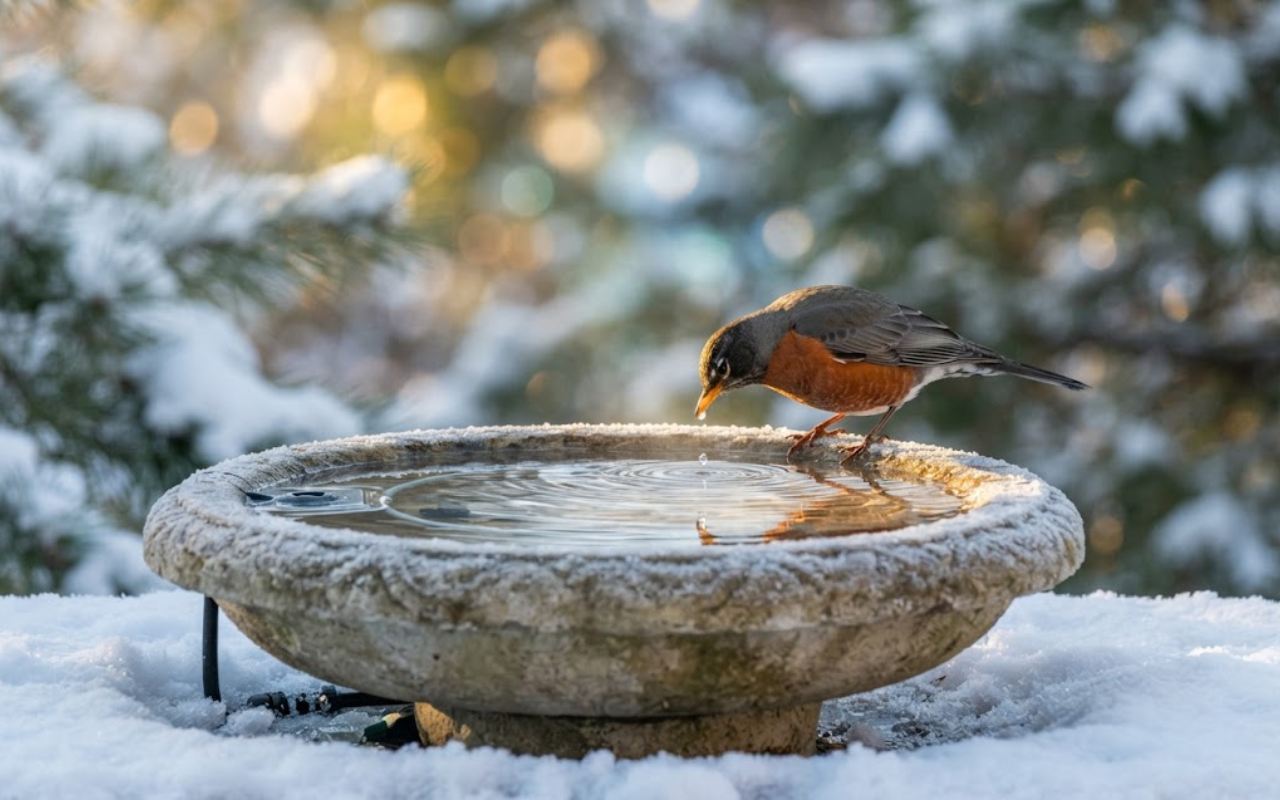
Starting a dependable warm water bird bath routine keeps your backyard flock alive and hydrated during harsh winter freezes without turning your yard into a death trap. Many backyard birders mistakenly believe they should pour steaming hot kettles into ice-filled basins every morning.
Doing this not only shatters delicate ceramic bowls through thermal shock, but it also creates serious hypothermia risks for the birds themselves.
In sub-freezing weather, birds need liquid water to drink and maintain metabolism, not an open swimming pool that soaks their down feathers. By managing water depth, temperature thresholds, and hardware safely, you provide clean hydration without endangering the local wildlife.
Quick-Glance Field Summary
A proper winter watering setup keeps open liquid available for drinking while physically preventing birds from fully submerging their plumage in freezing temperatures. Success relies on regulated, low-wattage heating hardware, shallow depth restrictors, and dedicated electrical safety.
- Water depth target: 0.5 to 1.5 inches maximum
- Thermostat turn-on threshold: 35°F to 40°F (1.7°C to 4.4°C)
- Submersible heater wattage: 44 to 150 watts with internal automatic shut-off
- Power supply requirement: Exterior GFCI protected outlet with weather-rated drip loop
- Safe basin materials: Polyresin, heavy plastic, or cast concrete (avoid ceramic, glass, and terra cotta)
- Perch structure: Flat stones or wire grid mesh elevated above the water line
Why You Should Never Pour Boiling Water into a Frozen Bird Bath
Boiling water seems like the quickest way to melt ice, but it creates two massive problems instantly. Pouring hot water into a frozen ceramic, stone, or terra cotta bath causes rapid thermal shock that snaps the basin in half. Forum members across r/backyardbirds frequently share photos of ruined heirloom pedestals cracked down the middle after a single morning kettle dump.
High temperatures also release thick steam clouds that attract unwanted attention from neighborhood predators like Cooper’s hawks. Furthermore, boiling water warps thin plastic liners and releases petroleum residues into the drinking supply.
If you need to melt a stubborn ice cap manually, use cool or lukewarm tap water around 50°F to 60°F. This gradual thermal shift softens the ice block safely without stressing the material.
| Hydration Basin Component | Avian Safety & Thermal Standard | Overnight Freeze Risk | Mandatory Routine Feeder Rule |
|---|---|---|---|
| Lukewarm Refill Method | Keep water between 40°F and 50°F. Never use boiling water, which cracks stone and leaves feathers damp. | Freezes within hours without an active internal heating source during cold snaps. | Replenish early every morning; dump out overnight ice sheets completely before pouring fresh water. |
| Submersible De-Icer unit | Thermostatically controlled element; activates automatically when water drops near freezing. | Zero; maintains a small open water ring down into sub-zero weather conditions. | Secure the power cord with outdoor tape; ensure the heating element stays fully under water. |
How to Stop Birds from Bathing and Freezing in Sub-Zero Air
The biggest winter danger is a bird getting completely soaked when the ambient air sits well below freezing. A bird’s survival in freezing weather depends entirely on the tiny air pockets trapped within dry down feathers. If water penetrates down to the skin, body heat plummets within minutes, resulting in fatal hypothermia.
A popular community hack shared on the r/birdwatching forum involves placing a flat baking cooling rack or hardware cloth directly over a heated basin. This allows chickadees, finches, and nuthatches to dip their beaks through the gaps while physically preventing them from fluttering into the water.
You can also stack smooth river stones inside the bowl until only small crevices of liquid remain visible.
- Maximum open water depth: 1 inch to keep breast feathers dry
- Center landing pad: 1 large flat flagstone protruding 0.5 inches above the surface
- Edge perimeter: Smooth river gravel to offer textured, non-slip footing
- Surface barrier: Stainless steel 0.5-inch wire grid for aggressive bathers like starlings
Starlings and American robins love vigorous splashing, regardless of outdoor temperatures. Restricting the open pool prevents these larger birds from soaking the station and leaving ice glaze on surrounding branches.
Choosing the Right Heater and Electrical Setup for Cold Weather
Dedicated bird bath de-icers are far superior to dangerous DIY immersion coils or ungrounded livestock gear. Modern commercial bird bath heaters utilize internal thermostats that activate only when water temperatures dip below 40°F. They cycle off automatically once the water reaches approximately 45°F to 50°F, which conserves electricity.
Many beginners buy livestock bucket heaters, but experienced forum users caution that uncalibrated farm units will overheat shallow basins. High heat accelerates evaporation and leaves heaters exposed to air, which melts plastic reservoirs and creates fire risks.
Always plug your equipment into a certified outdoor ground fault circuit interrupter outlet.
- Heater power rating: 44 to 75 watts for shallow pans, up to 150 watts for large stone basins
- Cord connection: Watertight cord lock gasket or outdoor electrical junction box
- Cable routing: Heavy-duty 14-gauge outdoor extension cord with a downward drip loop
- Base construction: Aluminum cast body or stainless steel wrapped element
Forming a drip loop along the power cord prevents melting snow from tracking straight into the electrical connection. Check the cord regularly for signs of rodent chewing, especially when gray squirrels visit the water station.
Keeping the Water Clean Without Warping Your Gear
Cold winter air does not stop bacterial growth, especially when multiple species congregate around a single water source. Winter bird baths collect droppings, pine needles, and dust quickly, which fosters bacteria like Salmonella and fungal spores.
Standard cleaning requires scrubbing the bowl with a solution of one part unscented household bleach to nine parts warm water. Rinse the basin thoroughly with fresh water until all chlorine odor dissipates before refilling it.
Never add toxic chemical additives like glycerin, salt, or automotive antifreeze to the water under any circumstances.
- Bleach sanitizing mixture: 1:9 ratio of plain bleach to water applied with a stiff nylon brush
- Natural alternative wash: 50/50 mixture of white vinegar and water for light mineral buildup
- Banned chemical: Glycerin, which destroys the interlocking barbules of feathers and causes death
- Banned chemical: Table salt or rock salt, which damages avian kidneys even in mild concentrations
While high heat kills germs, pouring boiling sanitizing rinses onto cold plastic basins will twist and deform the plastic permanently. Stick to room temperature sanitizing washes applied with a nylon scrub brush twice a week.
Safe Placement Tips to Protect Birds from Predators and Windows
The location of your winter bath dictates whether birds visit regularly or avoid the area entirely. Audubon guidelines recommend placing water stations either within 3 feet of your windows or farther than 30 feet away. The 3-foot rule ensures that birds startled by predators cannot gather enough flight speed to sustain fatal window impact injuries.
A user on the American Birding Association community boards highlighted that placing baths under dense overhanging trees drops debris and creates blind ambush spots for domestic cats. Instead, position the bath roughly 10 feet from dense shrubs or evergreen boughs.
This 10-foot buffer gives small songbirds a safe staging area to scan the open ground before dropping down to drink.
- Window safety distance: Under 3 feet directly off the glass, or beyond 30 feet into the yard
- Escape staging brush: 8 to 12 feet away to provide visual clearance against neighborhood cats
- Ground elevation: 3 to 4 feet off the ground on a sturdy, level metal or stone pedestal
- Sun exposure: Full southern or western exposure to harness natural solar thawing throughout the day
Aligning your bath with the winter sun reduces your heater’s electrical workload and speeds up morning surface clearing. A stable pedestal also prevents raccoons and opossums from tipping the warm reservoir overnight.