Learning how to discourage crows from dominating your cold-weather feeders is essential for maintaining a balanced backyard bird sanctuary throughout the freezing winter months. American crows are highly intelligent, social corvids with voracious winter appetites that can easily overwhelm feeding stations designed for smaller songbirds.
When winter weather diminishes natural foraging options, a single flock of crows can empty perches and monopolize food sources in minutes. Backyard birders can preserve access for chickadees, finches, and nuthatches by implementing humane, biologically sound deterrents without harming corvids.
Install Physical Exclusion Cages on Winter Feeders
Crows possess substantial wingspans and wide bodies that prevent them from squeezing into restricted, narrow spaces. Surrounding your standard tube or hopper feeders with metal wire exclusion cages stops large birds while allowing smaller species to pass through freely. Standard commercial cages typically feature grid openings measuring between 1.5 inches and 2 inches in diameter.
- Install vinyl-coated wire mesh with 1.5-inch grid openings around central tube feeders.
- Maintain at least three inches of clearance between the outer wire mesh and the inner seed ports.
- Ensure the protective cage features a solid or domed roof to prevent perching from above.
These dimensions comfortably accommodate small winter residents like tufted titmice, downy woodpeckers, and juncos. American crows quickly realize their broad shoulders cannot breach the wire barrier, prompting them to move along to accessible foraging grounds.
Transition to Weight-Sensitive Perch Feeders
Weight-activated feeding units use calibrated mechanical springs to shut access doors over seed ports when heavy visitors land on them. Because an adult American crow generally weighs between 11 and 21 ounces, its body weight easily trips the internal spring mechanism. In contrast, backyard songbirds like black-capped chickadees weigh less than half an ounce and feed without triggering the gate.
- Calibrate spring tension perches to activate under any downward weight exceeding three to four ounces.
- Clean movable metal hinges frequently to prevent winter freezing, ice accumulation, and mechanical binding.
- Disinfect internal moving parts monthly using a standard solution of one part bleach to nine parts warm water.
These mechanical designs eliminate aggressive scolding or physical distress while cleanly denying access. Crows find no foot leverage on the closing perches and rapidly abandon the mechanism in favor of easier food sources.
Offer Targeted Diets That Deter Large Corvids
Crows thrive on broad, calorie-rich diets including cracked corn, large suet blocks, peanuts in the shell, and meat scraps. By replacing these large items with specialized seeds that corvids dislike or cannot easily consume, you protect your supply for target songbirds. Safflower seed is an ideal substitute because its hard white outer shell and slightly bitter taste make it unappealing to crows.
- Fill core feeding stations with pure white safflower seed to attract cardinals and nuthatches.
- Dispense tiny Nyjer thistle seeds using narrow-slit finch feeders that crows cannot manipulate.
- Remove loose table scraps, pet food kibble, and whole corn ears from open yard areas completely.
Nyjer seed provides vital winter lipids and proteins for goldfinches, pine siskins, and redpolls without attracting large flocking species. Eliminating easily accessible, high-calorie staples removes the underlying incentive that draws large corvid flocks to your property.
Suspend Hanging Feeders Free of Solid Landing Platforms
Crows require flat, stable perches to comfortably balance their heavy bodies while consuming food. Platform, tray, and ground feeding stations offer wide landing areas that invite corvid monopolization. By removing wide wooden ledges and switching to hanging, free-swinging feeders, you disrupt their landing mechanics.
- Replace wide tray feeders with slender vertical tube designs featuring perches shorter than one inch.
- Hang lightweight, swinging feeder models from flexible wire mounts that sway under heavy loads.
- Trim ground-level platform skirts and remove broad debris catchers that provide footing.
Small arboreal clinging birds, such as goldfinches and nuthatches, feed effortlessly while swinging on unstable perches. Crows lack the physical agility to cling comfortably to tiny, vibrating pegs, rendering the food unreachable.
Create a Dedicated Secondary Feeding Station for Crows
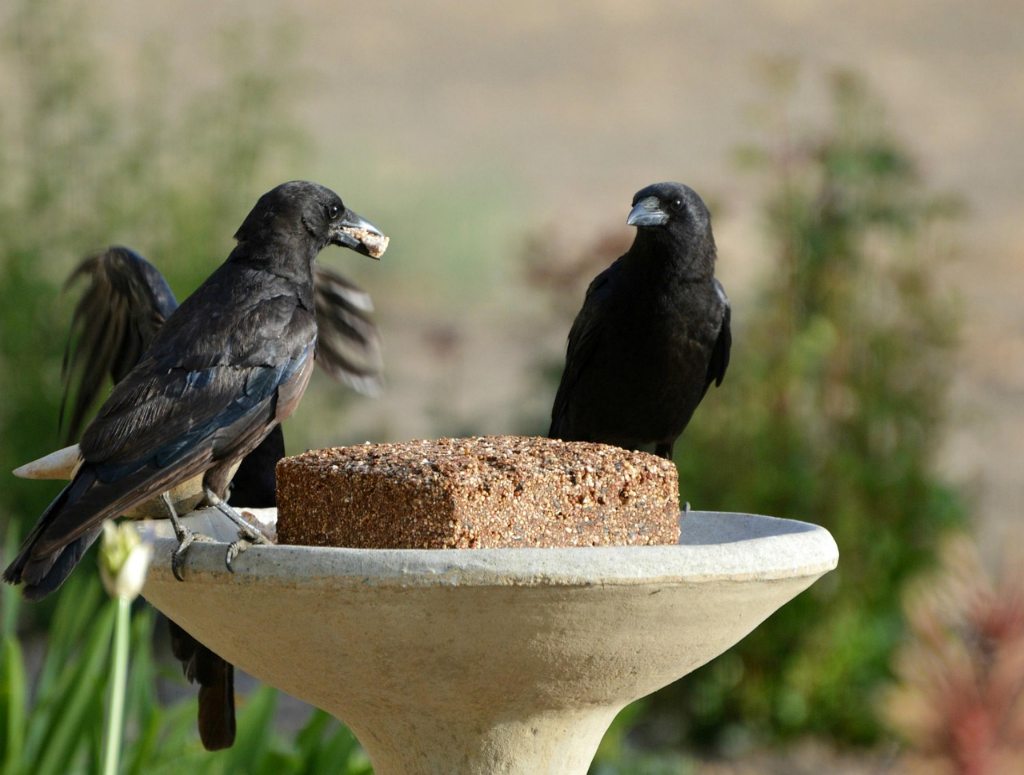
Completely banishing crows from a neighborhood can be counterproductive, as their persistent foraging memory often keeps them patrolling your yard. An effective strategy endorsed by field ornithologists involves setting up an alternative, corvid-friendly station situated far away from your delicate songbird feeders. Place this dedicated decoy station at least thirty to forty feet away in an open corner of the property.
- Provide a low ground tray stocked with whole-kernel corn, raw peanuts, or suet pellets.
- Position the station within clear sightlines so crows immediately spot it before approaching your main garden.
- Replenish the food supply at consistent morning hours to establish predictable foraging routines.
Providing an unobstructed, accessible food source satisfies the biological needs of neighborhood crows while keeping them distracted. Small backyard songbirds can then feed calmly at their own sheltered stations, ensuring a safe, diverse winter bird habitat.