
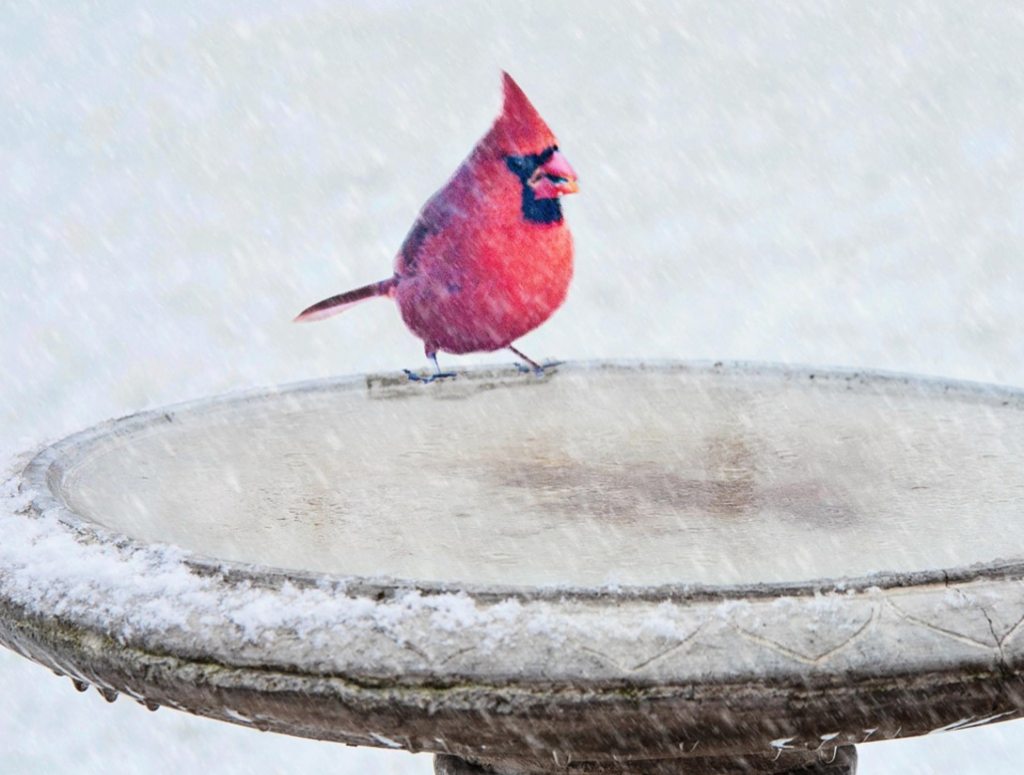
Many backyard naturalists find that their heated bird baths lose water rapidly during periods of intense winter cold, often waking to completely dry basins within twenty-four hours. This frustrating phenomenon rarely stems from physical basin cracks or hidden structural failures; instead, it is driven by aggressive thermodynamic forces and hidden environmental interactions that accelerate moisture loss.
Understanding the mechanics of cold-weather water loss requires examining microclimate conditions, heating element wattages, and regional wildlife behaviors. Once you identify the specific combination of mechanical and natural factors draining your setup, you can implement targeted field adjustments to maintain an open, liquid reservoir throughout the freezing season.
Vapor Pressure Differentials and Thermal Boundary Layer Stripping
The primary driver of unexplained winter water loss is the steep vapor pressure deficit between the warmed water surface and the surrounding sub-freezing air. Cold winter air holds very little moisture, creating exceptionally low ambient relative humidity levels across northern latitudes.
When a submerged heating element warms water to 40 or 50 degrees Fahrenheit, the thermodynamic gradient forces water molecules to transition rapidly into vapor, driving accelerated evaporation that mimics a simmering pot.
Convective air currents exacerbate this rate of phase change across open basins. High-velocity winter winds shear away the thin, humid boundary layer of air resting directly above the water surface, constantly exposing the liquid to dry air currents.
This continuous boundary layer stripping accelerates mass transfer, exhausting a two-quart basin in less than a single day during windy cold snaps.
- Field conditions that dramatically amplify thermodynamic surface evaporation include:
- Sustained winter wind speeds exceeding 15 miles per hour that continuously scour the microclimate boundary layer.
- Ambient air temperatures plummeting below 15 degrees Fahrenheit while heating elements cycle continuously.
- Unshielded pedestal elevations that elevate the basin into turbulent, unobstructed yard drafts.
- Low atmospheric relative humidity levels falling below 40 percent during polar vortex events.
When these environmental parameters align, a typical garden bird bath can shed up to an inch of water depth every twelve hours purely through atmospheric transfer.
De-Icer Wattage Imbalances and Uncalibrated Heating Elements
Many commercial de-icers and integrated heated baths utilize uncalibrated or high-wattage resistance heating elements that drastically overheat small volumes of water. Backyard hobbyists frequently deploy 150-watt to 250-watt stock tank de-icers in shallow, decorative basins designed to hold only one or two gallons.
These overpowered heating units elevate the water temperature far above the bare minimum liquid threshold of 34 degrees Fahrenheit, triggering continuous passive steaming.
Standard internal bimetallic thermostats often fail or feature wide temperature differentials, failing to shut off until water temperatures climb past 60 degrees. Running high water temperatures in freezing air is counterproductive to wildlife management and wasteful of electricity.
Avian visitors do not require warm bathwater; they only need a reliable opening in the ice to drink and perform critical maintenance on their contour feathers.
To prevent equipment-induced boil-off, look for hardware configurations tailored to shallow water profiles:
- Low-wattage immersion de-icers rated between 44 and 75 watts that prevent freezing without heating the water mass.
- Cast aluminum heating units with sensitive, factory-calibrated thermostats that disconnect power at 40 degrees Fahrenheit.
- External line-voltage controllers like the Thermo-Cube that mechanically interrupt current flow until ambient temperatures drop below 35 degrees.
- Ground fault circuit interrupter outlets paired with water-sealed cord connections to prevent erratic internal shorts.
Maintaining your water temperature within a narrow band just above freezing directly reduces the thermal gradient, curtailing vapor loss without allowing solid surface ice to lock up the basin.
Nocturnal Mammalian Consumption and High-Volume Avian Splashing
Unexplained water loss that occurs exclusively between dusk and dawn rarely points to evaporation; it typically indicates nocturnal mammalian activity. Urban and suburban backyards host robust populations of winter raccoons, Virginia opossums, striped skunks, and flying squirrels that struggle to locate open, unfrozen surface water.
A single visiting raccoon can lap up half a gallon of liquid in mere minutes, while a small group of nocturnal visitors can completely drain an automated basin overnight. Daytime water loss, by contrast, frequently results from aggressive mechanical displacement rather than drinking.
Small passerines like the American Goldfinch naturally scale up pectoralis muscle mass and shivering metabolic capacity by 20 to 30 percent during winter, requiring frequent access to water to clear insulating down feathers of dirt and mineral deposits.
Flocks of European Starlings, American Robins, or Cedar Waxwings visiting en masse quickly displace substantial liquid reserves through aggressive wing-flapping and communal bathing bouts.
Common animal-induced water displacement patterns frequently reported by backyard observers include:
- Nocturnal muddy residue, scratch marks, and hair along the basin rim pointing to mid-sized urban mammals.
- Sudden drops in water volume during midday intervals coinciding with roving flocks of frugivorous winter birds.
- Saturated, iced-over ground rings radiating eighteen inches from the bath base caused by heavy bathing displacement.
- Disturbed basin textures or knocked-aside balancing stones indicating heavy physical perching leverage along the rim.
Differentiating between mammalian consumption, active feather conditioning splash-out, and atmospheric evaporation allows you to apply the correct behavioral deterrents rather than adjusting your electrical gear in vain.
Strategic Windbreak Geometries and Microclimate Positioning
Relocating your heated bath to mitigate local wind vectors represents the most cost-effective technique to slow runaway evaporation. Positioning a heated water source in the dead center of an open lawn exposes the liquid to the maximum chilling and stripping effects of winter gusts.
By shifting the installation toward natural shelter, you preserve the boundary layer of warmer, moisture-laden air that naturally cushions the water surface. Adhere strictly to safe window-strike clearance rules when repositioning your gear within the yard perimeter.
The American Bird Conservancy and Audubon recommend placing water and feeding stations within three feet of home windows, or alternately beyond thirty feet away, to eliminate fatal flight collisions.
Setting your bath within three feet of a south-facing exterior wall creates a reliable windbreak that blocks prevailing northern drafts while capitalizing on passive solar warmth radiated from the home foundation.
Proven microclimate arrangements that effectively shelter surface water without compromising bird safety include:
- Coniferous evergreen plantings, such as dense arborvitae or dwarf spruce, positioned north and west of the water source.
- Heavy brush piles placed eight to ten feet away to provide immediate escape cover from Cooper’s Hawks without allowing ambush predators to hide.
- Freestanding solid cedar wind panels or decorative privacy fencing staked along the high-wind yard perimeter.
- South-facing brick or masonry walls that absorb daytime solar radiation and re-radiate infrared heat through the night.
These strategic spatial adjustments shield the water surface from persistent wind-scouring, slashing evaporative losses while establishing a safer, lower-stress winter foraging station.
Hardware Adjustments, Thermal Sinks, and Automated Top-Off Solutions
Fine-tuning the physical dynamics inside the basin helps stabilize water volume throughout sub-zero weather patterns. Shallow water depths are essential for small songbirds, with field guidelines dictating a central depth of no more than 1.5 to 2 inches, tapering to a gentle, textured edge.
Because thin sheets of water lose heat rapidly, incorporating dark, smooth river stones into the interior creates a thermal sink that stores radiant solar energy while offering safe, slip-free footholds.
Never introduce toxic chemical additives such as automotive antifreeze, alcohol, or commercial glycerin into a wildlife water source. Glycerin disrupts the natural microscopic barbs and barbules of avian contour feathers, destroying their natural water repellency and causing fatal hypothermia when wet birds face freezing air temperatures.
Safe maintenance relies strictly on mechanical and structural adjustments rather than chemical freezing-point depressants.
- Targeted hardware hacks that streamline volume stabilization and daily operations include:
- Dark, clean river rocks submerged above heating elements to absorb daytime sunlight and dissipate localized heat plumes.
- Standard 18-inch clear plastic baffle domes suspended low over the basin to deflect falling snow, break falling winds, and catch rising vapor.
- Inverted glass reservoir bottles equipped with poultry drinking fount bases that mechanically meter fresh liquid into the basin as it depletes.
- Dedicated outdoor hose bib insulators paired with insulated indoor water carboys to ensure effortless morning top-offs.
Implementing these structural enhancements keeps the heated bath safe, stable, and consistently wet, providing wild birds with an indispensable winter lifeline without demanding constant trips to the outdoor tap.