
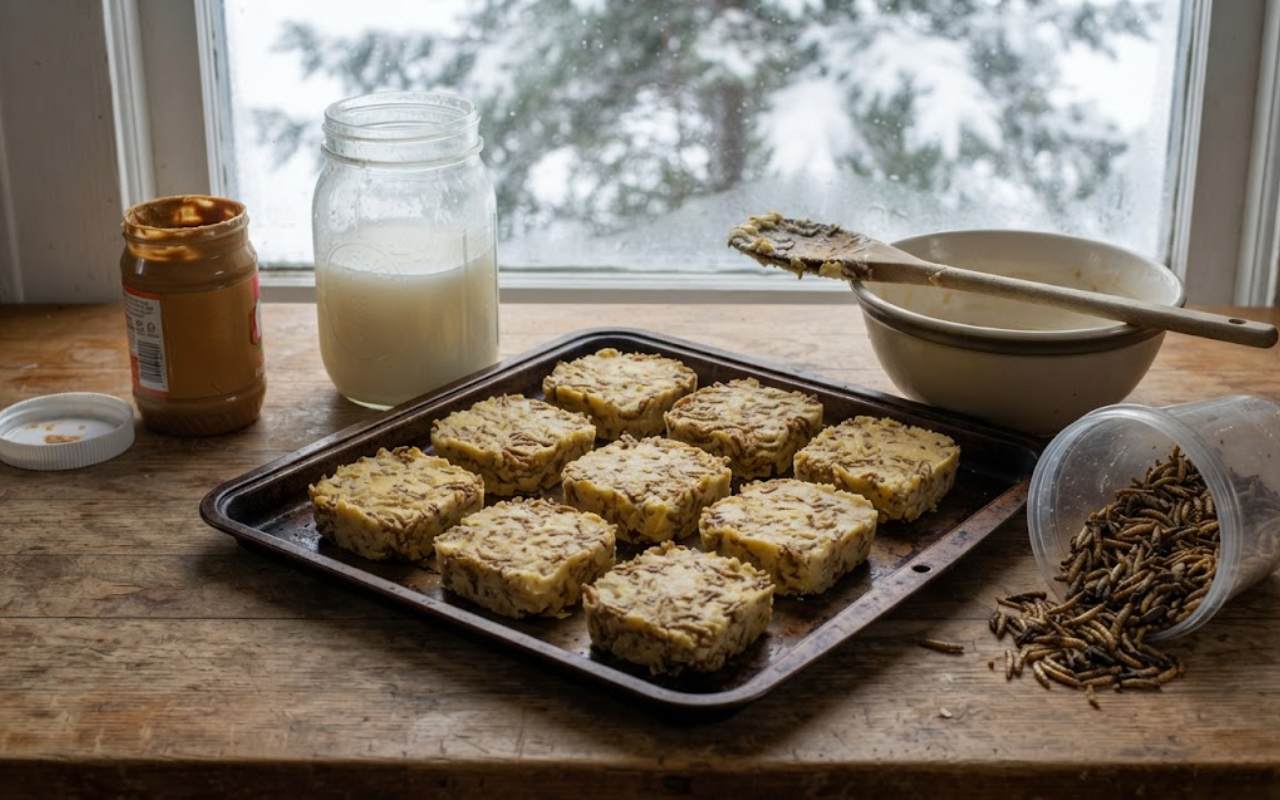
Making insect-infused suet blocks for winter warblers is one of the most reliable ways to sustain delicate insectivorous birds when severe frosts eliminate dormant spiders and leaf-litter arthropods. Backyard observers frequently watch species like Yellow-rumped Warblers and Pine Warblers flutter fruitlessly around hopper feeders because their slender, tweezer-like beaks cannot crack sunflower shells or handle coarse seeds.
Rendering high-grade animal fats packed with dehydrated invertebrates provides the immediate, high-density fuel these tiny songbirds need to survive long winter nights. Formulating these blocks in your own kitchen lets you control fat hardness and insect distribution, giving visiting warblers easy access to life-saving protein without damaging their bills.
Quick-Glance Field Summary
A homemade insect suet mix combines double-rendered beef kidney fat with crushed dried invertebrates and softening agents to remain edible in sub-freezing temperatures. This formulation matches the natural foraging mechanics of wintering warblers while locking out moisture that causes spoilage.
- Base ratio: 2 parts rendered beef tallow to 1 part natural smooth peanut butter.
- Insect load: 1 part crushed dried mealworms or black soldier fly larvae.
- Structural binder: 1 part finely ground yellow cornmeal or quick oats.
- Fat rendering target temperature: 220°F to 240°F to fully boil off residual water.
- Pliability threshold: remains soft enough to score with a fingernail down to 15°F.
- Feeder spacing rule: mount feeders within 3 feet or beyond 30 feet from windows.
Picking the Best Fat and Bugs for Winter Warblers
Raw beef kidney fat, traditionally called suet, forms the gold standard foundation for insectivorous winter birds. You can often buy raw kidney suet for low prices from local butcher counters, though it contains connective tissue that must be melted down into pure tallow. Avoid generic meat trimmings from regular steaks, as these scraps contain excess muscle tissue, water, and salts that spoil quickly and degrade the finished cake.
Wintering warblers require insect-derived chitin and protein alongside pure fats to maintain their muscle mass. While Yellow-rumped Warblers can digest saturated waxes from bayberries and wax myrtle fruits, other species like Orange-crowned and Pine Warblers depend almost exclusively on invertebrate protein. Dried mealworms and black soldier fly larvae provide dense sources of protein and natural minerals.
Standard dried insects should not simply be dumped whole into warm fat. A common complaint shared on r/birdwatching involves users finding entire commercial dried mealworms scattered and wasted on top of the snow under feeders. Warblers will pry loose whole insects, drop them accidentally, or give up entirely if the insects are too large for their gapes; pulsing the dried bugs in a food processor solves this problem instantly.
| Insect Infusion Base | Protein and Amino Acid Density | Structural Cake Texture | Avian Bill Suitability Index |
|---|---|---|---|
| Ground Freeze-Dried Mealworms | Elite; packed with essential fats and crude protein blocks. | Firm but crumbly; easily binds to melted tallow without clumping. | Perfect; allows slender warbler bills to extract fine insect meat cleanly. |
| Whole Dehydrated Crickets | High chitin surface mass; moderate digestible interior fats. | Coarse and chunky; requires extra fat layering to lock legs in place. | Moderate; best for large woodpeckers, requiring crushing for small wrens. |
How to Melt and Render Clean Suet at Home
Rendering raw kidney fat purifies the material into clean tallow by vaporizing residual moisture and separating out leftover gristle. Cut cold raw fat into small cubes or run it through a coarse meat grinder to maximize the surface area before heating. Place the chopped fat into a heavy cast-iron skillet or slow cooker set to low heat, ensuring the temperature stays below 250°F to prevent scorching.
- Chop raw kidney suet into uniform half-inch cubes.
- Melt on low heat until liquid tallow pools and cracklings float to the surface.
- Pour the hot liquid through two layers of cheesecloth into a heat-safe bowl.
- Cool the strained liquid completely until it turns into a solid white block.
- Re-melt the hardened tallow a second time to remove all trapped water droplets.
The double-rendering stage is critical for outdoor stability and shelf life. Any water trapped inside a suet block provides a breeding ground for bacterial rot and causes ice crystals to expand during sudden freezes. Once your second strain is complete and the tallow reaches approximately 130°F, stir in your dry ingredients so they distribute evenly without sinking straight to the bottom.
Backyard Fixes to Keep Suet Soft in Deep Freezes
Pure beef tallow solidifies into a rock-hard brick when temperatures plunge below 25°F. On community forums like r/backyardbirds, members frequently note that slender-billed insectivores abandon frozen suet blocks entirely because their thin mandibles cannot chip away the hard fat crystals. Woodpeckers and nuthatches can hammer through stone-cold suet, but warblers require a softer, yielding matrix.
To solve this issue, cut pure rendered tallow with raw, unsalted peanut butter and unrefined coconut oil. Coconut oil contains medium-chain triglycerides that alter the crystalline structure of the beef tallow, keeping the finished block malleable down to roughly 15°F. Stirring fine yellow cornmeal or rolled oat flour into the cooling mix also creates microscopic fracture lines that let delicate warbler beaks scrape off mouthfuls effortlessly.
- 2 cups rendered beef tallow.
- 1 cup natural smooth peanut butter with no added salt or sugar.
- 0.5 cup unrefined coconut oil.
- 1 cup pulverized dried mealworms or crickets.
- 1 cup finely ground yellow cornmeal.
Pour the combined mixture into silicone molds, small baking pans, or recycled commercial suet trays. Chill the trays in your freezer for two hours until they are solid enough to pop out easily. Wrap each finished cake tightly in parchment paper and store them in an airtight container inside your freezer until cold mornings demand their deployment.
How to Hang Feeders and Stop Backyard Bullies
Thin-billed warblers feed differently than clinging woodpeckers or heavy flocking birds like European Starlings. While starlings and grackles easily dominate standard hanging wire cages, warblers prefer perching along rough, natural bark surfaces. Smearing your homemade insect suet directly into the grooves of an untreated rough pine log feeder creates a natural foraging station tailored directly to warbler foot anatomy.
If you must use standard suet cages, install an inverted feeder or affix a clear 18-inch weather baffle directly above the unit. Starling bodies are heavy and have difficulty feeding upside down for sustained periods, whereas nimble warblers easily hover and cling to the bottom mesh of an inverted cage. Using a cage wrapped with 0.25-inch or 0.5-inch hardware cloth also prevents squirrels and blue jays from ripping out massive chunks in a single visit.
Place your feeding log or hanging cage either within 3 feet of your home windows or greater than 30 feet away. The 3-foot rule keeps birds from building up fatal flight speeds if they are spooked by backyard predators, drastically cutting window strike fatalities. Avoid hanging suet directly in all-day winter sun, as unseasonable warm spells can melt the peanut butter matrix and leave grease on avian head feathers.
Keeping Suet Fresh and Preventing Deadly Molds
Warm spells and winter rain introduce severe hazards to fatty bird foods. Damp suet cakes left in the yard for more than a week quickly grow fungal pathogens like Aspergillus flavus, which produces toxic aflatoxins that are lethal to songbirds. If temperatures climb above 50°F for multiple days, remove the blocks immediately to avoid rancidity and feather contamination.
Feather contamination is an overlooked winter killer for small birds. When soft fat liquefies, it can transfer onto a warbler’s facial feathers and breast plumage, stripping away the natural waterproofing and insulation necessary to keep the bird warm. Never add liquid vegetable oils, canola oil, or petroleum jelly to suet recipes, as these low-melt fats never harden sufficiently and will easily mat down delicate feathers.
Clean your suet cages and feeding logs every two weeks to prevent disease transmission. Scrub the feeding hardware thoroughly using a 1:9 household bleach-to-water dilution, then let the wood or metal air dry completely before refilling. Discard any fallen suet fragments gathered underneath the feeding zone so ground foraging birds do not ingest soiled or trampled tallow scraps.