
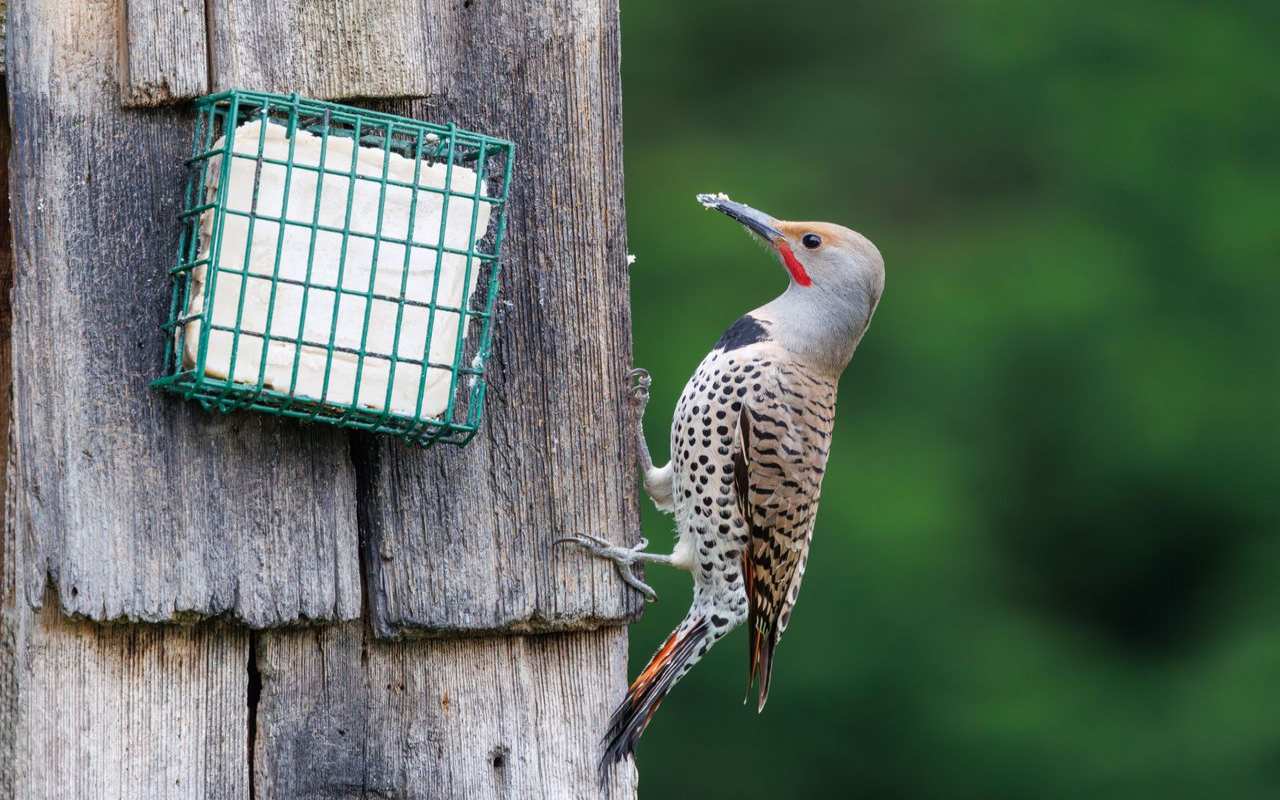
Learning how to make homemade suet for birds provides high-density fuel for backyard species facing extreme caloric deficits in deep winter. Wintering passerines, such as the Black-capped Chickadee and American Goldfinch, scale up their pectoralis muscle mass and shivering metabolic capacity by 20 to 30 percent to generate nocturnal body heat.
Using a nutrient-dense homemade suet recipe allows these birds to replenish critical lipid stores rapidly before sundown. Many commercial store-bought suet cakes rely on cheap grain fillers, low-melting-point palm oils, and preservatives that offer low metabolic value. Crafting customized suet cakes at home ensures optimal fat purity while preventing greasy feather contamination.
Lipid Selection: Beef Tallow Rendering versus Raw Fat Hazards
True suet is specifically the dense, hard fat surrounding the kidneys and loins of cattle, often called leaf fat by local butchers. Using unrendered raw fat scraps directly from kitchen trimmings poses serious hazards; raw fat spoils quickly at temperatures above freezing and harbors harmful bacteria.
Commercial lard or vegetable shortening melts at far too low an ambient temperature, creating greasy smears that destroy the microscopic barbules of bird feathers.
Bacon grease must always be avoided in backyard avian recipes. The curing process loads bacon grease with chemical nitrates, high salt levels, and carcinogenic nitrosamines that damage small avian kidneys.
- Raw beef kidney fat, often called leaf suet, provides the hardest lipid structure once rendered.
- Supermarket beef trimmings containing red meat scraps should be trimmed completely to prevent putrefaction.
- Pure commercial beef tallow is an acceptable pre-rendered substitute if butcher fat is unavailable.
- Vegetable shortening and hydrogenated oils lack species-appropriate fatty acid profiles and soften too easily.
- Bacon drippings and poultry grease must be completely excluded due to excessive sodium concentrations.
Rendering beef fat twice raises its final melting point and extracts lingering moisture. Simmer the chopped fat slowly on low heat until liquefied, strain it through fine cheesecloth, let it solidify completely, and repeat the melting cycle once more.
The High-Calorie Dry Base: Balances of Cornmeal, Oats, and Nut Flours
A balanced suet cake requires an absorbent, highly digestible dry substrate to bind the rendered tallow into a cohesive block. Without coarse, nutrient-rich binders, pure rendered fat crumbles or drips excessively during unseasonable midwinter thaws. The dry mix should emphasize raw, unroasted ingredients that mimic natural winter foraging sources.
Yellow cornmeal serves as the structural backbone of homemade suet mixtures. It binds free oils efficiently and prevents the greasy residue that causes feather matting around avian faces and eyes.
- Two parts rendered pure beef tallow, fully melted and strained of all gristle.
- One part all-natural, unsalted peanut butter containing no hydrogenated oils, extra sugars, or xylitol.
- Two parts coarse-ground yellow cornmeal to provide binding texture and reduce surface tackiness.
- One part rolled oats or oat flour to create an easily digestible crumb structure.
- One part hulled black oil sunflower seeds, raw chopped peanuts, or dried mealworms.
Mix the dry ingredients thoroughly in a heat-resistant bowl before introducing the warm, liquid fat. Stir the mixture until every dry particle is uniformly coated in the lipid base, ensuring no loose pockets of flour remain.
Safe Rendering and Solidification: Temperature Controls to Prevent Feather Matting
Thermal regulation during the preparation process directly dictates the physical safety of the finished suet cake. If tallow is scorched over high heat, its chemical integrity breaks down, resulting in a soft, sticky paste rather than a firm, weather-resistant block. Maintain stovetop heat between 225°F and 250°F to gently clarify the fats without smoking.
Pour the combined warm mixture into molds that match standard backyard hardware dimensions. Recycled commercial suet plastic trays or clean 1-quart cardboard milk cartons cut to 4.5-inch squares provide the ideal shape for common wire cages.
- Chop the chilled raw beef fat into half-inch cubes to accelerate even rendering without hot spots.
- Simmer the fat in a heavy-bottomed pot or slow cooker until all liquid is clear and solids turn golden.
- Strain the liquid through a fine metal sieve lined with unbleached cheesecloth into a clean heatproof vessel.
- Cool the mixture slightly before stirring in nut butters and dry grains to preserve essential vitamins.
- Freeze the filled molds for at least four hours to ensure thorough, uniform core solidification.
Always verify that the finished block feels hard and dry to the touch before mounting it outdoors. If your finger leaves an oily or slick residue on the block at room temperature, melt the mixture down again and incorporate an additional half-cup of coarse cornmeal.
Hardware Cages and Baffle Geometry to Exclude Squirrels and Starlings
Placing high-calorie suet in an open yard inevitably attracts non-target nuisance species like European Starlings and Eastern Gray Squirrels. Starlings possess sharp, non-serrated bills specialized for open-bill probing in soil, yet their aggressive flocking behavior can empty an unshielded suet cage in less than an hour.
Backyard hobbyists routinely solve this pressure by taking advantage of morphological and behavioral differences between clinging woodpeckers and these passerine pests.
Upside-down suet feeders feature an enclosed top and sides, forcing birds to cling inverted beneath a wire mesh floor. Clinging specialists like downy woodpeckers, nuthatches, and chickadees feed effortlessly from below, while starlings lack the leg strength to maintain an inverted hold.
- Install an inverted feeder featuring a 0.5-inch coated hardware cloth bottom to deter non-clinging flocking birds.
- Deploy a standard 18-inch metal torpedo baffle beneath pole-mounted feeders at a minimum height of four feet.
- Maintain a minimum horizontal clearance of ten feet from nearby tree branches to prevent squirrels from jumping onto the cage.
- Mount suet cages within three feet of windows, or beyond thirty feet, to prevent fatal flight collisions if birds are flushed.
- Utilize a wide, 12-inch clear polycarbonate weather dome over the cage to shield the fat cake from sleet and direct rain.
Rigid wire cages with 1.5-inch outer excluder cages also allow small songbirds inside while completely locking out grackles, starlings, and corvids. Ensure all mounting wire is galvanized or vinyl-coated to avoid rusting under wet winter conditions.
Winter Spoilage Risks, Aflatoxins, and Proper Feeder Sanitation Protocols
Winter humidity and fluctuating temperatures introduce serious biological hazards to fat-based bird feeding stations. When suet cakes are exposed to alternating freeze-thaw cycles, moisture accumulates inside the porous grain binders, creating an ideal breeding ground for mold.
The fungus Aspergillus flavus thrives in wet grain-and-nut matrices, producing dangerous aflatoxins that can cause acute liver failure in small songbirds.
Inspect suet blocks immediately following heavy snow or rainstorms. Discard any cake that displays black or green surface discoloration, an acrid odor, or a softening outer crust.
- Inspect hanging suet blocks weekly for interior moisture buildup, musty odors, or foul-smelling rancidity.
- Remove suet feeders entirely when daytime ambient temperatures consistently exceed 50°F (10°C).
- Scrape residual grease from wire mesh cages using a stiff wire brush before chemical sterilization.
- Submerge cages in a 1:9 household bleach-to-water dilution for ten minutes to eradicate fungal spores.
- Avoid pouring boiling water directly onto coated wire or polycarbonate parts, which can warp or crack under thermal shock.
Allow all hardware to air-dry completely in the sun before inserting a fresh, frozen suet block. Maintaining strict sanitation ensures your homemade winter suet station remains an essential lifeline rather than a biological hazard.