
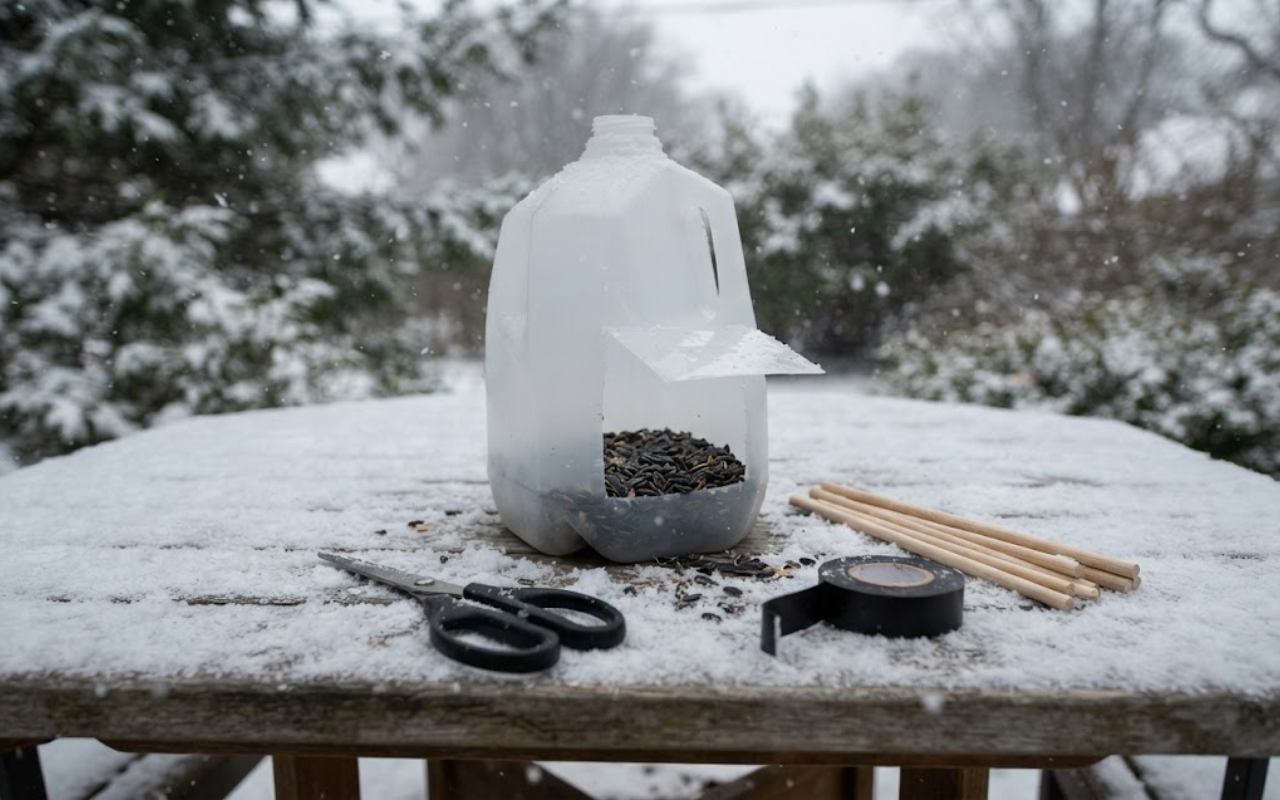
Building 3-minute DIY recycled jug winter feeders for emergency snowstorms gives songbirds an immediate food source when sudden blizzards bury natural foraging grounds. A standard clean plastic gallon jug, utility knife, and spare cordage can be converted into a functional feeding port before heavy precipitation starts.
During sudden sub-freezing cold snaps, small passerines like chickadees and nuthatches burn up to ten percent of their body mass overnight just maintaining core temperatures. Putting out high-energy food right before a weather front arrives prevents birds from exhausting their caloric reserves searching beneath frozen crusts.
Quick-Glance Field Summary
This emergency project repurposes clean plastic gallon jugs into storm-ready hopper feeders that shield dry seed from horizontal snow and sleet. Follow these baseline measurements and safety checks to deploy your feeder before storm winds peak:
- Base reservoir height: 2.5 to 3 inches from the bottom rim to keep feed dry and protected
- Feed port dimensions: 2 inches wide by 2 inches high, cut on two opposite sides
- Drainage holes: Minimum of 6 to 8 punctures through the bottom floor using a 1/8-inch nail or bit
- Suspension cord: Paracord, jute twine, or 16-gauge galvanized wire fed beneath the jug handle
- Ballast weight: 1 cup of clean pea gravel placed in the base to stop swinging in 30 mph gusts
- Preferred emergency fuel: 100 percent black oil sunflower seed for maximum lipid density
Best Types of Plastic Jugs for DIY Winter Feeders
Standard polyethylene milk jugs and heavy-duty translucent juice containers work best for rapid field conversion. Avoid thin, brittle water containers, which frequently crack and shatter when ambient temperatures dip below 15 degrees Fahrenheit.
Rinse every jug thoroughly with warm water before cutting to remove milk sugars or acidic residue. Forum contributors on r/backyardbirds frequently point out that spoiled milk film rapidly breeds bacteria on damp seeds, causing digestive upset in visiting finches.
Air dry the interior for ninety seconds with a clean shop rag or paper towel. Leaving pooled tap water inside will cause seed to freeze into a solid, unworkable block the moment the jug hits sub-freezing air.
How to Cut Weather-Proof Openings in a Milk Jug Feeder
Cut access portals precisely 2.5 to 3 inches above the bottom rim using a sharp utility knife or shears. Leaving this deep bottom reservoir prevents sideways winds from scouring loose sunflower seeds out of the basin.
Do not slice the plastic flap completely away from the jug wall. Instead, slice the bottom and sides of a two-inch square, then fold the plastic upward to form an awning over the opening.
Experienced yard birders on r/birdwatching highlight that leaving these top-hinged plastic awnings keeps driving sleet from packing into the seed tray. Make these cuts on two opposing sides only, leaving the perpendicular walls solid to deflect heavy prevailing winds.
| Emergency Feeder Component | Quick Assembly Blueprint Spec | Storm Durability & Safety Metric | Mandatory Blizzard Setup Rule |
|---|---|---|---|
| Hooded Port Windows | Cut a three-sided square flap 3 inches from the base; bend the plastic upward to form an awning. | The overhead plastic awning blocks lateral blowing snow from packing down inside the seed bay. | Smooth down raw cut plastic edges using waterproof electrical tape to safeguard delicate avian feet. |
| Weighted Anchor Bay | Drop a clean, flat 1-pound rock or gravel layer into the absolute bottom of the empty container. | High; stops the lightweight jug assembly from spinning, tipping, or spilling out grains in 40mph gales. | Pour black oil sunflower seeds around the anchor stone up to the lower rim of your cut portal. |
Add Perches, Drainage, and Heavy Wind Anchors
Punch six to eight small drainage holes through the bottom floor using an awl, heated nail, or drill bit. Emergency snowstorms frequently drop mixed freezing rain first, and undrained water turns seed into an inedible ice puck.
Run an unsharpened wooden pencil or a sturdy backyard twig directly through the jug just below the feeding ports. Puncture small holes on both sides, push the stick entirely through, and leave two inches protruding on each end.
- Select rigid hardwood twigs or 1/4-inch wooden dowels over smooth plastic straws
- Secure the stick joints with a wrap of duct tape to prevent loose winter perches
- Add a handful of clean pea gravel to the floor before pouring in seed for wind ballast
- Place drainage holes around the outer rim of the bottom, not just in the center
Lightweight gallon containers whip wildly in high storm winds without added ballast. Adding clean stones lowers the center of gravity, keeping the jug stable so smaller birds can land without getting thrown off balance.
Fill With High-Fat Seeds and Hang at the Right Distance
Fill your feeder exclusively with black oil sunflower seed or chopped unsalted peanut kernels during freezing conditions. Black oil sunflower seeds contain high concentrations of lipids and raw protein, giving birds dense energy to survive severe wind chill.
Avoid generic commercial grocery blends that feature heavy amounts of red milo, cracked corn, and wheat filler. Wild birds routinely kick these filler grains out onto the snow, wasting valuable foraging energy during severe weather.
Hang the completed jug either within three feet of your home windows or further than thirty feet away. Audubon window collision studies confirm that placing feeders within three feet prevents birds from gaining enough flight speed to suffer fatal collisions if startled by a hawk.
- Fill the jug with black oil sunflower seed to maximize lipid consumption
- Avoid filler seeds like milo, oat groats, and millet that absorb water quickly
- Hang the feeder using paracord looped through the jug handle and over a branch
- Space emergency feeders at least ten feet apart to minimize territorial aggression
Securing the jug directly to a patio hook or strong tree branch keeps it off the ground where prowling cats hide. If snow accumulates over three feet, raise the suspension line to keep the feeding tray clear of ground drifts.
Clean and Swap Wet Jugs to Prevent Deadly Mold
Inspect the seed tray twice daily throughout the snowstorm to confirm the ports remain completely free of wet snow. Moisture inside enclosed plastic reservoirs accelerates the growth of Aspergillus flavus, a lethal fungus that produces toxic aflatoxins in damp seed.
If heavy rain or melting slush penetrates the reservoir, bring the jug inside and discard the clumped feed immediately. Never attempt to dry out moldy grain or mix fresh seed over a spoiled bottom layer.
- Sanitize contaminated jugs by soaking for ten minutes in a 1:9 bleach-to-water dilution
- Avoid using boiling water to clean thin milk jugs, as high heat warps the plastic
- Replace torn or split jugs immediately with fresh recycled containers
- Sweep up seed hulls accumulating on top of the snowpack to reduce rodent visits
Emergency recycled jug feeders are designed for rapid storm response and short field lifespans. Once the weather breaks and normal routines return, replace these temporary jugs with durable, cleanable cedar or polycarbonate winter hoppers.