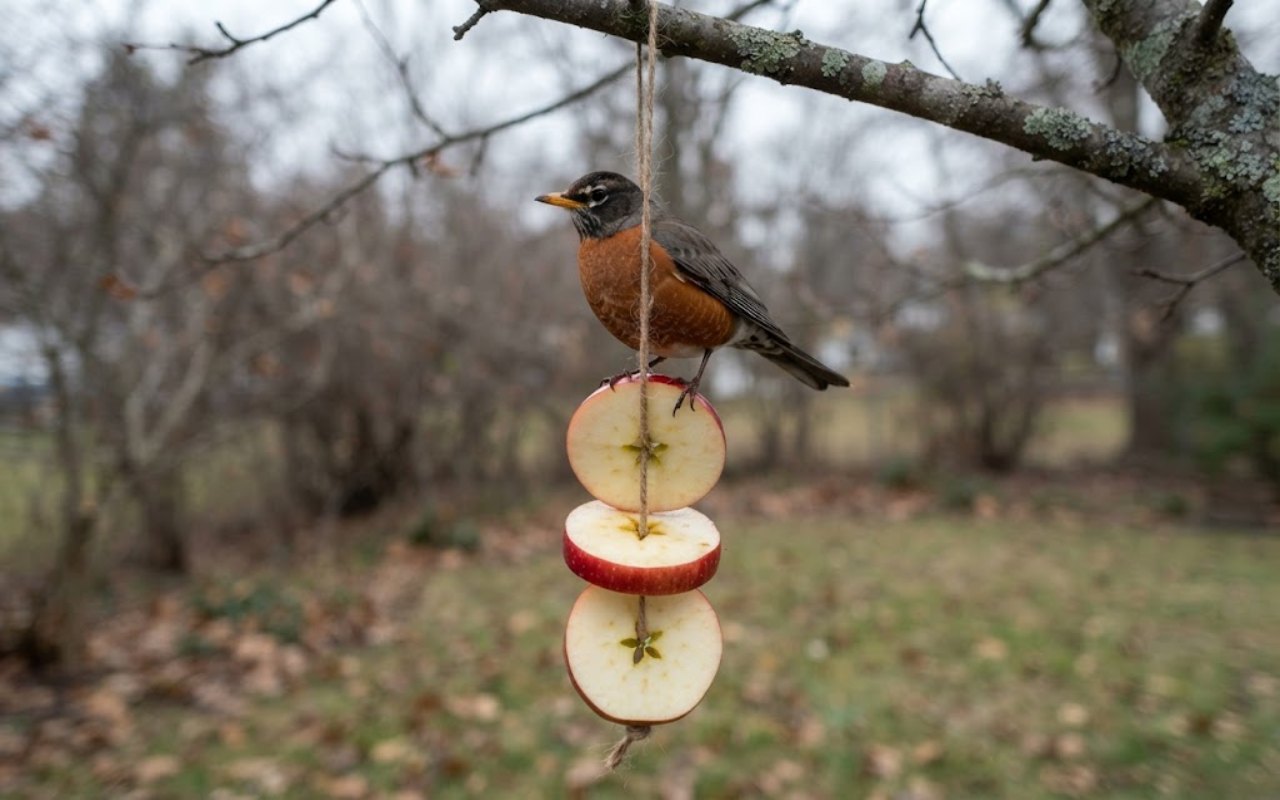
Constructing a dependable diy apple slice bird feeder offers an immediate nutritional lifeline for American Robins as their digestive tracts transition toward fruit in late autumn. While standard seed hoppers remain untouched by thrushes, offering fresh pomaceous fruit caters directly to their seasonal shift toward carbohydrate-rich soft mast.
Many backyard hobbyists struggle to attract these cautious foragers because improper mounting hardware creates unstable perches that robins outright reject. By applying targeted field mechanics and crowd-tested backyard modifications, you can build an accessible feeding station in less than ten minutes.
Quick-Glance Field Summary
This quick feeder design uses a rigid wire spindle and a cross-perch dowel to present fresh, cored apple slices to wild thrushes without tipping or spinning. Deploying this station near protective cover ensures autumn robins can comfortably access sugars without expending unnecessary flight energy or risking predation.
- Target Species: American Robin (Turdus migratorius) and overwintering frugivores
- Apple Slice Thickness: 0.75 inches to 1.0 inch cross-cut rounds
- Toxic Material Exclusion: Complete removal of apple core and seeds containing amygdalin
- Support Hardware: 14-gauge galvanized steel wire or heavy copper wire cut to 14 inches
- Perch Requirement: 0.25-inch wooden dowel or natural twig cut to 6 inches
- Buffer Distance: Within 3 feet of glass or beyond 30 feet to prevent window strikes
- Replacement Schedule: Discard unconsumed fruit every 48 hours to prevent mold
Turdidae Perch Mechanics and Suspended Fruit Instability
American Robins belong to the family Turdidae, a group characterized by feet adapted primarily for ground locomotion, running, and hopping rather than vertical clinging. Unlike chickadees, titmice, or nuthatches, robins possess anisodactyl feet with relatively flat gripping planes that cannot securely clasp thin strings or vertically rotating food.
When an apple slice swings wildly on a single string, a robin attempting to land will quickly abort and abandon the yard entirely. In active threads on r/backyardbirds, community members routinely note that robins hover awkwardly around swinging apple slices without landing.
One prominent observation from the forum highlighted that birds only fed once a horizontal stick was braced directly beneath the slice to support their full weight. Without a steady, level resting surface, the bird must flutter continuously, burning more calories than the meal provides.
To resolve this biomechanical mismatch, your feeder must provide a rigid, stationary perch base. A six-inch segment of wooden dowel or clean hardwood twig anchored directly beneath the fruit slice gives the bird the flat horizontal leverage it requires. This steady landing zone encourages prolonged feeding bouts and signals to traveling flocks that the station is secure.
| Eco Feeder Style | Physical / Structural Profile | Avian Safety Benefit | Primary Weather Risk |
|---|---|---|---|
| Apple Slice Ring | Thick horizontal fruit slices cored out and threaded onto raw jute twine lines. | Provides instant fructose and fiber energy for fruit-eating winter thrushes. | Absorbs ambient humidity rapidly, turning soft and dropping flesh after heavy rains. |
| Orange Peel Cup | Hollowed citrus half-sphere rind suspended horizontally and packed with suet. | 100% biodegradable and compostable; introduces zero plastic trash to branches. | High autumn dampness can accelerate surface mold blooms within days. |
Apple Anatomy, Cyanogenic Glycosides, and Fruit Preparation
Selecting and cutting the apple requires strict adherence to avian physiological safety. You must core every apple completely before offering it to wild birds because apple seeds contain amygdalin, a cyanogenic glycoside that releases toxic hydrogen cyanide during digestion.
While a single seed rarely fells an adult thrush, small birds metabolize compounds rapidly, making seed removal a vital precaution. Choose dense, firm apple varieties such as Granny Smith, Honeycrisp, or Gala rather than soft, mealy cultivars that collapse when punctured.
Cut the apple horizontally into cross-sections between 0.75 inches and 1 inch thick to maintain structural integrity under persistent bill strikes. Thin slices tear away from hanging wires within hours, dropping valuable food directly into leaf litter where terrestrial rodents browse.
- Wash fruit thoroughly under cold water to eliminate residual commercial pesticides and agricultural wax.
- Punch out the central core with an apple corer or paring knife to remove all seeds.
- Score the outer skin in three or four spots to give soft-billed robins an initial entry point.
- Avoid applying honey, peanut butter, or vegetable oils, as these substances mat avian feathers and degrade critical thermoregulation.
Once the slice is prepped, score the exposed pulp lightly with a fork to break the surface tension. Robins lack the hooked, sharp bills of raptors or the heavy crushing bills of grosbeaks; they rely on seizing and tearing soft fruit flesh. Scoring the slice releases fragrant aromatic esters into the cold air while making the first bites effortless.
Rigging Hardware: Heavy-Gauge Wire Spindles Versus Twine Failures
The standard advice found on craft websites frequently recommends hanging apple slices with baker’s twine, jute, or yarn. In practical field testing, this approach fails rapidly because autumn winds spin lightweight fiber cordage, tangling the rig in tree branches.
Furthermore, rain-soaked twine wicks moisture into the center of the apple, drastically accelerating fruit rot around the puncture point.
Experienced wildlife hobbyists on the BirdForum platform emphasize replacing soft cordage with rigid 14-gauge galvanized wire or coat-hanger wire. A community post detailing fruit stations demonstrated that rigid wire maintains its vertical drop even during heavy wind gusts, keeping the fruit stationary. Rigid wire also resists squirrel chewing, which quickly severs traditional jute lines.
- Cut a 14-inch length of 14-gauge galvanized wire using heavy wire cutters.
- Bend a 0.5-inch safety loop at the bottom end using needle-nose pliers.
- Slide a 6-inch wooden dowel horizontally through the bottom loop to act as the robin perch.
- Thread the wire vertically through the cored center of the apple slice until it rests firmly atop the dowel.
- Form a broad hook at the top end to secure the assembly to a tree branch or baffle pole.
This spindle configuration prevents the apple from sliding off the bottom while keeping the perch directly under the fruit. The rigid vertical shaft stops horizontal spinning, giving the bird reliable balance during feeding. You can assemble this setup in minutes using leftover garage hardware.
Microclimate Placement, Foliage Cover, and Window Collision Buffers
Placing your feeder requires balancing visual detection with escape routes and window strike avoidance. American Robins rely on clear sightlines to scan for ground predators like domestic cats, but they also require dense, woody cover within ten feet to retreat from cruising Cooper’s Hawks.
Suspending the feeder from an open outer branch of a native dogwood, serviceberry, or cedar tree provides optimal natural shelter. Window collisions represent a massive threat to migrating songbirds drawn toward human dwellings.
Follow the strict spacing guidelines established by the American Bird Conservancy to eliminate lethal window reflections. Place your feeding setup either within 3 feet of your home’s exterior glass or further than 30 feet away from any window pane.
At distances closer than 3 feet, birds taking flight cannot build enough momentum to suffer fatal trauma if they hit the glass. Beyond 30 feet, birds have sufficient air space to spot glass reflections and maneuver clear. Position the feeder on the eastern side of a tree canopy to protect the fruit from harsh afternoon sun and drying winds.
Managing Autumn Scavengers, Yellowjackets, and Microbial Spoilage
Early to mid-autumn installations often face competition from foraging yellowjackets and invasive European Starlings. Yellowjackets lose their natural insect prey bases as temperatures drop, driving them toward sweet pomaceous fruit.
If wasps colonize your feeder, move the station into deep shade or temporarily pull the fruit during unseasonably warm afternoons when insect activity peaks.
Moisture accumulation on exposed fruit creates an ideal breeding ground for harmful fungal pathogens. Species like Aspergillus flavus can develop rapidly in damp, decaying organic matter, exposing songbirds to fatal respiratory illnesses like aspergillosis. Never allow an apple slice to soften into brown slush or develop visible surface mold.
- Inspect the apple slice daily for signs of fungal fuzz, heavy insect burrowing, or sour fermentation smells.
- Remove and compost any unfinished fruit slice after 48 hours in mild weather, or 72 hours in freezing weather.
- Clean the wire spindle and wooden perch weekly using a standard 1:9 bleach-to-water dilution soak.
- Rinse the hardware thoroughly in clean water and let it air-dry completely before mounting fresh fruit.
By adhering to this rapid rotation and sanitation schedule, your feeding station remains a clean, pathogen-free stopover. Overwintering thrushes will quickly memorize the location, returning daily for reliable sugars when freezing ground soils lock away their normal invertebrate prey.