
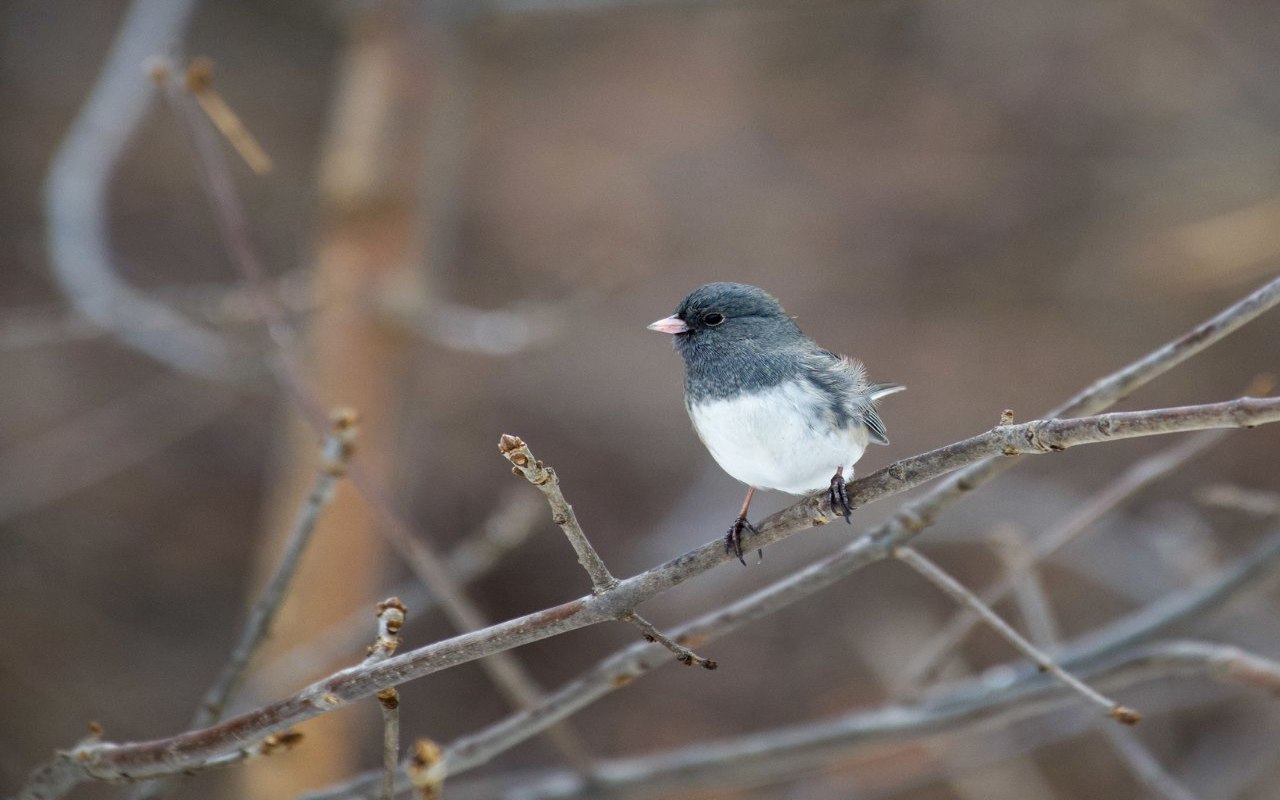
Knowing when the dark-eyed junco migration heads south to your yard marks the official transition from autumn gardening to winter bird feeding. Often called snowbirds, these small, slate-colored sparrows vacate their boreal forest and high-elevation breeding grounds right as freezing temperatures creep in. Their arrival serves as a reliable biological signal that hard frosts are just around the corner.
While migration depends somewhat on daily weather, their annual journeys follow predictable flyways and seasonal rhythms across North America. Watching your local patch of grass or patio can reveal their return down to the exact week each year. Understanding their calendar helps you stock the right food and prepare your yard before the first flock lands.
Understanding the Fall Migration Timeline
Dark-eyed juncos spend their summers raising broods across the vast boreal forests of Canada, Alaska, and higher mountain elevations in the West and Appalachians. As daylight shrinks in late August and early September, hormonal changes trigger migratory restlessness. The birds begin grouping together in small family bands before merging into larger winter flocks.
Unlike warblers that make rapid, non-stop flights across continents, juncos move south in a measured, staggered progression. They follow food availability and cold fronts rather than rushing all at once toward the Gulf Coast. Many juncos travel only as far south as necessary to find snow-free ground where seeds remain accessible.
Some populations do not migrate across long latitudes at all. Mountain-dwelling juncos practice altitudinal migration, which simply means they drop a few thousand feet in elevation from high pine ridges down into protected valleys. For these mountain birds, the trip south takes only an afternoon rather than several weeks of cross-country flight.
Weather Triggers and Regional Arrival Dates
Juncos typically ride southward on the leading edge of strong autumn cold fronts. High-pressure systems bring clear skies and northwest tailwinds that make sustained flight far less energy-demanding. A sharp overnight temperature drop in October is often followed by a sudden yard full of flashing white outer tail feathers the next morning.
Arrival dates vary significantly depending on your geographic location:
- Northern tier states such as Minnesota, Wisconsin, and Maine see their first arrivals between mid-September and early October.
- Central regions including Illinois, Ohio, Missouri, and Pennsylvania typically record steady backyard flocks by mid-to-late October.
- Mid-Atlantic and Southern states down to Georgia and Texas rarely host significant numbers until early to mid-November.
- Mountain West and Pacific Northwest valleys welcome arriving birds from late September through October as snow blankets higher peaks.
These seasonal milestones can shift by a week or two depending on regional wild food crops. If northern forests experience a heavy bumper crop of conifer seeds and wild berries, juncos may linger north longer than usual. Conversely, an early October blizzard across central Canada will flush massive numbers south ahead of schedule.
Preparing Your Yard for Ground Feeders
Juncos are quintessential ground foragers that rarely feel comfortable clinging to swinging tube feeders or narrow perches. In the wild, they hop across the forest floor, scratching leaf litter with both feet to unearth fallen weed seeds. To make your yard attractive, you need to offer food close to the earth where their natural instincts take over.
Platform feeders mounted just a few inches off the grass or broad ground trays with built-in drainage work best. Scattering seed directly on dry patio stones or under the eaves of a garden shed also keeps food dry during wet autumn storms. If you only provide hanging tube feeders, juncos will simply patrol the dirt underneath to scavenge whatever messier birds drop.
You can dramatically increase your yard count by offering their preferred winter foods:
- White proso millet scattered on low platform trays or clean ground spots
- Hulled sunflower chips, which provide high-calorie fat without forcing birds to crack tough shells
- Finely cracked corn in small amounts to provide cheap carbohydrates during cold snaps
- Red milo or coarse grains used sparingly, as juncos will readily kick these aside in search of smaller seeds
Always avoid throwing vast piles of commercial seed mixes onto damp ground. Uneaten grains quickly absorb soil moisture, creating toxic fungal growth and souring the feeding zone within days. Offer only what your neighborhood flock can consume before dusk.
Troubleshooting Common Winter Feeding Mistakes
Feeding birds on the ground presents unique backyard challenges that hanging feeders avoid. Snow buildup is the primary obstacle for wintering juncos, as a single heavy snowfall can bury their food under several inches of ice. Experienced birders frequently shovel a small patch of turf beneath an overhanging tree or erect a simple wooden shelter to keep ground food accessible.
Hygiene is another urgent concern for ground-feeding flocks. Because juncos walk directly across their food supply, ground feeding stations accumulate droppings rapidly, spreading diseases like salmonellosis and avian pox. Keeping your equipment clean requires a strict maintenance routine throughout the entire winter season.
Apply these practical maintenance habits to keep your visiting flocks safe:
- Clean ground trays every two weeks using a solution of one part chlorine bleach to nine parts warm water.
- Rinse all bleached equipment thoroughly with clear water and allow it to dry completely before refilling with fresh seed.
- Rake up accumulated hulls and droppings beneath feeding stations at least once a month.
- Relocate ground feeding spots every few weeks to prevent concentrated soil contamination.
Predation is also a major hazard for ground foragers. Roaming neighborhood cats love to stalk birds focused on the dirt, using low shrubs as ambush cover. Position your ground feeding stations at least ten feet away from dense ground-level brush, giving juncos a clear line of sight to spot approaching predators and escape.
Creating Safe Roosting Cover in Harsh Weather
While juncos spend their daylight hours scratching for food in open spaces, they require dense shelter once the sun sets. Winter nights push small songbirds to their energetic limits, and juncos must conserve body heat to survive sub-zero temperatures.
To combat the cold, dark-eyed juncos undergo incredible physical transformations, growing over 30% more feathers by weight in the winter than they do in the summer.
Additionally, they modify their schedules to engage in heavy, hyper-active late-afternoon feeding spikes. This strategic behavior allows them to pack on essential fat reserves that act as metabolic fuel to keep their body temperatures high during overnight fasts.
Dense evergreen trees such as junipers, yews, spruces, and native pines provide critical nighttime shelter from driving wind and snow. While flock mates frequently return to the exact same winter roosts together, juncos maintain a strict social hierarchy and do not huddle together to share body heat.
Instead of physical contact, they rely entirely on their localized dominance order, their dense individual winter plumage, and the microclimates created within thick vegetative windbreaks to endure freezing gales safely. If your property lacks mature conifers, you can build effective temporary cover using materials already in your yard.
Constructing a backyard brush pile is one of the easiest ways to support wintering juncos:
- Lay thick tree branches or discarded firewood logs in a crisscross pattern on the ground to form a sturdy base.
- Layer medium-sized garden trimmings and discarded perennial stalks across the central frame.
- Top the structure with evergreen boughs or your old holiday tree to create a waterproof, wind-resistant roof.
- Leave small entry tunnels near the base so juncos can easily hop inside to escape hawks and freezing gales.
Finally, remember that winter birds need open water just as much as seed. Digesting dry seeds requires moisture, and snow consumption lowers a bird’s core body temperature dangerously fast.
A shallow bird bath fitted with a thermostatically controlled de-icer will draw every junco in the neighborhood, ensuring your yard remains a lively winter refuge until spring migration begins.