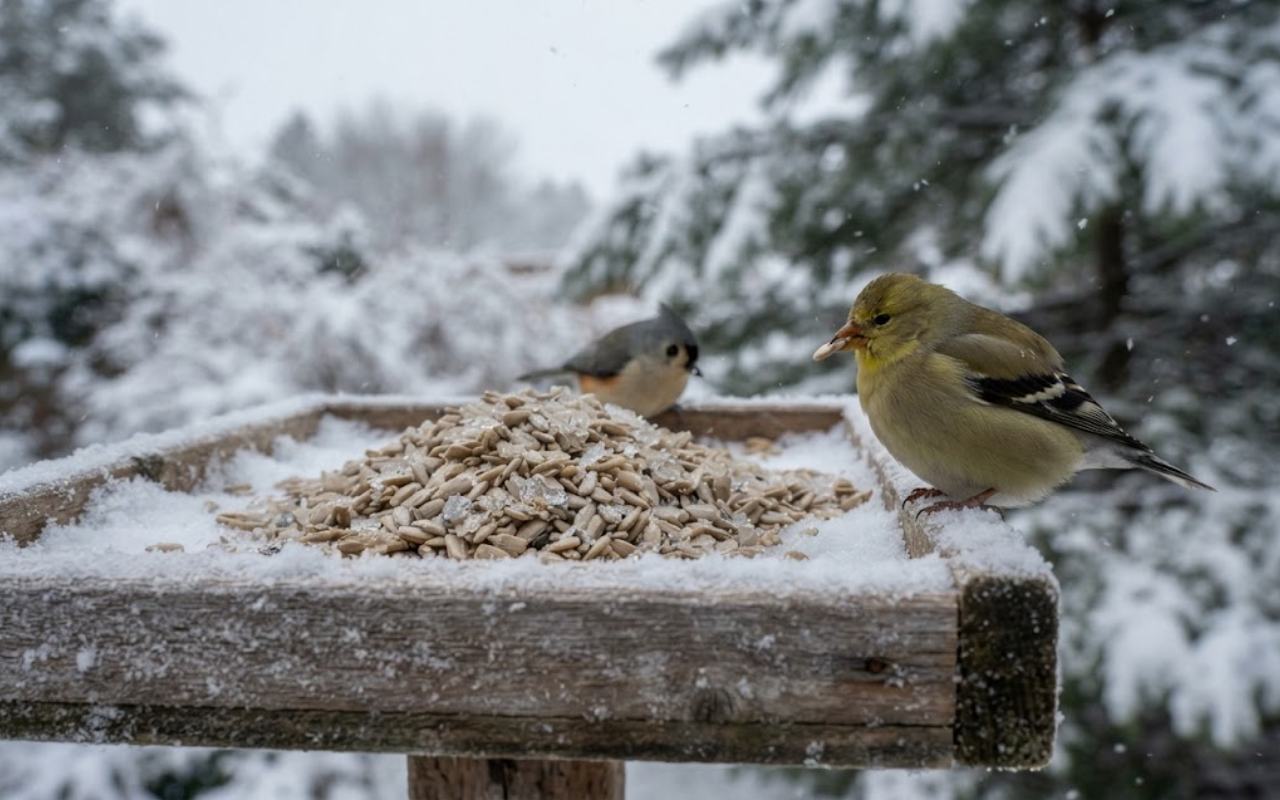
Switching to hulled sunflower chips in snow offers an immediate caloric boost for wild birds trying to stay warm. Without the outer shell, songbirds spend less time shivering on open perches cracking hulls and more time absorbing high-density plant fats.
However, stripping that protective hull exposes the tender nutmeat to winter moisture, blowing flakes, and freezing rain. When wet winter conditions hit an unprotected yard feeder, these clean chips can turn into a frozen, unusable brick in hours.
Quick-Glance Field Summary
Deploying hulled sunflower chips during major snowstorms prevents energy loss for foraging birds, but you must shield the feeding stations from precipitation to avoid costly seed spoilage. Managing small, twice-daily feeding portions alongside wide weather baffles keeps the feed accessible and completely dry.
- Feed Type: Coarse or medium hulled sunflower chips (avoid fine heart dust).
- Primary Feeder Style: Enclosed hopper or large-port tube feeder equipped with a 15-inch to 18-inch clear weather dome.
- Placement Geometry: Position feeders within 3 feet or beyond 30 feet of exterior windows to prevent fatal collisions.
- Temperature Limits: Below 32°F (0°C), keep seed completely sheltered from wind-driven drift; discard damp seed immediately if ambient temps spike above 40°F (4.4°C).
- Cleaning Routine: Soak hardware in a 1:9 household bleach-to-water dilution; air dry completely before refilling.
Why Songbirds Need Shell-Free Seed During Winter Storms
Small songbirds can lose up to ten percent of their body mass overnight during severe winter cold snaps. Birds like black-capped chickadees, tufted titmice, and American goldfinches must consume steady fats from dawn to dusk to fuel their nocturnal shivering Cornell Lab’s All About Birds. Providing sunflower hearts eliminates the physical labor of cracking through hard fibrous hulls in sub-zero wind chills.
Black oil sunflower meats contain roughly 40 to 50 percent fat by weight along with concentrated protein Volkman Pet Products. Every second a bird saves at the feeder keeps it safer from roaming winter raptors and limits exposure to freezing air currents. The absence of leftover hulls also preserves access to the feeding tray, keeping feeding surfaces clear of frozen debris.
To ensure safety during these heavy feeding rushes, position your setups carefully around your home. Keep your stations within 3 feet or beyond 10 to 30 feet of exterior windows Duncraft. This specific spacing configuration eliminates the high-velocity danger window between 3 and 10 feet where fatal glass collisions most frequently occur.
Ground-foraging winter visitors like dark-eyed juncos and white-throated sparrows benefit exceptionally well from shell-free feed. In active discussions across Reddit’s r/backyardbirds forum, northern keepers frequently observe that whole sunflower shells quickly freeze into a solid, impenetrable layer over snowbanks. Dropping shelled chips prevents that frozen crust, giving lower-level ground birds immediate access to high-fat food.
| Seed Hardware Class | Snow & Freezing Moisture Defense | Winter Caloric & Energy Delivery | Mandatory Winter Feeder Setup |
|---|---|---|---|
| Hulled Sunflower Chips | Poor; naked kernels soak up melting snow, clumping together and freezing solid into ice blocks. | Elite; zero shell means birds waste zero metabolic energy cracking casings during cold snaps. | Requires covered tube feeders or platform trays protected by a wide plastic rain roof dome. |
| Whole Black Oil Sunflower | High; heavy fibrous outer hulls shield the internal meat from direct moisture contact. | High lipid count, but birds must burn body heat to break open the shells on frozen perches. | Standard hopper or mesh cages; hulls will pile up on snow but keep the seed dry longer. |
The Real Danger of Moisture and Frozen Feeder Clogs
The primary drawback of using hulled sunflower chips is their extreme vulnerability to winter precipitation. Natural hulls function as a water-resistant jacket; once removed, the porous inner meat acts like a dry sponge. In driving blizzards, fine snow packs into feeding ports where body heat from resting birds and daytime sun thaw it into slush.
Once the internal temperature dips back below freezing, that wet sunflower meal binds together into a hard plug. A common complaint raised on specialized wild bird forums involves tube feeders becoming completely non-functional within four hours of a blizzard. The lower feeding ports lock up, preventing the birds from pulling seed while giving yard owners a difficult maintenance chore.
Hulled sunflower chips also release fine organic dust that accumulates at the base of feeder tubes. When mixed with meltwater, this dust turns into a sticky paste that resists normal seed agitation. Birds will quickly abandon a feeder with plugged ports, forcing them to burn scarce winter energy seeking other yards.
Protecting Your Feeders from Blizzard Drift and Melting Slush
Keeping hulled chips dry in winter requires proper hardware adjustments rather than passive feeding. Standard platform trays should be set aside during heavy snowfall because falling and drifting snow quickly buries the seed. Instead, enclose the chips inside gravity-fed hoppers or heavy-duty tube feeders with bottom drainage.
- Install an 18-inch polycarbonate weather baffle low over the feeder hanging loop to deflect diagonal snow.
- Wrap fine plastic mesh or storm guards around exposed tube ports to stop windward drift.
- Place feeders on the leeward side of your home or windbreaks to reduce blowing snow entry.
- Insert a wooden dowel or seed shaker into port openings each morning to break up settling seed.
A practical hack shared by experienced hobbyists on r/birdwatching involves using coarse-grade chips instead of fine sunflower hearts during winter. Coarse chips leave larger air gaps between individual pieces inside the reservoir. These micro-gaps prevent capillary action, stopping melting snow from traveling upward through the entire seed column.
Never use hot water to melt frozen seed plugs out of clear polycarbonate tube reservoirs. Boiling or hot tap water will instantly warp the plastic housing and create stress fractures. Bring the feeder indoors, let the clog melt naturally at room temperature, dump the wet seed, and dry the interior before re-hanging.
Stopping Mold and Bacterial Growth Under the Snowpack
Melt cycles during fluctuating winter storms create a serious health hazard for visiting flocks. When snow blankets fallen sunflower chips on the ground, the insulated microclimate under the snowpack encourages bacterial growth. Once temperatures rise above 40°F, damp sunflower meats decompose rapidly.
This warm, wet environment allows dangerous fungal pathogens like Aspergillus flavus to flourish. This fungus produces aflatoxins, which are lethal toxins that cause severe liver damage and respiratory failure in small songbirds. Ingesting moldy, waterlogged sunflower meats can quickly decimate local populations of pine siskins and redpolls.
- Shovel or sweep snow away from beneath hanging stations before a fresh layer falls.
- Lay down a heavy canvas tarp under your main feeder to catch dropped chips, then shake it clean daily.
- Sanitize feeder parts every two weeks using a 1:9 bleach-to-water soak followed by a clear water rinse.
- Refuse to use mineral oil or chemical water repellents near seed trays, as these coat bird plumage and destroy feather insulation.
Salmonella outbreaks also peak around winter feeding stations when birds crowd closely over contaminated food sources. If you notice damp, clumped seed with a sour smell or gray discoloration, empty the feeder immediately. Discard the spoiled chips in a sealed trash container rather than tossing them onto your compost pile where ground birds might still feed.
Practical Feeding Routines to Save Money and Cut Down Waste
Sunflower chips carry a higher upfront retail cost per pound than standard black oil sunflower seeds. Losing half a feeder full of expensive hulled seed to a blizzard is frustrating and financially wasteful. You can drastically reduce economic waste by shifting how and when you fill your feeders during winter storms.
Instead of filling large hoppers to the brim before a blizzard, switch to a targeted rationing schedule. Offer only what your yard birds can strip clean within three to four daylight hours. This prevents excess seed from sitting overnight inside the feeder where condensation and horizontal drift can ruin it.
- Measure out one to two cups of coarse chips at sunrise to feed the early morning feeding rush.
- Add a secondary half-portion around midday to support birds preparing for nighttime roosting.
- Mix sunflower chips with equal parts safflower seed to slow down aggressive blue jays and starlings.
- Store bulk bags indoors inside air-tight, heavy-duty galvanized metal cans to block mice and ambient humidity.
By managing portions tightly, you safeguard your wallet while ensuring the visiting birds only encounter fresh, high-octane seed. Hulled sunflower chips remain an outstanding winter survival fuel when protected by proper gear and consistent yard hygiene. Taking a few proactive steps to block moisture guarantees that your backyard flock stays fed without wasting costly feed.