
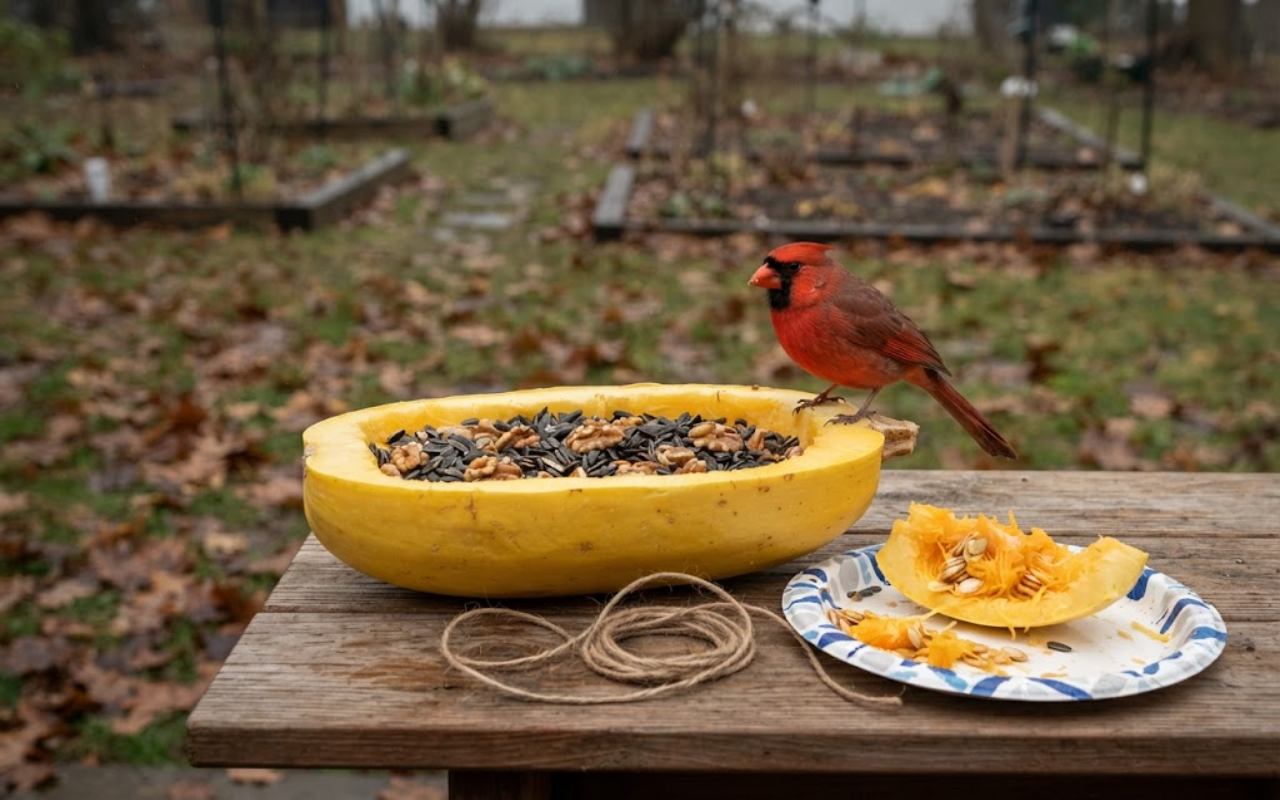
Crafting a functional spaghetti squash bird feeder diy project allows backyard naturalists to transform autumnal garden surplus into an effective, biodegradable foraging station. This zero-waste feeding approach repurposes the dense, fibrous rind of winter squash into a natural platform basin that serves foraging songbirds during cold weather transitions.
Unlike thin summer squash varieties, the lignified outer wall of Cucurbita pepo provides a sturdy, weather-resistant shell that holds up well against precipitation. When prepared with appropriate drainage and structural suspensions, these compostable vessels offer temporary lipid-dense feeding hubs without adding plastic waste to the garden ecosystem.
Quick-Glance Field Summary
A homemade squash feeder repurposes halved winter squash into an organic platform that provides high-energy seeds to local songbirds while naturally degrading over time.
Success relies on scorch-drying the empty rind, boring critical bottom-drainage weep holes, and utilizing multi-point suspension cords to prevent catastrophic balance failure during severe winds.
- Base vessel: Cured spaghetti squash half, minimum wall thickness 0.35 inches
- Suspension line: Jute twine or untreated hemp cord, 3-ply thickness (rated 20-pound break strength)
- Drainage blueprint: Four 0.25-inch diameter holes drilled symmetrically through the lowest basin floor
- Fill matrix ratio: 60 percent black oil sunflower seed, 20 percent white proso millet, 20 percent chopped suet or raw squash seeds
- Placement standard: Minimum 5 feet off the ground, situated either within 3 feet of a window or beyond 30 feet to mitigate fatal strike collisions
- Usable lifespan: 10 to 18 days in temperatures below 45°F before organic decomposition necessitates disposal
Rind Preparation and Moisture Extraction Mechanics
The primary mode of failure reported across backyard gardening forums involves rapid internal mold bloom caused by residual moisture trapped within the pulp wall.
On platforms like r/gardening and local homesteading forums, users frequently complain that fresh squash rinds turn slimy within forty-eight hours when hung immediately after seed scooping.
Complete mechanical removal of the stringy interior placental tissue is critical to prevent the proliferation of pathogenic fungi. Using a metal spoon or serrated melon baller, scrape the inner walls until you reach the smooth, light yellow subterranean flesh.
Once cleared, modern field naturalists recommend baking the hollowed half cut-side down on an ungreased baking sheet at 200°F for roughly 45 minutes to desiccate the inner layer without compromising the rind’s structural rigidity.
- Remove all loose, wet placental strands to eliminate surface moisture reservoirs.
- Pat the interior dry with paper towels to absorb free plant sap.
- Air-dry the inverted shell in a warm room for 24 hours prior to field drilling.
- Inspect the outer skin for existing soft spots or micro-punctures before rigging.
This initial drying step hardens the outer cuticle against fungal spores. It also prepares the wall for clean drilling, preventing tearing along the natural grain lines of the squash.
| Gourd Feeder Variety | Structural Geometry & Volume | Ideal Seed & Lipid Pairing | Target Backyard Visitors |
|---|---|---|---|
| Spaghetti Squash Boat | Elongated, deep oval basin offering an expansive, wide-open landing pad. | Whole raw shelled peanuts, black oil sunflower, and beef tallow suet pellets. | Blue jays, steller’s jays, common grackles, and larger woodpeckers. |
| Acorn Squash Cup | Small, compact circular bowl with rigid, high-rimmed edges. | Safflower seeds, striped sunflower, and chopped walnut meats. | Cardinals, grosbeaks, nuthatches, and tufted titmice. |
Drainage Architecture and Fungal Toxin Prevention
Standing water inside an unglazed organic vessel rapidly creates an anaerobic environment ripe for dangerous environmental pathogens. Damp seed clusters foster the growth of Aspergillus molds.
While Aspergillus flavus produces soil-borne aflatoxins that cause acute, fatal hepatic necrosis in wild passerines, its relative Aspergillus fumigatus rapidly colonizes wet grains and causes aspergillosis, a devastating respiratory disease.
Standard drill bits pressed through soft squash walls can tear wide, irregular fissures unless braced properly with scrap lumber behind the entry point.
Forum discussions on r/backyardbirds document common tragedies where un-drained squash feeders turned into stagnant seed soup after a single autumn drizzle, killing off local finches.
To prevent moisture pooling and subsequent fungal spore inhalation or ingestion, create multiple discrete drainage ports rather than one large central hole. A cluster of smaller ports retains seed while letting capillary water drain freely under gravity.
Never coat the interior with synthetic chemical sealants or polyurethane varnishes to repel water. Any chemical ingestion through softened wood sealers presents acute toxicity risks to foraging birds.
Drill four 0.25-inch weeping ports at the absolute lowest elevation points of the interior cavity.
Line the basin floor with a small piece of untreated 0.25-inch hardware cloth to stop whole seeds from blocking the weeping ports.
Avoid drilling oversized holes that compromise the structural hoop strength of the squash hull.
Suspension Rigging and Wind Balance Stability
A single suspension cord anchored through the squash neck invariably tilts, dumping expensive seed whenever a larger bird attempts an landing approach.
Community contributors in birding groups note that blue jays and red-bellied woodpeckers generate significant kinetic downward force on approach, easily tipping unbalanced platform feeders.
A stable suspension requires a three-point or four-point bridle harness to distribute the load evenly. Puncture three equidistant holes approximately 0.75 inches below the top lip of the squash rim using an awl or a clean 0.125-inch drill bit.
Threading untreated hemp or natural sisal cord through these points ensures horizontal equilibrium even in moderate gusts. Avoid synthetic nylon mono-filament line, which slices directly through damp rind tissue under physical tension.
- Cut three equal lengths of 3-ply natural jute twine, each measuring 30 inches.
- Knot each cord beneath its respective rim hole using a double overhand stopper knot backed by a flat wooden washer.
- Gather the three strands directly above the geometric center of the basin and bind them with a clean bowline knot.
- Check the horizontal level of the rim using a small line level before introducing feed.
Equally tensioned bridle strands prevent the feeder from swinging violently into tree limbs during high-wind events. This geometry creates a calm, level landing surface that entices timid ground and platform foragers alike.
Seed Matrix Selection and Lipid Caloric Blending
Filling a platform vessel demands careful consideration of nutritional value and environmental resistance. While commercial mixed birdseed often contains cheap red milo and wheat fillers, ground-feeding sparrows and finches rapidly kick these low-calorie grains aside, leaving them to rot on the ground below.
Instead, prioritize seeds rich in raw lipids that provide cold-weather survival calories. Reclaiming the squash’s own seeds is a classic forum-tested zero-waste tactic, but they must be air-dried thoroughly and lightly cracked to assist birds with weaker bills.
Pairing homegrown squash seeds with black oil sunflower seed offers exceptional caloric returns, delivering high-density vegetable fats to small birds burning metabolic reserves to survive frosty nights.
- Black oil sunflower seeds: High lipid count with thin, readily cracked husks suitable for chickadees and titmice.
- Safflower seeds: Thick-hulled, bitter seeds beloved by cardinals but broadly rejected by nuisance European starlings and gray squirrels.
- White proso millet: Dense, spherical grass seeds optimized for native dark-eyed juncos and American tree sparrows.
- Air-dried, crushed squash seeds: Free supplemental lipids extracted directly from the harvested spaghetti squash core.
Spread the mixed seed evenly across the basin floor in a layer no deeper than 1 inch. Shallow seed beds improve air circulation, discourage internal mold growth, and allow birds to spot natural predators without obstructed lines of sight.
Decomposition Timelines and Backyard Yard Integration
Unlike commercial plastic or cedar wood feeders, an organic squash feeder possesses a strictly finite functional lifespan that varies with local ambient temperatures and humidity levels.
Forum monitors in northern zones report these feeders can last upwards of three weeks in sub-freezing temperatures, whereas sudden warming spells above 55°F speed up bacterial rot, turning the rind soft and pliable within days.
Regular tactile inspection is necessary to keep your backyard station sanitary. Monitor the suspension anchor points daily, as these areas experience the highest mechanical shear stress from the cords.
The moment the rind exhibits deep discoloration, soft mushy spots, or sour fermentation odors, lift the unit down and dispose of it directly into your outdoor compost bin.
- Position the hanging feeder either within 3 feet of your home’s exterior glass or further than 30 feet away to avoid fatal window impact zones.
- Deploy the feeder under a natural evergreen bough or a 12-inch clear acrylic weather dome to shield the open cavity from rain.
- Discard the unit immediately if gray mold mycelium appears on the inner pulp walls.
- Transfer any remaining unsoiled seed into an existing hopper feeder before composting the decomposed rind.
Integrating these natural feeders into your yard creates an enriching seasonal feeding point that safely nourishes local birds. Once its service ends, the entire assembly breaks down harmlessly back into the soil, leaving zero micro-plastics or non-biodegradable waste in your landscape.