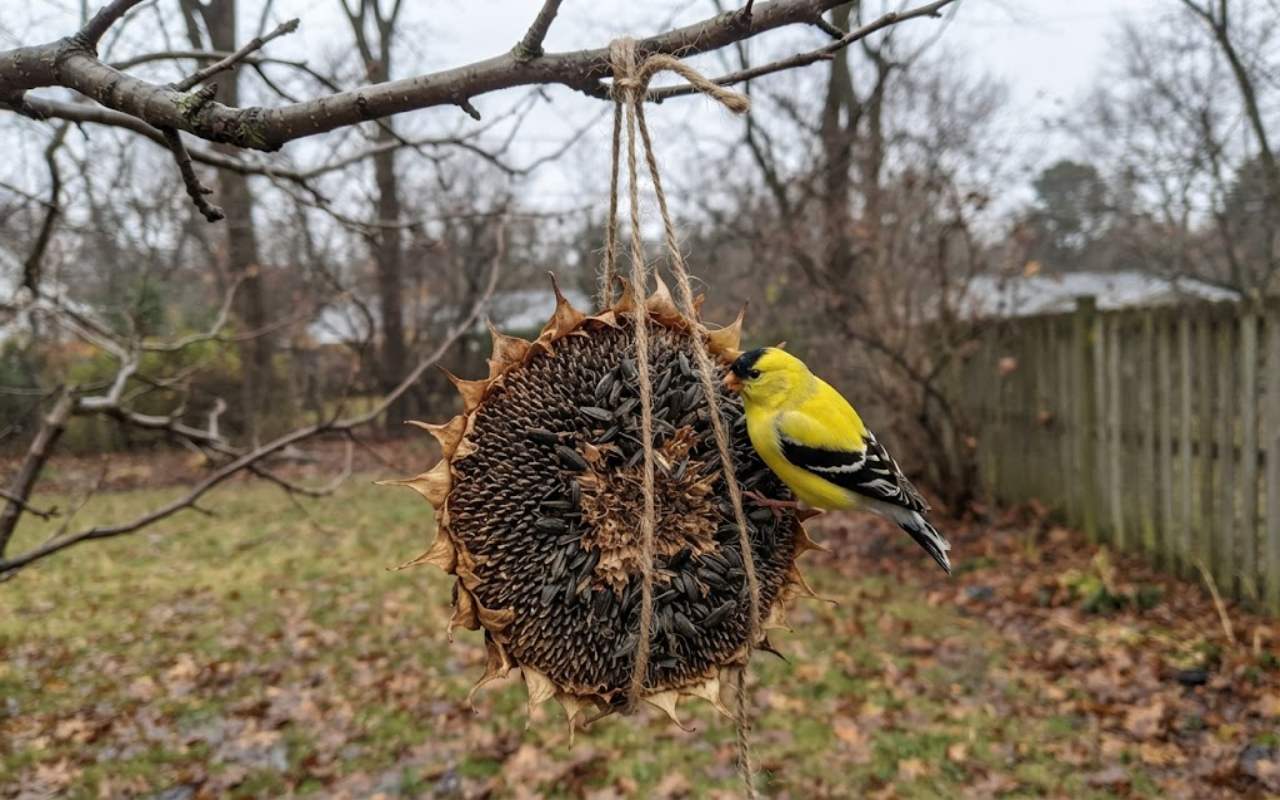
Learning how to properly dry and hang entire sunflower heads allows backyard naturalists to transform late-summer spent blooms into an energetic goldmine for wild foragers. By harvesting at the exact physiological ripening window and curing the discs systematically, you can construct a durable, cost-effective dried sunflower head bird feeder that supplies overwintering songbirds with vital plant lipids.
Wild birds naturally thrive when foraging directly from dense seed discs, as wrestling seeds from the fibrous receptacle mimics their native behaviors. Sturdy suspension hardware and precise moisture controls prevent common backyard failures like brittle structural collapse, rodent theft, and fatal fungal contamination.
Quick-Glance Field Summary
Properly drying and presenting intact sunflower heads requires harvesting only when the flower bracts turn yellow-brown, followed by curing the disks in an airy, low-humidity environment below 12 percent moisture content.
Suspending the dried heads outdoors demands heavy-gauge structural wire driven through the woody base rather than soft center pith, paired with strict predator baffling to deter squirrels.
- Harvest window indicator: Involucre backing and phyllaries turn dull yellow to deep brown as disk florets shed freely.
- Safe seed moisture target: Below 12 percent relative internal moisture
- Curing duration: 14 to 21 days in dark, well-ventilated space between 50°F and 70°F
- Curing wrap: Breathable brown paper bags or mesh onion bags, never closed plastic
- Suspension hardware: 16-gauge to 18-gauge galvanized wire or 0.5-inch coated wire mesh cradles
- Predator clearance: Minimum 10-foot lateral jump distance and 5-foot ground clearance using wide steel baffles
- Sanitation soak: 1:9 household bleach-to-water dilution for reusable clips and wire
Moisture Evaporation and Critical Harvest Timing
Harvesting a sunflower head too early results in shriveled, meatless seed shells with insufficient caloric density for visiting birds. Conversely, waiting too long leaves the disc exposed to autumn morning dews, allowing surface spores to colonize the seed layers before curing begins. You must monitor the reverse side of the sunflower bloom, known scientifically as the receptacle disc.
Begin your harvest when the green involucre on the back of the head shifts from vibrant green to a pale, yellowish-khaki color, and its individual leaflike phyllaries begin to dry out. The tiny disk florets covering the seed faces should dry out and brush away effortlessly with your bare fingers, revealing fully striped or solid seed coats beneath. The seeds must feel plump, firm, and tightly packed across the concentric circles of the head.
Cut the stem cleanly using bypass pruners, leaving at least 8 to 12 inches of intact stalk attached directly to the flower base. This remaining stem segment acts as a crucial moisture wick during the initial evaporation phase and serves as an anchor point for later rigging.
Avoid harvesting immediately after a soaking rainfall; wait for two consecutive dry, sunny afternoons to drop ambient moisture on the petals.
| Feeder Style | Structural Geometry & Security | Nutritional Lipid Density | Primary Avian Traffic |
|---|---|---|---|
| Dried Sunflower Head | Suspended horizontally or vertically via a four-quadrant twine harness. | Extreme; natural black oil seeds packed with premium vegetable fats and oils. | Finches, chickadees, nuthatches, tufted titmice, and grosbeaks. |
| Spaghetti Squash Boat | Elongated, deep oval canoe basin suspended via drilled wall anchor nodes. | Variable; customized tray depth holds loose bulk mixes, peanuts, or suet. | Blue jays, Northern cardinals, towhees, and woodpeckers. |
Brown Bag Curing Protocols and Fungal Pathogen Prevention
A major pitfall discussed across birding forums involves mold outbreaks during garage curing. In community threads on r/backyardbirds, hobbyists regularly report ruined harvests after enclosing fresh heads in sealed containers or damp basements where stagnant air traps escaping plant water.
When thick sunflower heads dry slowly without ventilation, Aspergillus flavus easily establishes itself, generating toxic aflatoxins that are lethal to small passerines.
To guarantee rapid moisture transfer, slide each harvested head into an unprinted brown paper grocery bag or a fine nylon mesh produce sack. Punch several ventilation slits into the sides of the paper bag using a utility knife to facilitate passive cross-ventilation.
Secure the neck of the bag snugly around the stem using natural jute twine or a zip tie, keeping the hanging head elevated upside down.
- Hang heads in single layers spaced at least 6 inches apart along rafters or clotheslines.
- Maintain an ambient temperature range of 50°F to 70°F with consistent air movement.
- Operate a small oscillating fan nearby to strip away rising humidity pockets in enclosed garages.
- Discard any heads showing white powdery mildew, grayish fur, or an earthy, sour odor.
The curing phase normally concludes within two to three weeks depending on local outdoor humidity levels. You will know the head is cured when the back plate feels dry, papery, and completely stiff. The individual seeds will rattle slightly within their sockets while remaining firmly anchored inside the outer fibrous matrix.
Hardware Rigging to Prevent Receptacle Pith Crumbling
The interior core of a dried sunflower head is composed of spongy, brittle pith that rapidly deteriorates once exposed to winter precipitation. A frequent hardware failure highlighted by experienced backyard forum contributors involves drilling a single hole straight through the center disc to thread hanging twine.
Within hours of bird activity, the fragile pith crumbles completely, causing the heavy disk to drop into the dirt where ground rodents devour it.
Instead of puncturing the center, route 16-gauge or 18-gauge galvanized steel utility wire horizontally through the fibrous base of the intact stem. Wrap the wire tightly twice around the stem joint, cinching it directly beneath the broader swelling of the flower plate. This rigging distributes the hanging load across dense vascular tissue rather than soft interior pith.
- Thread galvanized wire through the woody stalk intersection using needle-nose pliers.
- Form a closed, twisted top eyelet to connect directly to heavy-duty carabiners or swivel clips.
- Avoid organic twines like cotton or untreated hemp, which rot rapidly and yield to rodent teeth.
- Support enormous heads exceeding 12 inches across by wrapping a wide sling of 0.5-inch hardware cloth underneath the base.
This wire cradle design prevents the seed head from fragmenting as large, heavy species like Blue Jays and Red-bellied Woodpeckers brace against the perimeter. The steel wire also maintains structural integrity during freezing drizzle and wet, heavy snowfalls.
Rodent Baffling and Aerial Suspension Geometry
A single mature sunflower head represents a massive concentration of easily accessible fat that instantly attracts local squirrels, chipmunks, and raccoons. Forum contributors on r/birdwatching frequently describe hanging whole heads from tree limbs, only to find the entire stalk severed and stolen within minutes by eastern gray squirrels. If you suspend a sunflower head without active mechanical baffling, it will rarely survive long enough to benefit wild birds.
To safeguard the resource, hang the wire rig from a standalone metal shepherd hook positioned well away from launching zones. Adhere to the established avian feeding clearance rules by keeping the head at least 10 feet away from horizontal tree limbs, fences, or roof gutters. The base of the sunflower must hang at least 5 feet above the ground to eliminate standing leaps from rodents.
Install a smooth, wide steel baffle beneath the suspension point or along the vertical pole. Torpedo baffles or wide 18-inch disk baffles deflect climbing mammals effectively before they reach the wire harness.
If you must hang the head from a patio arbor or porch beam, suspend it on a micro-diameter steel cable passing through a 15-inch clear acrylic weather dome, preventing chewing pests from obtaining downward footholds.
Avian Foraging Dynamics and Lipid Preservation
Sunflower seeds serve as an essential winter survival fuel, offering a high ratio of crude plant fats, plant protein, and dense carbohydrate calories. Black oil varieties provide particularly concentrated lipid levels compared to thick-shelled striped confectionary seeds, making them critical during sudden temperature drops.
Feeding whole heads keeps the delicate seed kernels sealed in their protective husks until the precise moment of consumption, shielding natural oils from rancidity.
Presenting whole sunflower heads alters bird behavior by establishing a stable foraging station for clinging species. White-breasted Nuthatches, Black-capped Chickadees, Tufted Titmice, and American Goldfinches naturally leverage their strong zygodactyl or perching feet to hang upside down directly from the disc face. This specialized spatial dynamic limits interference from aggressive, non-clinging nuisance birds like European Starlings.
- American Goldfinches pluck outer seeds systematically while perching along the upper rim.
- Chickadees and titmice extract individual kernels rapidly to cache them inside nearby tree bark crevices.
- Downy Woodpeckers stabilize themselves against the stiff stalk to hammer seeds directly from the center.
Monitor your hanging sunflower heads after periods of severe precipitation or thawing snow. If moisture saturates the backing plate outdoors and freezing winds subside, inspect the seed base for internal moisture buildup.
Discard any heads that stay damp for more than three consecutive days to prevent chronic respiratory risks and ensure your wild visitors receive safe, dry, high-potency fuel all winter long.