
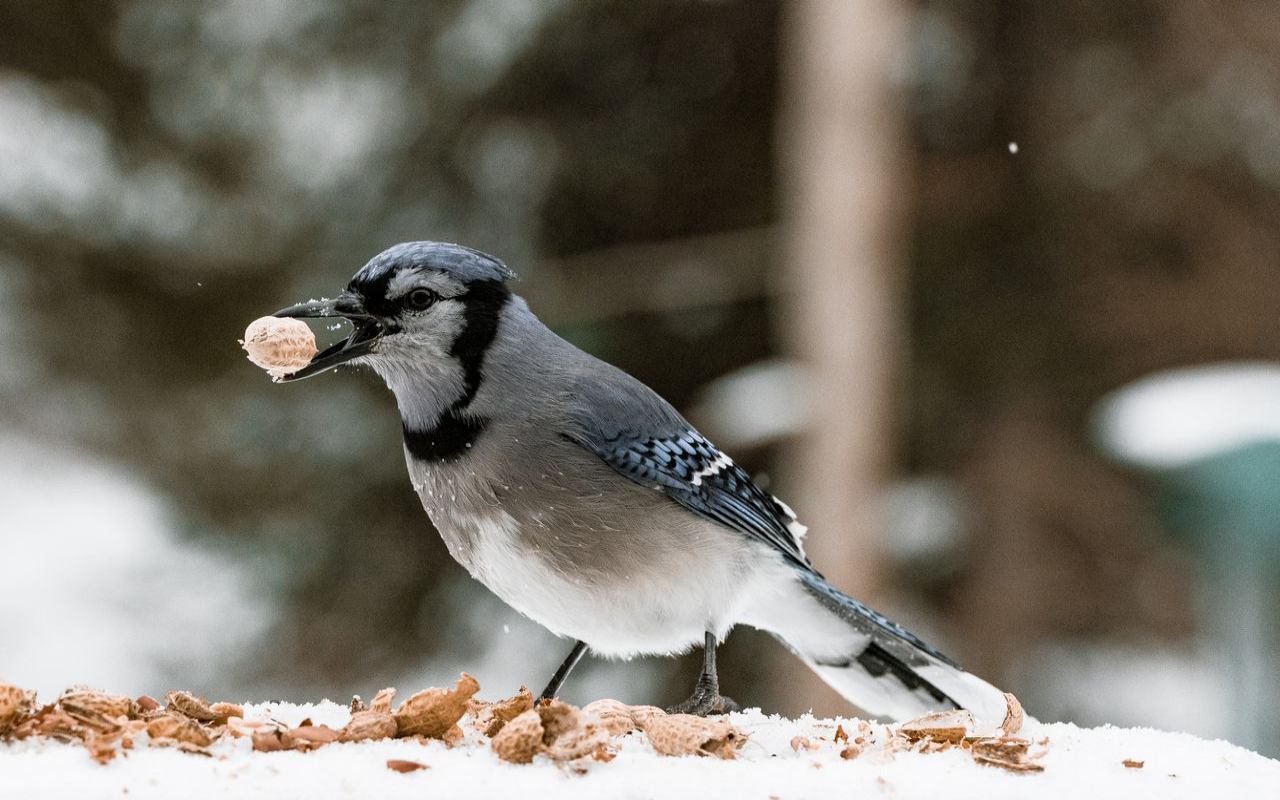
Providing high-lipid nutrients like feeding peanuts to birds in November delivers an immediate, energy-dense lifeline as late autumn temperatures plunge and natural insect availability plummets. Many backyard enthusiasts mistakenly believe that birds should only receive whole, in-shell nuts to stimulate natural foraging behavior.
In reality, forcing small wintering songbirds to expend critical metabolic calories cracking fibrous pods during freezing weather creates an energy deficit that compromises overnight thermoregulation.
Removing the fibrous outer hull provides accessible lipids without forcing birds to waste daylight on mechanical shell extraction. Transitioning your feeding station to raw, unsalted shelled peanuts right before sustained sub-freezing temperatures arrive stabilizes local avian populations across early winter.
Species Profile and Core Behavioral Differences
Different avian families exploit shelled peanuts through distinct foraging strategies during late autumn. Members of the family Paridae, such as chickadees and titmice, operate on an immediate-consumption or short-term caching cycle. Corvids like the Blue Jay employ an aggressive bulk-caching strategy, transporting multiple peanut kernels in their sublingual pouches to bury across their home range.
- Paridae (Chickadees and Titmice): Transport individual split halves to sheltered tree branches for immediate bill-hammering or bark-crevice caching.
- Sittidae (Nuthatches): Wedge whole shelled nuts into furrowed bark before hacking them into digestible morsels with downward head strikes.
- Picidae (Woodpeckers): Use zygodactyl perching grips to brace against vertical mesh feeders, consuming high-lipid fragments directly on site.
- Corvidae (Jays): Ingest or pouch four to six whole kernels per visit to rapidly build subterranean winter caches before frozen ground sets in.
Understanding these behavioral divergences helps determine which feeder styles accommodate both clinging woodpeckers and quick-grabbing passerines. Accommodating both foraging types prevents feeder crowding and reduces aggressive displacement behaviors during peak morning feeding windows.
Habitat Layout and Feeder Setup
Proper peanut delivery requires dedicated hardware built to prevent rapid moisture uptake and physical choking. Never use loose nylon mesh sacks or cloth bags, as avian claws, toes, and tongues regularly catch in flexible synthetic netting, causing fatal trauma. Standard hopper or small-port plastic seed tubes are also inappropriate because peanut halves easily wedge in delivery ports, collecting interior condensation that induces rapid rot.
- Stainless Steel Mesh Silos: Rigid cylindrical tubes constructed from heavy-gauge wire that compel birds to peck off small, manageable fragments rather than swallowing whole kernels.
- Heavy-Duty Hopper Trays with Drainage: Wide perching platforms featuring micro-perforated metal floors that allow rain runoff while providing stability for larger woodpeckers.
- Vertical Suet-Peanut Cages: Coated steel wire boxes that hold peanut-cake blends or pressed peanut splits flat against vertical bark substrates.
Mesh enclosures restrict birds to shearing small pieces off each nut, eliminating the risk of whole-kernel choking in smaller species. Furthermore, rigid metal construction prevents larger rodents from easily chewing through reservoirs during nocturnal foraging runs.
Structural Dimensions and Placement Guidelines
Feeder positioning must balance accessibility for wild birds with structural defense against window strikes and terrestrial predators. Feeder hardware should be positioned either within 3 feet of exterior windows or beyond 30 feet from glass surfaces. This strict distance rule ensures birds startled from perches cannot build enough flight velocity to sustain fatal blunt-force trauma against reflective glass.
- Mesh Aperture Sizing: Maintain a precise 0.25-inch (6-millimeter) wire grid spacing to ensure kernels stay contained while allowing birds to peck fragments cleanly.
- Mounting Elevation: Install feeders at a minimum height of 5 to 6 feet above grade on a smooth, freestanding metal pole equipped with a squirrel baffle.
- Cardinal Orientation: Face feeder ports toward the south or southeast to maximize morning sun exposure and provide shielding from prevailing northwest winds.
- Ground Sanitation Radius: Maintain an open 10-foot perimeter under the feeder free of dense brush to prevent surprise attacks by domestic cats.
Never mount peanut feeders directly to living tree trunks or wooden deck railings without predator barriers. Direct tree mounting creates an open pathway for raccoons, squirrels, and rodents, while also exposing foraging birds to arboreal ambush predators.
Nutritional Biochemistry and Feeding Protocols
November represents a critical physiological juncture where wild birds require dense caloric intake alongside structural proteins to maintain pectoral flight muscles. While pure fats supply thermal energy, late-migrating and overwintering species still undergo minor structural feather repairs and muscle maintenance before severe winter freezes. Shelled peanuts offer a biochemical profile that uniquely balances sustained thermal output with tissue repair.
- Shelled Peanuts: Contain 48 to 52 percent crude lipids, 25 to 30 percent crude protein, and a low 16 percent carbohydrate ceiling for optimal metabolic efficiency.
- Rendered Beef Suet: Delivers 80 to 90 percent crude lipids and less than 1 percent carbohydrates, but provides only 5 to 8 percent crude protein.
- Black Oil Sunflower Seeds: Offer 38 to 42 percent crude lipids, 16 to 18 percent crude protein, and roughly 25 percent carbohydrates encased in high-fiber hulls.
This nutritional profile proves that shelled peanuts provide almost double the protein concentration of sunflower seed while matching the thermal benefits of suet. Offering high-protein, high-fat rations in November ensures birds sustain overnight shivering thermogenesis without sacrificing lean body mass.
Pest Mitigation and Sanitation Safeguards
High lipid content makes raw peanuts exceptionally susceptible to rapid colonization by Aspergillus flavus, an environmental mold that produces lethal aflatoxins. Ingesting even microgram quantities of aflatoxin causes severe hepatotoxicity and rapid mortality across passerine flocks. In damp November climates, monitor peanut reservoirs daily for signs of clumping, foul odors, or gray fungal mycelium.
- Diluted Bleach Solution (1:9 Ratio): The premier sanitizing standard, killing resilient fungal spores and Salmonella enterica within a 10-minute immersion without corroding galvanized wire.
- Pure Boiling Water: Highly effective at sterilizing all-metal wire feeders within 3 minutes, though strictly forbidden for polycarbonate plastic reservoirs due to heat warping.
- Diluted White Vinegar (50/50 Acetic Acid Ratio): Mild sanitizing agent useful for surface grime, but fails to reliably eradicate tough fungal spores like Aspergillus flavus.
Avoid relying on handheld ultraviolet blacklight sweeps to detect aflatoxins in the field, as natural wood lichens and bark tannins emit identical fluorescing false positives. Clean and fully dry peanut hardware weekly, discarding any uneaten food that has been exposed to driving late-autumn rains for more than forty-eight hours.