
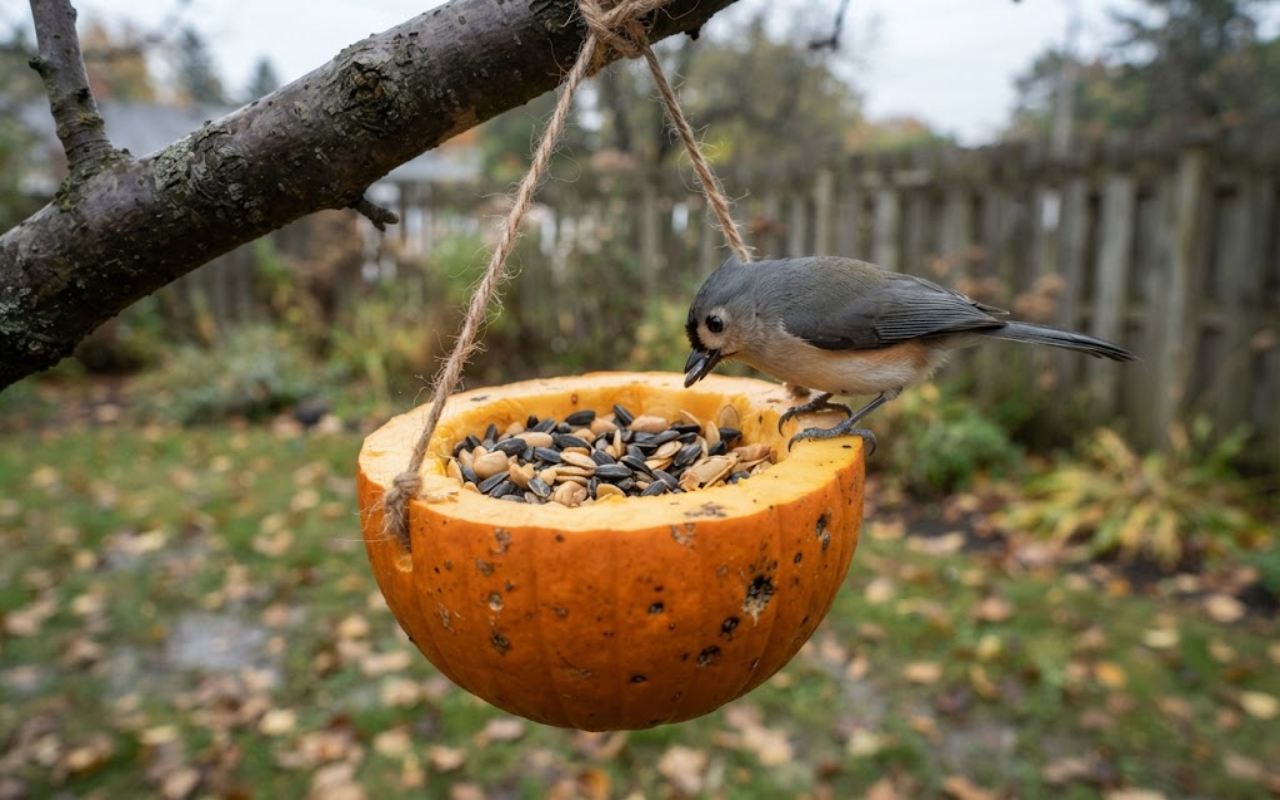
Crafting 5 easy diy fall bird feeders using pumpkins and pinecones offers an immediate, low-waste method to deliver vital cold-weather calories to your backyard flock. Seasonal produce and conifer cones serve as natural foraging platforms during the peak of autumn migration. When properly constructed, these organic feeders function as high-value fueling stations that blend seamlessly into the surrounding garden habitat.
However, poorly executed designs frequently turn into rotten backyard hazards within a few days. Common issues include rapidly molding pumpkin flesh, soft nut butters matting feathers, and squirrels stealing gourds. Success requires understanding food safety, moisture dynamics, and the physical mechanics of hanging raw organic materials.
Quick-Glance Field Summary
Transforming backyard pumpkins and pinecones into safe autumn bird feeders requires balancing high-calorie lipids with aggressive moisture management to prevent pathogenic decay. By matching structural shell cuts to high-traction pine scales and weather-resistant hanging cordage, you can build reliable feeding stations that withstand autumn rain and heavy foraging pressure.
- Pinecone Pre-Treatment: Bake collected open cones at 200°F (93°C) for 30 minutes to liquefy sticky pine pitch and eliminate latent insects.
- Pumpkin Basin Geometry: Drill a minimum of five 0.25-inch bottom weep holes to shed rain and meltwater immediately.
- Lipid Binding Agents: Use pure rendered beef suet or unsalted, single-ingredient peanut butter free of hydrogenated oils, xylitol, and added sodium.
- Seed Payload: Fill hollows with 100% black oil sunflower seeds, safflower, or chopped raw peanuts to deliver a 40% lipid ratio.
- Suspension Line: Hang units using 3-ply natural jute or untreated sisal cord rather than monofilament line, which poses a serious entanglement risk.
- Clearance Safety: Mount all feeders within 3 feet of your windows, or beyond 30 feet, following established collision prevention guidelines.
Pumpkin Bowl Drainage and Aspergillus Prevention
A common failure documented by backyard enthusiasts on r/backyardbirds involves whole mini-pumpkins turning into anaerobic, foul-smelling soup within 48 hours of rainfall. When stagnant rainwater collects inside a scooped pumpkin shell, commercial seed mixes quickly ferment and generate deadly blooms of Aspergillus flavus. This insidious mold releases dangerous aflatoxins that can cause acute respiratory aspergillosis in foraging songbirds.
To build a structurally stable hollowed-pumpkin feeder, slice a small sugar pumpkin or Jack-Be-Little gourd in half horizontally across its widest axis. Scrape out the damp internal strings and loose seeds completely, leaving a dense, firm outer wall that measures at least 0.75 inches thick. Leaving wet pulpy fiber inside accelerates natural fungal rot and shortens the structural lifespan of your feeder basin.
Before adding any seed, invert the shell and drill several 0.25-inch drain holes directly through the base. A frequent modification shared by northern hobbyists involves lining the hollow base with a small square of 0.25-inch hardware cloth elevated on tiny wooden skewers. This creates a functional false bottom, allowing driving precipitation to drain away immediately so seeds remain completely dry and safe to ingest.
Pinecone Lipid Selection and Feather Contamination Hazards
While standard pinecone crafts typically call for smear-and-hang peanut butter, wild bird forum contributors regularly warn about the hazards of soft, unrendered fats. Commercially processed peanut butters containing hydrogenated oils stay viscous and sticky at room temperature, which can easily transfer onto a feeding bird’s facial feathers. When chickadees or nuthatches smear soft lipids across their body feathers, the interlocking barbules separate and lose their thermal insulation properties.
To prevent feather contamination, prioritize high-melting-point carriers such as pure rendered beef kidney tallow or vegetable suet. Melt the tallow gently in a double boiler, stir in your seed mixture, and allow the slurry to cool until it reaches the consistency of firm clay before working it into the pinecone scales. If you choose to use peanut butter, blend it with equal parts plain cornmeal and rolled oats to stiffen the matrix and absorb free oils.
Large Eastern white pine cones or ponderosa pine cones provide the best architecture for holding cold-weather lipids. Always bake field-collected cones on a parchment-lined baking sheet at 200°F for roughly half an hour before use. This process forces closed scales to expand fully, dries up tacky sap that could entangle avian bills, and sterilizes any residual insect eggs nestled in the core.
Rigging Cordage Geometry and Anti-Squirrel Sway Mechanics
Structural failure often occurs at the suspension point when heavy autumn gourds are loaded with dense seeds and visited by squirrels. In specialized wild bird communities, users frequently report thin cotton strings snapping, sending filled pumpkin bowls crashing to the ground below. A full mini-pumpkin laden with wet seeds and suet can easily exceed two pounds, demanding a secure mechanical mount.
- Drill four symmetrical 0.25-inch holes precisely 1 inch below the carved rim of your pumpkin basin.
- Thread two separate 4-foot lengths of heavy, untreated sisal cord through opposite holes, crossing the cordage underneath the gourd’s base to create an external load-bearing cradle.
- Knot the intersecting cords tightly beneath the pumpkin to support the basin’s bottom rather than relying on weak rim holes that can tear under stress.
- For pinecone feeders, wrap a 24-inch length of natural 3-ply jute twine securely around the top three rows of woody scales before pressing in your fat mixture.
- Fasten the suspension cord with a double clove hitch around the central stem to guarantee the pinecone will not slip free in heavy wind.
Avoid synthetic fishing line, monofilament, or thin craft wire under all circumstances. Fine plastic filaments can wrap around an avian leg or wing, while thin wire cuts into expanding pumpkin flesh like a cheese slicer. Natural jute and sisal degrade safely if lost, provide excellent purchase for climbing birds like nuthatches, and remain pliable in freezing weather.
Seed Lipid Density and Winter Energy Requirements
Autumn feeder design must focus entirely on fueling the high metabolic turnover of local resident and migratory species. Standard economy seed blends contain excessive amounts of red milo, oats, and cracked corn, which smaller songbirds deliberately discard while hunting for calorie-dense oilseeds. These low-value grains collect on damp ground below, attracting unwanted rodents and spoiling rapidly in the fall humidity.
The foundation of both your pumpkin hollows and pinecone coatings should consist primarily of black oil sunflower seeds. Black oil sunflower seeds possess thin, easily cracked shells and deliver a roughly 40% lipid content that songbirds convert into crucial overnight fat stores. Blend these sunflower seeds with high-grade safflower, which northern cardinals actively seek out but European starlings and tree squirrels routinely reject due to its bitter taste.
For dense pinecone packers, integrate whole shelled peanuts, hulled sunflower hearts, and a modest scatter of nyjer seed into your cooled tallow base. Avoid adding dried fruit, bakery crumbs, or commercial raisins into your fall lipid mixtures. Dehydrated fruits absorb ambient moisture during fall drizzle, turning gummy and serving as prime breeding grounds for environmental yeasts that irritate avian crops.
Post-Harvest Decomposition Timelines and Yard Sanitation
Unlike commercial polycarbonate tubular or metal hopper feeders, raw botanical feeding platforms carry a finite operational window. Field practitioners on localized wildlife forums often note that uncarved pumpkins can sit outdoors for weeks, but carved fruit exposes its moist fleshy cells to rapid bacterial breakdown. Temperature swings between mild autumn afternoons and freezing nights quickly rupture pumpkin cell walls, accelerating collapse.
Inspect your hanging pumpkin feeders every three days for signs of softening flesh, surface darkening, or gray fungal filaments along the cut rim. In ambient temperatures between 45°F and 65°F, a carved gourd will remain sanitary for approximately four to six days before structural breakdown begins. Once temperatures drop consistently below freezing, a pumpkin feeder can safely persist for up to two weeks without decomposing.
When a pumpkin feeder shows softening walls, dispose of it immediately into an active hot compost bin or deep brush pile well away from your primary feeding station. Pinecone bases can be collected once picked clean, stripped of remaining grease, boiled in a mild water solution, and stored dry to be re-packed for midwinter feeding. Strict sanitation routines guarantee your fall feeders nourish migrating birds without exposing them to preventable environmental pathogens.