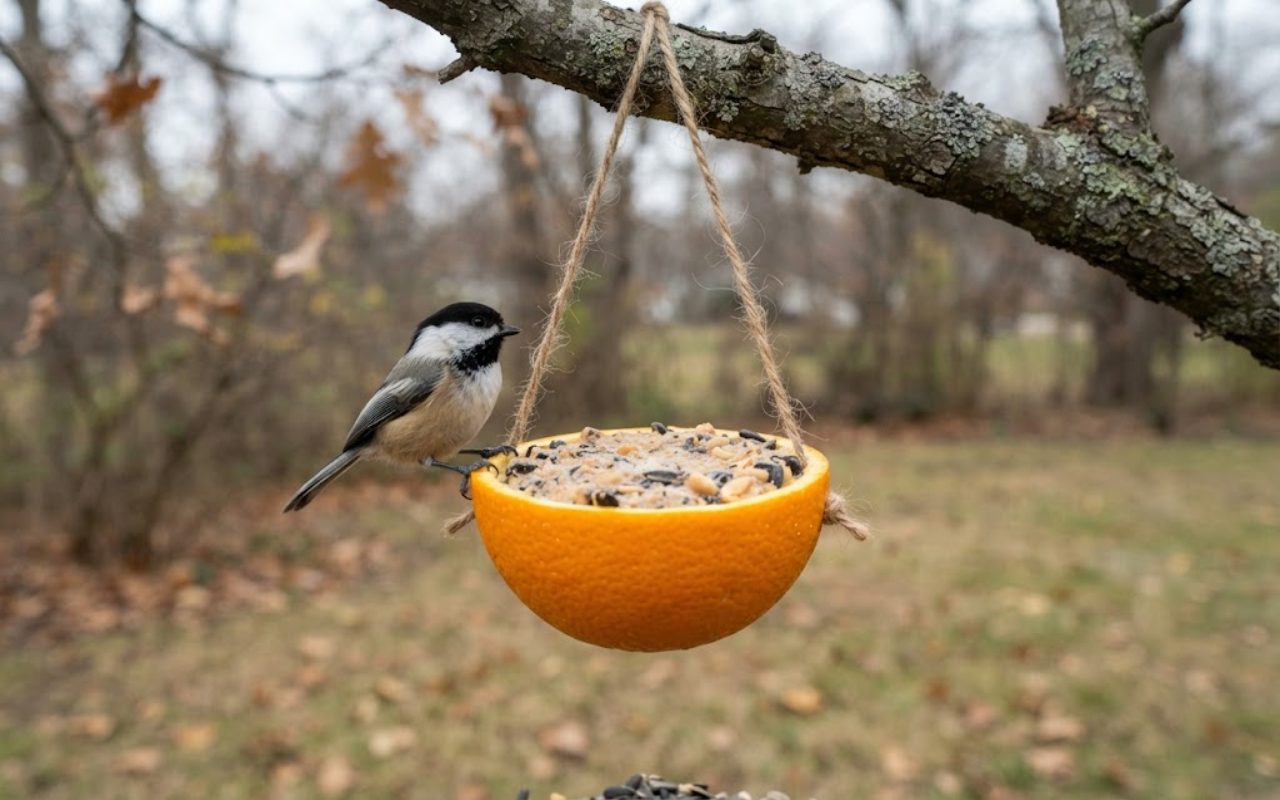
Learning how to make biodegradable orange peel feeders provides an eco-friendly way to supply backyard birds with high-energy lipids during the critical October fall migration window. Many store-bought plastic feeders pose microplastic hazards or require harsh chemical scrub downs when damp autumn conditions set in. Transforming citrus rinds into temporary feeding cups eliminates seasonal waste while offering migrating songbirds a clean, compostable food station.
Experienced birders often observe that early autumn weather introduces unique feeding challenges, such as unexpected rain spells and opportunistic backyard mammals. By preparing these citrus vessels properly, you can prevent mold, support avian nutritional needs, and eliminate plastic hardware from your garden canopy entirely.
Quick-Glance Field Summary
This biodegradable feeder project uses hollowed citrus halves suspended by natural fibers to deliver energy-dense seed mixes during fall migration. It resolves common autumn feeder dampness by providing a short-term, fully compostable vessel that breaks down naturally once the food cycle ends.
- Base vessel: Navel orange or grapefruit rind halved along the equatorial axis
- Suspension material: 100 percent untreated jute twine, hemp cord, or organic sisal
- Suspension length: 12 to 18 inches drop length to prevent excessive wind tipping
- Perch component: 6-inch green hardwood twigs or bamboo skewers (minimum 3/16 inch diameter)
- Feed filler: 50 percent black oil sunflower seed, 30 percent suet or unrefined peanut butter, 20 percent white proso millet
- Operational lifespan: 5 to 9 days under ambient temperatures between 40°F and 65°F
- Target placement: 3 feet or less from window glass, or greater than 30 feet away, adhering to standard window strike prevention spacing
The physical foundation of any citrus feeder relies on selecting thick-skinned fruit varieties that resist premature collapse. Thin-skinned Valencia oranges tend to warp and buckle within forty-eight hours once loaded with heavy seed. Navel oranges or thick-skinned grapefruits offer the dense albedo layer necessary to support the weight of perching birds.
Thorough pulp removal directly dictates how long the feeder remains functional before fungal decay begins. Any remaining fruit sugars will ferment rapidly under autumn moisture and attract unwelcome yellowjackets. Use a curved grapefruit knife or a metal soup spoon to scrape the interior bowl down to the white pith.
- Select navel oranges measuring at least 3.5 inches in diameter with firm, blemish-free rinds
- Scrape all juicy vesicles away until only the dry inner albedo layer remains
- Air-dry the inverted rind halves on a wire rack for 12 hours before adding structural hardware
Rushing the drying step is a common pitfall shared across forum discussions. When citrus rinds are filled while still wet with juice, the inner moisture migrates immediately into the grain and causes early spoilage. Allow the rind surface to feel leathery and dry to the touch before proceeding with assembly.
| Eco Feeder Style | Physical / Structural Profile | Avian Safety Benefit | Primary Weather Risk |
|---|---|---|---|
| Orange Peel Cup | Hollowed citrus half-sphere shell suspended horizontally by natural jute cords. | 100% biodegradable and compostable; zero plastic trash introduced to branches. | High humidity can accelerate rind softening and localized mold blooms within days. |
| Apple Core Ring | Thick horizontal apple slices threaded onto a rustic natural twine loop. | Provides instant fructose and fiber energy for fruit-eating winter migrants. | Flesh dries out, shrivels, and attracts heavy wasp traffic during mild afternoons. |
Twig Perch Anchoring and Natural Cordage Rigging
Balancing a suspended hemispherical cup requires secure cross-bracing to prevent seed from spilling during windy autumn gusts. A common issue reported by backyard bird enthusiasts on r/backyardbirds involves feeders tilting upside down the moment a larger bird, like a blue jay or tufted titmouse, attempts an off-center landing.
Piercing the rind with perpendicular support skewers resolves this balance issue by giving birds a firm landing base outside the rim.
Use naturally gathered hardwood twigs rather than smooth craft dowels, as natural bark provides critical foot traction. Push the twigs cleanly through the rind roughly one-half inch below the cut rim, creating a horizontal cross pattern across the bottom.
- Gather dry hardwood twigs measuring approximately 3/16 inch to 1/4 inch in diameter
- Trim twigs to extend roughly 2 inches beyond the outer perimeter of the rind on each side
- Pierce the citrus wall using an awl or clean nail before pushing twigs through to prevent tearing the rind
Suspend the feeder exclusively with untreated natural cordage like twisted jute or organic sisal. Synthetic nylon cords should be avoided because fraying synthetic strands can tangle around bird feet. Natural twine degrades safely if knocked to the ground by squirrels.
- Cut two 24-inch lengths of untreated 3-ply jute twine
- Thread twine directly beneath the crossed twig ends to distribute the downward weight of feeding birds
- Tie the four loose ends together in an overhand knot roughly 12 inches above the feeder basin
Cold-Weather High-Lipid Feed Blends for October Migrants
October brings drastic temperature swings that demand calorie-dense rations for late-season migrants and resident overwintering birds. Light grain mixes packed with red milo or oats will simply be tossed onto the ground by selective foragers. Instead, focus on raw fats and oil-rich seeds that fuel thermoregulation on freezing autumn nights.
Commercial seed cakes can be replicated at home using render-solid fats or pure nut butters. Avoid any peanut butter containing hydrogenated vegetable oils, added table salt, or artificial sweeteners like xylitol, which are toxic to wildlife.
- Black oil sunflower seeds provide high meat-to-shell lipid content for chickadees and nuthatches
- Rendered beef tallow acts as a weatherproof matrix that binds loose seed together
- Pure unsalted peanut butter provides immediate protein and fat during sub-40°F mornings
- High-grade suet crumbles allow rapid digestion without forcing birds to crack tough shells
Warm your fat base gently until it reaches a soft, workable paste rather than a hot liquid. Mix the seeds thoroughly into the fat until the blend achieves a thick, scoopable mortar consistency. Pack the mixture firmly into the orange bowl, pressing it below the level of the twigs to keep the center of gravity low.
Allow the packed fat mixture to cool and harden in a refrigerator for at least one hour before hanging the feeder outside. This solidification step prevents the filler from shifting or falling out if the feeder swings in a sudden autumn breeze.
Rain Shielding and Aflatoxin Mold Prevention
Damp autumn conditions introduce real physiological hazards to feeding stations, particularly from the fungus Aspergillus flavus. This common mold produces dangerous aflatoxins in damp, stagnant birdseed, which can cause severe liver failure in small passerines.
Because citrus rinds are naturally porous, proper environmental management is necessary to keep moisture out of the seed pocket. A frequent troubleshooting hack discussed among experienced contributors on birding forums is the use of a wide overhead baffle to block rain.
A standard 12-inch clear acrylic weather dome or an inverted repurposed aluminum pie tin suspended four inches above the citrus rind deflects direct October rain. This cover preserves the leathery consistency of the rind and keeps the seed matrix dry.
- Position the feeder under the natural umbrella of thick conifer branches or architectural eaves
- Suspend a standard 12-inch weather dome above the orange half using the central hanger knot
- Ensure the feeder stays out of direct driving rain paths to prevent the bowl from pooling water
Check the feeder every three days for signs of dampness, sour smells, or black spotting along the rind rim. If persistent October rain penetrates the fat mixture, compost the entire unit immediately and hang a fresh one. Never attempt to scrape mold off an existing rind, as fungal hyphae penetrate deeply into porous citrus albedo.
Discard the feeder completely if ambient daytime temperatures rise unseasonably above 70°F for more than two consecutive days. Warm conditions accelerate bacterial spoilage of raw tallow and cause soft peanut butter to coat avian facial feathers, disrupting natural preening.
Predation Management and Safe Garden Canopy Placement
Hanging food items that combine bright orange color with aromatic nut fats naturally attracts curious non-target wildlife. Squirrels, chipmunks, and raccoons will readily chew through jute cords and carry off the entire feeder bowl.
Placing the feeder with intentional clearances keeps these mammals at bay while shielding feeding birds from stalking domestic cats.
Follow standard bird strike avoidance geometry when choosing an anchor branch or hanging pole. The feeder should hang either within 3 feet of your home windows or further than 30 feet away.
The 3-foot clearance prevents birds from reaching dangerous flight speeds if startled toward reflective glass, while the 30-foot distance gives them room to maneuver safely.
- Hang feeders at least 5 feet above the ground to keep them out of reach of leaping domestic cats
- Maintain a minimum 8-foot horizontal clearance from fences, deck rails, or tree trunks to deter squirrels
- Anchor cordage to slender outer branches that cannot support the weight of heavy climbing rodents
If small mammals continue to chew the hanging twine, mount the citrus feeder on a freestanding metal pole equipped with a barrel baffle. Keep domestic pets indoors during peak morning and evening feeding bursts when birds are most focused on refueling.
Once the seed reservoir is depleted and the orange rind begins to curl and dry, unhook the twine and drop the entire assembly into your backyard compost bin. The untreated jute, hardwood twigs, and citrus skin will break down into organic matter within weeks, leaving zero landfill debris behind.