
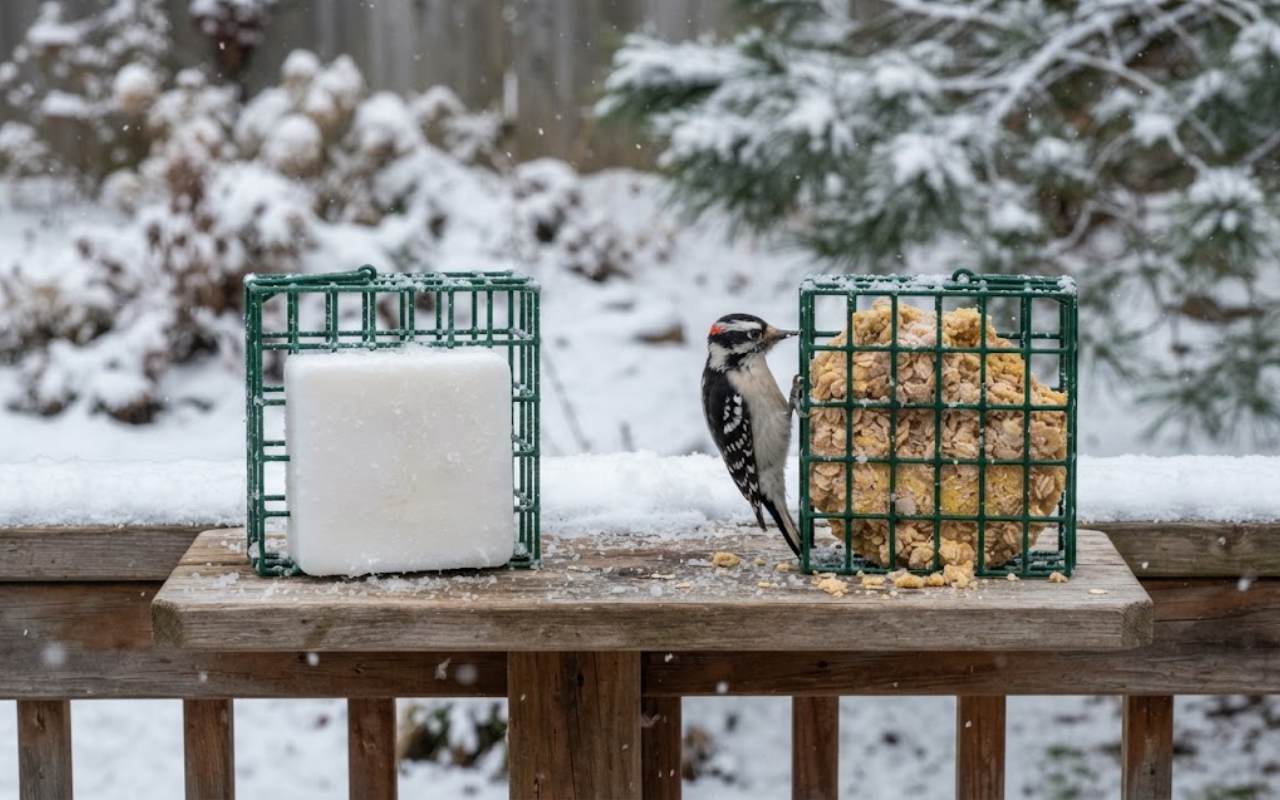
Deciding between suet dough vs suet blocks during sub-freezing winter storms comes down to how rendered fat and binding grains react to freezing moisture. When heavy snow and sleet blanket backyard feeding stations, birds need dense caloric energy without burning excess body heat to chip through ice.
Many backyard birders assume all commercial cakes act the same in the cold, but their physical recipes behave very differently once winter weather sets in. Choosing the wrong mix can leave your local woodpeckers, nuthatches, and chickadees burning valuable energy on an inedible block or facing spoiled, moldy grain after a rapid thaw.
Quick-Glance Field Summary
Pure rendered suet blocks hold up significantly better in blowing snow than suet dough because they naturally repel precipitation rather than absorbing moisture. While no-melt dough excels in summer heat, its heavy grain binders quickly absorb melting snow, turning into a soggy, unpalatable paste that breeds mold during winter freeze-thaw cycles.
- Standard Pure Suet Melt Point: 95°F to 115°F (ideal for sub-freezing winter conditions)
- Suet Dough Composition: Rendered tallow mixed with high ratios of cornmeal, wheat flour, and peanut meal
- Winter Weather Dome Size: Minimum 12-inch to 18-inch diameter baffle to block driving snow
- Critical Health Threshold: Discard damp suet cakes showing black, green, or powdery surface spots to prevent aflatoxin poisoning
- Feeder Mesh Sizing: Standard 0.5-inch coated wire cage to allow bill access while keeping cake intact
What Happens to Rendered Fat and Dough When Temperatures Drop
Pure rendered beef suet is hard animal fat, specifically tallow rendered from around beef kidneys. In deep winter cold, this solid tallow turns dense, firm, and fully moisture-resistant. Water rolls off the oily exterior, which prevents falling snowflakes from penetrating deep into the block.
Commercial suet dough uses a very different formula specifically engineered to prevent melting in high summer temperatures. Manufacturers blend a lower concentration of rendered fat with high volumes of wheat flour, cornmeal, and peanut meal to raise the cake melting threshold. While this prevents greasy drips in July, these dry binders act like tiny kitchen sponges as soon as winter snow hits the feeder.
When outdoor temperatures drop below 20 degrees, both products stiffen considerably. However, pure suet stays dense and hydrophobic, while dough cakes trap ambient moisture from sleet, freezing fog, and powdery snow within their grain matrix.
| Fat Cake Classification | Sub-Zero Texture & Pliability | Snow & Moisture Absorption Risk | Winter Feeder Management Key |
|---|---|---|---|
| Rendered Suet Blocks | Freezes rock-solid below 32°F; requires high mechanical bill pecking force to extract fats. | Low; hydrophobic tallow structure sheds direct water drops but cracks under freeze-thaw cycles. | Best for large, heavy-billed woodpeckers capable of hacking hard frozen fat surfaces cleanly. |
| Flour-Bound Suet Dough | Stays soft and crumbly; internal grain matrix prevents hard crystallization in freezing wind. | High; unshaded snow can turn dry flour components into mush if allowed to melt completely. | Elite for small songbirds; must be hung under a wide plastic roof dome to block snow accumulation. |
Why Wet Snow Ruins Suet Dough Faster Than Pure Tallow
On community forums like r/backyardbirds, a frequent winter complaint centers on suet turning into a gummy, foul-smelling gray slop after a brief storm. This failure happens almost exclusively with “no-melt” dough products exposed to horizontal, wind-driven snow. The high ratio of grain middlings readily absorbs blowing powder, softening the cake structure into paste during afternoon temperature spikes.
Once moisture penetrates a grain-based dough block, fungal hazards escalate rapidly. Damp cornmeal and wheat middlings provide an ideal breeding ground for microscopic fungi, specifically Aspergillus flavus. This mold can generate deadly aflatoxins that cause fatal liver damage in small songbirds like chickadees and goldfinches.
Pure suet blocks eliminate this moisture absorption issue entirely. Snow landing on a tallow block sits on the hydrophobic surface and blows away or drips off harmlessly when the sun emerges. Without damp agricultural grains trapped inside the cake, the fat remains stable, sanitary, and calorie-dense for weeks of freezing weather.
How Small Birds Feed on Frozen Blocks in Freezing Weather
Winter feeding challenges are not just about food spoilage; birds must also be able to physically consume the cake. A common issue documented on wild bird forums involves Carolina Chickadees and Downy Woodpeckers repeatedly hammering at rock-hard suet cakes in sub-zero weather before flying away empty-handed. When air temperatures plunge below 10 degrees, solid pure tallow can freeze solid enough to resist smaller avian beaks.
Birds do not have teeth, so they rely on their bills to flake off microscopic shavings of high-calorie fat. Suet dough is technically softer and easier to flake in sub-zero air due to its crumbly flour base, which provides immediate access for smaller bills. Unfortunately, this advantage disappears completely if the dough gets damp and freezes into a solid, concrete-like ice matrix.
In mild snowstorms hovering near the freezing mark, pure suet blocks soften enough under direct winter sunlight for birds to feed easily. If an extended deep freeze grips your region, pure suet blocks can be quickly modified indoors. Grating a pure suet block with a standard kitchen cheese grater and scattering the flakes in an open tray feeder lets small winter residents feed without expending precious thermal energy.
Simple Feeder Roofs and Cages That Keep Snow Off
Keeping winter precipitation completely off your suet is the most effective way to prevent weather-related feed waste. Standard wire mesh cages leave all four vertical sides and the flat top fully open to driving snow. Installing an 18-inch polycarbonate weather baffle directly above the hanging cage blocks overhead snow accumulation and cuts down on wind chill.
For yards with heavy starling or squirrel pressure, switch to an upside-down suet cage hung under a wide plastic roof. Woodpeckers and nuthatches easily cling to the bottom wire mesh to feed upside-down, while falling snow settles harmlessly on the solid metal roof plate above. This orientation keeps the feeding surface dry, sheltered, and clean through heavy blizzard conditions.
Standard suet cages constructed with 0.5-inch vinyl-coated wire work best in snowy weather. Avoid tight, narrow-slotted metal feeders that trap melting snow inside the frame where it cannot drain. Always hang winter suet stations on south-facing posts or tree trunks to maximize natural solar warming during short winter daylight hours.
Better Ways to Offer High-Fat Food During Severe Blizzards
When severe winter weather rolls in, relying solely on commercial hanging cakes is not your only option. Many experienced backyard hobbyists create their own cold-weather spreads using pure, unsalted rendered beef kidney tallow mixed with pure peanut butter. Pressing this soft mixture directly into the rough fissures of tree bark creates an authentic foraging setup that shelters food from driving snow.
Raw, unrendered beef suet straight from a local butcher shop performs exceptionally well during long sub-freezing spells. Raw suet contains natural connective tissue and cell structures that prevent it from becoming as brittle as commercially rendered tallow cakes in sub-zero cold. Simply place chunks of fresh raw fat into a standard 0.25-inch hardware cloth hopper where birds can harvest bite-sized pieces with minimal effort.
If you must use up lingering packages of suet dough during winter months, reserve them exclusively for completely enclosed feeding stations. Place dough cakes inside enclosed hopper feeders that feature extended wooden eaves and dry side ports. By keeping blowing snow completely off the product, you prevent moisture absorption, eliminate fatal mold risks, and supply your flock with reliable winter fuel.