
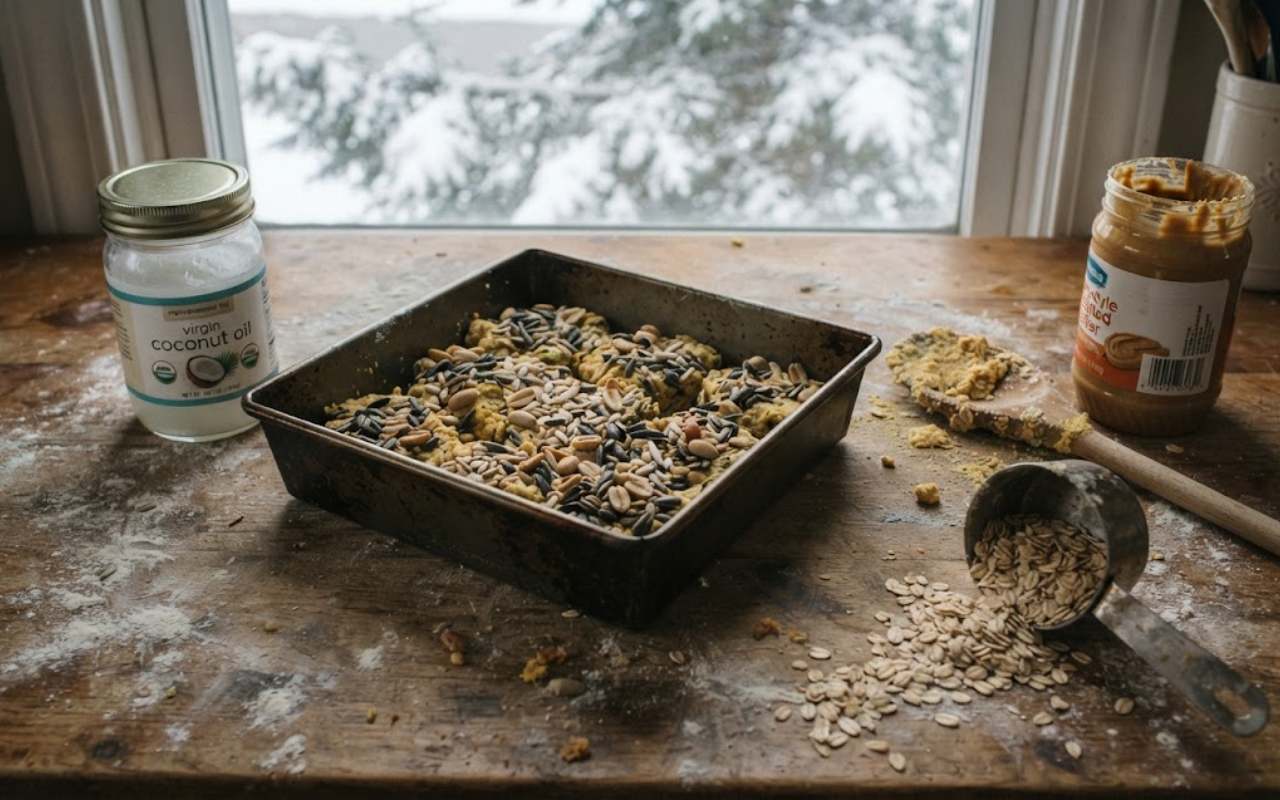
Crafting a homemade vegan suet recipe allows backyard birders to supply dense winter calories to insect-eating birds without using rendered beef tallow. Many hobbyists turn to store-bought vegetable shortening like Crisco because it mimics animal fat at a low price point.
However, hydrogenated vegetable fats present severe physical hazards to wild birds that every backyard feeder operator must avoid. Selecting proper plant-based fats and blending them with absorbent dry binders keeps your wild birds nourished without damaging their plumage.
Quick-Glance Field Summary
Never use hydrogenated vegetable shortening in bird feeders because it coats avian feathers and destroys their natural insulation. A safe plant-based cake uses natural coconut oil mixed with unsalted peanut butter, coarse yellow cornmeal, and high-protein seeds fed strictly below 50 degrees Fahrenheit.
- Safe base fat: Pure unrefined virgin coconut oil (melting threshold: 76°F / 24°C)
- Safe protein binder: No-salt, no-sugar peanut butter (confirm zero xylitol on the label)
- Dry absorption base: Two parts coarse yellow cornmeal to one part rolled oats
- Seed mix additions: Black oil sunflower seeds, shelled peanuts, and safflower seeds
- Operational temperature ceiling: Offer only below 50°F (10°C) to prevent softening
- Hardware requirements: Standard 0.25-inch wire mesh suet cage protected by a rain roof
Why Vegetable Shortening Harms Backyard Birds
Commercial vegetable shortening relies on partially or fully hydrogenated industrial oils like soybean and palm oil. These chemical fats remain semi-solid at room temperature but melt rapidly under body heat or mild sunshine. When birds feed, this greasy fat transfers onto their facial feathers, wings, and bellies.
On Reddit’s r/backyardbirds, community members frequently warn beginners against using Crisco cakes after discovering downy woodpeckers with greasy, matted breast feathers and bald eye rings. Experienced wildlife rehabilitation volunteers note on these forums that vegetable shortening strips the interlocking barbules of bird feathers, permanently ruining their waterproof barrier. Once feathers lose their structure, water reaches the skin directly, leading to lethal hypothermia during freezing nights.
Vegetable shortening also offers zero biological value to birds. Unlike natural animal suet or whole plant lipids, hydrogenated shortening contains artificial trans fats that songbirds cannot metabolize properly. Feeding it robs birds of the dense, usable calories they need to survive severe winter weather.
| Vegan Fat Base | Thermal Melting Threshold | Avian Safety & Plumage Risk | Operational Weather Ceiling |
|---|---|---|---|
| Pure Virgin Coconut Oil | Turns liquid at 76°F (24°C); remains firm and rock-solid in freezing temperatures. | Safe; provides clean lipid energy when mixed with coarse grains to soak up surface oil. | Feed strictly below 50°F (10°C) to prevent any softening or smearing. |
| Hydrogenated Shortening | Softens over a wide plastic range; leaves a greasy residue. | Dangerous; leaves a sticky coat on wings that destroys a bird’s natural weather insulation. | Banned entirely from backyard feeding stations year-round. |
The Best Plant Fats to Use Instead
To create a safe alternative, you must select fats that stay firm in cold air and wash away naturally during avian preening. Unrefined virgin coconut oil serves as the most reliable solid base because it has a clean fatty acid profile. Natural peanut butter provides essential plant proteins and raw calories that nuthatches, chickadees, and woodpeckers readily accept.
- Virgin coconut oil: Sets hard below 76°F and avoids greasy synthetic stabilizers
- Natural peanut butter: Delivers concentrated plant protein without hydrogenated palm oil fillers
- Coarse yellow cornmeal: Absorbs surface moisture and gives the cake a crumbly, digestible texture
- Whole rolled oats: Locks the oil in place and prevents grease separation in changing weather
- Black oil sunflower hearts: Provides high-protein fuel without forcing birds to discard hulls
Always read peanut butter labels before mixing your base fats. Many commercial peanut butter brands contain added salt, hydrogenated oils, or artificial sweeteners like xylitol, which is toxic to wildlife. Choose products that contain only peanuts and peanut oil.
How to Mix and Test Your Dough
A successful plant-based mixture relies on a high ratio of dry ingredients to fat. If your mix contains too much liquid oil, the finished block will slump inside the wire cage on sunny mornings. A heavy dose of dry grains absorbs free oils and makes the finished cake safe to touch.
- 1 cup unrefined virgin coconut oil
- 1 cup unsalted, all-natural peanut butter
- 2 cups coarse yellow cornmeal
- 1 cup whole rolled oats
- 1 cup black oil sunflower seed chips
Melt the coconut oil and peanut butter together in a saucepan over low heat just until liquefied. Remove the pot from heat and stir in the cornmeal, oats, and sunflower seeds until the mixture resembles stiff cookie dough. Press the warm dough firmly into a clean, reusable suet mold or a square glass baking dish lined with parchment paper.
Place the mixture into your freezer for at least two hours until it freezes solid. Before placing it outside, perform a simple warmth test by pressing your bare thumb against the block for ten seconds. If your thumb picks up a greasy, wet residue rather than dry crumbs, the recipe contains too much oil; break the block down, stir in an extra half-cup of cornmeal, and re-freeze it.
Keeping Feeders Clean and Stopping Mold Growth
Plant-based fats spoil much faster than commercial beef suet cakes. When moisture enters the dough from rain or melted snow, damp cornmeal and crushed peanuts become breeding grounds for dangerous microbes. The most common threat is Aspergillus flavus, a fast-growing fungus that produces poisonous aflatoxins capable of killing songbirds within days of ingestion.
Clean wire suet cages thoroughly between every fresh block. Discard any uneaten, crumbly suet fragments into the trash rather than shaking them onto the ground where rodents and ground-feeding doves congregate. Wash metal cages using a standard 1:9 bleach-to-water dilution soak for ten minutes, then rinse them with fresh water and allow them to dry completely before reloading.
- Bleach sanitizing bath: Mix one part household chlorine bleach with nine parts cool tap water
- Soak duration: Submerge wire cages for ten minutes to eradicate fungal spores and bacteria
- Drying protocol: Allow cages to air dry in the sun to eliminate lingering chlorine vapors
- Inspection rule: Throw away any suet block showing gray threads, dark spots, or a sour smell
Do not pour boiling water over plastic-coated suet baskets, as high heat cracks the vinyl coating and exposes raw wire that rusts quickly. If you use a wooden suet log with drilled holes, scrub the interior cavities with a stiff wire bottle brush soaked in vinegar water, as bleach can soak into untreated wood grain.
Weather Rules and Safe Feeder Placement
Temperature management dictates whether a plant-based cake remains safe outdoors. Even a well-balanced coconut oil block begins to soften when ambient air temperatures climb toward 50°F (10°C). Hang these cakes exclusively during late autumn, winter, and very early spring when freezing weather keeps the fat structurally sound.
Backyard birders on localized wild bird forums highlight that direct winter sunlight often warms dark wire cages several degrees above the ambient air temperature, causing hidden leaks. To prevent this, always mount your suet cage against the north-facing or east-facing side of a mature tree trunk, out of direct afternoon glare. Install a wide 12-inch or 18-inch clear plastic weather baffle directly above the cage to shield the dough from driving rain and snow.
- Feeder height: Hang suet stations at least five feet above ground to keep them out of reach of mammals
- Sun protection: Position feeders in full shade to stop midday heat from softening the oils
- Weather shield: Install a 12-inch clear baffle dome to deflect precipitation away from the feed
- Window collision distance: Place suet stations within three feet of windows or farther than thirty feet away
Following Audubon window placement guidelines protects birds that dart away from your feeding station in a panic. Placing feeders within three feet prevents birds from building up enough flight speed to injure themselves if they strike the glass. If that proximity is not an option, moving the suet station beyond thirty feet gives birds ample flight space to spot window reflections and dodge the glass entirely.