
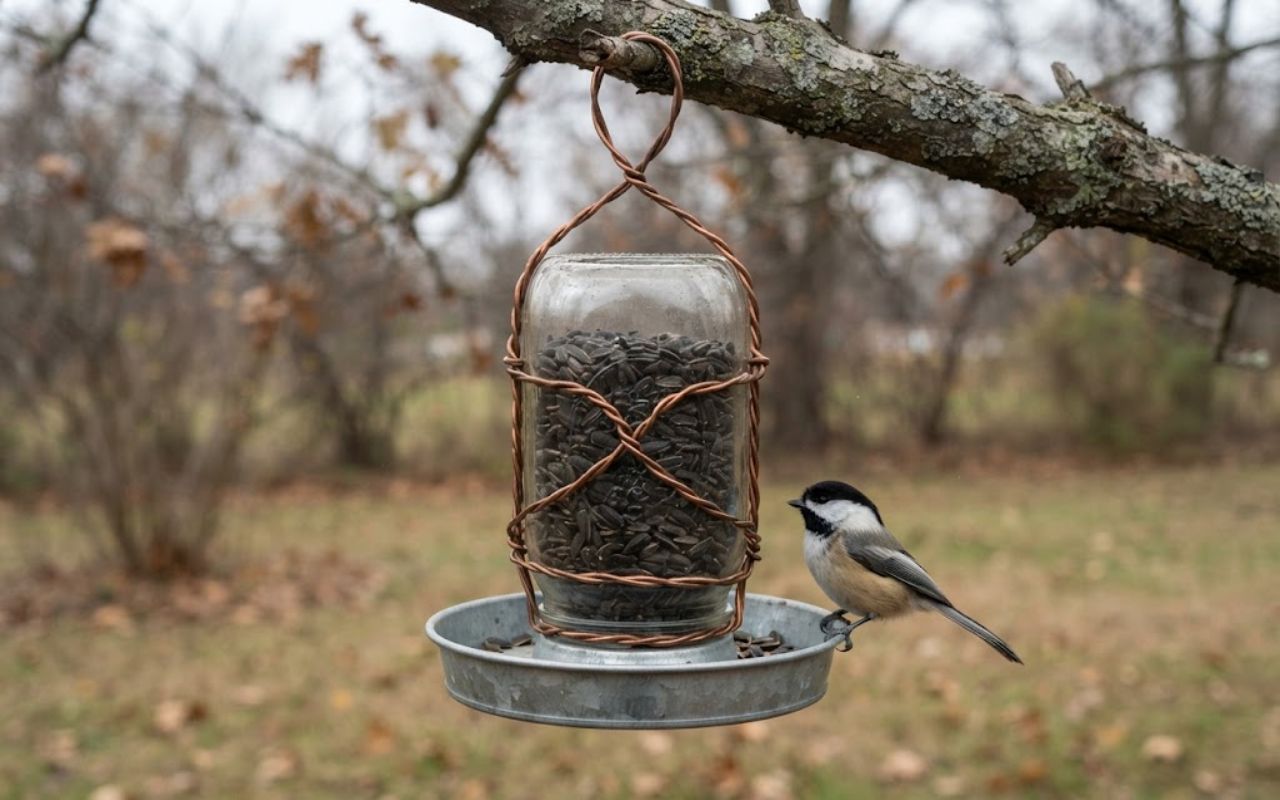
Learning to build rustic mason jar fall bird feeders requires solving the chronic moisture issues that plague simple gravity dispensers during wet autumn transitions. Repurposed pantry glassware creates an airtight environment where morning dew and fluctuating temperatures trigger hazardous internal condensation. When damp seed sits in poorly ventilated glass bases, rapid fungal rot quickly ruins the bounty intended for migrating songbirds.
Pairing traditional glass jars with modified galvanized chick bases or wooden trays allows you to construct an enduring, stable feeding station. Achieving field success requires precise mechanical alterations to allow continuous moisture drainage while maintaining a steady gravity flow of grains. The following technical guide details exactly how to assemble and maintain your seasonal glass feeder using field-tested community modifications.
Quick-Glance Field Summary
Building a durable glass gravity feeder requires retrofitting a standard poultry feeder base with auxiliary drainage ports to prevent seed saturation. Proper rigging demands a non-slip mechanical harness crafted from heavy-gauge copper wire to secure the slick glass cylinder against autumn wind gusts.
- Base Reservoir: Standard 1-quart wide-mouth mason jar paired with a 6-inch galvanized or heavy-duty plastic chick feeder base.
- Drainage Machining: Four to six 0.125-inch weep holes drilled along the outer lip trough to eliminate pooled water.
- Rigging Wire: 14-gauge annealed copper wire or 16-gauge 304 stainless steel safety wire wound with a secure tension-lock hitch.
- Optimal Seed Profile: 70 percent high-oil black oil sunflower seeds blended with 30 percent white proso millet.
- Window Safety Buffer: Mount within 3 feet of exterior windows or beyond 30 feet to prevent fatal flight collisions.
Jar Selection and Glass Thermal Stress Thresholds
Selecting the proper glass reservoir dictates the structural integrity and functional lifespan of your autumn feeding station. Canning jars engineered for home heat-processing, such as vintage Ball or Kerr quart containers, offer thick soda-lime glass that withstands seasonal temperature shocks better than lightweight decorative glassware.
On specialized forums like r/backyardbirds, community members frequently warn that narrow-mouth jars create severe internal seed bottlenecks during damp spells, making wide-mouth quart configurations the mandatory standard.
The smooth interior contour of a wide-mouth jar permits heavy grains to slide toward the feeding ports without jamming at the shoulder. Clear glass allows backyard observers to monitor seed volume from indoors without disturbing feeding birds.
However, clear glass also accelerates solar heat gain during brisk, sunny autumn afternoons, creating an internal microclimate that must be balanced with adequate ventilation.
Thermal fluctuations between cold autumn nights and mild daylight hours will stress low-grade glassware. Inspect every recycled container for micro-fractures, air bubbles, or lip chipping before starting assembly.
- Jar Volume: 32 fluid ounces (1 quart) provides optimal weight balance when filled with dense autumn seed mixes.
- Mouth Profile: Wide-mouth openings measuring 3 inches in diameter to ensure uninhibited seed descent.
- Glass Type: Annealed soda-lime canning glass rated for thermal differentials.
- Inspection Criteria: Zero visible hairline stress fractures around the external thread ridges.
| Upcycled Silo Type | Physical / Structural Profile | Avian Safety Benefit | Primary Weather Risk |
|---|---|---|---|
| Mason Jar Silo | Thick, rigid glass reservoir inverted over a circular metal chick feeder base. | Protects internal seeds completely from driving rain and damp autumn fog. | Glass body can freeze and crack if internal moisture expands during sub-zero snaps. |
| Plastic Soda Bottle | Lightweight polyethylene bottle pierced horizontally with wooden spoons. | Completely shatterproof if dropped; easy for small children to handle and assemble. | Lightweight frame sways violently in high winds, dumping seeds onto wet ground. |
Chick Feeder Base Retrofitting and Drainage Orifice Machining
The standard poultry chick feeder base screws directly onto standard mason jar threads, creating a traditional gravity tray. On regional birding forums, experienced builders consistently report that stock poultry bases fail rapidly outdoors because they lack perimeter drainage, turning seed troughs into stagnant sludge within hours of rainfall.
You must modify these retail bases by machining precise drainage ports along the lower perimeter trough before introducing feed. Galvanized steel bases provide a classic farmhouse aesthetic, but you must ensure the protective zinc coating is intact to prevent immediate rust.
Alternatively, powder-coated or heavy polypropylene bases resist autumn frost cycles without leaching oxidation into wet seed. Using a cobalt bit in a variable-speed drill press or hand drill prevents tear-out and creates clean, burr-free drainage ports.
Position your drill bits along the lowest crease of the feeding trough where rainwater naturally pools. De-burr all cut metal edges using a small round needle file to prevent lacerations to bird tongues and feet.
- Hole Diameter: 0.125-inch (1/8-inch) diameter holes to allow water discharge while retaining medium-sized seeds.
- Hole Quantity: Four to six evenly spaced drainage ports drilled around the outer perimeter channel.
- Base Clearance: Minimum 0.75-inch trough depth to prevent high autumn winds from scouring loose seed onto the ground.
- Metal Treatment: Cold-galvanizing compound applied with a cotton swab to freshly drilled metal edges to seal against rust.
Suspension Mechanics and Wind Shear Wire Rigging
Suspending a slick, heavy glass cylinder presents unique mechanical challenges that standard twine or macrame hangers cannot reliably solve. Humidity and autumn dampness rot organic jute and hemp within weeks, resulting in catastrophic ground impacts and shattered glass.
Community discussions across wildlife craft boards demonstrate that heavy-gauge annealed copper wire or stainless steel safety wire provides the ultimate combination of rust resistance, load strength, and rustic visual charm.
Forming a secure cage requires a double-loop base harness connected to a primary vertical bail handle. Wrap the wire tightly under the raised glass lip directly beneath the threaded jar neck to establish a solid mechanical anchor point. Never rely purely on friction or decorative adhesive wraps to support glass vessels filled with heavy grain.
Wind gusts transfer significant kinetic energy to suspended feeders, creating pendulum sway that can loosen poor connections. Securing your wire cage with mechanically twisted pigtails eliminates joint slippage.
- Wire Material: 14-gauge bare copper wire or 16-gauge 304 stainless steel craft wire.
- Tensile Capacity: Structural harness designed to support at least 15 pounds of combined glass, seed, and perching weight.
- Suspension Loop: Closed 2-inch top eyelet connected to a heavy steel carabiner or weather-rated S-hook.
- Neck Security: Continuous wire collar twisted tightly into the lower channel beneath the external jar threads.
Autumn Seed Flow Dynamics and Internal Condensation Mitigation
Autumn brings shifting flock populations that demand nutrient-rich feeds to fuel migration and build essential lipid reserves for cold nights. Black oil sunflower seeds represent the gold standard for fall feeding due to their high caloric density and thin, manageable hulls.
However, the high oil content of these seeds, combined with trapped internal humidity, causes grains to bridge together inside the inverted jar instead of flowing freely into the base.
To maintain steady flow, create a mixed seed blend that incorporates smooth, round grains alongside rough sunflower shells. White proso millet acts as a natural mechanical lubricant, preventing large sunflower seeds from locking together over the dispensing holes.
Avoid low-grade commercial filler grains like red milo, cracked corn, or oats, which rapidly absorb airborne moisture and expand into a solid plug.
When warm daylight induces condensation on the interior glass walls, unmitigated dampness promotes the rapid growth of Aspergillus flavus. This common fungal mold produces aflatoxins, which are highly toxic to avian liver systems.
- Seed Composition: 70 percent black oil sunflower seed for primary lipids and 30 percent white proso millet for flow maintenance.
- Excluded Grains: Zero cracked corn or wheat fillers to prevent rapid moisture uptake and internal clumping.
- Flow Check Frequency: Physical inversion check conducted every three days during prolonged autumn rains.
- Reservoir Capacity: Refill only what local flocks consume over four days to prevent long-term moisture accumulation.
Pathogen Decontamination Protocols and Strike Safe Placement
Maintaining a clean feeding station protects local songbird populations against avian pox, salmonellosis, and respiratory fungal infections. Glass mason jars excel over porous plastics because the non-porous surface can be scrubbed clean without scratching.
When cleaning glass reservoirs, avoid thermal shock by letting the jar reach room temperature before applying hot water, and never place chilled glass directly into boiling water.
Soak disassembled components in a mild bleach solution to neutralize clinging spores and bacteria. Rinse all parts thoroughly with clean water until no chlorine odor remains, and allow the jar and modified base to air-dry completely before refilling with fresh seed. Moisture trapped during the refilling process will immediately spoil the autumn grains.
Positioning your feeder requires strict adherence to avian safety geometry relative to reflective glass windows. The Audubon Society recommends placing backyard feeders within 3 feet of exterior windows or beyond 30 feet from glass surfaces to minimize fatal flight impacts.
- Sanitation Ratio: Soak all components in a 1:9 unscented household bleach to water dilution for 10 minutes.
- Cleaning Interval: Deep sanitation executed every 14 days, or immediately following 48 hours of continuous autumn precipitation.
- Elevation Clearance: Hang the feeder base 5 feet above the ground to deter jumping rodents and domestic predators.
- Collision Proximity: Position precisely 3 feet or closer to house windows to prevent birds from building fatal flight momentum.