
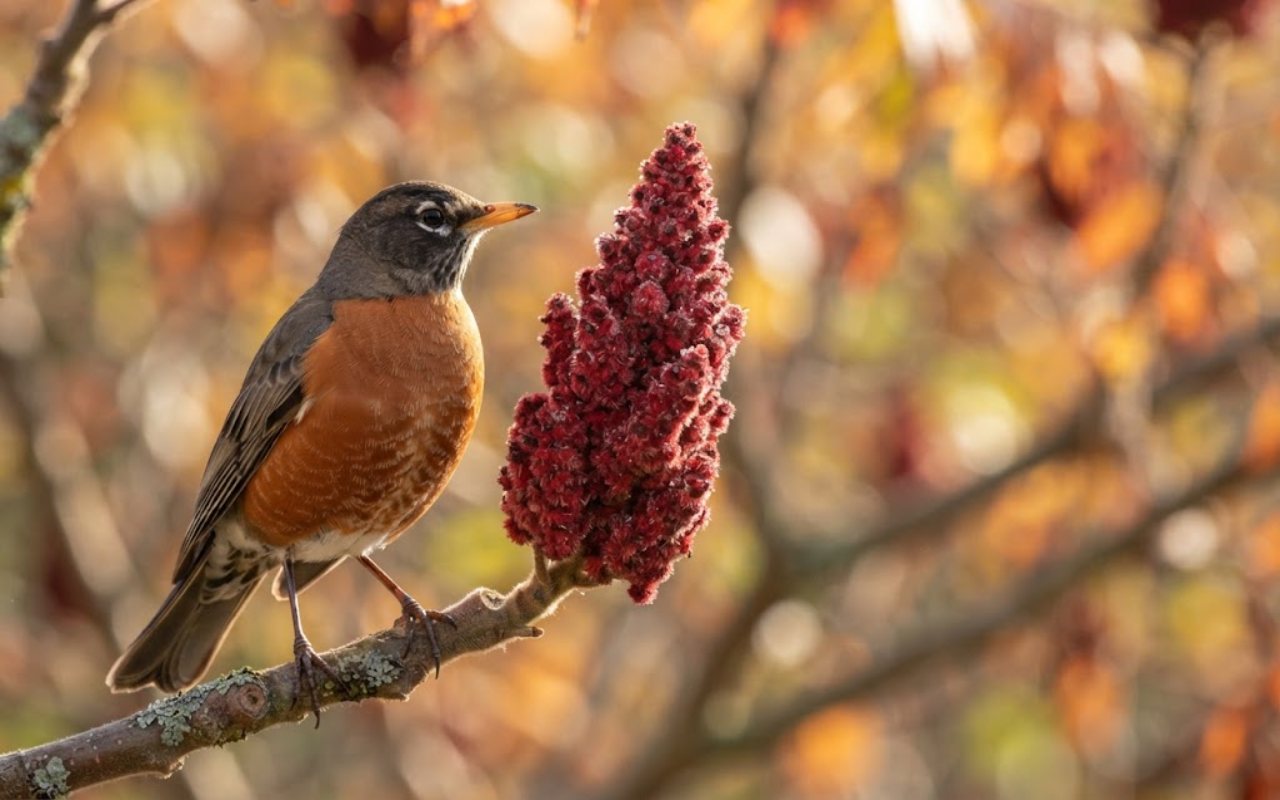
Establishing native autumn plants for birds transforms an ordinary backyard into a critical migratory fueling station and winter survival refuge. Many property owners rely entirely on commercial seed blends, yet wild passerines evolved to time their metabolic spikes with native plant phenology. Integrating authentic regional flora ensures that avian visitors receive the precise balances of lipids, carbohydrates, and essential micronutrients required for strenuous seasonal flights.
Transitioning to native vegetation eliminates artificial feeding dependencies while cultivating self-sustaining, predator-safe foraging zones. Experienced growers routinely watch birds completely ignore non-native ornamentals while stripping native shrubs bare in a matter of hours. This strategic plant selection protects local biodiversity and ensures that your yard remains a premium destination for wandering winter flocks.
Quick-Glance Field Summary
Selecting the right fall vegetation requires balancing immediate migratory lipid spikes with freeze-resistant winter emergency mast. Prioritize high-fat autumn drupes alongside structural native perennials whose seed heads persist above the regional snowline.
- High-lipid autumn migrator shrubs: Spicebush (Lindera benzoin) and Arrowwood Viburnum (Viburnum dentatum)
- Cold-weather persistent soft mast: Winterberry Holly (Ilex verticillata) and Eastern Redcedar (Juniperus virginiana)
- Late-season high-carbohydrate emergency fuel: Staghorn Sumac (Rhus typhina) and Smooth Sumac (Rhus glabra)
- Uncut native seed head producers: Purple Coneflower (Echinacea purpurea) and Orange Coneflower (Rudbeckia fulgida)
- Early autumn canopy fuel vines: Virginia Creeper (Parthenocissus quinquefolia) and American Beautyberry (Callicarpa americana)
- Structural planting clearance: Place dense fruit-bearing thickets at least 30 feet away from reflective windows to eliminate fatal strike trajectories.
High-Lipid Fall Drupes: Fueling Migratory Passerine Stopovers
Migrating thrushes, vireos, and warblers require energy-dense lipids rather than simple sugars to replenish glycogen reserves and sustain sustained night flights. Arrowwood Viburnum (Viburnum dentatum) produces blue-black drupes that contain fat levels exceeding 40 percent of their dry mass. In community discussions on wild bird forums, observers often document entire flocks of gray catbirds and hermit thrushes exhausting arrowwood crops within forty-eight hours of fruit ripening.
Spicebush (Lindera benzoin) functions as another vital lipid powerhouse during peak late-September and October migration windows. The glossy red drupes contain approximately 30 to 50 percent lipids, offering immediate caloric recovery for long-distance neotropical migrants. These deciduous shrubs naturally thrive in partial woodland shade and damp understories, making them ideal understory plantings.
Virginia Creeper (Parthenocissus quinquefolia) complements these shrubs by winding through canopies and producing high-fat, dark blue berries on striking red pedicels. While invasive vines like oriental bittersweet offer empty sugars, Virginia Creeper provides essential fatty acids that birds metabolize rapidly during cold autumn fronts. The native vine also serves as a host plant for sphinx moth larvae, granting insectivorous birds supplemental protein before temperatures drop.
The Bletting Phenomenon: Why Birds Wait for Post-Freeze Winterberries
Backyard birders frequently post troubleshooting questions when autumn approaches and birds deliberately bypass pristine crops of native berries. This hesitation occurs because plants like Winterberry Holly (Ilex verticillata) rely on a process closely resembling bletting—historically an old-world culinary term used to describe ripening certain fruits, like medlars, past maturity to the point of structural decay.
In the wild, the exact same cellular breakdown happens naturally on winterberry stems to benefit local wildlife. Sub-freezing temperatures initiate repeated freeze-thaw cycles that rupture the tough internal cell walls within the fruit.
This natural chemical process neutralizes unpalatable, astringent tannins and converts complex starches into accessible, easily digestible sugars. Winterberry requires at least one male pollinator shrub situated within forty feet of female cultivars to generate heavy berry sets.
When freezing conditions finally soften the crimson fruit in late autumn or early winter, American robins, eastern bluebirds, and cedar waxwings descend to harvest the softened crop. Leaving these berries untouched on the stem during October and November ensures that resident species have an unbroken food reservoir when snow blankets ground-level food sources.
American Beautyberry (Callicarpa americana) offers an earlier autumn harvest of radiant purple fruit clusters that circle the stem joints. While lower in raw fat than viburnums, beautyberry yields massive volumes of easily digestible carbohydrates across the Southeast and mid-Atlantic regions.
Forum contributors note that northern mockingbirds and brown thrashers readily defend individual beautyberry shrubs as territories, feeding steadily on the persistent berries well into December.
Seed Cone Architecture: Uncut Perennials Outperforming Hanging Feeders
The autumn garden cleanup routine practiced by traditional landscapers destroys one of the most productive natural food sources available to granivorous birds. Purple Coneflower (Echinacea purpurea) produces spiky, hemispherical seed cones packed with rich acoustic-attracting kernels.
Leaving dead flower stems intact throughout autumn allows American goldfinches, dark-eyed juncos, and native sparrows to balance on the sturdy stems and harvest seeds naturally.
Orange Coneflower (Rudbeckia fulgida) serves a complementary foraging function with its dark, dense central disks. The stiff, upright stems elevate ripe seeds several feet above the soil, preventing ground dampness from introducing mold or rot.
A common complaint on birdwatching platforms involves seed clumps spoiling inside commercial hanging feeders due to moisture; intact native seed cones naturally shed autumn rain and keep seed caches dry.
- Stems must remain uncut until late spring when ambient daytime temperatures consistently exceed 50 degrees Fahrenheit.
- Planting perennials in broad groupings of five or more specimens improves foraging efficiency by minimizing inter-plant flight energy.
- Dense perennial groupings catch fallen snow naturally, creating microclimates underneath that shelter ground-foraging sparrows.
Overly manicured landscapes force small granivores to travel long distances between open feeders, exposing them to domestic predators and sharp-shinned hawks. Retaining native seed heads preserves natural foraging rhythms without the sanitation risks associated with crowded artificial feeding stations.
Persistent Emergency Mast: Sumac and Redcedar Cold Tolerance
As late autumn transitions into deep freezes, primary food items deplete rapidly, leaving birds dependent on durable mast that resists winter rot. Staghorn Sumac (Rhus typhina) produces erect, fuzzy red fruit clusters called drupe pyrenes that persist throughout heavy snow and ice storms.
While low in raw lipid concentration compared to autumn berries, sumac supplies indispensable late-season carbohydrates, calcium, and malic acid when preferred forage is exhausted. Black-capped chickadees, northern flickers, and blue jays regularly utilize sumac stands during severe regional temperature drops.
The dense hairs on sumac drupes shed direct moisture, which suppresses the colonization of Aspergillus flavus and other dangerous mold pathogens that typically thrive on moist decaying fruit. Planting sumac in dry, open soil edges forms an impenetrable natural food bank that remains viable straight through March.
Eastern Redcedar (Juniperus virginiana) provides dense, waxy, blue seed cones that mimic traditional berries and serve as foundational cold-weather fuel. Female redcedars feed dozens of species, most notably cedar waxwings, evening grosbeaks, and yellow-rumped warblers.
The thick foliage of this native juniper simultaneously shields birds from fierce wind gusts while they forage, drastically reducing their daily convective heat loss.
Thicket Geometry: Predator Cover and Foraging Microclimates
The physical arrangement of native plantings determines whether wild birds can feed safely without falling victim to ambush predators. Native shrubs should always be installed in layered, irregular thickets rather than isolated, solitary islands across an open lawn.
Grouping species like American elderberry, arrowwood, and spicebush simulates edge-habitat geometry, offering instantaneous refuge from raptors and neighborhood cats.
American Elderberry (Sambucus canadensis) ripens slightly ahead of other autumn mast, providing early-fall migrants with high-antioxidant, moisture-rich sustenance. Planting elderberry along the damp outer margins of a shrub border establishes an outer protective perimeter for smaller, shy songbirds.
Ground-foraging birds like eastern towhees and fox sparrows exploit the leaf litter collected underneath these shrub borders, turning over native mulch to unearth latent invertebrate prey alongside fallen berries.
To maintain optimal bird health and prevent structural hazards, yard geometry must account for structural parameters and clear flyways:
- Maintain a buffer zone of at least 30 feet between dense fruit thickets and large reflective windowpanes to eliminate reflection-induced flight collisions.
- Keep foraging corridors interconnected so small birds can move between protective branches without crossing wide, open expanses of lawn.
- Avoid all synthetic pesticides and fungicides on native plantings, as migrating birds rely heavily on berry-adjacent caterpillars for rapid protein supplementation.
Integrating these native species establishes a fully self-reliant refuge that caters to the exact evolutionary needs of wild birds. By matching regional botanical varieties with specific fall nutritional requirements, gardeners cultivate an ecologically resilient avian sanctuary that thrives long after artificial feeders empty.