
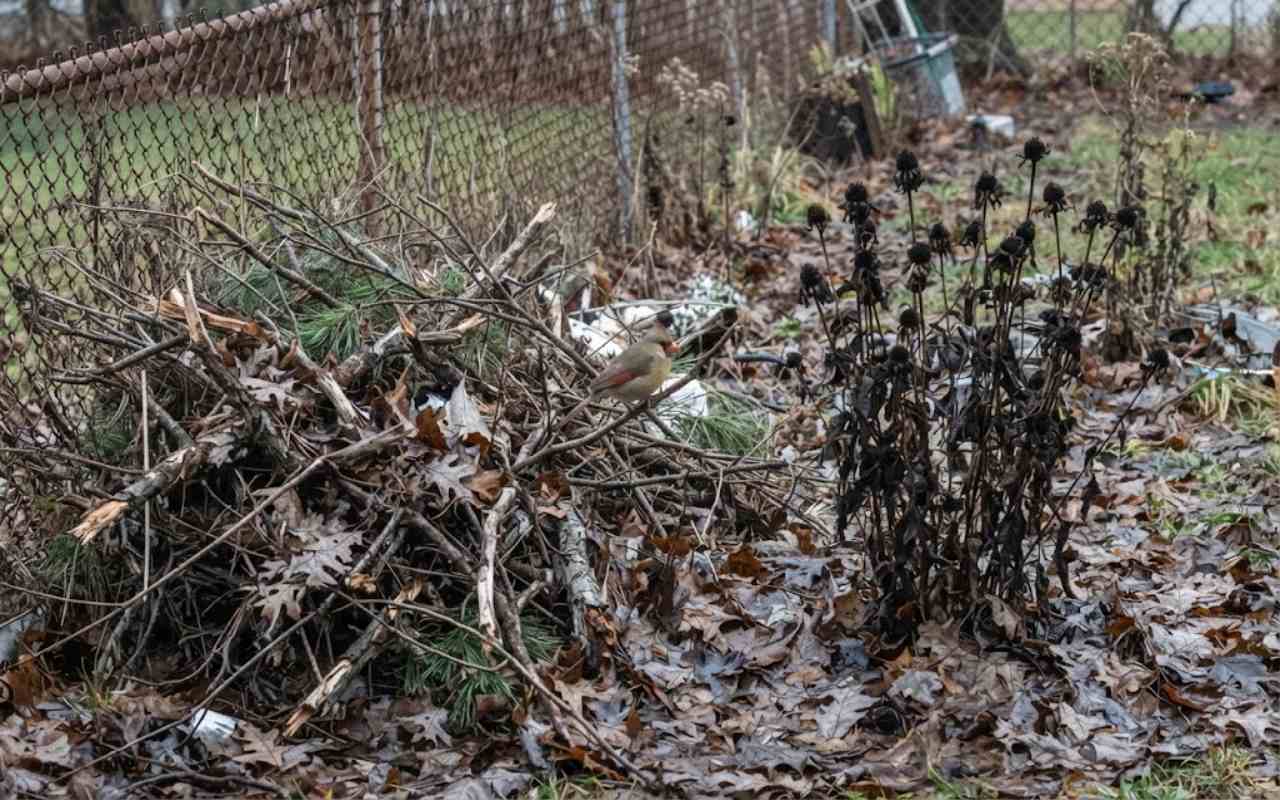
Executing strategic autumn landscaping for birds requires shifting from manicured lawns to functional wildlife ecology. Swapping aggressive cleanups for structural habitat creation turns your yard into an indispensable migratory fueling depot. Conventional raking and pruning inadvertently destroy the exact foraging roughage and insect microhabitats songbirds need to survive.
Retaining natural forage and building shelters instantly transforms a barren property into a thriving avian sanctuary. Leaving native seed heads standing and preserving leaf litter provides high-fat fuel that prevents overnight hypothermia. These simple habitat modifications eliminate feeder dependencies while keeping local bird populations secure all winter long.
Quick-Glance Field Summary
Restructuring your property for autumn bird retention balances thermal shelter construction, standing seed architecture, and reliable hydration while eliminating disruptive yard-clearing habits.
Implementing layered brush piles, undisturbed leaf litter zones, and calibrated de-icing setups creates a resilient haven that meets urgent avian caloric demands through dropping temperatures.
- Brush pile foundation: 6-inch to 8-inch cross-hatched hardwood base logs with loose canopy brush rising 4 to 6 feet high
- Window collision safety zones: Water sources and feeding stations positioned strictly within 3 feet or beyond 30 feet from exterior glass
- Foraging leaf mulch layer: 2-inch to 4-inch depth of undisturbed deciduous leaves under shrub lines
- Cold-snap nectar concentration: 3:1 water-to-sucrose formula lowering fluid freezing thresholds down to 22°F to 25°F
- Feeder sanitation soak: 1:9 household bleach-to-water dilution followed by complete air-drying to eliminate fungal spores
Brush Pile Structural Architecture and Predator-Exclusion Zones
A common issue raised in r/backyardbirds threads is that haphazard brush piles often collapse into sodden, ground-level mats after the first heavy autumn rainfall. Instead of offering thermal protection, flattened debris traps ground moisture and attracts subterranean rodents while excluding songbirds.
A functional wildlife brush pile demands an engineered, load-bearing framework that keeps interior tunnels elevated, dry, and secure from neighborhood cats.
Start by laying heavy foundation logs in an alternating grid pattern to establish a stable structural base. This framework elevates the entire structure off damp earth, circulating ambient air and creating escape chambers that larger predators cannot breach.
- Base layer logs measuring 6 to 8 inches in diameter placed parallel to each other roughly one foot apart
- Secondary cross-timber layer set perpendicular across the base to establish interior crawl voids
- Coarse branch layer using deciduous limbs or pine cuttings stacked loosely across the grid
- Exterior canopy thatch using evergreen boughs to shed driving rain and deflect sleet
Once the core scaffold is erected, finish the exterior with evergreen boughs or pruned perennial stems. This creates an impermeable weather shield on top while maintaining an open maze below where juncos, native sparrows, and wrens can roost securely during freezing nights.
Leaf Litter Foraging and Soil Macroinvertebrate Preservation
Standard suburban autumn maintenance insists on vacuuming and bagging every fallen leaf, which eliminates the primary protein source for ground-feeding birds.
In community discussions across localized birding groups, members frequently note that yards with thick leaf cover attract significantly more towhees, thrashers, and native sparrows than those with bare, power-blown mulch beds.
Fallen deciduous leaves harbor dormant caterpillar pupae, spider egg sacs, and subterranean detritivores that supply crucial animal lipids ahead of winter.
Rake fallen foliage directly into deep landscape borders and beneath the drip lines of established shrubs rather than curbside bags. Keep these zones undisturbed through early spring to shield ground-dwelling macroinvertebrates from killing frosts.
- Oak and maple leaf mulch spread evenly at a settled depth of 2 to 4 inches
- Natural wood-border edging or fallen branches placed along margins to prevent wind drift
- Coarse perimeter buffer zones to retain leaf humidity without smothering underlying soil
Birds forage through these zones using an energetic double-scratch hop to unearth buried calories. Avoid synthetic cedar or chemically colored landscape mulches, which contain aromatic compounds and toxic dyes that repel soil invertebrates and degrade avian foraging quality.
Standing Native Seed Head Management and Lipid-Dense Calibration
Deadheading flowering perennials in late autumn eliminates free, self-rationing seed caches that finches and nuthatches depend on during early snow events. On urban wildlife forums, suburban gardeners often struggle with homeowner association rules when leaving brown stalks standing.
A successful community-tested hack involves leaving dense perennial seed stands tucked discreetly along rear fence borders, maintaining a neatly trimmed three-foot turf edge at the property line to show clear human intentionality.
Different native plant genera release seed at staggered intervals throughout the autumn and winter months, providing continuous forage across shifting weather systems.
Retaining varied stalks ensures that lighter birds like American goldfinches can forage high on trembling seed stems, while heavier native sparrows glean what drops below.
- Echinacea and Rudbeckia stems retained at full height to feed goldfinches and chickadees
- Native ornamental grasses left uncut to disperse fine grains during winter gale events
- Solidago and Symphyotrichum clusters preserved to support late migrating monarch butterflies and overwintering titmice
Supplement standing stalks with elevated feeding stations stocked with black oil sunflower and nyjer seed. Black oil sunflower seeds provide a thin outer hull easily cracked by smaller bills, yielding a kernel packed with accessible plant fats. Reserve bitter safflower for open tray feeders to deter squirrels while nourishing cardinals, and deploy nyjer in specialized mesh feeders to eliminate wasted, ground-spoiled grain.
Thermal Windbreaks and Microhabitat Roosting Geometry
Autumn marks a dramatic shift in prevailing winds, exposing birds to sudden convective body-heat loss if your yard lacks structural windbreaks. Planting a tiered evergreen buffer along the north and northwest perimeters of your yard dramatically drops localized wind speeds.
Multi-stemmed conifers such as eastern red cedar, arborvitae, and spruce provide natural thermal pockets where birds trap boundary-layer body heat during sub-freezing nights.
When deploying supplementary roosting boxes or cleaning out summer nesting boxes, apply the standard collision distance guidelines defined by field ornithologists.
Place shelters and feeding zones either within 3 feet of house windows or farther than 30 feet away, ensuring that birds startled by predators cannot accelerate to lethal collision speeds if they bolt toward reflective glass.
- Conifer perimeter buffers planted in staggered dual rows along northern boundaries
- Repurposed wooden nest boxes retrofitted with interior climbing pegs and bottom ventilation plugs
- Entrance holes flipped downward or sheltered using overhanging predator baffles to block freezing precipitation
Inspect your wooden roosting boxes before winter storms arrive to clean out old summer nesting materials. Summer nests frequently harbor parasites and mites, while moisture-damaged debris promotes dangerous fungal growth that compromises avian respiratory systems.
Heated Hydration Physics and Cold-Snap Water Management
Natural open water sources freeze solid during autumn cold snaps, leaving birds metabolically stressed as they expend vital thermal energy eating frost or snow to stay hydrated. In cold-weather birding forums, backyard enthusiasts frequently report standard ceramic basins cracking or bird-bath heater coils burning out due to rapid autumn evaporation.
Selecting high-impact poly-resin basins combined with thermostatically controlled de-icers guarantees safe, unfrozen water without risking basin fractures.
Avoid utilizing common chemical additives or home remedies like glycerin in wild bird baths to prevent freezing. Glycerin coats avian contour feathers, destroying their waterproof micro-structure and leading to fatal hypothermia within hours.
- Submersible de-icers featuring auto-shutoff thermostats rated to activate at 35°F to 40°F
- Smooth field stones placed inside basins to provide safe footing and limit water depth to 1.5 inches
- Deep plastic basins with flexible walls to absorb freezing water expansion without structural failure
If late-migrating or winter hummingbirds inhabit your region, maintain rigorous nectar chemistry during sudden temperature drops. A standard 4:1 water-to-sucrose ratio begins freezing at roughly 29°F and turns to dangerous slush by 27°F.
Adjusting temporarily to a concentrated 3:1 winter mix drops the freezing baseline to roughly 25°F to 26°F, providing essential calories and preventing ice lock without interfering with delicate hummingbird tongue groove physics.
Clean your hydration reservoirs and feeding gear weekly using a standard 1:9 household bleach-to-water dilution to prevent outbreaks of Candida albicans and Aspergillus flavus. Avoid pouring boiling water directly onto cold polycarbonate feeder plastics, as severe thermal shock causes rapid structural warping and stress fractures.
Rinse all components thoroughly with clean water, allowing them to dry completely before re-deploying them to keep your autumn sanctuary safe and disease-free.