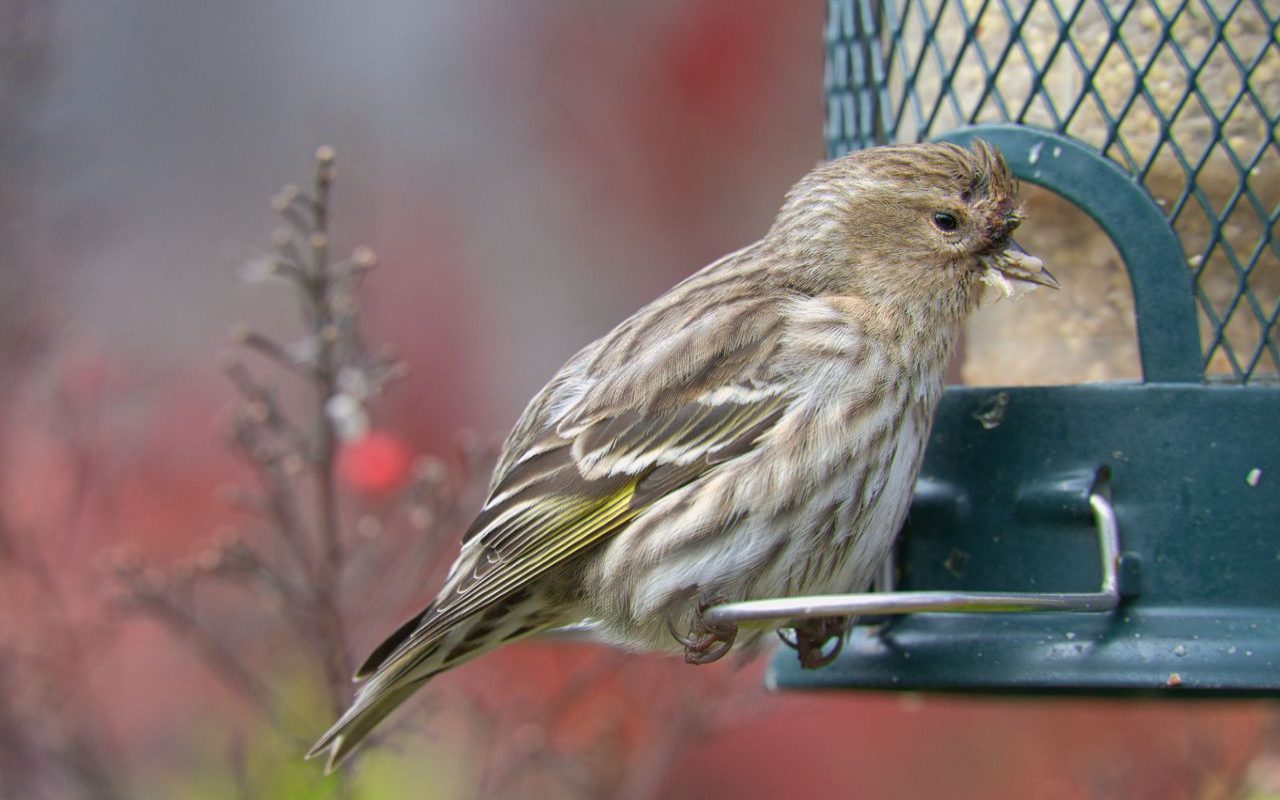
Learning how to predict a finch irruption requires birders to look far beyond their fences to northern tree crops. These erratic winter movements bring sudden, swirling flocks of Pine Siskins into suburban yards unpredictably. Understanding what drives these nomadic finches southward helps you prepare your yard long before they arrive.
Unlike typical seasonal migrants that follow predictable calendars, siskins move entirely based on the boom or bust cycles of tree seeds in the boreal forest. When the northern trees run dry, these pint-sized birds push across North America in numbers that can completely overwhelm unprepared feeding stations.
Reading the Boreal Cone Crops Before Winter Hits
Predicting a siskin surge starts in late summer by monitoring northern forest mast conditions across Canada and the northern United States. Every autumn, the Finch Research Network publishes the Winter Finch Forecast, which analyzes seed production across key tree species.
If northern conifers produce a heavy crop, siskins remain on their northern breeding grounds through subzero temperatures without needing backyard feeders.
When conifer crops fail across Ontario, Quebec, and the boreal belt, siskins have no choice but to head south in search of food. Pine Siskins are generalist foragers among the finch family, but they rely heavily on a specific rotation of wild seeds:
- White spruce and red spruce cones across the central and eastern boreal forests
- Eastern hemlock and northern white cedar stands in mixed woodlands
- Yellow birch and white birch catkins that sustain roaming flocks through late autumn
- Alder catkins along northern riparian corridors and wetlands
When two or more of these key tree crops suffer widespread regional failure, an irruption becomes practically inevitable. Community birding networks light up every September as observers in Ontario and Maine report whether cone branches look bare or heavy.
Paying attention to these early northern forestry reports gives you several weeks of advance warning before the influx hits your region.
Key Weather Signs and Migration Windows to Watch
Once northern food runs out, siskins do not trickle down in single pairs like typical backyard residents. They travel in tight, vocal flocks that ride brisk northwest cold fronts starting in mid-October and peaking throughout November. If you see early scattered reports on regional eBird maps in late October, your local area will likely see birds within days.
Backyard observers often hear these flocks before actually seeing them. Pine Siskins produce a distinctive, rising zreeeet call that sounds remarkably like a zipper being pulled upward. If you step outside on crisp mornings following a strong autumn pressure drop, listen upward for that sharp, buzzy chatter passing overhead.
These birds are true nomads that rarely linger in one spot unless they find reliable, abundant food resources. A flock might clean out a neighborhood in forty-eight hours and then vanish just as quickly toward the coast or farther south. Keeping your stations stocked before these late autumn cold snaps prevents passing flocks from bypassing your yard entirely.
Upgrading Feeder Setups for Nomadic Siskin Flocks
Welcoming dozens of aggressive little finches at once requires a deliberate shift in how you offer seed. Siskins have slender, pointed bills specifically adapted for prying tiny seeds out of tight spaces, which dictates what they can efficiently eat. Offering large striped sunflower seeds or cheap filler blends with cracked corn will only result in massive waste on the ground.
To keep siskins fueled and reduce ground debris, stick to seeds with high oil content and smaller profiles:
- Finely diced sunflower chips or hearts that allow quick consumption without leaving discarded hulls
- Fresh Nyjer seed, also known as thistle, packed with essential plant fats for cold nights
- Whole black oil sunflower seeds offered in durable hopper feeders or wide mesh tubes
While mesh thistle socks are popular in the birding aisle, experienced backyard birders know they present serious real-world headaches in wet winter weather. In rain and wet snow, moisture wicks directly through the cloth fabric, causing the dense Nyjer inside to turn moldy and clumpy within forty-eight hours.
Siskins will completely abandon a waterlogged sock, leaving you with ruined seed that smells sour and harbors fungal growth. Opt instead for sturdy polycarbonate tube feeders with weather domes and bottom drainage holes.
Metal feeding ports are ideal because heavy siskin flocks will vigorously fight for perching space, quickly chewing through cheap plastic openings. Adding a seed catchment tray beneath the tube feeder also keeps birds from scratching waste directly into the damp winter mud.
Managing Salmonella Risks During High-Density Visits
The greatest heartbreak of an irruption winter is the rapid emergence of salmonellosis among crowded finch flocks. Pine Siskins are hyper-social birds that feed packed tightly together, often sitting directly in the food supply while defecating.
Because they arrive from remote wilderness areas with little baseline resistance to domestic pathogens, backyard feeding stations can quickly become hot zones for disease.
You must check your stations daily for individual birds showing unmistakable physical signs of illness:
- Lethargic behavior such as remaining stationary while humans or other birds approach
- Severely fluffed plumage that makes the bird look round, puffy, and uncoordinated
- Squinting, swollen eyes or heads tucked under wings during bright daytime feeding hours
- Inability to fly rapidly when startled, often hopping clumsily along the ground
If you spot even one sick siskin, backyard birding ethics dictate taking down every feeder immediately for at least two full weeks. Simply wiping the perches with a paper towel will not eliminate the bacteria from your feeding station.
Soak and scrub all hardware thoroughly in a solution of one part household bleach to nine parts clean water, then rinse completely and let dry. Rake the soil and mulch beneath your feeding zone to remove the accumulation of droppings and damp seed hulls.
Discard the contaminated debris in sealed trash bags rather than composting it. Leaving feeding stations active when disease is present can wipe out entire local flocks within weeks.
Real-World Backyard Adjustments for Overcrowded Stations
When an irruption peaks, your yard can easily shift from hosting five quiet goldfinches to fifty frantic siskins in a single morning. This sheer volume creates heavy feeding pressure that can easily bully away resident chickadees, nuthatches, and native sparrows.
Spreading your resources across multiple micro-stations prevents dominant flocks from monopolizing all of your food. Separating your feeders across different corners of the yard breaks up large flocks into smaller, calmer groups.
Place your primary tube feeder near protective evergreen cover, but set up a secondary hopper station at least thirty feet away. This setup gives timid native birds a quiet sanctuary while the chaotic siskins battle over the primary perches.
Do not forget to offer clean, open water alongside your dry seed offerings. Pine Siskins consume heavy amounts of dry, oily seed and need regular hydration to properly metabolize their food in freezing temperatures.
A shallow, heated bird bath with a textured stone perching surface will draw just as much siskin attention as a full tube of sunflower chips.