
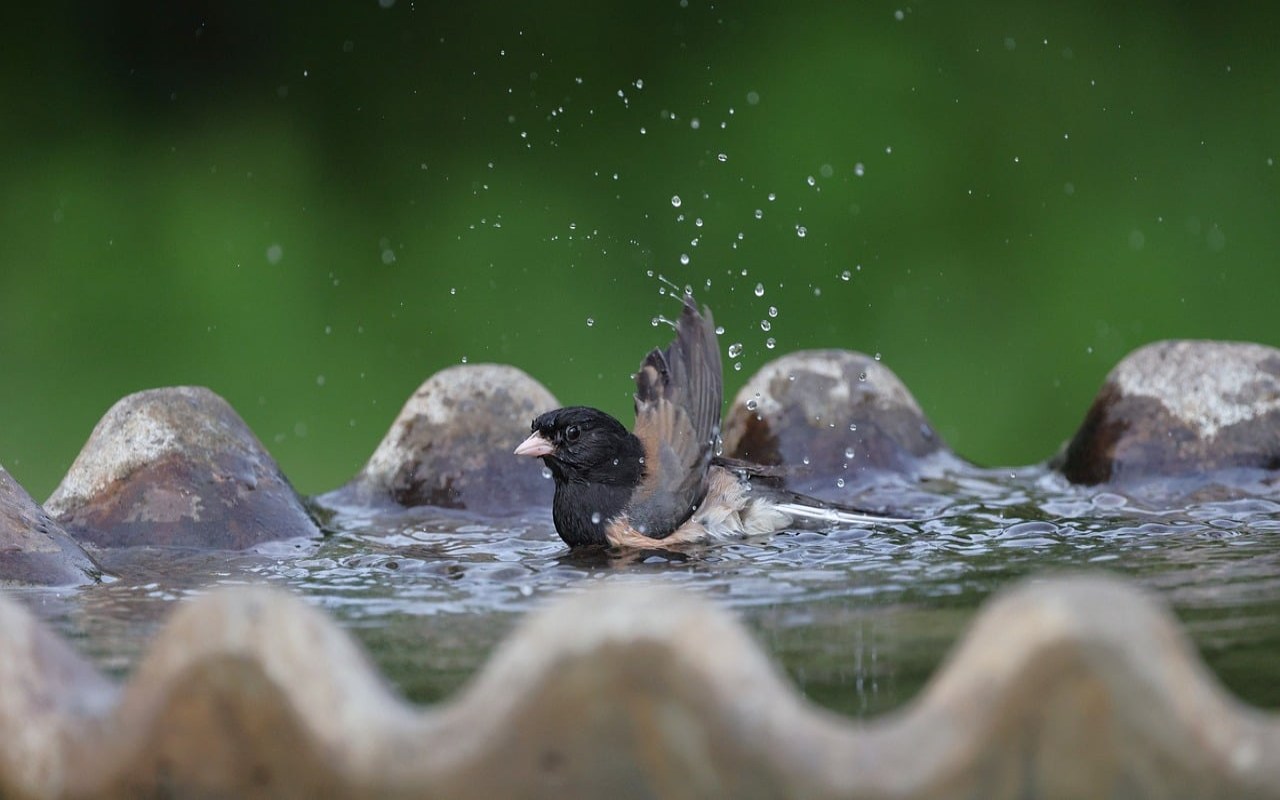
If you are wondering how deep should a winter bird bath be to keep your backyard visitors safe, the short answer is that managing your bird bath depth properly requires a significantly shallower setting than in the summer. Providing liquid water during sub-zero stretches is one of the most generous things you can do for wild birds, but deep water quickly turns your good intentions into a deadly trap.
In freezing weather, birds visit your water station primarily to quench their thirst and keep their metabolic furnaces burning. Keeping the water level strictly controlled ensures they get the hydration they need without soaking the downy feathers that stand between them and hypothermia.
The Fatal Danger of Soaked Feathers in Freezing Weather
During the summer months, you often see robins, sparrows, and finches vigorously splashing around in two or three inches of water. Feathers dry rapidly in warm weather, allowing birds to realign their plumage and restore aerodynamic efficiency in minutes. In freezing conditions, that same enthusiastic splash bath can easily prove fatal.
Bird feathers work much like a high-performance winter jacket, trapping microscopic pockets of warm air against the skin to retain body heat. When a bird becomes completely saturated in freezing weather, these insulating air pockets collapse instantly. If the outdoor temperature hovers well below freezing, the water on outer contour feathers can flash-freeze before the bird has time to preen.
Members of backyard birding forums regularly recount heart-wrenching stories of finding songbirds incapacitated next to heated bird baths after taking an ill-timed plunge. A bird with ice encrusted along its primary flight feathers cannot escape neighborhood cats, sharp-shinned hawks, or the biting chill of a winter night. By eliminating the temptation or opportunity to submerge, you actively save lives.
Ideal Winter Depth Measurements for Safe Drinking
To maintain a secure watering hole, your cold-weather water level must remain vastly shallower than conventional summer settings. Most standard bird bath bowls hold anywhere from two to three inches of water, which is simply too deep for smaller songbirds during frost conditions.
In the winter, the water line should measure no more than one inch at its deepest point, with most of the basin measuring closer to a half-inch. This depth allows small birds like chickadees, kinglets, and goldfinches to wade safely onto the perimeter without submerging their bellies.
Larger birds like blue jays, cardinals, and woodpeckers can easily dip their beaks from the dry edge without ever stepping into the liquid.
- Maximum depth across the main basin: 0.5 to 1 inch.
- Ideal basin slope: A gradual drop of no more than 0.25 inches per linear inch.
- Dry landing rim width: At least 1 to 2 inches of textured rim for sure-footed perching.
- Emergency escape clearance: Flat, non-slip surfaces extending completely out of the waterline.
These dimensions guarantee that even if an erratic starling or enthusiastic sparrow attempts to flutter its wings, only the lower toes and bill will contact the water. Keeping the water level shallow also reduces the electrical energy required to keep the surface ice-free.
Practical Yard Hacks to Keep Water Shallow
You do not need to purchase a brand-new, purpose-built basin to achieve the right winter depth. Many backyard hobbyists use simple, low-cost modifications to transform an existing deep bath into a winter-safe watering station.
The easiest and most common forum-tested solution involves adding large, flat river stones directly to the bowl. Stacking these stones creates a gentle, terraced slope and effectively displaces water volume, creating a perimeter that is barely a half-inch deep.
Make sure to use rough, non-porous rocks rather than smooth, polished decorative marbles so the birds maintain traction on wet surfaces.
- Smooth, flat river stones arranged across the bottom to displace excess water.
- Clean red clay pavers or slate tiles set in the center to act as elevated drinking islands.
- A shallow, heavy plastic plant saucer placed directly inside the main pedestal basin.
- Hardware cloth or vinyl-coated mesh cut to fit over the rim as an anti-bathing deck.
Using a heavy plastic plant saucer is particularly clever because it allows you to lift out ice slabs easily if your power fails. Simply rest a 12-inch terracotta-colored plastic saucer inside your standard concrete bath and place your heating element inside it.
If you use wire mesh across the top, choose a half-inch coated grid securely fastened over the rim. Small songbirds will comfortably land on the wire, dip their beaks through the openings to drink, and find it physically impossible to drop their bodies into the pool.
Choosing Heaters and Avoiding Common Gear Failures
Shallow water freezes much faster than deep water, which makes temperature regulation your next primary challenge. A dedicated de-icer or a built-in heated bird bath is essential if you experience consistent freezing days.
When purchasing a heating unit, look for a thermostatically controlled de-icer that turns on only when temperatures approach freezing. Units with flat, low-profile heating elements work best because they can sit completely submerged under just an inch of water without burning out.
Cheap, oversized stock tank heaters often run too hot, warming the water to temperatures that encourage birds to bathe when they should only be drinking.
- Thermostat activation threshold: Units that switch on automatically around 35 degrees Fahrenheit.
- Power consumption: 44 to 75 watts for small, shallow backyard pans (such as the Farm Innovators B-9 or K&H Ice Eliminator) to prevent aggressive steam evaporation. For northern regions facing sub-zero stretches, look for low-profile 100 to 150-watt cast-aluminum disc de-icers (like the Farm Innovators Model C-50) to handle deeper freezes safely without overheating shallow pools.
- Electrical protection: Direct connection into an outdoor GFCI outlet protected by an in-use weatherproof cover.
- Construction material: Cast aluminum or high-density, rock-like plastic that will not crack during rapid thermal shifts or melt plastic basins.
A frequent troubleshooting issue reported by winter birders is rapid evaporation caused by dry winter winds paired with continuous heat. Because a safe winter bath is shallow, it can boil dry or burn out an exposed heating element in less than two days. Check the water level daily, especially during blustery cold fronts, and top it off with lukewarm water from an indoor pitcher.
Never run outdoor extension cords across high-traffic lawn areas where snow shovels, foot traffic, or chewing rodents can compromise the insulation. Wrap your cord connections in water-tight cord lock covers to prevent melting snow from tripping your house breakers.
- Electrical protection: Direct connection into an outdoor GFCI outlet protected by an in-use weatherproof cover.
- ⚠️ WARNING: Cold winter winds combined with moisture from melting snow can cause “nuisance tripping” on highly sensitive outdoor GFCI circuits. If your heater suddenly stops working, never bypass the GFCI protection. Instead, check for moisture inside your cord lock covers, ensure you aren’t overloading the circuit with other heavy outdoor holiday lighting, and replace aging, brittle exterior extension cords to prevent subtle current leaks.
Safe Winter Cleaning and Routine Maintenance
Because open water is a scarce commodity during a deep freeze, birds flock to active winter baths in unusually high concentrations. High avian traffic in a shallow volume of water means droppings, organic debris, and bacteria build up far faster than in summer.
You must never use chemical antifreeze, automotive coolant, salt, or glycerin to keep your bird bath from freezing. Forum threads occasionally recommend adding glycerin to water to lower its freezing point, but wildlife rehabilitation experts strictly advise against this practice.
Glycerin saturates bird feathers, matting down the plumage, destroying natural waterproofing oils, and directly causing hypothermia.
- Basic weekly rinse: Warm tap water scrubbed thoroughly with a stiff, non-metallic brush.
- Mild disinfection mixture: Nine parts clean water mixed with one part distilled white vinegar.
- Deep sanitizing solution: Nine parts water mixed with one part standard household chlorine bleach.
- Sun-drying cycle: Thorough air-drying in direct sunlight before refilling to eliminate chemical residues.
When using a bleach solution to combat stubborn algae or disease outbreaks, always relocate the bath indoors or empty it completely away from wild visitors. Rinse the basin three to four times with fresh water until the faint smell of chlorine completely dissipates before setting it back out.
Managing a winter bird bath takes a bit of extra vigilance, but your efforts provide a vital lifeline to your neighborhood flock. By maintaining a strict depth of one inch or less and providing stable, ice-free perches, you give backyard birds the hydration they desperately need while keeping their feathers warm, dry, and safe.