
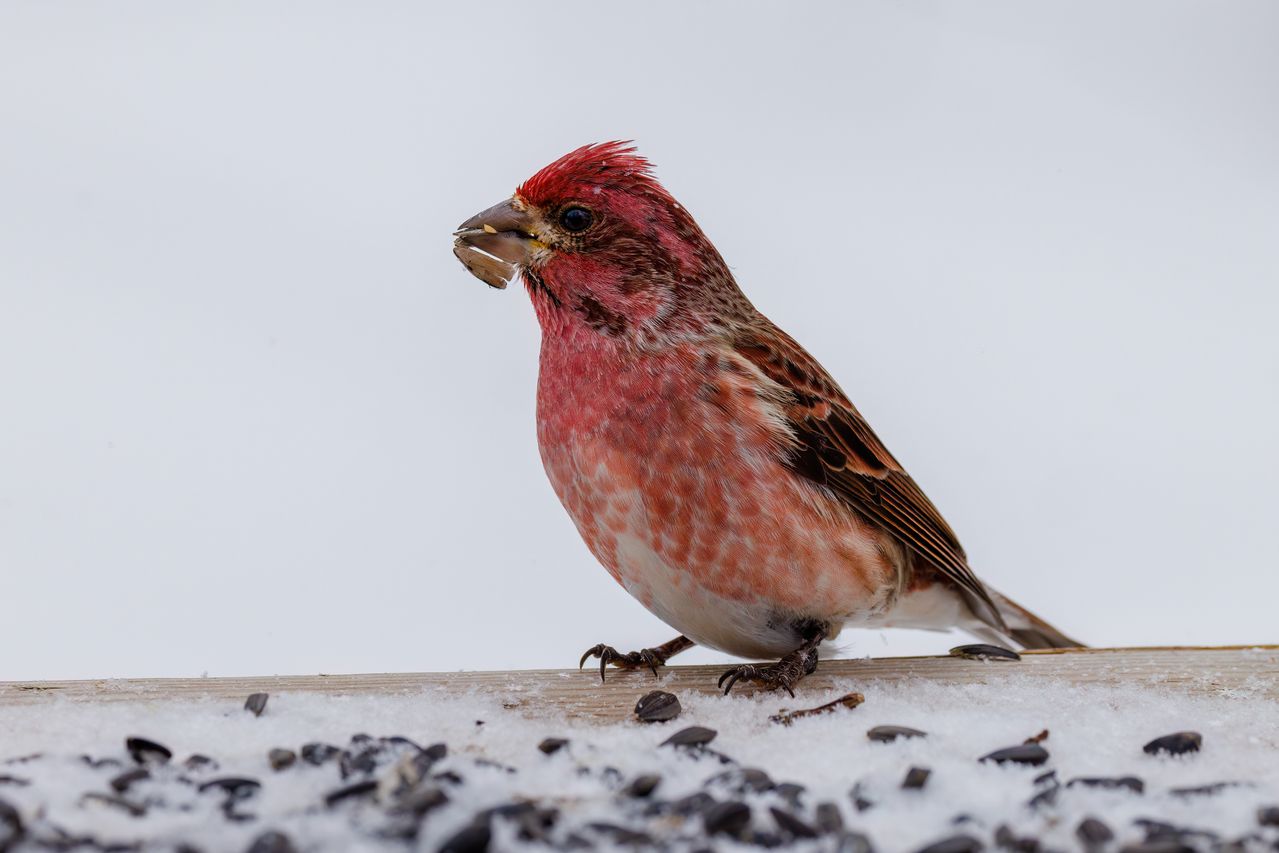
Deploying targeted high-calorie winter bird food is the most effective intervention backyard birders can use to counteract the fatal energy deficits caused by prolonged sub-zero conditions. Small passerines operate on razor-thin caloric margins, often burning over ten percent of their total body mass during a single freezing night simply to maintain core body temperatures via shivering thermogenesis.
Field studies show that wintering passerines, including the American Goldfinch, naturally scale up their pectoralis muscle mass and shivering metabolic capacity by 20 to 30 percent to survive extreme cold snaps. Providing hyper-dense fats and proteins eliminates the costly foraging flights that burn through these vital energy reserves.
Pure Lipids and Rendered Tallow Melting Thresholds
Raw suet obtained straight from a butcher contains moisture and connective tissues that spoil or mold rapidly during erratic winter thaw-freeze cycles. Backyard hobbyists avoid this by sourcing commercially rendered beef kidney tallow, where the rendering process boils out residual moisture to leave shelf-stable triglycerides.
Fat provides nine calories per gram, making pure rendered tallow cakes the premier survival resource for downy woodpeckers, nuthatches, and brown creepers when ice storms glaze natural foraging bark.
- Commercial double-rendered beef kidney tallow plugs fitted into drilled log feeders
- Unsalted peanut butter blended directly with raw lard to create spreadable bark butter
Spread this lard and peanut butter paste directly onto tree trunks, pinecones, or hanging logs with rough exterior grooves. Natural bark furrows shelter the lipid mixture from sleet, giving smaller clingers like kinglets and chickadees immediate access without forcing them to balance on exposed metal perches.
Never mix glycerin into cold-weather fat blends to alter consistency; forum discussions regularly document how topical glycerin coats contour feathers, destroying their natural waterproofing and inducing fatal hypothermia.
To prevent neighborhood raccoons and starlings from consuming an entire suet block in a single visit, mount feeders inside specialized outer cages. A standard suet cage enclosed within 1.5-inch wire mesh allows small foragers to pass through while denying access to larger birds and mammals.
High-Oil Seed Densities and Metabolic Muscle Fuel
Not all wild bird seeds deliver equivalent thermal efficiency during freezing weather. Cheap retail seed mixes commonly rely on filler grains like milo, red millet, wheat, and oats, which ground birds routinely kick onto the soil where they rot beneath snowbanks.
Serious backyard stewards prioritize seeds carrying oil contents well above thirty percent to maximize caloric yield per crack.
- Black oil sunflower seeds featuring thin outer hulls and high polyunsaturated fat reserves
- Pure sunflower hearts offering direct access to dense calories without protective shell obstacles
- High-lipid safflower seeds that wild rodents, grackles, and squirrels generally avoid
Black oil sunflower seeds remain the gold standard across sub-freezing habitats due to their favorable meat-to-shell ratio. Their thin shells allow small birds like black-capped chickadees to crack the hull quickly and minimize exposure to wind chill.
Sunflower hearts eliminate the mechanical cracking step entirely, providing birds with instantaneous calories while leaving no mess to foster microbial decay under melting snow.
Safflower serves as a strategic fuel source because mammalian pests and common nuisance birds dislike its bitter taste. Setting safflower in platform feeders ensures that cardinals and titmice secure necessary fats without facing relentless competition from neighborhood squirrels.
Shelled Nuts, Mealworms, and Mechanical Efficiency
When outdoor temperatures dive below zero, small birds cannot afford the metabolic penalty of opening stubborn, thick-hulled nuts. Presenting pre-shelled nuts directly on tray feeders gives foraging birds uninterrupted access to structural proteins and dense plant fats.
Whole and broken nuts deliver concentrated nutrition that sustains heavier winter species, including blue jays, tufted titmice, and white-breasted nuthatches.
- Shelled whole peanuts and halves positioned inside heavy-duty wire mesh column feeders
- Crushed walnut pieces and chopped pecan meats salvaged from winter baking staples
- Desiccated or rehydrated mealworms delivering essential animal fats and chitinous protein
Peanuts pack roughly fifty percent fat alongside heavy vegetable proteins, giving visiting flocks the muscle maintenance fuel needed during prolonged cold snaps. Make sure to feed raw or roasted peanuts without added salts or artificial seasonings, as avian kidneys cannot process excessive sodium.
For woodpeckers, place peanut pieces inside vertical metal mesh dispensers that force birds to extract individual bites rather than hoarding whole nuts.
Dried mealworms provide vital animal proteins that seed mixes completely lack. High-latitude forum users frequently suggest soaking dried mealworms in warm water for twenty minutes before placing them outside in the morning.
This simple rehydration hack provides winter insectivores, such as eastern bluebirds and overwintering hermit thrushes, with critical internal moisture alongside fat.
Freeze-Resistant Sucrose Nectar for Winter Hoverers
Overwintering hummingbirds, such as coastal Anna’s Hummingbirds, face acute starvation risks when nectar plants freeze under deep frost. These tiny birds consume half their body weight in sugar every day to sustain heart rates that exceed one thousand beats per minute during flight.
Their fluid tongue mechanics rely on elastic groove trapping to draw nectar inward, a delicate dynamic that fails instantly if sugar mixtures turn to slush.
- Standard 4:1 white sucrose water solution that begins slushing at approximately 27 degrees Fahrenheit
- Concentrated 3:1 winter emergency nectar that depresses the freezing threshold down to 22 degrees Fahrenheit
- Nyjer thistle seeds delivering concentrated micro-lipids for winter finches
A standard four-to-one water-to-sugar solution starts freezing at 27 degrees Fahrenheit (-2.8 degrees Celsius). During deep freezes, hobbyists boil a richer three-to-one mixture, which pushes the slush point down to roughly 22 degrees Fahrenheit without over-saturating the liquid.
Never use raw honey, brown sugar, or powdered sugar in nectar recipes, as these substrates encourage fatal fungal infections caused by Candida albicans.
Nyjer seeds function as the plant-nectar equivalent for winter finches, packing high levels of natural plant oils inside tiny black hulls. Dispense these minute seeds through dedicated thistle socks or specialized mesh feeders with micro-slits.
Goldfinches flock to these vertical tubes throughout blizzard conditions, extracting thousands of oil-rich seeds while clinging tightly against gusting winds.
Moisture Control, Aflatoxins, and Feeder Hardware Protection
Adding rich winter foods to your yard requires aggressive moisture management. Melting snow mixed with cracked grain creates a damp environment where Aspergillus flavus fungi proliferate, releasing lethal aflatoxins that kill birds through liver failure.
Backyard enthusiasts prevent this hazard by attaching deep 12-inch or 18-inch clear polycarbonate weather domes directly over hanging feeders.
- Clear 18-inch overhead weather baffles to deflect freezing rain and heavy snowfall
- Bottom drainage trays lined with 0.25-inch galvanized hardware cloth to vent melting runoff
- Diluted sanitization washes mixed at a 1:9 bleach-to-water ratio for biweekly scrubbing
To prevent window strikes during frantic morning feeding sessions, observe the strict spacing protocols outlined by ornithologists. Position winter feeders either within 3 feet of your windows, which prevents birds from gaining fatal collision speed if startled, or place them beyond 30 feet away to provide a clear escape trajectory. Routine feeder hygiene is equally non-negotiable.
Soak your entire feeding hardware assembly in a 1:9 bleach-to-water dilution every two weeks, rinsing thoroughly and air-drying completely before refilling with feed. Never pour boiling water over cold polycarbonate hoppers or acrylic tubular reservoirs, as sudden thermal expansion causes these plastics to warp, crack, or release internal sealants.
Maintaining pristine, weather-shielded hardware guarantees your wild birds receive dense winter fuel without falling prey to damp food, disease, or predators.