
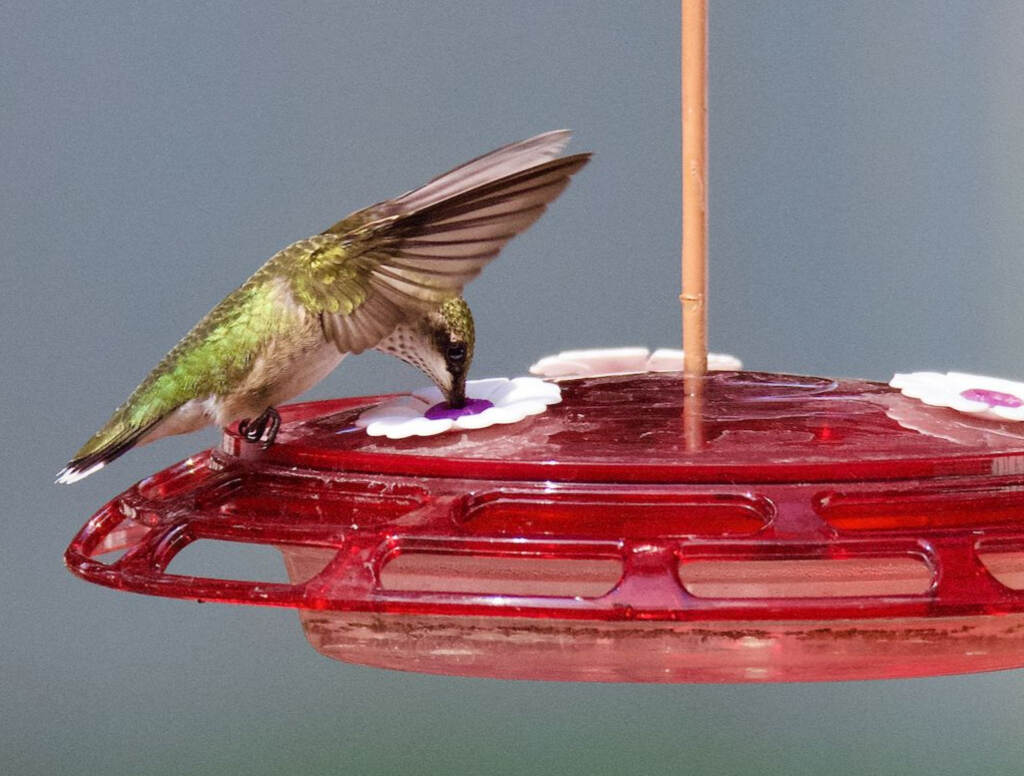
Optimizing your backyard hummingbird nectar freezing point becomes an essential task when sudden sub-freezing cold snaps threaten the energy reserves of overwintering birds. Resident species like Anna’s hummingbirds across the Pacific Northwest rely heavily on supplemental feeders when natural floral blooms vanish and insect torpor limits protein availability.
Standard baseline advice often falls short when ambient temperatures plunge well below freezing for consecutive days. Understanding the physical chemistry of sugar solutions alongside avian physiology allows you to prevent frozen reservoirs while protecting fragile feeding mechanics.
Thermodynamic Freezing Point Depression of Sucrose Solutions
Pure water undergoes a phase change into crystalline ice at 32°F (0°C). When you dissolve plain white granulated table sugar (sucrose) into water, the dissolved solute particles disrupt the formation of hydrogen bonds between water molecules, which induces colligative freezing point depression.
A standard spring and summer nectar concentration of four parts water to one part sucrose yields a dissolved solids concentration of roughly 20 percent by weight.
- Standard four-to-one ratio: 20 percent sugar concentration, begins crystallizing and turning to slush at approximately 27°F (-2.8°C).
- High-density three-to-one ratio: 25 to 28 percent sugar concentration, depresses the freezing threshold down to approximately 22°F to 25°F (-5.5°C to -3.8°C).
- Unsafe two-to-one ratio: 33 percent sugar concentration, remains liquid at lower temperatures but introduces severe kidney dehydration risks.
Pushing the mixture denser than a three-to-one ratio introduces critical physiological stress. While some wild winter flowers produce concentrated nectar, exceeding 28 percent sucrose forces avian kidneys to expend excessive metabolic water to process the dense solute load. Sticking strictly to a measured three-to-one solution provides real thermal resistance without triggering fatal osmolar imbalances in tiny birds.
Fluid Viscosity and Avian Tongue Mechanics at Sub-Freezing Temperatures
Hummingbirds do not sip fluids through their beaks like drinking straws. Instead, their tongue relies on dynamic, micro-scale fluid mechanics where twin keratinous grooves rapidly expand and roll inward to trap fluid via elastic groove trapping. When ambient temperatures hover near 23°F, highly concentrated sugar water undergoes a steep rise in dynamic viscosity.
- Thickened cold nectar resists elastic groove trapping along the distal tongue tips.
- Avian licking frequency drops from fifteen licks per second down to single-digit cycles when fluids turn syrupy.
- Slushy ice crystals act like abrasive sand against sensitive lamellae tissue inside the bill.
If nectar becomes too viscous, a hummingbird expends far more calories pumping the dense fluid than it absorbs from the sugars. This energetic deficit rapidly compromises the bird during severe cold spells. Maintaining the fluid above its slush threshold ensures the nectar viscosity remains thin enough for effortless capillary filling.
Field-Tested Thermal Regulation and Feeder Basking Hacks
Backyard hobbyists frequently encounter frozen feeding ports long before the internal reservoir solidifies, because small metal or plastic ports have higher surface-area-to-volume heat loss. In online wildlife rescue forums, experienced caretakers bypass ineffective commercial insulating jackets in favor of continuous low-wattage heat sources.
Installing an incandescent light source directly beneath the base creates a rising convective plume of warm air that prevents the feeding ports from icing shut.
- C7 or C9 incandescent outdoor holiday light strands wrapped securely around the basin base.
- Plumber heat tape or pipe heating cables connected to a thermal cube outlet that triggers automatically at 35°F.
- Aluminum mechanic drop lights fitted with a 15-watt incandescent bulb positioned six inches below the feeder glass.
- Dual feeder rotational swaps, keeping one warm inside the house while the other hangs outside for two-hour intervals.
Never coat feeding ports with cooking spray, mineral oil, or commercial anti-icing lubricants. Greasy substances inevitably transfer onto the bird’s forehead feathers and breast plumage. Once feathers become saturated with grease, their microscopic barbules unhook, destroying the structural insulation that keeps the hummingbird alive during nighttime torpor.
Pathogen Proliferation and Fungal Hazards in Dense Ratios
A concentrated three-to-one sugar solution contains higher caloric density, which also provides an accelerated growth substrate for dangerous microbes once temperatures fluctuate. Opportunistic pathogens like Candida albicans readily proliferate inside concentrated sucrose mixtures, especially around soft vinyl floral tips.
When hummingbirds ingest this yeast, they develop candidiasis, causing the tongue to swell severely until the bird can no longer retract its bill or feed.
- Inspect ports daily for black pinpoint specks that indicate early fungal colony establishment.
- Completely avoid raw honey, brown sugar, organic turbinado, or molasses because complex carbohydrates accelerate bacterial spoilage.
- Never add commercial red dyes or glycerin, which breaks down downy feather structure and introduces liver toxins.
Damp conditions also encourage Aspergillus flavus molds along port crevices, which produce toxic aflatoxins that destroy avian liver function. Cleaning protocols must be adjusted for heavy winter syrups, as hot tap water alone will not dissolve hardened sucrose crusts.
Soak disassembled components in a one-to-nine household bleach-to-water dilution every four to five days, followed by a thorough rinse with clean water to eliminate chemical residues.
Safe Winter Hardware Deployment and Microclimate Management
Physical feeder placement in your yard drastically alters the local rate of conductive and radiative heat loss. Glass reservoirs maintain thermal stability longer than thin plastics, but boiling water can crack thick glass, while boiling liquids warp common polycarbonate plastic reservoirs.
Mounting your feeder out of continuous wind exposure eliminates forced convective cooling, keeping the nectar temperature closer to the ambient air mass.
- Hang feeders beneath deep eaves or covered porch ceilings to prevent direct radiant heat loss into the clear night sky.
- Install an 18-inch clear acrylic weather dome close over the feeder to shield ports from sleet, freezing rain, and accumulating snow.
- Adhere to the established three-foot or thirty-foot collision placement rule relative to adjacent window glass to prevent fatal flight collisions.
- Position the setup along south-facing or east-facing walls to capture early morning solar gain as birds break nighttime torpor.
Placing the feeder within three feet of a glass window not only protects birds by preventing high-velocity flight strikes, but it also takes advantage of radiant heat leaking through home windows.
This urban microclimate pocket can keep ambient air two to three degrees warmer than an exposed post in an open lawn.
Combining smart structural placement with an honest three-to-one sucrose mix keeps your winter hummingbirds well-fueled and completely safe through the harshest winter mornings.