
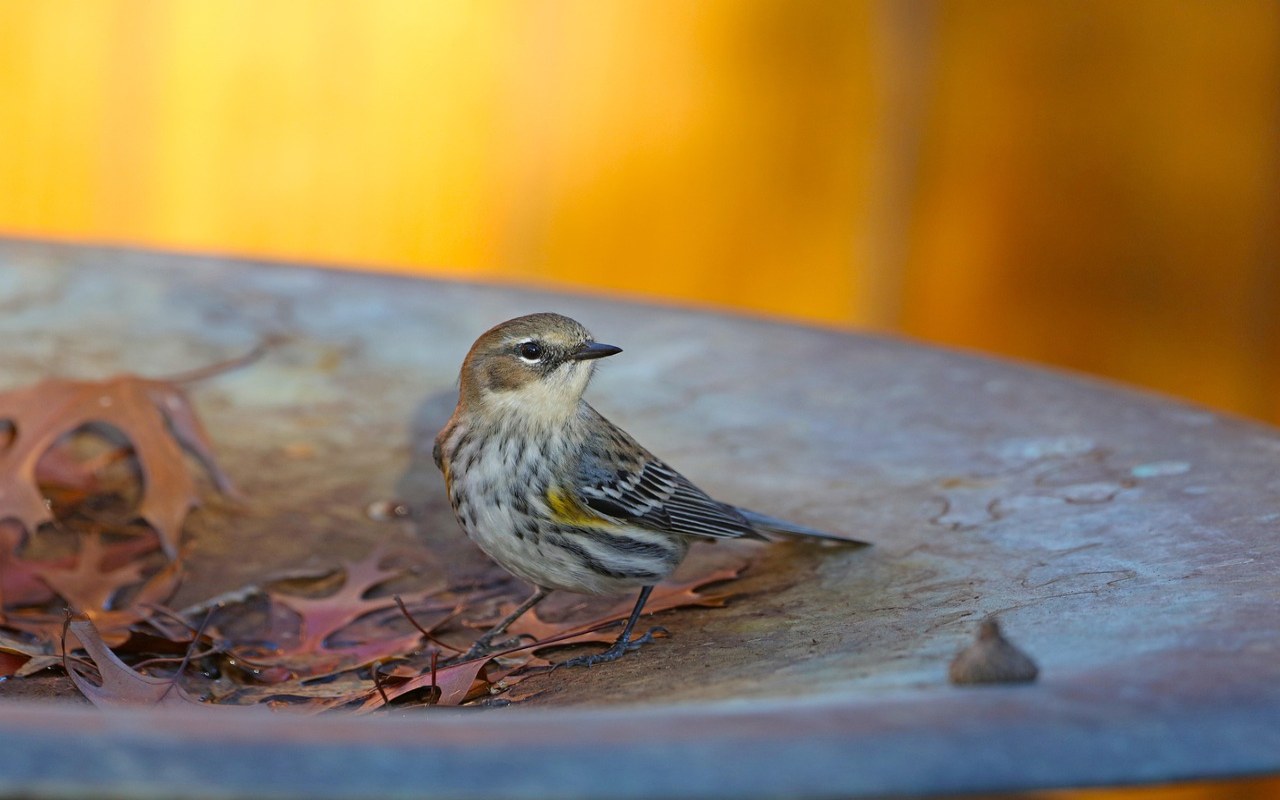
Learning how to manage fall leaf litter in bird bath setups is one of the most critical maintenance challenges for late-season backyard bird stewards. As deciduous canopies drop foliage across autumn yards, open water sources rapidly convert into toxic, tannin-saturated sumps that threaten local avifauna.
Many backyard hobbyists mistakenly believe that leaf-tinted water is simply a benign, natural tea that birds encounter in wild forest puddles. In closed, shallow residential basins, however, decomposing leaves trigger rapid bacterial blooms and extreme oxygen depletion that wild, free-flowing streams naturally mitigate.
Autumn Avian Hydration Profiles and Foliage Intrusion Dynamics
Migratory stopover species and overwintering residents rely heavily on reliable surface water to maintain metabolic thermoregulation and feather lipids. Species utilizing late-autumn water sources exhibit distinct foraging behaviors and physiological dependencies that dictate their vulnerability to contaminated stations:
- American Robin (Turdus migratorius): Consumes standing water heavily after shifting to high-sugar autumn berry diets, requiring clean liquid to maintain digestive efficiency.
- Dark-eyed Junco (Junco hyemalis): Primarily ground-foraging sparrows that approach low basin edges, frequently splashing fallen perimeter leaf litter directly into shallow water dishes.
- Black-capped Chickadee (Poecile atricapillus): Demands rapid sips between cache-hiding bouts, utilizing perches directly above water reservoirs where dislodged oak leaves routinely tumble.
- Yellow-rumped Warbler (Setophaga coronata): Late-season migrants that require pristine communal bathing sources to cleanse feather barbules before sustained cold-front crossings.
Fallen leaves from dominant suburban trees introduce distinct chemical profiles into small water features. Hardwood leaves from red oaks, pin oaks, and black walnuts leach massive concentrations of polyphenols and juglone within hours of submersion.
These compounds dramatically depress surface tension and water clarity. Birds facing water fouled by decaying debris exhibit reduced drinking frequency, which accelerates dehydration during early freezing events.
Mechanical Filtration and Hardware Specifications for Leaf Deflection
Preventing leaves from settling into bird bath basins requires mechanical barriers and continuous surface motion rather than passive open reservoirs. Standard residential bird baths lack internal filtration, necessitating supplemental gear designed to shed or suspend physical detritus:
- Physical Screen Covers: Hardware mesh constructed from 0.25-inch stainless steel wire cloth, elevated 0.5 inches above water level to allow beak entry while blocking broadleaf entry.
- Submersible Low-Voltage Agitators: Continuous water wigglers or circulating pumps rated at 1.5 to 3.0 watts, displacing between 40 to 65 gallons per hour to break surface film.
- Basin Reservoir Geometry: Broad, sloped vessels with a maximum depth of 1.5 inches at the center and 0.5 inches at the perimeter, holding 1.0 to 1.5 gallons of liquid.
- Coarse Pre-Filter Sleeves: Open-cell reticulated polyurethane foam wraps around pump intake bells to capture suspended leaf veins without restricting impellers.
Thin plastic and lightweight resin baths often flex under heavy debris loads, upsetting pump balance and tipping during wind gusts. Heavy glazed ceramic or cast stone basins maintain uniform thermal retention and structural stability against autumn wind turbulence.
Never install deep landscaping pond basins exceeding 2.0 inches of standing water without interior stair-stepped escape stones. Small passerines trapped under submerged leaf rafts face immediate hypothermia and drowning risks.
Spatial Dimensions, Elevation, and Canopy Buffer Layouts
The location of an autumn bird bath dictates how much deciduous litter it collects during high-wind events. Position your hydration hardware outside the primary fall drip-line of broadleaf trees while retaining clear sightlines for predator detection:
- Drip-Line Clearance Radius: Minimum 15-foot horizontal offset from the outer branch perimeter of high-tannin trees such as oaks, maples, and sweetgums.
- Elevation Baseline: Basins must stand between 30 and 36 inches above ground grade on a rigid pedestal to escape wind-blown leaves rolling along turf.
- Ground Clearing Buffer: Maintain a 6-foot radius of bare gravel, flagstone, or short-mowed turf beneath the pedestal, cleared of leaf litter every 48 hours.
- Window Collision Mitigation: Place stations within 3 feet of exterior glass or beyond 30 feet, strictly maintaining east or southeast solar exposure to retard fungal germination.
Basins mounted directly on tree trunks or low understory bushes are strictly forbidden during the autumn drop. These micro-sites act as natural leaf funnels that bury open water reservoirs under heavy debris within a single afternoon.
Open flight clearance must span at least 10 feet in three cardinal directions. This spatial envelope permits immediate escape from stalking domestic predators that use dense ground litter for cover.
Biochemical Decomposition and Avian Toxicology in Stagnant Water
When autumn leaves submerge, anaerobic microbes initiate structural breakdown, creating hazardous biochemical transformations inside the water column. The sudden infusion of organic matter shifts clean municipal or well water into a hostile biological brew through several distinct chemical pathways:
- Dissolved Oxygen Depletion: Heterotrophic bacteria consuming organic leaf sugars cause severe biological oxygen demand, producing foul, anoxic water.
- Tannic and Humic Acid Spikes: Hydrolyzable tannins lower water pH below 5.5, destabilizing the protective cutaneous flora of avian beaks and feet.
- Enteric Pathogen Cultivation: Submerged decomposing foliage provides high-surface-area matrices for Salmonella enterica and Pseudomonas aeruginosa amplification.
- Clostridium Spores: Trapped organic sediment under rotting leaves creates anaerobic environments that encourage Clostridium botulinum toxin type C production.
Evaluating water management techniques reveals substantial differences in overall disease mitigation during heavy foliage drops:
- Daily Manual Flush and Refill: Highest efficacy; entirely resets bacterial colony counts and removes suspended polyphenols before organic oxidation occurs.
- Continuous Surface Agitation: Moderate efficacy; disrupts surface tension and prevents mosquito oviposition, but fails to neutralize dissolved tannins if leaves sit on the bottom.
- Passive Debris Catchment Covers: Variable efficacy; successfully blocks physical leaf entry, but requires twice-daily clearing to prevent trapped wet leaves from leeching through mesh during rainfall.
Birds that consume high-tannin, bacteria-laden bath water risk acute enteritis, mucosal ulceration, and systemic salmonellosis. Maintaining strict biochemical clarity is therefore an essential survival factor for overwintering flocks.
Disinfection Protocols and Hardware Maintenance Chemistry
Eliminating biofilms and neutralizing acidic organic residues requires rigorous sanitation protocols that do not degrade feeding equipment. Debris removal must be paired with appropriate chemical sterilization agents to destroy fungal spores and pathogenic bacteria:
- Dilute Sodium Hypochlorite (1:9 Bleach-to-Water Ratio): The gold standard for microbiological decontamination, achieving total kill rates of Salmonella and avian poxvirus within a 10-minute contact soak.
- Dilute Acetic Acid (1:1 White Vinegar-to-Water Ratio): Effective at dissolving hard mineral crusts and loosening stuck leaf pectin, but insufficient for neutralizing heavy viral or bacterial outbreaks.
- Pressurized Boiling Water Rinse: Mechanically strips surface biofilms without chemical residues, but risks thermal shock cracking on glazed ceramic and structural warping on consumer plastics.
Apply the dilute bleach solution once weekly using a stiff-bristle nylon brush to scrub all interior surfaces, paying special attention to rim fissures and pump housings. Rinse the basin thoroughly until all detectable chlorine odor completely dissipates before refilling with fresh municipal water.
Never apply commercial quaternary ammonium compounds, pine-based disinfectants, or synthetic algaecides to avian water fixtures. These chemicals leave persistent lipid-soluble residues that strip essential waterproofing oils from avian plumage, leading to hypothermia and death.