
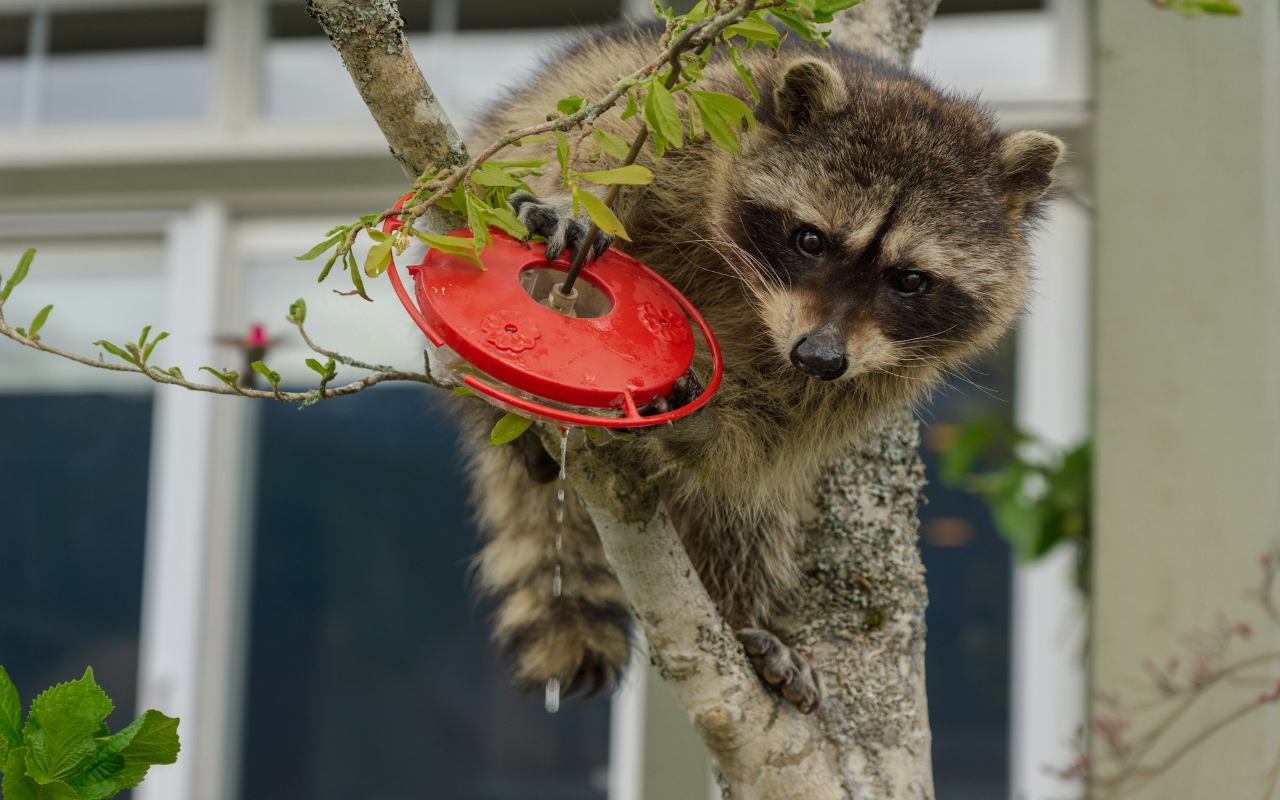
Implementing engineered mechanical exclusions is the most reliable way to stop raccoons at feeders from stealing winter suet cakes during periods of intense cold. Backyard birders frequently lose calorie-dense tallow cakes to nocturnal omnivores equipped with dexterous paws and semi-retractile claws. Understanding mammalian foraging behavior allows homeowners to safeguard avian feed without resorting to hazardous chemicals or ineffective deterrents.
A common myth suggests that hanging suet feeders high on mature tree trunks prevents terrestrial raiding. In reality, northern raccoons (Procyon lotor) are specialized arboreal climbers capable of traversing vertical bark effortlessly, making trunk-mounted feeders their primary targets. Eliminating these foraging opportunities requires understanding the biomechanics of both avian foragers and mammalian pests.
Species Profile and Core Behavioral Differences
High-energy winter suet stations cater to specialized insectivorous birds that require dense lipids when natural arthropod populations go dormant. Primary target species rely on suet to maintain their core body temperatures of approximately 105 degrees Fahrenheit through sub-freezing nights. These avian foragers possess anatomical adaptations for clinging to vertical bark surfaces and suspended wire mesh:
- Downy Woodpecker (Dryobates pubescens), requiring small-footprint vertical feeders with tail-prop support.
- Hairy Woodpecker (Leuconotopicus villosus), requiring longer feeder bodies to accommodate larger tail leverage.
- Pileated Woodpecker (Dryocopus pileatus), demanding heavy-gauge cages and elongated paddle props exceeding twelve inches.
- White-breasted Nuthatch (Sitta carolinensis), specialized for inverted foraging on open mesh surfaces.
- Black-capped Chickadee (Poecile atricapillus), utilizing rapid cling-and-grab feeding mechanics.
In stark contrast, Procyon lotor possesses hyper-sensitive, non-prehensile front digits boasting incredible tactile discrimination. Raccoons lack the specialized avian gizzard, requiring easily digestible caloric blocks rich in accessible fats. Their nocturnal foraging patterns exploit human absence, while their cognitive spatial mapping enables them to recall feeder locations and bypass crude wire closures.
Mammalian problem-solving skills allow raccoons to twist, pry, and unlatch conventional flip-top wire suet baskets. These animals also demonstrate behavioral habituation, learning to shake feeder poles until suet blocks dislodge onto the ground. Successful protection mandates physical barriers that exceed mammalian reach, grip strength, and jumping capacity.
Habitat Layout and Feeder Setup
Tree trunks and low branches are strictly forbidden zones for winter suet placement. Mounting suet directly against a tree trunk provides raccoons with stable footing, turning expensive suet blocks into effortless meals. Feeders must be shifted away from natural launch points into a controlled, isolated clearance zone.
Avian safety requires factoring in clear flight trajectories and predator escape routes. Small songbirds need unobstructed lines of sight to detect incoming Cooper’s Hawks or sharp-shinned predators. Positioning feeding poles near dense evergreen cover provides rapid shelter for small birds while denying raccoons an overhead jumping platform.
- Establish a clear jump boundary with at least ten feet of open horizontal clearance from any fence, deck railing, roofline, or overhanging tree limb.
- Position the feeder pole precisely ten to fifteen feet away from low evergreen shrubs to offer avian shelter without creating an ambush zone for ground predators.
- Orient feeder surfaces toward the south or southeast to maximize morning solar warming and shield birds from prevailing northwesterly winter winds.
Ground debris beneath the feeder must be actively managed to eliminate supplemental attractants. Fallen suet fragments and seed hulls create olfactory trails that guide foraging raccoons straight to the pole base. Installing a catch tray directly beneath the suet cage captures falling crumbs and reduces nocturnal scent footprints.
Structural Dimensions and Placement Guidelines
Mechanical exclusion relies on exact dimensional geometry that exceeds the physiological leaping and climbing limitations of adult raccoons. A standard adult raccoon can execute vertical leaps of four to five feet from a flat surface and span four horizontal feet without assistance. Installing undersized retail baffles fails to stop these agile mammals.
- Feeder hanging height must suspend the bottom of the suet cage at a minimum of six feet above the ground.
- The mounting pole must consist of smooth, galvanized steel or tubular aluminum with an outer diameter of one inch.
- Cylindrical stovepipe baffles must measure at least eight inches in diameter and twenty-four inches in total length.
- Disk baffles must feature a minimum diameter of twenty-four to twenty-eight inches with a free-swiveling collar.
- The lower rim of any pole baffle must rest at least four and a half feet above ground level to prevent raccoons from leaping past it.
When selecting secondary cage protections, choose external cages manufactured from thick, vinyl-coated eleven-gauge wire. The cage grid must feature 1.5-inch square openings, which admit chickadees, nuthatches, and downy woodpeckers while physically blocking raccoon paws. Avoid thin chicken wire, which raccoons can easily warp, crush, or unravel using brute force.
Secure feeder access doors with dual-action spring-loaded carabiners or threaded quick-links rather than simple friction latches. Raccoons can effortlessly lift gravity-operated lids and bend flexible wire clips. Utilizing threaded hardware forces the animal to confront rigid steel barriers that cannot be bypassed through physical manipulation.
Nutritional Biochemistry and Feeding Protocols
Suet represents an indispensable winter energy reserve because rendered beef tallow yields exceptional caloric density through saturated fatty acids. Rendering removes water and proteinaceous impurities, leaving triglycerides that remain solid at room temperature and resist rancidity. Birds convert these saturated lipids directly into metabolic heat during long winter nights.
Comparing winter feed options illustrates the biochemical superiority of pure tallow:
- Rendered beef suet delivers 80 to 95 percent crude lipids, 2 to 5 percent crude protein, and less than 1 percent carbohydrates, making it the most energy-dense winter food available.
- Shelled peanuts deliver 45 to 50 percent crude lipids, 25 to 30 percent crude protein, and 15 to 20 percent carbohydrates, providing high structural protein alongside moderate fat.
- Black oil sunflower seeds deliver 28 to 35 percent crude lipids, 15 to 18 percent crude protein, and 25 to 30 percent carbohydrates, balancing lipids with a high fiber hull.
Feeders can incorporate supplemental defensive biochemistry by utilizing pure capsaicin-infused suet formulations. Capsaicin functions as an agonist against the transient receptor potential vanilloid 1 (TRPV1) receptors found in mammalian peripheral nerves. Birds completely lack capsaicin-sensitive receptors, allowing them to ingest hot pepper cakes without irritation, whereas raccoons experience intense oral and ocular nociception.
However, habituated urban raccoons can build tolerance to low-grade commercial pepper suet. Homeowners should not rely solely on capsaicin to protect poorly placed feeders. Furthermore, low-grade suet filled with cheap cornmeal or unrendered grease softens during mild sunny days, triggering rapid lipid rancidity that degrades essential fats into harmful free fatty acids.
Pest Mitigation and Sanitation Safeguards
Damp, soiled suet feeders present severe microbiological hazards to wild bird populations. Moisture trapped inside low-grade suet mixes accelerates the growth of Aspergillus flavus, a pathogenic fungus that produces deadly aflatoxins. Furthermore, raccoon saliva and physical contact introduce Salmonella enterica, which spreads rapidly among clinging birds and causes devastating enteric infections.
Backyard sanitation protocols must destroy bacterial pathogens without deteriorating metal feeder coatings or degrading plastic components. Cleaning solutions demonstrate varying levels of field efficacy:
- Diluted household bleach at a 1:9 sodium hypochlorite-to-water ratio ranks highest in broad-spectrum antimicrobial and antifungal efficacy; requires a strict ten-minute soak followed by extensive air-drying.
- Commercial 5 percent white vinegar ranks moderately in bacterial reduction but fails to reliably eliminate fungal endospores; safe for polycarbonate plastics but insufficient for disease outbreaks.
- Boiling water immersion ranks high for immediate thermal pathogen elimination but strips zinc coatings off galvanized hardware and permanently warps consumer plastics.
Submerge non-porous wire cages and hardware in the 1:9 bleach solution every two weeks during the winter season. Limit soak durations to fifteen minutes to avoid stripping anti-rust finishes from galvanized steel welds. Scrub all crevices with a stiff nylon wire brush to dislodge hardened fat residues before applying the sanitizing soak.
Never apply chemical repellents, sticky polybutene gels, or automotive grease directly to feeder poles. These viscous substances coat avian plumage, destroying the microscopic barbule structures that trap air and provide vital thermal insulation. Relying strictly on proper mechanical baffles, clearance geometry, and rigid sanitation ensures long-term protection for your winter birds and your feeding hardware.