
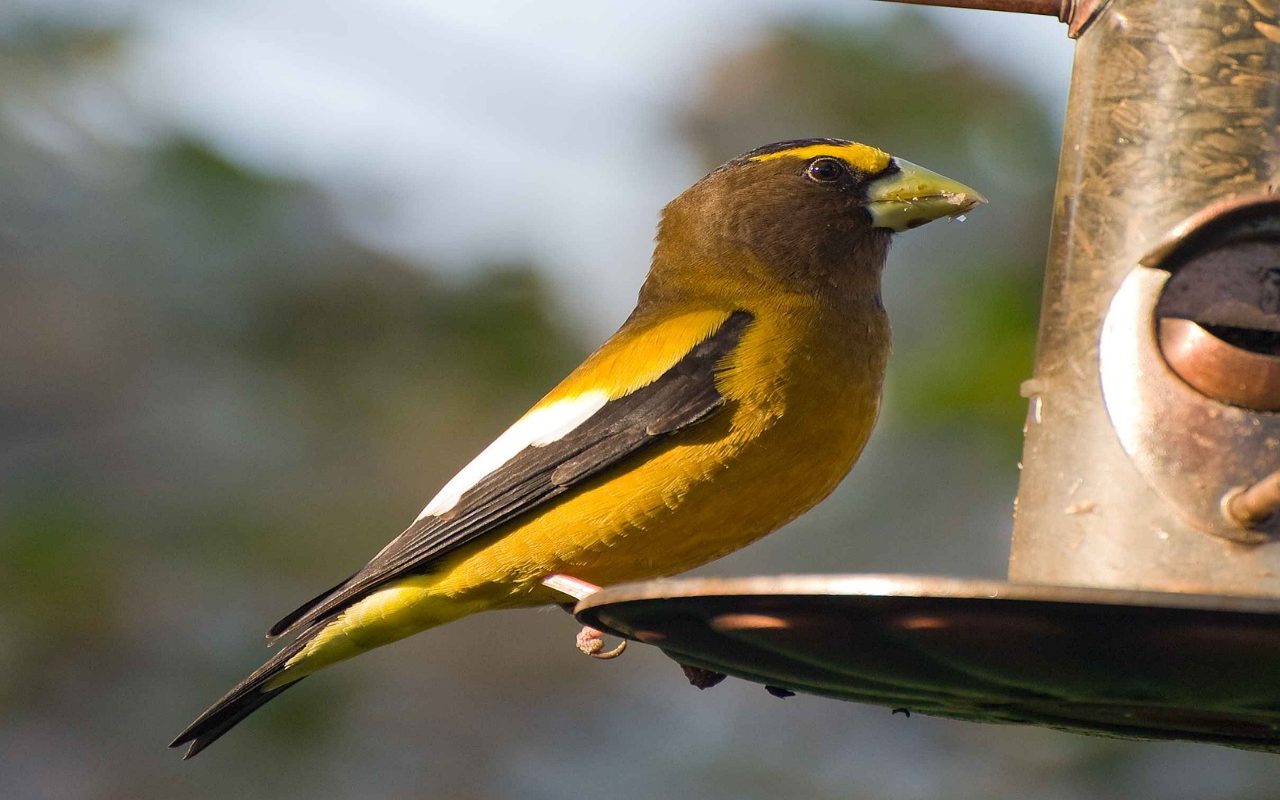
Learning how to focus on attracting grosbeaks in fall to your feeding station requires understanding their specialized foraging morphology and behavioral needs. A persistent backyard feeding myth claims that generic wild bird seed mixes will attract these elusive, heavy-billed songbirds. In practice, grosbeaks systematically reject low-cost filler grains like red milo, cracked corn, and proso millet, scattering them across the ground where they spoil.
Swapping out commercial blends for high-lipid, thin-hulled black oil sunflower seeds represents the single most effective adjustment you can make. This concentrated caloric fuel directly accommodates the mechanical bite force and biological energy demands of grosbeaks during stressful spring migrations and winter irruptions.
Species Profile and Core Behavioral Differences
Backyard birders typically encounter four primary grosbeak species across North America, each displaying distinct regional ranges and social feeding habits. While all share a heavily reinforced, conical bill engineered for crushing seeds, their flock structures and microhabitat preferences differ significantly.
- Rose-breasted Grosbeak: Inhabits eastern deciduous canopies and visits feeding stations either alone or in small family groups during seasonal migrations.
- Black-headed Grosbeak: Serves as the western ecological equivalent, frequenting mixed woodlands and riparian corridors while defending feeding territories.
- Evening Grosbeak: Operates as an irruptive boreal specialist, arriving in large, boisterous, synchronized flocks that rapidly drain high-capacity feeders.
- Pine Grosbeak: Forages primarily in subalpine coniferous forests, demonstrating docile temperaments and requiring large, stable perches to accommodate its substantial bulk.
Understanding these social variations ensures you select gear that minimizes spatial competition between feeding individuals. Evening Grosbeaks feed shoulder to shoulder, whereas Rose-breasted Grosbeaks require visual buffers to limit territorial skirmishes.
Habitat Layout and Feeder Setup
Standard narrow tube feeders equipped with short perches fail to attract grosbeaks due to basic avian physics. A grosbeak maintains a bulky, front-heavy center of gravity that prevents it from perching comfortably on half-inch plastic pegs or clinging directly to vertical wire mesh.
Providing a broad, structural footprint allows grosbeaks to balance comfortably while cracking tough seed casings. Opt for wide platform stations, open ground-level tables, or reinforced wooden hopper feeders featuring broad landing rails.
- Feeding platform area: Minimum 12 by 12 inches to support multiple heavy-bodied birds simultaneously.
- Perch dowel diameter: 0.5 to 0.75 inches to comfortably accommodate passerine foot spans.
- Reservoir volume: 3 to 5 quarts of seed to maintain constant supplies for large irruptive flocks.
- Tray base drainage: Perforated stainless steel micro-mesh to prevent moisture accumulation and premature fungal spoilage.
Avoid hanging light, unweighted plastic stations in open wind corridors. Grosbeaks prefer exceptionally rigid feeding substrates that do not tip or swing under their weight during landing.
Structural Dimensions and Placement Guidelines
Feeder positioning dictates both feeding success and personal safety for visiting birds. To minimize window collision fatalities, position your feeder either within 3 feet of exterior glass or farther than 30 feet away.
Orient the primary landing ledge toward the south or southeast to provide early morning solar warmth and protect birds from prevailing northwest winds. Mount the assembly on a dedicated metal pole equipped with a downward-facing cylinder baffle positioned 4 feet above the soil.
- Mounting elevation: Exactly 5 to 6 feet above the ground to establish clear sightlines against lurking predators.
- Window strike buffer: Under 3 feet to prevent fatal flight velocities, or beyond 30 feet to allow trajectory corrections.
- Predator clearance: 10 feet of radial clearance from horizontal tree limbs or launch structures.
- Ground debris perimeter: 8-foot cleared radius directly beneath the platform to manage discarded hull buildup.
Never suspend grosbeak feeders directly from flexible, leafy tree branches. Such placements leave birds vulnerable to ambush by domestic cats and permit climbing mammals to bypass traditional baffles.
Nutritional Biochemistry and Feeding Protocols
Black oil sunflower seed outperforms all other backyard offerings in physical efficiency and nutritional concentration. Its thin outer shell yields quickly to the grosbeak’s muscular mandible, requiring far less kinetic energy to crack than tough striped sunflower seed.
- Black oil sunflower seed: 40 to 45 percent crude lipid, 16 to 18 percent crude protein, and a 20 percent carbohydrate ceiling.
- Raw shelled peanuts: 45 to 50 percent crude lipid, 25 to 28 percent crude protein, and a 15 percent carbohydrate ceiling.
- White proso millet: 3 to 4 percent crude lipid, 9 to 11 percent crude protein, and a 70 percent carbohydrate ceiling.
The high lipid concentration in black oil sunflower seeds metabolizes rapidly into glycogen and fat reserves. Millet and corn, conversely, offer little beyond indigestible starch for birds with this specific bill morphology.
Pest Mitigation and Sanitation Safeguards
Damp seed waste creates an optimal breeding ground for Salmonella enterica and the toxic mold Aspergillus flavus, which produces deadly aflatoxins. Some enthusiasts use ultraviolet blacklights to check for mold, but this method proves unreliable outdoors because benign natural lichens and wood resins fluoresce under identical wavelengths.
Maintain an aggressive sanitation schedule by completely disassembling and scrubbing your feeding gear every two weeks. Different cleaning solutions vary drastically in their antimicrobial efficacy and material impacts.
- Diluted chlorine bleach: A 1:9 bleach-to-water soak for 10 minutes fully neutralizes fungal spores and bacteria without degrading UV-stabilized polycarbonate plastics.
- Fifty percent white vinegar solution: Acetic acid kills light bacterial films, but it fails to eliminate resilient fungal spores and dangerous mycotoxins.
- Boiling water immersion: Highly effective against biological pathogens, but it warps acrylic feeder reservoirs and damages galvanized anti-rust coatings.
Always rinse hardware thoroughly with cold water following a bleach soak, and ensure all components dry completely before adding fresh seed. Rake and discard the waste hulls within the drop zone weekly to eliminate ground-level contamination.