
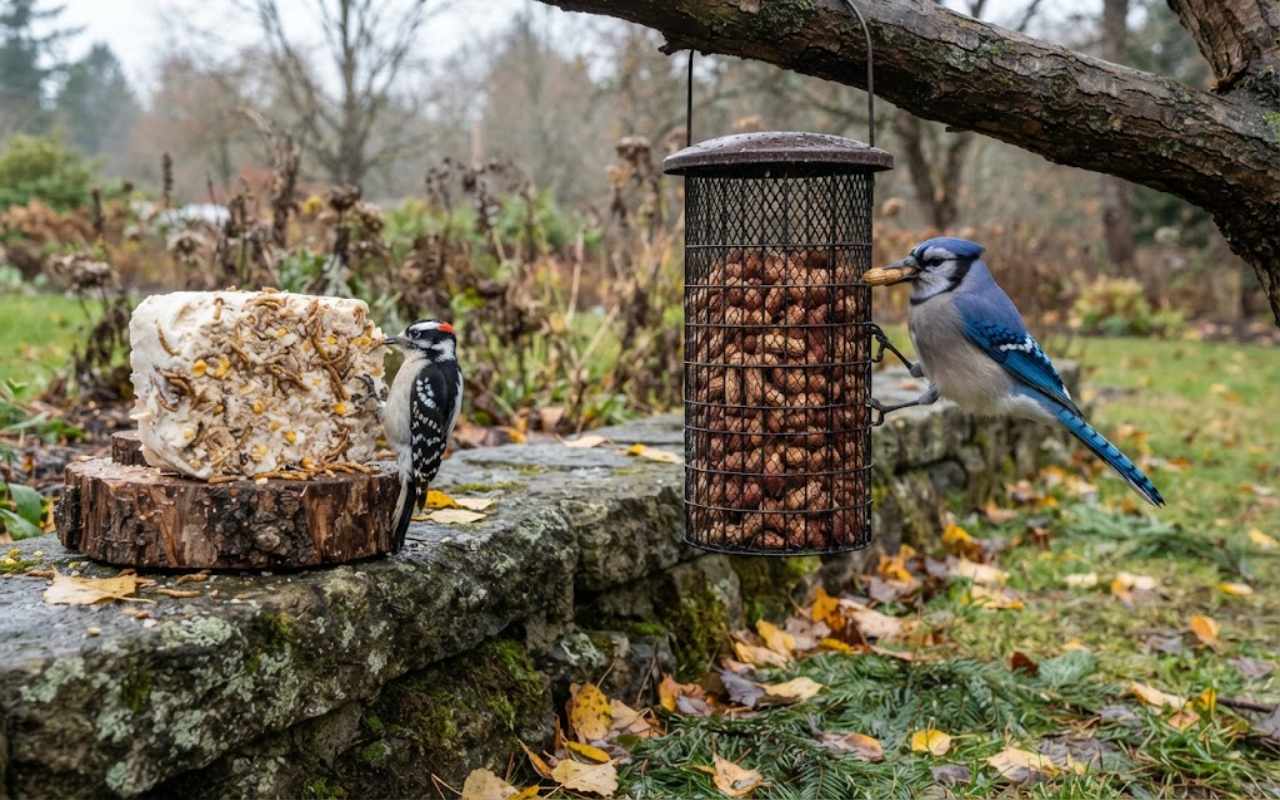
Providing energy-dense high-fat bird foods for fall becomes critical as late fall temperatures plummet and natural insect populations disappear. Migratory stragglers and overwintering residents must rapidly build adipose tissue to maintain their core body temperature of roughly 105 degrees Fahrenheit through freezing nights.
Forum discussions across communities like r/backyardbirds reveal that many backyard enthusiasts struggle with rapid food spoilage and aggressive nuisance birds during this seasonal shift. Understanding the specific lipid profiles and physical handling requirements of calorie-heavy rations prevents wasted feed and keeps your local flock healthy.
Quick-Glance Field Summary
Switching to lipid-rich rations requires balancing caloric density with moisture protection to stop dangerous mold colonization during damp autumn freezes. Selecting targeted feeder hardware prevents aggressive bullies from depleting high-value calories before small songbirds can feed.
- Target minimum crude fat threshold: 25% to 45% across late fall rations.
- Feeder window safety clearance: Within 3 feet or beyond 30 feet from glass surfaces.
- Hardware wire mesh opening for peanut hoppers: 0.25-inch stainless steel mesh.
- Sanitization cycle: Bi-weekly soak using a 1:9 unscented bleach to water ratio.
- Suet temperature ceiling: Below 50 degrees Fahrenheit for pure rendered beef tallow.
Black Oil Sunflower Seeds and Lipid Density Optimization
Black oil sunflower seeds remain the gold standard for fall feeding because their lipid profile dwarfs that of conventional striped varieties. Thin outer shells allow small-billed passerines like black-capped chickadees and tufted titmice to extract the oil-rich meat with minimal energy expenditure.
The crude fat concentration of black oil sunflower ranges between 35% and 40%, delivering the dense fuel birds need to generate metabolic heat.
Traditional large striped sunflower seeds feature thicker husks and contain roughly 25% crude fat, which forces smaller birds to burn excessive calories just to access the nut.
You can reduce foraging effort further by offering cracked kernels or sunflower chips, though hulled seeds spoil faster in damp weather. Install hopper feeders equipped with broad drainage bases to prevent bottom-layer moisture collection during autumn drizzle.
Place your sunflower feeding stations either within 3 feet of your home or farther than 30 feet away. The Audubon Society highlights that this placement prevents fatal window collisions when panicked birds scatter from hawks.
Discard damp husks that pile up beneath the feeding zone to prevent ground-foraging sparrows from ingesting fungal spores.
| High-Fat Fuel Type | Nutritional Density Profile | Target Avian Visitors | Feeder Hardware Pairing |
|---|---|---|---|
| Pure Beef Tallow Suet | Extreme concentration of animal lipids and metabolizable calories. | Woodpeckers, nuthatches, chickadees, and tufted titmice. | Heavy-gauge steel wire cages or specialized inverted under-hang baskets. |
| Black Oil Sunflower | Thin-shelled seeds packed with high-grade vegetable oils and fats. | Cardinals, grosbeaks, finches, native sparrows, and jays. | Elevated polycarbonate tube stations or large protective hopper bins. |
| Raw Shelled Peanuts | Dense concentrations of plant proteins and high-lipid fatty acids. | Blue jays, crows, nuthatches, and tufted titmice. | Stainless steel mesh columns or low ground platform wooden trays. |
Rendered Beef Tallow Suet and Starling Excluder Hardware
Pure beef suet provides dense animal lipids that closely mimic the dormant insect grubs and fat reserves wild birds seek before winter freezes. True suet consists of hard fat rendered from the tissue surrounding cattle kidneys, known for its high melting point and firm structure.
Commercial doughs containing cornmeal or millet dilute the total fat content, so check ingredient labels for straight rendered beef tallow. A frequent complaint across the r/backyardbirds forum involves aggressive European starlings descending on feeders and devouring standard suet blocks within a few hours.
Community members consistently solve this problem by deploying upside-down, bottom-access suet cages rather than open wire baskets.
Downy woodpeckers, nuthatches, and chickadees forage easily while hanging upside down, whereas starlings lack the specific tendon-locking mechanisms, shorter leg bone proportions, and relative gripping strength required to feed comfortably from an inverted position.
- Pure rendered tallow: Provides dense saturated fats that resist turning rancid below 50 degrees Fahrenheit.
- Inverted hanging cage: Restricts perching bullies while allowing agile, clinging songbirds full nutritional access.
- Wire mesh spacing: Use 0.5-inch coated wire mesh to prevent bill entrapment.
Never feed commercial mixtures stabilized with vegetable oils or glycerin during cold weather. Glycerin mats feather barbules, destroying the natural air pockets birds rely on for thermal insulation and causing fatal hypothermia.
Hang suet stations on shady north-facing branches to prevent direct afternoon sun from softening the cake.fatal hypothermia. Hang suet stations on shady north-facing branches to prevent direct afternoon sun from softening the cake.
Shelled Peanuts and Aflatoxin Prevention in Wet Fall Weather
Raw peanut kernels deliver an exceptional nutritional payload of approximately 45% to 50% fat and 24% crude protein. Woodpeckers, blue jays, and white-breasted nuthatches rely heavily on peanuts to cache calories ahead of freezing temperatures.
Because whole peanuts spoil rapidly when exposed to rain, feed them in specialized stainless steel wire hoppers rather than open platform trays. Damp autumn conditions introduce significant biological hazards that can devastate local avian populations.
Forum contributors on r/birdwatching frequently describe pulling clumped, gray masses of molding peanuts out of tube feeders following late November downpours.
Warm, wet organic matter creates a breeding ground for the fungus Aspergillus flavus, which produces toxic aflatoxins that destroy avian liver function.
- Use a dedicated 0.25-inch stainless steel wire mesh tube to enforce piece-by-piece foraging.
- Fill feeders with only a two-day supply during periods of high humidity or consistent rainfall.
- Clear out saturated nut fragments immediately using warm water and a scrub brush.
Clean contaminated hoppers using a 1:9 household bleach-to-water soak for ten minutes, followed by a thorough air dry. Avoid boiling water on feeders with polycarbonate plastic components, as high heat warps the plastic seams and allows rainwater to leak inside.
Nyjer Seed Oil Retention and Moisture Clumping Control
Nyjer seed, harvested from the African daisy Guizotia abyssinica, contains roughly 35% crude fat and serves as the primary energy source for American goldfinches and pine siskins.
These tiny black seeds feature a firm hull that protects the delicate internal germ from cold weather. Because finches strip the seed hull to access the kernel, they require clean, free-flowing ports to feed efficiently.
The primary issue with nyjer during late fall is moisture clumping within narrow tube feeder ports. When autumn condensation builds up inside plastic tubes, the tiny seeds swell, pack together, and choke the feeding openings.
Finch enthusiasts on localized wildlife forums often note that flocks suddenly abandon nyjer feeders when the seed packs tightly or goes stale.
- Run a paper towel rub test by crushing a tablespoon of seed to confirm the presence of visible oil residue.
- Discard nyjer that smells sour, feels dry and dusty, or produces no sheen when compressed.
- Install an 18-inch polycarbonate weather dome above the feeder to divert rain away from the feeding ports.
Empty the bottom two inches of nyjer tube feeders weekly to clear out accumulated moisture plugs. If goldfinches ignore your station for several days, the seed has likely dried out or succumbed to mold, requiring a complete reservoir change.
Safflower Seeds and Mammalian Deterrence Strategy
Safflower seeds offer an impressive 38% crude fat content while resolving common yard management issues. The hard white hull encloses an oil-rich seed that northern cardinals, chickadees, and house finches readily crack open.
Safflower acts as a high-fat alternative to sunflower seed when mammalian competition and aggressive birds take over your feeding station.The primary advantage of safflower lies in its woody, thick seed coat and the bitter chemical compounds naturally present in the outer hull.
Eastern gray squirrels, chipmunks, and common grackles generally find this structural defense unpalatable and move elsewhere when you replace general seed mixes with pure safflower.
This allows timid songbirds to feed uninterrupted during short late-fall feeding windows without losing their cache to rodents.
- High lipid density: Sustains cardinal and finch energy reserves through freezing nights.
- Natural pest resistance: Deters squirrels and bully birds without requiring chemical capsicum treatments.
- Durable shell architecture: Shields internal oils from moisture longer than cracked grains.
Place safflower in elevated hopper feeders or heavy-duty tray feeders equipped with perimeter perches. Maintain clean ground zones beneath the feeder to stop wet discarded shells from decaying into surrounding lawn turf.
Rotate your stock frequently to guarantee that seeds retain their natural oil reserves as winter approaches.