
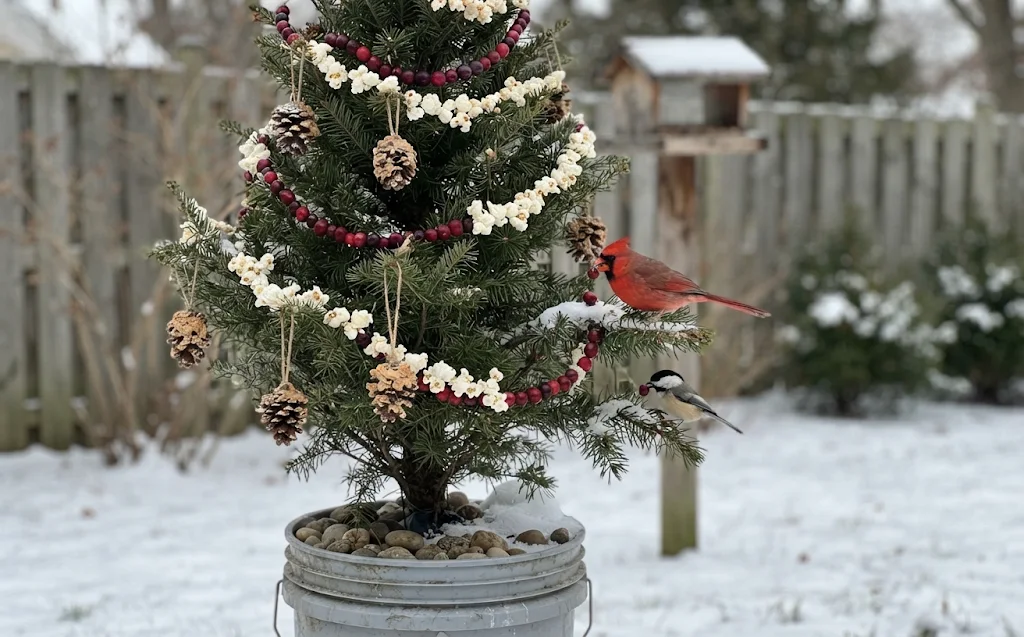
Repurposing Christmas trees for birds transforms your post-holiday conifer into vital winter cover when deciduous trees are bare and sub-zero winds sweep across open yards. Instead of dragging a bare Fraser fir or Scotch pine to the curb for municipal chipping, placing that dense evergreen structure near your feeding station shields overwintering songbirds from freezing drafts and hunting hawks.
Before moving your tree outdoors, strip every strand of tinsel, metal ornament hook, artificial snow flocking, and ribbon so curious birds do not ingest synthetic fibers or tangle their feet. Once clean, you can deploy the tree whole or cut into branches using five practical backyard setups that last until spring cleanup.
Quick-Glance Field Summary
An untreated, decoration-free Christmas tree supplies immediate thermal windbreaks, predator concealment, and natural perches throughout January, February, and March. Keep the tree needle-safe by avoiding chemical fire retardants and anchoring upright trunks firmly against winter gales.
- Essential safety check: Only use natural, unflocked trees with zero tinsel, wire hooks, or chemical flame retardants
- Best conifer varieties: Fraser fir, Balsam fir, Scotch pine, and White spruce (retain needles longest outdoors)
- Primary winter bird visitors: Northern Cardinals, Dark-eyed Juncos, Black-capped Chickadees, White-throated Sparrows, Song Sparrows
- Optimal placement distance: Within 6 to 10 feet of existing seed or suet feeders for quick escape cover
- Window strike rule: Place within 3 feet of glass or beyond 30 feet with exterior decals or screens on large windows
- Spring disposal timing: Break down and chip dried branches in late March or April once shrubs leaf out
1. Anchor the Whole Tree Upright Near Your Bird Feeders
Standing your entire Christmas tree upright inside a weighted bucket or lashed to a fence post creates an instant evergreen windbreak and hawk refuge right beside your feeding station. Small songbirds like chickadees and titmice dart into dense conifer needles the moment a Sharp-shinned or Cooper’s Hawk appears overhead.
- Secure the base: Wedge the trunk into a 5-gallon bucket filled with dry gravel or heavy stones—avoid damp sand if you want to remove the trunk mid-winter, as wet sand freezes into a solid block until spring thaw—or tie the stem to a wooden fence post with natural jute twine.
- Position near feeders: Place the upright tree 6 to 10 feet from your tube or hopper feeders so nervous birds can grab a seed and retreat immediately into cover to crack the hull.
- Prevent window strikes: Keep the tree either within 3 feet of exterior windows or more than 30 feet away, and add exterior screens or patterned decals spaced 2 inches apart on large facing panes as recommended by the Cornell Lab of Ornithology.
2. Build a Ground-Level Brush Pile for Sparrows and Juncos
Laying your Christmas tree flat on its side and layering pruned boughs over the trunk builds a low-profile thermal brush pile for ground-foraging birds. Dark-eyed Juncos, White-throated Sparrows, and Carolina Wrens spend winter nights roosting close to the soil where thick evergreen boughs block freezing wind chill and keep heavy snow from burying feeding patches.
- Create an air pocket: Rest the main trunk across two thick logs or bricks before layering cut lower branches on top so birds have dry, snow-free tunnels underneath.
- Choose a sheltered corner: Tuck the brush pile along a south- or east-facing fence line or hedge to capture morning sun while blocking prevailing north and west winds.
- Manage ground seed safely: Scatter white proso millet or hulled sunflower hearts under the outer skirt of branches, though skip ground seed in dense urban yards prone to rats and avoid dry brush piles in high-risk wildfire zones.
3. Turn the Tree into an Edible Suet and Seed Garland Station
Decorating your outdoor evergreen with natural, bird-safe treats converts the tree into a multi-level feeding station for clinging birds like woodpeckers, nuthatches, and chickadees. Hanging food directly inside dense boughs lets smaller songbirds feed sheltered from freezing gusts.
- String natural garlands: Thread unsalted, air-popped popcorn, fresh cranberries, and apple slices onto natural cotton string or jute twine—avoiding nylon fishing line or plastic thread that can entangle bird feet.
- Press suet into bark crevices: Smear small portions of cold, rendered beef suet mixed with coarse cornmeal directly into rough trunk bark and branch forks.
- Hang pine cones: Tie natural pine cones coated in xylitol-free peanut butter and rolled oats onto sturdy inner branches where squirrels have to work harder to reach them.
4. Cut Boughs to Insulate Birdbaths and Roost Boxes
Sawing individual evergreen boughs off the trunk gives you weatherproof windbreaks you can lash around heated birdbaths, ground feeders, and wooden roosting boxes. Wrapping conifer branches around exposed stations cuts convective heat loss and keeps water surfaces calmer on blustery days.
- Shield heated birdbaths: Wedge cut fir or spruce boughs around the base and windward side of your pedestal birdbath to block icy gusts from blowing water out of the basin.
- Create tray feeder roofs: Tie two wide evergreen boughs together in an A-frame tent over open platform feeders to keep falling snow from burying seeds.
- Camouflage roost boxes: Fasten small evergreen sprigs near the bottom entrance of winter roosting boxes to break up the box outline and reduce drafts.
5. Chip Dried Needles and Branches into Mulch Beneath Shrubs
Once late March arrives and backyard shrubs begin budding out, pruning your dried Christmas tree into organic mulch recycles carbon back into your garden beds while supporting spring insect forage. As wood chips and needles decompose beneath native bushes, they retain soil moisture, suppress weeds, and attract beetles, worms, and pillbugs that returning robins and thrushes hunt for protein.
- Prune manageable lengths: Cut side branches off the main trunk with bypass loppers and lay them flat beneath berry-producing shrubs like viburnum, serviceberry, or winterberry holly.
- Chip into organic mulch: Feed dry branches through a backyard wood chipper to create moisture-retaining organic mulch for flower beds and shrubs—noting that decomposing evergreen chips build healthy soil humus without significantly altering soil pH.
- Leave a nurse log: Set the bare central trunk along the back edge of a woodland border where decaying wood will harbor beneficial insects for Downy and Hairy Woodpeckers all summer.
Christmas Tree Repurposing Methods Compared
| Repurposing Method | Primary Target Birds | Best Yard Location | Winter Lifespan |
|---|---|---|---|
| Upright Feeder Windbreak | Chickadees, Titmice, Cardinals | 6–10 ft from seed feeders | Through late March |
| Ground Brush Pile Shelter | Juncos, Sparrows, Carolina Wrens | Sheltered fence or hedge corner | Through early April |
| Edible Treat Garland Tree | Woodpeckers, Nuthatches, Finches | Visible from window (<3 ft or >30 ft) | 4–6 weeks (refresh treats) |
| Cut Bough Feeder/Bath Shields | All winter feeder & bath visitors | Windward side of birdbaths & trays | 8–10 weeks until needle drop |
| Shrub Mulch & Nurse Log | Robins, Thrushes, Woodpeckers | Beneath native berry shrubs | Year-round soil & insect habitat |
Keeping Your Backyard Bird Sanctuary Safe Through Spring
Before hauling your Christmas tree outside, double-check that every strand of tinsel, wire hook, and synthetic ribbon has been removed so foraging birds do not ingest plastic or tangle their feet. Whether you stand the trunk upright beside your seed feeders or layer the boughs into a ground shelter, leaving that evergreen cover intact until late March gives backyard songbirds a reliable refuge through the coldest stretch of winter.