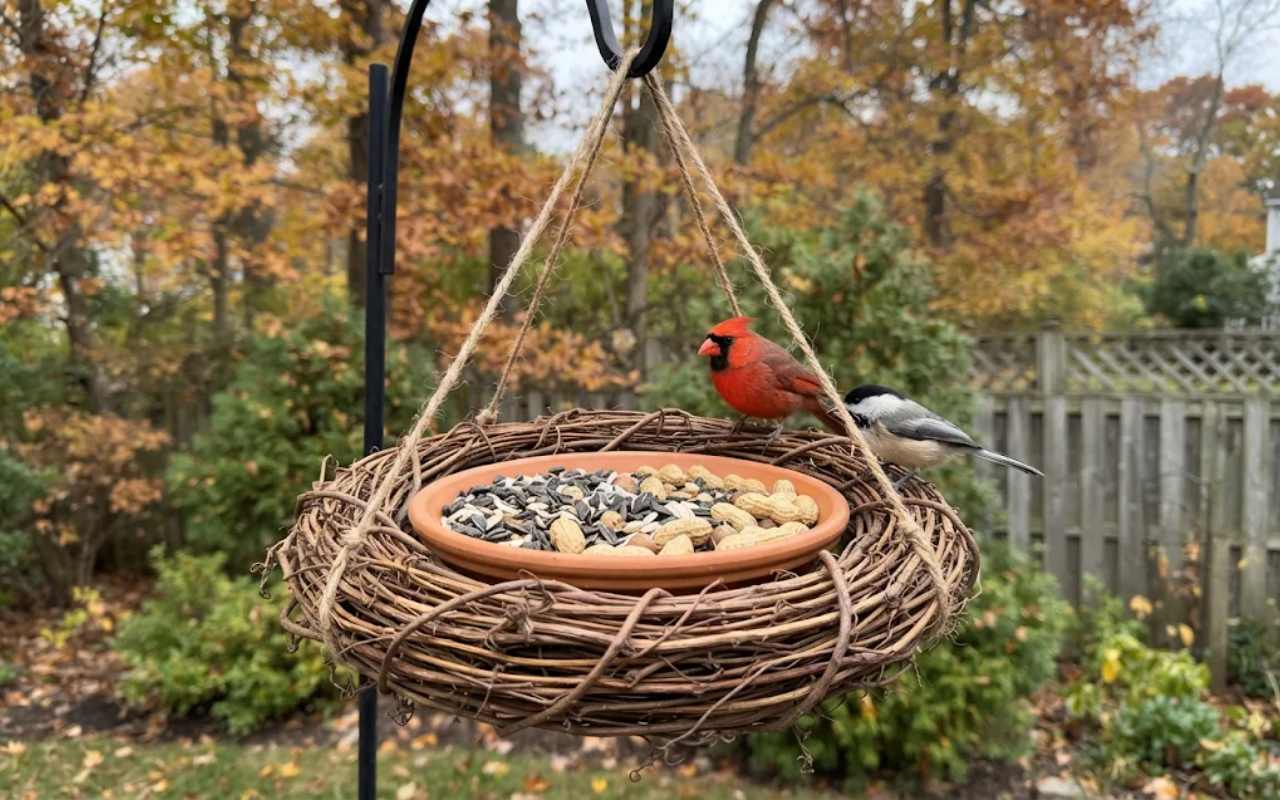
Building a grapevine wreath bowl bird feeder transforms an ordinary craft-store vine ring into a rustic, high-capacity feeding platform that looks like a natural woven nest. Unlike narrow plastic tube feeders that force larger backyard birds to hover or crowd around tiny pegs, a wide grapevine bowl provides a secure, grippy rim where cardinals, chickadees, and titmice can perch comfortably side by side.
You can assemble this hanging seed nest in under 30 minutes using a 12-to-14-inch natural grapevine wreath, a shallow drainage saucer, and heavy-duty weatherproof twine. Placing it under an eaves overhang or sheltered tree branch keeps autumn rains off the seed while giving your yard an effortless seasonal focal point.
Quick-Glance Craft Summary
A sturdy grapevine wreath forms the outer perch ring, while a nested ceramic, terracotta, or stainless-steel saucer holds loose seed blends without letting small grains fall through the twigs. Securing the hanger at four balanced anchor points prevents the bowl from tipping when heavier songbirds land on one edge.
- Prep & Assembly Time: 20 to 30 minutes (basic drill needed for drainage holes; no glues or toxic sealers required)
- Core Base Materials: One 12-to-14-inch untreated grapevine wreath and one 8-to-10-inch shallow saucer with drainage holes
- Safe Hanger Cordage: 4-strand natural jute twine, hemp rope, or uncoated stainless-steel craft wire (avoid thin fishing line)
- Best Autumn Seed Blends: Black oil sunflower seeds, safflower seeds, hulled sunflower hearts, and shelled peanuts
- Top Backyard Visitors: Northern Cardinals, Black-capped Chickadees, Tufted Titmice, White-breasted Nuthatches, and House Finches
- Optimal Hanging Placement: 5 to 6 feet high, 8 to 12 feet from dense shrub cover, and within 3 feet or beyond 30 feet of windows
Supplies You Need for a Weatherproof Grapevine Seed Nest
Gather untreated, chemical-free materials so curious songbirds never peck at synthetic glues, glitter, or painted finishes. Selecting a saucer that nests snugly inside the inner opening of your grapevine wreath locks the bowl in place without relying on adhesives.
- 1 Natural Grapevine Wreath (12 to 14 inches): Inspect the tag to verify it is 100% untreated wild grapevine without clear acrylic sealers, artificial berries, or hot-glue residue.
- 1 Shallow Dish or Saucer (8 to 10 inches): Choose an unglazed terracotta saucer, glazed ceramic dish, or stainless-steel or unpainted aluminum pie tin (avoid galvanized metal, as zinc coatings can leach into damp seed) sized to wedge tightly into the center hole of the wreath.
- 4 Lengths of Heavy Jute Twine or Wire (36 inches each): Cut four equal cords of thick natural jute rope (at least 3mm thick) or 18-gauge stainless-steel wire to form a balanced 4-point suspension harness.
- 1 Metal S-Hook or Swivel Snap: Keeps the hanging cords from twisting into knots during gusty autumn winds.
- Optional Natural Autumn Accents: Tuck a few dried coneflower seed heads, rose hips, or sprigs of bittersweet-free autumn leaves into the outer vines for natural texture.
Saucer & Bowl Liner Options Compared
| Center Dish Material | Drainage & Cleaning | Weight & Stability | Best Weather Use |
|---|---|---|---|
| Unglazed Terracotta Saucer | Breathes well; drill with masonry bit | Heavy (resists swinging in wind) | Dry autumn days (store before hard freeze) |
| Glazed Ceramic Plant Dish | Smooth surface; drill with diamond bit | Heavy & balanced | Sheltered porch or covered eave |
| Stainless-Steel or Aluminum Tin | Easy metal drill; zero zinc toxicity risk | Lightweight (add 2 river stones inside) | All-weather fall & early winter |
| Heavy-Duty Recycled Plastic Tray | Easy to drill; dishwasher-safe | Lightest (requires 4-point balance) | Freeze-thaw autumn transitions |
How to Assemble Your Grapevine Wreath Bowl Bird Feeder Step by Step
To build a stable hanging grapevine wreath feeder, drill drainage holes in your center dish, lash a four-point harness directly through the thickest inner vines, wedge the dish firmly into the center opening, and balance the suspension cords before hanging. Tying your hanger cords around the solid vine core rather than the dish rim lets you lift the saucer out easily for weekly scrubbing.
- Step 1: Drill Drainage Holes in the bottom of your 8-to-10-inch saucer so autumn rain drains rapidly instead of soaking seeds into moldy clumps—use a 1/8-inch carbide masonry bit for unglazed terracotta, a diamond-tipped tile/glass bit with light pressure (and no hammer action) for glazed ceramic, or a standard metal bit for stainless steel.
- Step 2: Mark Four Anchor Points evenly around the wreath at the 12, 3, 6, and 9 o’clock positions so the finished feeder hangs completely level.
- Step 3: Tie the 4-Point Harness by threading each 36-inch length of jute twine deep through the thickest inner vines at your four marked spots, securing each end with a tight double square knot.
- Step 4: Gather and Knot the Top Loop by holding all four cords straight up above the center of the wreath, adjusting the slack until the wreath sits flat, and tying a sturdy overhand loop knot 14 to 18 inches above the rim.
- Step 5: Wedge the Saucer into the Center by pressing your drained dish down into the middle opening of the wreath until the surrounding twigs grip the rim tightly—you can also weave two thin strands of twine underneath the dish in an “X” cradle for extra support.
- Step 6: Fill with Dry Autumn Seed and hang the feeder from a sturdy shepherd’s hook or tree limb using a metal S-hook.
Best Autumn Seeds and Safe Placement Tips
Fill your grapevine bowl with clean, low-waste seeds that won’t sprout or mold in damp fall weather, and position the feeder where local hawks and window glass pose minimal risk. Because open platform bowls expose seed to moisture and droppings more than enclosed tubes, smart placement keeps your flock healthy.
- Choose Hull-Free or High-Fat Seeds: Use black oil sunflower seeds, safflower seeds (which squirrels dislike), hulled sunflower chips, and whole unsalted peanuts in the shell for Blue Jays and nuthatches.
- Skip Cheap Filler Mixes: Avoid commercial blends heavy in red milo, cracked corn, or wheat, as birds scratch those fillers out onto the ground where they attract mice and rats.
- Follow the 8–12 Foot Shrub Cover Rule: Hang your wreath bowl 8 to 12 feet away from dense shrubs or evergreens so chickadees and cardinals have fast escape routes from hawks without giving neighborhood cats a hidden ambush spot directly underneath.
- Prevent Window Collisions: Follow placement guidelines from the Cornell Lab of Ornithology by hanging the feeder either within 3 feet of exterior windows (so birds cannot build lethal flight speed) or more than 30 feet away with exterior screens or decals on large facing panes.
Cleaning and Weather Care Through Late Fall
Open tray and bowl feeders require weekly cleaning to prevent wet seed from growing Aspergillus mold or spreading avian conjunctivitis. Following bird feeder sanitation guidelines from the Cornell Lab of Ornithology, regular washing keeps shared feeding platforms safe for visiting flocks.
- Lift Out the Dish Weekly: Pop the center saucer out of the grapevine ring every 5 to 7 days, dump out damp hulls and droppings, and scrub the bowl with warm soapy water.
- Sanitize Monthly: Soak the empty dish in a 1:9 household bleach-to-water solution (1 part bleach to 9 parts water) for 10 minutes, rinse thoroughly with clean water, and air-dry completely before returning it to the wreath.
- Retire Before Heavy Winter Snow: Move the grapevine feeder under a covered porch or store it in a dry shed once heavy wet snowstorms begin, as ice buildup can weigh down natural vines and snap jute cords.
Frequently Asked Questions About Grapevine Wreath Bird Feeders
How do I keep squirrels off a grapevine wreath feeder?
Hang your grapevine feeder from a freestanding metal shepherd’s hook equipped with a wrap-around squirrel baffle positioned at least 4 feet off the ground, and place the pole 8 to 10 feet away from trees, fences, or deck railings that squirrels can leap from. Filling the saucer with bitter white safflower seeds—which cardinals and chickadees love but squirrels usually ignore—also discourages raiding without hurting the rustic aesthetic.
Will a grapevine wreath rot in the rain?
Natural dried grapevine is remarkably woody and weather-resistant, easily lasting through an entire autumn season outdoors without rotting as long as it dries out between rainstorms. Hanging the feeder beneath a covered porch eave or dense evergreen branch and drilling drainage holes in your center saucer keeps moisture from pooling in the twigs, though you should store the wreath in a dry shed once heavy winter sleet and wet snow arrive.
What size grapevine wreath works best for a bird feeder?
A 12-inch to 14-inch grapevine wreath offers the ideal balance of wide outer perching space and lightweight stability when suspended from four cords. Wreaths smaller than 10 inches leave too little room for larger songbirds like Northern Cardinals or Blue Jays to land comfortably, while wreaths wider than 16 inches become heavy when loaded with seed and tend to tilt in gusty fall winds.