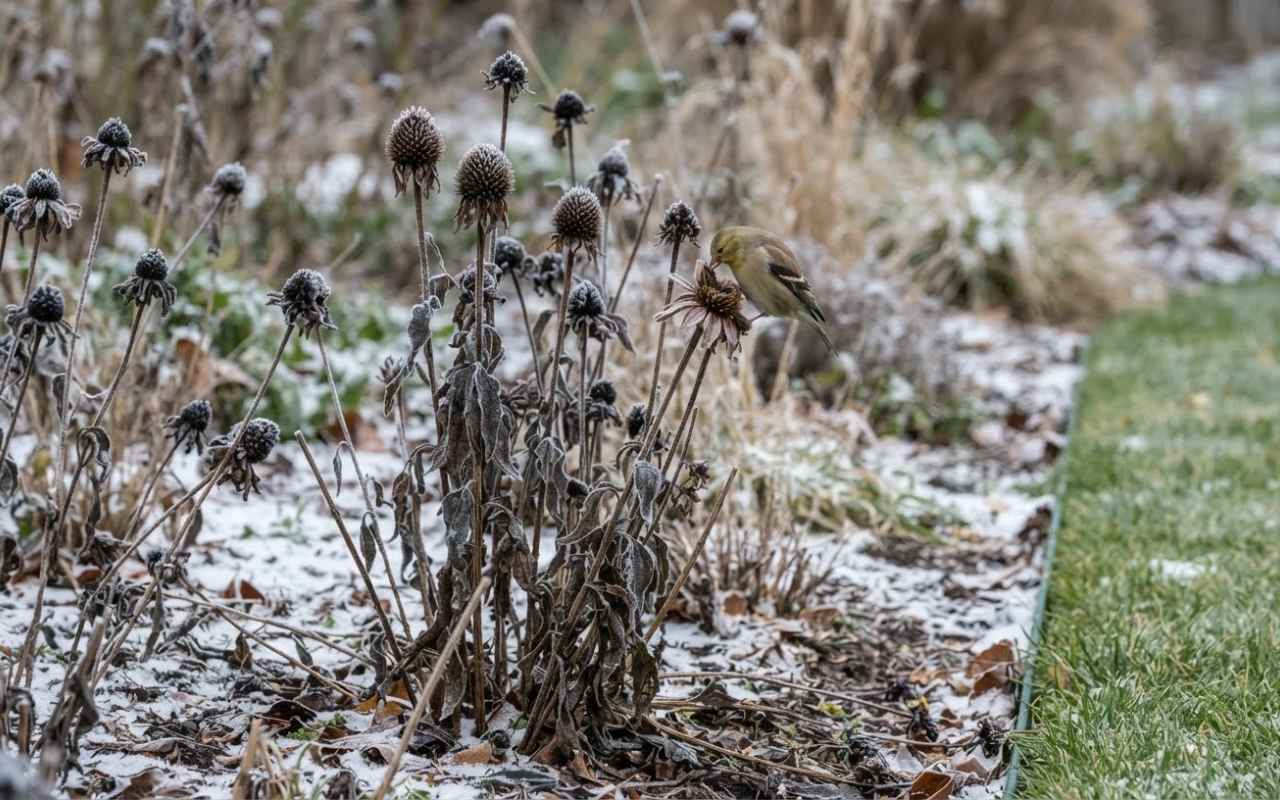
Practicing leaving dead perennials for winter birds creates a resilient, disease-free food supply that sustains native songbirds through the most punishing freezing cycles of the year. While manicured autumn yard work strips landscapes bare, uncut native stems hold high-lipid seed caches and sheltered dormant insects well above the heavy winter snowpack.
Recent community discussions on backyard birding forums highlight how artificial feeder ports routinely ice over during freezing rain, locking songbirds out of commercial seed mixes. In contrast, sturdy native plant stalks sway naturally in winter winds, shedding heavy crusts of ice and giving wintering flocks unbroken access to nutrient-dense forage.
Quick-Glance Field Summary
- Retaining standing native stems through late winter establishes an unmanaged foraging zone that completely bypasses freezing feeder mechanics, lethal mold proliferation, and artificial feeding costs.
- This practical blueprint outlines optimal stalk heights, key plant species, and harvest schedules to maximize cold-season avian survival without sacrificing your neighborhood aesthetic.
- Recommended standing stem height: 18 to 24 inches minimum
- Primary seed producers: Purple Coneflower, Black-Eyed Susan, Cup Plant
- Essential insect-sheltering stems: Wild Bergamot, Goldenrod, Joe Pye Weed
- Soil buffer zone: 2 to 3 inches of undisturbed leaf litter
- Spring cleanup trigger: Sustained daytime temperatures above 50 degrees Fahrenheit
Which Dead Plants Offer the Best Food for Backyard Birds?
Leaving dead perennials provides native birds with tailored, high-energy seeds that stay dry, resist heavy snow cover, and remain accessible when ground resources freeze completely over the winter months. These natural seed heads supply concentrated lipids and carbohydrates without the spoilage risks of uncleaned feeding stations.
| Target Perennial Species | Primary Avian Consumers | Structural Snow Resiliency | Nutritional Winter Benefit |
|---|---|---|---|
| Purple Coneflower (Echinacea purpurea) | American Goldfinch, Dark-eyed Junco (Anisodactyl perching passerines) | High; rigid stems support heavy snow without snapping | High-oil kernel seeds deliver sustained metabolic calories |
| Black-Eyed Susan (Rudbeckia hirta) | Black-capped Chickadee, Tufted Titmouse (Anisodactyl clingers) | Moderate; dense central cones shed freezing moisture easily | Rich in crude fats and dense dietary carbohydrates |
| Wild Bergamot (Monarda fistulosa) | Downy Woodpecker (Zygodactyl climber), Native Finches | High; hollow, square stalks resist crushing winter winds | Seed calyxes hold persistent seeds and dormant micro-insects |
| Stiff Goldenrod (Oligoneuron rigidum) | White-throated Sparrow, Pine Siskin (Anisodactyl ground foragers) | Moderate; broad flat-topped clusters catch drifting snow | Abundant miniature achenes provide easily cracked calories |
| Cup Plant (Silphium perfoliatum) | Northern Cardinal, Purple Finch (Heavy anisodactyl seed-crackers) | Exceptional; thick fibrous stalks withstand severe blizzards | Large, thick-hulled seeds offer maximum winter protein |
Field reports on birdwatching forums consistently show American goldfinches abandoning full nyjer tube feeders to harvest seeds directly from standing coneflower cones.
The rigid geometry of native seed heads permits perching songbirds to anchor themselves firmly with their anisodactyl foot structure, which features three forward-facing toes and a strong opposable rear hallux.
This stable claw grip gives small passerines the leverage needed to pry individual seeds loose even during severe gusts. These standing species also naturally stage food distribution across the season.
Soft, exposed seeds drop early to nourish ground-foraging native sparrows, while tightly locked coneflower and cup plant seeds remain intact until deep January blizzards force larger winter flocks to forage higher up the stem.
How Do Standing Stems Protect Birds Better Than Backyard Feeders?
Standing perennial stems prevent the transmission of deadly avian diseases by continuously drying in outdoor winds, effectively stopping the deadly fungal and bacterial blooms that routinely plague artificial plastic and wooden bird feeders.
This constant airflow creates an open, hygienic dining environment that commercial backyard hardware simply cannot replicate. Damp, unventilated feeder hardware traps metabolic bird waste, decaying seed hulls, and pooling rain.
These closed, wet conditions fuel the rapid proliferation of Aspergillus flavus, a soil-borne fungus that produces lethal aflatoxins. When infected birds inhale these fungal spores, the toxins trigger acute respiratory distress and severe mortality across localized flock populations.
In an unmanaged winter garden bed, seed heads stay elevated above damp soils, completely breaking this moisture trap. Open breezes sweep around natural stems, keeping seed clusters dry and dispersing droppings harmlessly into the lower soil profile.
Furthermore, traditional hanging feeders force high densities of multiple bird families into constant close contact around small perches. This unnatural overcrowding drives the rampant spread of mycoplasmal conjunctivitis and avian poxvirus.
Foraging across a wide perennial bed disperses individual birds, drastically cutting pathogen transmission rates while encouraging wild territorial movements.
What Hidden Insects Live Inside Winter Garden Stems?
Standing dead perennials protect overwintering insect larvae, pupae, and dormant spiders within their hollow piths, offering insect-eating songbirds a critical survival source of essential fats and animal proteins during sub-freezing weather.
These cryptic invertebrates keep birds alive when seed caches alone cannot fulfill their daily metabolic requirements. While finches and sparrows rely heavily on raw seed oils, species like chickadees, titmice, and nuthatches actively hunt for dormant animal life hidden beneath plant cuticles.
White-breasted nuthatches explore stem bases and vertical stalks by using an elongated, highly modified back hallux claw on an anisodactyl foot framework. This anatomical feature lets them climb upside down without the specialized tail props seen in true climbing birds.
True climbing Piciformes, such as Downy Woodpeckers, exploit standing perennial gardens using their specialized zygodactyl foot structure. With two toes pointed forward and two toes backward, these birds grip thick goldenrod galls and cup plant stems firmly while hammering through tough outer stalks.
- Goldenrod gall fly larvae (Eurosta solidaginis) inside swollen stem chambers
- Dormant leafcutter bee larvae and stem-nesting wasps sealed in hollow piths
- Overwintering moth pupae tucked within curled, desiccated leaves
- Hidden spider egg sacs lodged tightly between leaf axils and central stems
These hidden protein packets provide vital amino acids that plant seeds lack. Access to cold-hardy insect lipids allows resident insectivores to generate internal body heat through shivering thermogenesis during extreme sub-zero nights.
When Should You Cut Back Stems to Protect Nesting Pollinators?
You should delay cutting back standing perennial stems until mid to late spring, waiting until daily temperatures consistently exceed 50 degrees Fahrenheit for at least one full week. This thermal threshold gives native cavity-nesting bees and beneficial predatory insects enough ambient warmth to safely emerge from their winter torpor.
Rushing into the garden during the first warm weekend of March disrupts dormant solitary bees that have overwintered as delicate pupae inside hollow stems. Cutting, raking, and bagging these stems too early sends thousands of native pollinators straight into municipal landfills.
- Check the seven-day forecast for sustained afternoon temperatures above 50 degrees Fahrenheit
- Verify that regional mud layers have dried sufficiently to prevent severe soil compaction
- Confirm that newly emerging perennial crown growth is visible at the ground surface
Step 1: Inspect the perimeter to locate hollow and pithy stems.
Step 2: Use clean hand pruners rather than a gas-powered string trimmer.
Step 3: Cut individual stalks at uneven heights between 8 and 24 inches.
Step 4: Leave cut stem pieces scattered loosely on the soil surface as natural mulch.
Step 5: Retain standing stubble through summer to provide new nesting cavities.
Leaving variable-height stubble creates secure nesting sites for newly emerged female solitary bees throughout the upcoming spring breeding season. The remaining cut stems will hide beneath fresh green foliage within weeks, maintaining wildlife value without looking unkempt.
How Do You Keep a Winter Perennial Garden Looking Intentional?
You keep a dead winter perennial garden looking tidy by establishing crisp border edges, designing layered plant heights, and installing prominent visual cues that signal deliberate conservation stewardship to passing neighbors. Combining neat structural lines with wild seed plantings prevents complaints and shows that the brown vegetation is intentional.
Homeowners associations frequently cite natural winter landscapes as abandoned or neglected if the space lacks clear human design parameters.
Defining a sharp boundary line completely changes the psychological perception of dead vegetation. A tidy, mowed edge shows clear property management, transforming an unkempt patch of dead weeds into an intentional native bird sanctuary.
- Maintain a clean, mowed strip of turfgrass at least two feet wide along all sidewalks
- Install clean wooden post-and-rail fences, stone retaining walls, or steel edging borders
- Add official conservation signage labeling the planting as a native wildlife habitat
- Place a clean, functional stone birdbath or sculptural garden bench near the planting zone
Group your perennials by height to keep stems stable under heavy wind and drifting snow. Plant tall, fibrous species like cup plant and wild bergamot toward the rear or center of the bed to prevent them from flopping over walkways.
Surround taller plants with mid-sized, sturdy species like purple coneflower and black-eyed Susan to act as structural buttresses against winter winds. This tiered layout keeps individual seed heads suspended above snowdrifts while framing the planting cleanly against your home foundation.