
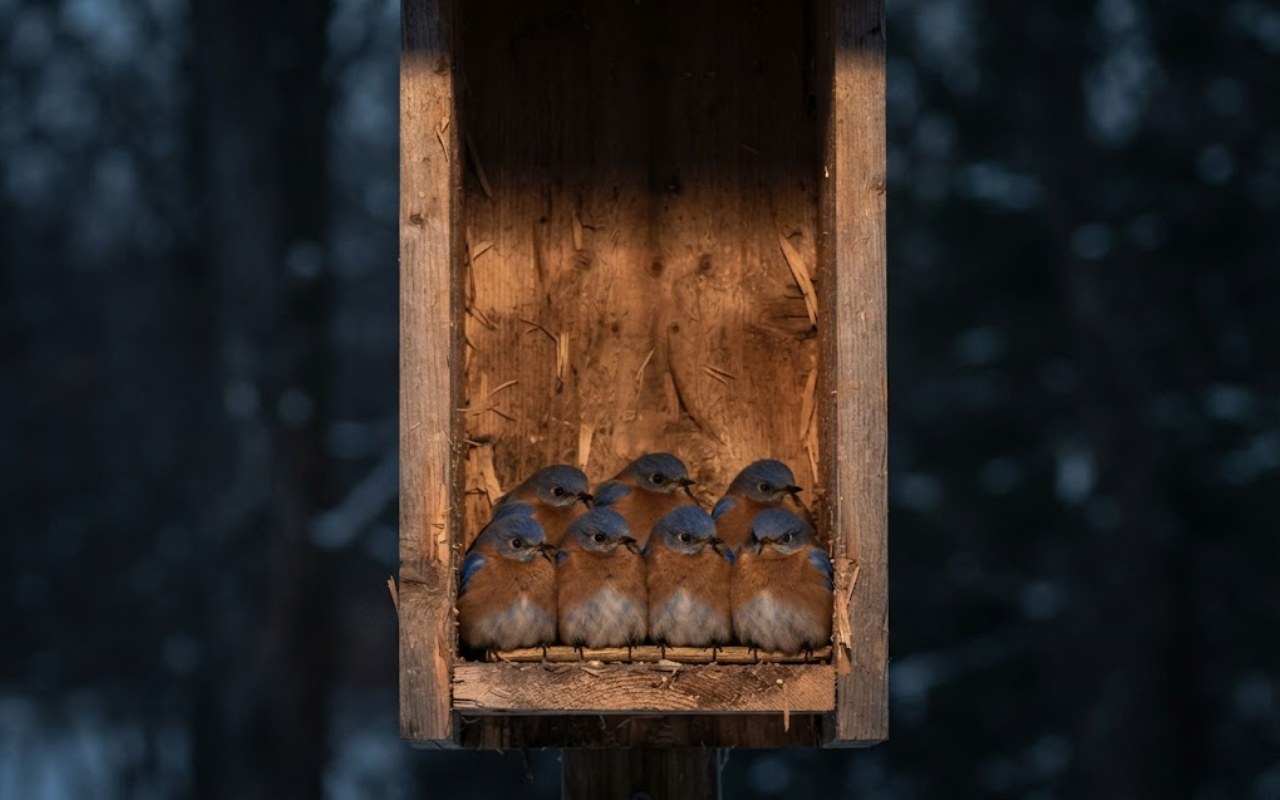
Determining how many birds fit in a roost box to stay warm depends on species body mass, interior box volume, and the severity of overnight winter temperatures. Smaller songbirds routinely pack together into tight communal clusters to share metabolic body heat, cutting their individual thermal loss by more than half during freezing weather.
Field researchers and backyard birders frequently document astonishing numbers of birds wedged into modest wooden shelters. While a standard box might hold one nesting pair in the spring, that identical cavity can shelter dozens of winter survivors when temperatures drop below freezing.
Quick-Glance Field Summary
A properly constructed winter roost box safely shelters between six and thirty cavity-roosting birds depending on their species size and the interior cubic volume. To prevent suffocation and hypothermia, the shelter must balance tight thermal conservation with moisture-releasing ventilation.
- Internal Floor Dimensions: Minimum 5 inches by 5 inches, preferably 8 inches by 8 inches for multi-bird clusters.
- Vertical Interior Height: 16 to 24 inches from the floor to the roof line.
- Entrance Hole Placement: Bottom third of the box, roughly 2 to 3 inches above the floor, measuring 1.5 inches in diameter.
- Interior Perch Design: Staggered, rough-hewn wooden ladders or grooved side walls, avoiding round dowels directly over one another.
- Hardware and Fasteners: Exterior-grade galvanized or stainless steel screws driven from the outside, keeping internal surfaces completely free of exposed metal.
How many songbirds can actually crowd inside one box?
A standard roost box measuring eight by eight inches wide can safely hold six to fifteen bluebirds, while smaller species like pygmy nuthatches can pack more than forty individuals into the exact same space. The total head count is governed entirely by social tolerance, air circulation, and physical body volume.
On Reddit’s backyard birding communities, backyard monitors frequently express disbelief when reviewing internal nest box camera footage during polar vortex events. A recurring community observation from midwestern watchers documents fourteen Eastern Bluebirds stacking themselves into three distinct vertical tiers inside an ordinary, unheated box.
Meanwhile, mountain ornithologists in the Pacific Northwest have recorded extreme winter roosting counts exceeding fifty Pygmy Nuthatches inside a single wooden cavity. These tiny birds weigh mere grams and press together into a dense, vibrating sphere of feathers to avoid freezing to death.
- Eastern Bluebirds: Six to fifteen individuals in an eight-inch square box.
- Black-capped or Carolina Chickadees: Four to twelve individuals huddled along grooved wall sections.
- Pygmy and White-breasted Nuthatches: Ten to over fifty individuals forming communal pyramids.
- Downy Woodpeckers: Usually solitary, but up to three or four will share oversized cavities during deep freezes.
- Winter Wrens: Ten to twenty individuals packing tightly into small, dark recesses.
Small birds deliberately compress their plumage and overlap their wings to minimize exposed surface area. This social layering traps metabolic heat inside the center of the mass, rotating cooler exterior birds toward the inside as the night progresses.
Why do birds sleep together in freezing weather?
Small songbirds gather inside a single roost box because communal huddling significantly reduces convective heat loss, allowing tiny avian bodies to survive sub-zero nights that would otherwise trigger fatal hypothermia. Clumping together reduces the exposed personal surface area of every participating bird.
During extreme cold, a small songbird can lose up to ten percent of its total body weight overnight just burning fat reserves to maintain internal body heat. Because species like chickadees and bluebirds possess high surface-area-to-mass ratios, an isolated bird loses heat to the ambient air exceptionally fast.
On wildlife rehabilitation forums, field rescuers often point out that isolated birds found dead on winter mornings rarely starved; they simply depleted their caloric fuel before sunrise. When ten birds press their bodies into a shared cluster, the ambient air pocket around them warms significantly, stabilizing the immediate shelter environment well above the outside temperature.
- Metabolic Conservation: Shared body warmth reduces the amount of stored body fat required for shivering thermogenesis.
- Microclimate Creation: Enclosed box walls block wind, eliminating convective chill across the bird’s feather boundary layer.
- Rotating Thermal Relief: Birds on the cold perimeter instinctively push toward the core, cycling warmth through the flock.
This behavioral adaptation, known as social thermoregulation, is purely utilitarian. Birds that fight territory battles during the breeding season will completely suspend their aggression once dusk approaches in mid-winter.
How do you convert a summer nest box into a winter roost?
You can convert a standard summer nest box into an effective winter roost by sealing upper ventilation slots, installing interior climbing tracks, and flipping the front panel so the entry hole sits near the bottom. These quick structural adjustments trap rising warm air while maintaining adequate lower oxygen intake.
Standard nest boxes feature high entrance holes and upper wall ventilation slots to shed excess summer heat. For winter survival, you must reverse this physical setup because hot air immediately rises and escapes through high openings, chilling the box floor.
In practical field discussions on wild bird forums, experienced caretakers frequently report catastrophic gear failures caused by placing smooth round perches inside converted boxes. Droppings quickly coat low-hanging dowels, fouling the birds below and creating toxic, damp surfaces that destroy feather insulation.
- Flip the Front Panel: If your box design permits, remove the front panel and re-install it upside down so the entrance hole is positioned low.
- Score the Interior Wood: Cut horizontal kerf cuts one-eighth inch deep into the interior wooden walls to create claw holds for roosting birds.
- Seal the Upper Slits: Affix temporary exterior weather stripping or foam strips over top ventilation slits to stop draft leaks.
- Avoid Interior Dowels: Discard round perches; birds naturally stack against rough, vertical cedar walls rather than balancing on slick horizontal rods.
Ensure that all modifications rely on mechanical friction or non-toxic wood fasteners. Never apply spray foam, chemical adhesives, or wet silicones inside a box during the winter, as toxic off-gassing directly harms sensitive avian lungs.
What safety dangers happen inside an overcrowded roost box?
The most critical safety hazards in an overcrowded roost box are asphyxiation from accumulated carbon dioxide, moisture buildup from respiration, and plumage contamination from communal droppings. Trapped humidity destroys the insulating value of down feathers, causing birds to freeze despite their numbers.
When dozens of birds pack into an airtight cavity, their respiration pumps significant water vapor into the trapped air space. If the box lacks bottom-level airflow, this moisture condenses on the cold wooden walls and drips directly back onto sleeping birds.
Field autopsies regularly reveal that damp feathers cannot trap warm air, leading straight to rapid hypothermia. Furthermore, saturated organic material combined with bird waste provides a fertile breeding ground for fungal pathogens like Aspergillus flavus, which causes fatal respiratory infections across wintering flocks.
- Wet Plumage Collapse: High interior humidity saturates exterior feathers, eliminating the dead air space that provides natural insulation.
- Toxic Dropping Accumulation: Birds sleeping directly underneath upper cluster layers get coated in metabolic waste, damaging feather barbules.
- Suffocation Hazards: Completely sealed boxes without bottom airflow accumulate fatal concentrations of carbon dioxide overnight.
- Sub-Zero Metal Hazards: Exposed screw points or wire brackets inside the box present freeze hazards where wet eyes or feet can adhere to bare metal.
To guarantee physical safety, ensure that the roof has a generous exterior overhang to keep driving sleet away from the entry hole. The interior floor must remain completely dry and free of unventilated moisture throughout the winter season.
How do you safely clean and maintain a winter roost box?
Safely maintain an active winter roost box by dry-brushing droppings and biological debris out of the box during dry afternoon hours without using liquid cleaners. Liquid sanitizers trap moisture inside cold wood grain, raising box humidity to lethal levels during subsequent night freezes.
A thorough dry-scraping protocol protects birds from harmful fungal spores while ensuring the wooden cavity remains bone dry for evening occupants. Birds begin entering winter roost boxes well before full sundown, meaning maintenance must occur exclusively between late morning and early afternoon.
Never use bleach solutions, soap water, or chemical sprays while outdoor temperatures remain below freezing. Damp cedar or pine takes days to dry in sub-zero weather, and any residual dampness will chill the next flock that attempts to roost inside.
- Step 1: Open the clean-out access door around noon on a clear, sunny day after all overnight birds have fully dispersed.
- Step 2: Use a stiff-bristled wire brush or metal putty knife to scrape accumulated fecal crusts away from the floor and walls.
- Step 3: Sweep out all dry organic debris, inspecting the floor corners for standing dampness, mold growth, or fungal threads.
- Step 4: Add a quarter-inch layer of clean, dry wood shavings or dry untreated pine needles to cushion and insulate the wooden floor.
- Step 5: Latch the box securely, verifying that all exterior predator guards remain tight and functional before evening sets in.
Consistent seasonal maintenance prevents the accumulation of dangerous aflatoxins and keeps parasite loads low throughout the winter. A dry, properly configured roost box provides reliable, life-saving shelter against the harshest winter weather.