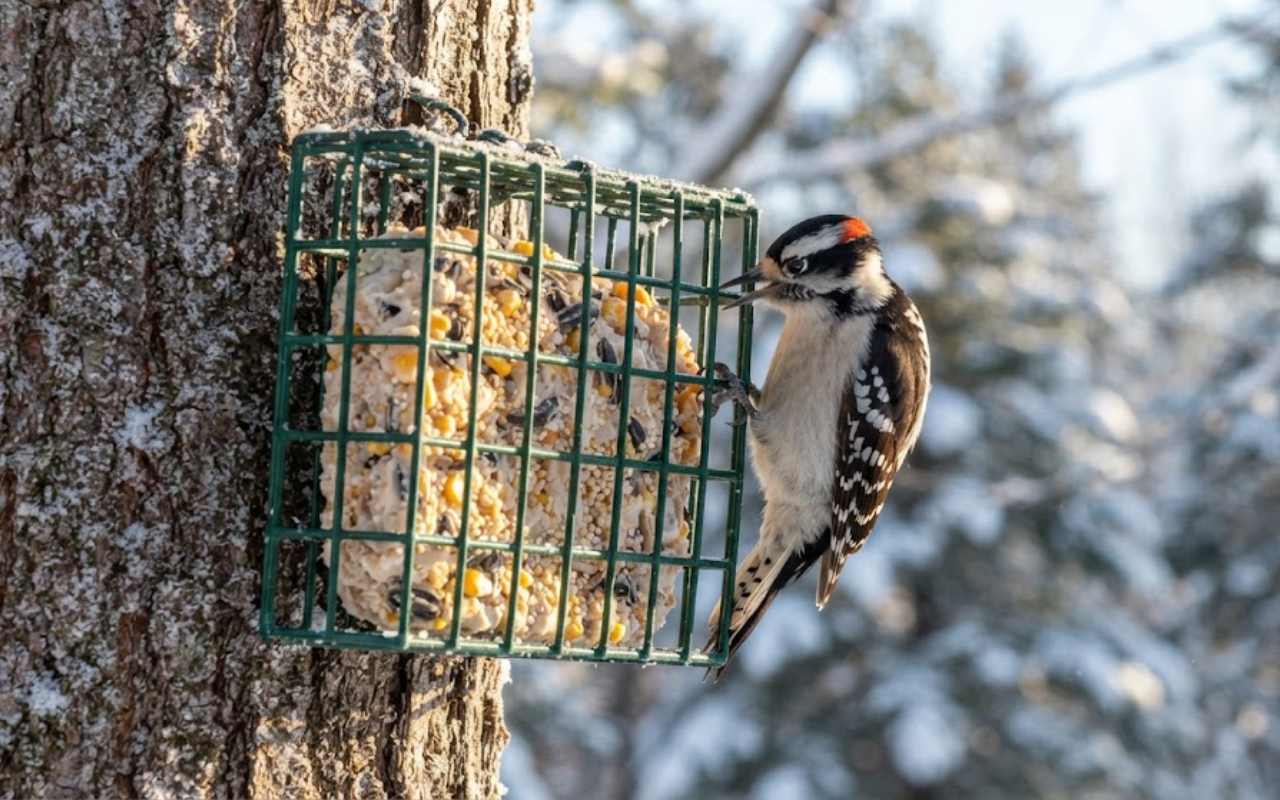
Choosing between shaded vs sunny bird feeder placement and learning how to stop suet from freezing are among the most critical structural decisions you can make for your backyard flock when winter temperatures drop.
While spring and summer bird feeding strategies favor heavy shade to keep sensitive specialty seeds from spoiling, sub-zero winter freezes flip the behavioral script completely.
Veteran bird watchers across specialized ornithology forums and wild bird rehabilitation networks emphasize that microclimates in your yard dictate whether wild birds stay safe, warm, and calorie-efficient or waste precious energy fighting the cold.
This guide breaks down the underlying science of winter bird feeder placement, combining thermodynamics and avian behavior to help you position your setup for maximum cold-weather comfort.
The Best Winter Bird Feeder Placement
Position your bird feeders on the southeast side of your property, roughly 4 to 10 feet away from a dense evergreen tree or brush pile. This layout maximizes morning radiant solar heat while providing an immediate windbreak and an escape route from aerial predators.
The Case for Sunny Bird Feeder Placement in Winter
During a severe cold wave, small songbirds fight a constant battle against hypothermia. Because their metabolic rates must skyrocket to maintain an incredibly high core body temperature of roughly 104 degrees Fahrenheit (40 degrees Celsius), thermal efficiency becomes a life or death scenario.
1. Radiant Solar Heating and Calorie Conservation
Positioning your winter bird feeders in a location that receives full morning sun offers an immediate thermodynamic boost to foraging passerines.
Absorbing direct sunlight allows birds to utilize passive solar heating, minimizing the amount of internal metabolic energy they must burn just to stay warm while eating.
Experienced birders note that chickadees, finches, and nuthatches will heavily favor a sun-exposed feeding station over an identical shaded station during early morning hours when their energy reserves are at their lowest point after a long freezing night.
2. Managing Cold-Weather Suet Dynamics
High-fat lipids like suet are the ultimate winter fuel, but extreme cold can turn standard suet blocks into rock-hard bricks that small-beaked birds struggle to break apart. Plunging bird baths also freeze over rapidly without a heat source.
While weak winter sunlight provides helpful ambient warmth to keep suet pliable on mild winter days, pure suet or standard high-fat lipid blocks will still freeze rock-hard in sub-zero or deep single-digit freezes.
To combat this on ultra-cold days, seasoned birders recommend using commercial glycerin-blended or no-melt suet blocks that resist freezing better, or switching to chopped suet pellets in sun-exposed tray feeders.
Sun-exposed feeders naturally clear themselves of frost and light snow accumulation much faster than shaded alternatives, ensuring seed trays stay dry and open for business.
The Case for Shaded Bird Feeder Placement in Winter
While the thermodynamic benefits of a sunny bird feeder placement are undeniable, completely exposing a feeding station to the open winter sun introduces a massive, life-threatening compromise: wind chill and hawk exposure.
1. The Deadly Impact of Wind Chill
Across backyard birding communities, a common winter complaint is that a beautifully sunlit feeder remains completely empty during a storm. This happens because sunny areas are frequently the most open, unprotected spots in a yard.
Direct exposure to biting north winds strips the insulating boundary layer of air trapped within a bird’s puffed-up feathers. A bird feeding in a sunny but windy spot can lose heat faster than a bird feeding in a shaded, wind-protected thicket. Shaded positions are often nestled near dense evergreen trees, cedar hedges, or the leeward side of a home, providing an essential natural windbreak.
2. Aerial Predator Ambush Safety
Winter brings a massive influx of hungry raptors, specifically Cooper’s Hawks and Sharp-shinned Hawks, into residential areas. Feeders placed out in the wide-open sun leave visiting songbirds completely silhouetted against the bright snow, making them effortless targets for low-flying hawks.
The Verdict: The Ideal Winter Positioning Strategy
To achieve absolute maximum cold-weather comfort for your backyard birds, you should deploy a hybrid placement strategy that captures the best of both worlds.
The ultimate location is to position your primary winter bird feeders on the southeast side of your property, roughly 4 to 10 feet away from a dense evergreen tree or brush pile.
A southeastern orientation allows your feeding station to catch the absolute first rays of morning sun, providing immediate radiant warmth when birds are most desperate for calories. Simultaneously, keeping the feeder within 10 feet of dense evergreens ensures they have immediate, shaded wind protection from harsh northern drafts and a split-second escape route if a hawk strikes.
Structural Breakdown: Shaded vs Sunny Feeder Comparison
| Feeder Setting | Primary Advantages | Main Risk Factors | Ideal Target Species |
|---|---|---|---|
| Full Sunny Placement | Radiant solar heating, faster snow melting, keeps suet blocks soft | High wind chill exposure, high silhouette visibility to hawks | Finches, Cardinals, Blue Jays |
| Dense Shaded Placement | Flawless windbreak shelter, excellent predator canopy cover | Rapid suet freezing, dark morning visibility, lingering frost | Chickadees, Nuthatches, Wrens |
Deep-Dive Forum Troubleshooting: Real-World Placement Solutions
When scanning birding subreddits and local Audubon club threads, users frequently encounter specific, localized mechanical issues caused by winter weather dynamics. Here is how to troubleshoot your layout using community-proven solutions.
Managing the Morning Rush Hour
On freezing winter mornings, birds experience a biological phenomenon known as nocturnal weight loss. A tiny bird like a Black-capped Chickadee can lose up to ten percent of its body weight overnight simply by shivering to survive. This creates a high-stakes morning rush hour where dozens of birds arrive at your feeders simultaneously.
If your primary sunlit feeder is too small, aggressive species like Blue Jays or House Finches will monopolize the warm space, forcing smaller, subordinate birds into the freezing shade.
To fix this, forum users recommend placing a multi-port tube feeder in the sun for the smaller finches and chickadees, while tossing a separate handful of whole peanuts onto a shaded platform tray nearby to distract the larger, more aggressive birds.
The Problem of Solar Food Spoilage
While freezing weather generally preserves bird food, sudden mid-winter thaws can turn a sunny feeder into a biological hazard. If you experience a sudden warm-up where temperatures climb above freezing, direct sunlight hitting damp seed trays or suet blocks will accelerate bacterial growth and ferment fruit pieces.
To mitigate this risk, monitor the weather channels closely. If a temporary winter thaw occurs, downsize the amount of food you place in your sunlit feeders to a single-day supply, or temporarily shift your high-moisture foods like suet and fruit into a shaded, well-ventilated spot until the freeze returns.
Defeating the Winter Wind Tunnel Effect
Many homeowners mistakenly assume that placing a feeder close to the side of their house guarantees an effective windbreak. However, architectural layouts can sometimes create a wind tunnel effect, where biting air currents hit the flat wall of a home and compress, speeding up as they move down the side of the building.
Before locking in your winter feeder positions, step outside during a windy day and physically check the air currents. If a specific sunny spot next to your porch feels like a wind tunnel, move the feeder closer to a natural brush pile or an evergreen cedar hedge. Living plants are far more effective at scattering and dampening wind velocity than flat, solid siding or brick walls.
Winter Pathogen Management and Feeder Hygiene
Concentrating high numbers of wild birds into localized, thermally optimized sunny zones creates a prime vector for spreading destructive wildlife diseases. When birds crowd onto a single warm perch, they leave behind droppings and respiratory secretions that can contaminate food supplies.
1. Combating Salmonellosis Outbreaks
Salmonellosis is a highly contagious bacterial disease spread through fecal contamination, and it is a major cause of winter mortality in flocking species like Pine Siskins and Goldfinches. When birds gather closely together at sun-exposed platform feeders, the risk of cross-contamination increases dramatically.
If you notice any birds looking unusually puffy, sluggish, or letting you approach them without flying away, take down the feeding station immediately.
2. House Finch Eye Disease Prevention
Mycoplasma gallisepticum, commonly known as House Finch Eye Disease, causes severe crusting and swelling around an avian eye, eventually leading to blindness and predation. This respiratory bacterium spreads rapidly when birds rub their faces against dirty feeder ports or perches.
Sunny, high-traffic multi-port feeders must be treated with strict hygiene protocols to prevent your yard from turning into a hub for illness.
3. The 7-Day Sanitization Routine
To maintain a safe, professional wildlife station, sanitize all high-traffic winter feeders at least once every seven days. Submerge the disconnected components into a large bin filled with a nine-to-one water-to-bleach solution.
Scrub away all caked seed debris, rinse the parts thoroughly with clean water, and allow the feeders to dry completely before refilling them with fresh seed. Never pack wet seeds into a feeder tray, as internal moisture will freeze into solid clumps or foster dangerous mold blooms.